
Learning sharks-Share Market Institute


Rajouri Garden  8595071711 7982037049  Noida 8920210950 , and  Paschim Vihar  7827445731  

Fee revision notice effective 1st April 2025; No change for students enrolled before 15th May 2025

Download “Key features of Budget 2024-2025here

ICICI Lombard shares approach 52-week high?

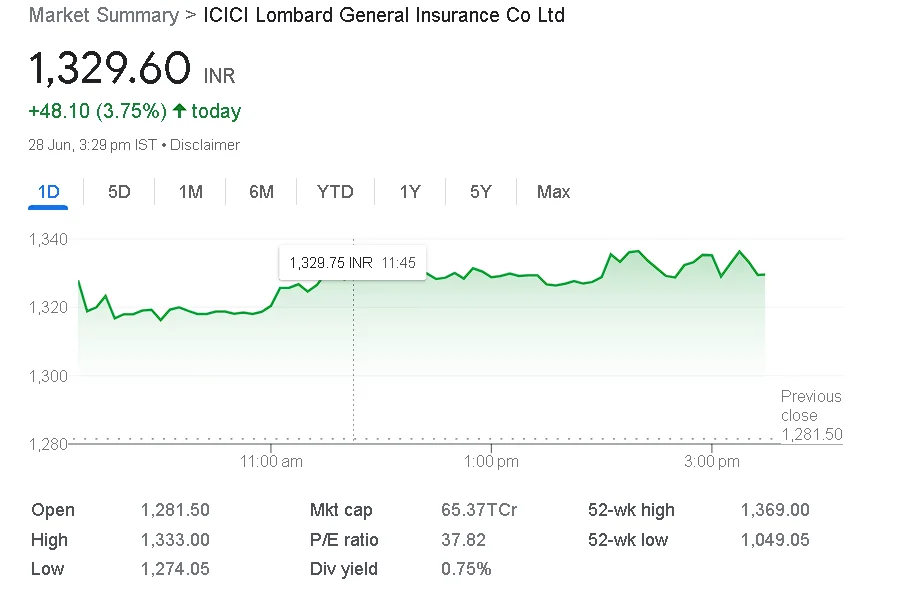
In Wednesday’s session, the stock of ICICI Lombard General Insurance ended flat at Rs 1329. The stock, which was trading near its 52 week high of Rs 1369 hit on August 17, 2022 opened at Rs 1,328 level in the previous session.

The company earned a premium (net) of Rs 3,726.03 crore in Q4FY23 compared to Rs 3,317.78 crore in Q4FY22 and Rs 3,792.05 crore in Q3FY23.
The 5 day, 20 day, 50 day, 100 day, and 200 day moving averages for ICICI Lombard General Insurance are all higher.

Motilal Oswal Research confirmed its buy call on ICICI Lombard General Insurance Company Ltd today, with a revised one-year target price of Rs 1,550. The aim represents a 17% increase over the previous BSE close of Rs 1327.05.

  • ICICI Lombard General Insurance’s stock closed flat on Wednesday at Rs 1329. The stock, which was trading at its 52-week high of Rs 1369 on August 17, 2022, opened the previous session at Rs 1,328.
  • The stock has risen 19% in a year and is expected to rise another 7% in 2023. In the most recent session, 1.29 lakh shares of the company changed hands, resulting in a turnover of Rs 17.13 crore.

In terms of technicals, the stock’s relative strength index (RSI) is 73.6, indicating that it is trading in the overbought zone.

  • We believe these are possible through a) scale benefits driving down cost ratios and b) a stronger mix in the health segment with a bigger retail share.

ICICI Lombard General Insurance reported a 40% increase in profit in the March quarter of 2018 fiscal, at Rs 436.96 crore, compared to Rs 312.51 crore profit in the March quarter of 2022. The company reported a PAT of Rs 352.53 crore in the December 2022 quarter.

  • Sales increased to Rs 5446.6 crore in Q4 2022, up from Rs 4799 crore in the previous quarter. In Q4, net premium earned increased by more than 12% year on year but decreased by 1.7% sequentially.

We raise our target multiple from 26x to 30x FY25E EPS as we believe the ICICI Bank share sale is now behind us. We maintain our BUY rating and revise our one-year target price to Rs 1,550.”

CONCLUSION

FOR MORE INDO CLICK THIS

SITE: https://learningsharks.in/

FOLLOW OUR

PAGE: https://www.instagram.com/learningsharks/#

Understanding the Different Sectors in the Stock Market

Introduction

A stock market sector is a collection of stocks that have a lot in common, typically because they are in similar industries. According to the most widely used classification system, the Global Industry Classification Standard (GICS), there are 11 different stock market sectors.

We divide stocks into sectors to make it easier to compare businesses with similar business models. Sectors also make it easier to compare which stocks are profitable.

The Importance of Sector Analysis


When investing in the stock market, it is critical to examine the various sectors and their performance. Each sector represents a distinct group of businesses that operate in a particular industry. Investors can identify trends, opportunities, and potential risks by evaluating the performance of these sectors, allowing for more informed investment strategies.

Sector 1: Technology


The technology sector includes businesses that develop and manufacture electronic goods, software, and information technology services. This industry includes industry titans like Apple, Microsoft, and Google. Technological advances and innovation are driving forces in this sector, resulting in exponential growth and significant investor interest.

Product innovation, market dominance, and revenue growth should be considered by investors interested in the technology sector. To identify potential investment opportunities, it is critical to stay current on the latest trends and emerging technologies in this sector.

Sector 2: Healthcare


Companies in the healthcare sector provide medical services, pharmaceuticals, biotechnology, and healthcare equipment. This industry is being driven by factors such as an aging population, advances in medical research, and rising healthcare costs.

Investors interested in the healthcare sector should consider the drug pipeline, regulatory approvals, and competitive landscape. When evaluating investment opportunities in this sector, it is critical to understand the potential impact of new therapies, government regulations, and healthcare policies.

Sector 3: Financial Services


Banks, insurance companies, investment firms, and other financial institutions are all part of the financial services sector. This sector is critical to economic growth because it provides services such as lending, asset management, and insurance coverage.

Investors interested in the financial services industry should consider interest rates, regulatory changes, and macroeconomic indicators. Furthermore, evaluating the financial health, market share, and competitive advantages of individual companies in this sector is critical for making sound investment decisions.

Sector 4: Consumer Discretionary


Companies in the consumer discretionary sector provide non-essential but desirable goods and services. Retail, automobiles, hospitality, and entertainment are examples of industries in this sector. Consumer spending habits and economic conditions have a significant impact on the performance of this industry.

When evaluating the consumer discretionary sector, investors should consider consumer sentiment, product demand, and competitive positioning. Keeping up to date on changing consumer preferences, emerging trends, and shifts in spending habits can aid in identifying potential investment opportunities in this sector.

Sector 5: Energy


Companies in the energy sector are involved in the exploration, production, refining, and distribution of energy resources. Oil and gas companies, renewable energy providers, and utility companies all fall into this category.

Oil prices, geopolitical events, and environmental regulations should all be considered by investors interested in the energy sector. Understanding diversification strategies and technological advancements in this sector is also critical for evaluating investment opportunities.

Conclusion


Finally, understanding the various stock market sectors is critical for investors looking to optimize their investment strategies. Investors can make informed decisions and capitalize on potential opportunities by analyzing the performance, trends, and key factors within each sector. Technology, healthcare, financial services, consumer discretionary, and energy are examples of diverse industries, each with its own set of dynamics and considerations.

Remember that successful investing necessitates ongoing learning, adaptability, and keeping up with market developments. Investors can improve their decision-making process and potentially achieve favorable returns on their investments by employing a thorough sector analysis approach.

FOR MORE INFO CLICK THIS SITE:https://learningsharks.in/

FOLLOW OUR PAGE:https://www.instagram.com/learningsharks/?hl=en

Understanding Mutual Funds: A Comprehensive Guide to Investing

Introduction


Welcome to our comprehensive mutual fund guide, where we delve into the world of investing and provide valuable insights to assist you in making informed decisions. In this article, we will look at the fundamentals of mutual funds, such as their definition, types, benefits, and investment considerations. By the end, you’ll have a firm grasp on mutual funds and be ready to begin your investment journey.

Mutual funds give small or individual investors access to diversified, professionally managed portfolios.

What Exactly Are Mutual Funds?


Mutual funds are investment vehicles that pool money from multiple investors in order to invest in a diverse portfolio of stocks, bonds, and other securities. Professional fund managers manage them with the goal of generating returns for investors. Individuals who invest in mutual funds gain access to a diversified portfolio that would be difficult to achieve on their own.

Benefits of Mutual Funds

Mutual funds offer several benefits that make them an attractive investment option:

  1. Diversification: Investing in a mutual fund allows you to spread your money across multiple securities, lowering the risk associated with individual investments.
  2. Professional Management: Skilled fund managers actively monitor and manage the fund’s investments, relying on their knowledge to make sound decisions.
  3. Liquidity: Mutual funds allow investors to buy or sell shares on any business day at the fund’s net asset value (NAV), giving them easy access to their investments.
  4. Affordability: Because mutual funds have low investment minimums, they are accessible to a wide range of investors.
  5. Variety: Mutual funds are available in a wide range of investment goals, risk tolerances, and asset classes.

Types of Mutual Funds

Mutual funds can be categorized into various types based on their investment objectives and underlying asset classes. Let’s explore some common types of mutual funds:

  1. Equity Mutual Funds

Equity funds invest primarily in stocks and equity-related instruments. They seek long-term capital appreciation by investing in companies with strong growth prospects. Equity funds are further classified as follows:

Large-Cap Funds: invest in well-established companies with a high market capitalization. They typically provide long-term stability and consistent returns.

Mid-Cap Funds: These funds invest in medium-sized companies that have the potential for rapid growth. They provide a good mix of growth and risk.

Small-Cap Funds: These funds invest in smaller companies that have higher growth potential but also higher volatility.

  1. Bond Mutual Funds
    Bond funds are mutual funds that invest in fixed-income securities such as government bonds, corporate bonds, and municipal bonds. They intend to generate income by making regular interest payments. Bond funds are further classified as follows:

Government Bond Funds: These funds invest in bonds issued by governments and carry a lower risk than other bond funds.

Corporate Bond Funds: Corporate bond funds invest in corporate bonds, which have higher yields but also higher risk.

Municipal Bond Funds: Municipal bond funds invest in bonds issued by municipalities and local governments. Certain investors may benefit from tax breaks.

  1. Balanced Funds
    Balanced funds, also known as hybrid funds, invest in both stocks and bonds. They aim to strike a balance between income and capital appreciation. These funds are appropriate for investors seeking a diversified investment option.
  2. Index Funds
    Index funds seek to mimic the performance of a specific market index, such as the S&P 500. They provide broad market exposure and are managed passively, resulting in lower expense ratios than actively managed funds.
  3. Specialty Funds
    Specialty funds concentrate on specific industries, themes, or strategies. Technology funds, real estate funds, socially responsible funds, and sector-specific funds are some examples. These funds enable investors to tailor their investments to their personal preferences or beliefs.

Considerations for Investing in Mutual Funds

Before investing in mutual funds, it’s essential to consider the following factors:

  1. Investment Objectives
    Define your investment objectives clearly, whether they are long-term wealth accumulation, retirement planning, or saving for a specific milestone. Your investment objectives will help you choose the best mutual funds for your needs.
  2. Tolerance for Risk
    Determine your risk tolerance to determine the level of volatility with which you are comfortable. In general, equity funds are riskier than bond funds. However, higher risks are frequently associated with the possibility of higher returns.
  3. Performance of the Fund
    Examine the historical performance of the mutual funds you’re thinking about investing in. Although past performance is not a guarantee of future results, it can provide insight into the fund’s consistency and performance during various market conditions.
  4. Charges and Expenses
    Consider the mutual fund’s fees and expenses, such as expense ratios, sales loads, and redemption fees. These expenses can have an impact on your overall investment returns, so it’s critical to select funds with low fees.
  5. Track Record of the Fund Manager
    Examine the fund manager’s track record and experience with mutual funds. A knowledgeable and experienced fund manager can have a significant impact on the fund’s performance.

Conclusion


Mutual funds provide an easy and convenient way for individuals to invest in a diverse portfolio of securities. You will be well-equipped to make informed investment decisions if you understand the various types of mutual funds, their benefits, and the factors to consider when investing.

Remember to conduct thorough research, evaluate your investment goals and risk tolerance, and choose mutual funds that align with your goals. Investing in mutual funds may provide you with long-term growth, income, and the opportunity to meet your financial objectives.

FOR MORE INFO CLICK THIS SITE:https://learningsharks.in/

FOLLOW OUR PAGE:https://www.instagram.com/learningsharks/?hl=en

Indian markets at all-time high! What mutual fund investors do?

However, with markets reaching all-time highs, many mutual fund investors are debating whether to take profits or stick with their systematic investment strategies.

Indian markets opened at an all-time high amid robust inflows from foreign investors on the back of improving macroeconomic fundamentals.
Mutual funds are often regarded as one of the greatest ways to invest in equities.

In Wednesday’s trading session, the 30-share BSE Sensex rose more than 500 points to a new all-time high of 63,956, while the NSE Nifty rose more than 160 points, or 0.8%, to 18,910.

Mutual funds are often regarded as one of the greatest ways to invest in equities. However, with markets reaching all-time highs, many mutual fund investors are debating whether to take profits or stick with their systematic investment strategies.

“If you are thinking about redeeming your mutual funds, it is important to weigh the pros and cons carefully,” says Viral Bhatt, Founder of Money Mantra. If you need the money for an unanticipated expense, you must redeem your funds.

However, if you are selling your funds because you are concerned about the market, you should think twice. The market is always unpredictable, but it has always trended upwards over time.

“Many investors are blissfully unaware of the advantages of long-term investing and do not seek professional advice.” If you are unsure about the long-term benefits of investing, you should consult with a financial counsellor.

A financial advisor can assist you in understanding the risks and rewards of investing and in developing a plan that meets your specific needs,” he added.

How do I choose the best fund?

“Historically, good funds have provided appealing past performance.” Any mutual fund will tell you in its risk considerations that past performance is not a guarantee of future performance.

  • However, it has been seen that good funds outperform in most market scenarios. “At the very least, they outperform in the long run,” Bhatt added.
  • “Preferred a fund that is based a lot more on the process and rules than a fund that is entirely based on the discretion of the fund manager,” he added.

He also emphasised that the most crucial stage in selecting the best mutual funds is to focus on finding mutual funds that meet your specific needs.

CONCLUSION

FOR MORE INDO CLICK THIS

SITE: https://learningsharks.in/

FOLLOW OUR

PAGE: https://www.instagram.com/learningsharks/#

Bajaj Finance, Bajaj Auto, Bank of Baroda, Vaibhav Global,

On Friday, Bajaj Finance shares will go ex-dividend. For FY23, the NBFC declared a final dividend of Rs 30 per share. Friday would also be a record date in this regard.

Others included Nippon Life India Asset Management, Nilkamal, Can Fin Homes GSK Pharma, Sona BLW Precision Forgings, Syngene International and Welspun Enterprises.
This two-wheeler manufacturer declared a dividend of Rs 140 per share. The payment will be made on July 28th.

Bajaj Auto shares will also go ex-dividend on Friday. This two-wheeler manufacturer declared a dividend of Rs 140 per share.

  • On Friday, Bank of Baroda will become ex-dividend. This state-owned bank declared a dividend of Rs 5.50 per share.
  • On August 6, the actual payment will be made. Can Fin Homes, which declared a Rs 2 dividend per share, will go ex-dividend on Friday.
  • GSK Pharma (Rs 32 per share), Nilkamal (Rs 20 per share), Nippon Life India Asset Management (Rs 7.5 per share), and Escorts Kubota (Rs 7 per share) will be ex-dividend.
  • Vaibhav Global and Greenlam Industries, both of which declared a Rs 1.5 per share dividend, will go ex-dividend on Friday.

Sona BLW Precision Forgings (Rs 1.53 per share), Welspun Enterprises (Rs 1 per share), and Syngene International (Rs 0.50 per share final dividend, Rs 0.75 per share special dividend) will all go ex-dividend today.

The shareholders who will be eligible to apply for the rights shares will be determined by the company board on this day. The Rs 9 crore rights offering will begin on July 3 and conclude on July 5.

Eligible shareholders of the firm as of the record date were able to subscribe for three rights shares for every Bandaram Pharma Packtech share they owned on the record date.

CONCLUSION

FOR MORE INDO CLICK THIS

SITE: https://learningsharks.in/

FOLLOW OUR

PAGE: https://www.instagram.com/learningsharks/#

Who Is A Broker?

Learn about the definition, requirements, functions, and different types of brokerage in our comprehensive guide to brokerage.

Brokers, also known as trading members, play an important role in the stock market. They carry out transactions such as stock purchases and sales on behalf of their clients. In exchange, they charge a brokerage commission.

However, stock market brokers also provide other services. Portfolio management and financial advice are two examples. With stock market transactions taking place online, brokers also provide a variety of platforms for investors and traders to access the stock market.

How Brokerage Houses Support Traders

Brokerage firms used to represent their clients on the exchange floor when it was a physical venue. They carried out buy and sell orders as the legal representatives of their customers, following the client’s instructions.

Brokers are registered stock exchange members. Furthermore, they must follow the market regulator’s regulatory guidelines, the Securities and Exchange Board of India (SEBI). Learn more about Indian stockbrokers.

India now has a dematerialized stock market in which trades are executed online. Stockbrokers still perform the same primary function: executing orders on behalf of their clients. However, the venue has shifted to digital channels.

Functions Of a Brokerage Firm

  • Order Execution: Online execution of trading orders by brokers for their clients. The brokerage charges a commission for this. This could be a one-time fee or a percentage of the transaction value.
  • Trading Platforms: Nowadays, having multiple secure platforms through which clients can place orders is critical. The majority of larger brokers offer trading apps and software for smartphones, laptops, and tablets. You could also trade and invest over the phone or through chat.
  • Financial Advice: Both new and experienced investors rely on their broker’s stock recommendations. However, stockbrokers are required to disclose all information when recommending a stock, including the risks.
  • Margin Financing: Traders with large brokerage accounts can use margin funding facilities. This entails borrowing funds from the broker in order to take larger positions in the market.

The firm must obtain the necessary licenses in order to perform these stockbroking functions. They must register with SEBI and become members of a stock exchange to do so. Learn about the benefits of using brokerage firms.

Types Of Brokers


A stock trader or investor can choose between three types of brokers: full-service brokers, discount brokers, and robo-advisers.

1. Full-service Broker

A full-service broker offers a wide range of services to its clients. The majority of full-service brokers have offices in major cities where customer service representatives can meet with clients in person. These brokers provide tailored support to investors with varying interests and levels of expertise through tailored brokerage plans and services. Clients with significant holdings may even hire dedicated service managers to manage their portfolios.

Educational materials and financial advice are also available from full-service brokers. For example, they may make stock recommendations based on your brokerage plan. However, they are also required to disclose any risks associated with their stock tips. It also helps that these brokers typically have in-house market research teams that produce regular market research reports. Customers can gain research-based insights by accessing these reports. They can also access live market data and news, as well as receive real-time market alerts via SMS.

Full-service brokers typically charge 0.3% to 0.5% per trade in commission. This is on the higher end of the scale. However, given the wide range of services and products available, the extra cost may be worthwhile.

2. Discount Brokers

While full-service brokers offer a wide range of services, discount brokers concentrate on the essentials. Discount brokers execute buy and sell orders on behalf of their clients but do not provide any additional services. As a result, they charge a much lower commission. The fee may be as low as Rs 10 per transaction in some cases.

How do discount brokers keep their fees ‘discounted’? Because they only provide transactional services, they may not have many physical locations. This helps to keep their operating costs low. These brokers primarily operate through online platforms.

They may be appropriate for seasoned investors looking to save money. However, the lack of advisory, research, and tailored services can be a disadvantage. Such brokers may not be the best option for those new to stock market investing.

3. Robo-advisers

Robo-advisers are digital platforms that provide automated financial planning services online. They generate financial advice using algorithms and require very little human supervision. How do they function? The client fills out an online questionnaire about their financial situation and goals. This information is used by the robo-adviser to provide investment advice.

Robo-advisers are typically less expensive than even discount brokers. Many charge an annual flat fee ranging from 0.2% to 0.5% of the total account balance. The opening balances are also very low. Furthermore, you can contact the robo-adviser at any time using an internet-connected device. There is no need for you to visit their office. In just a few clicks, you can begin transacting.

What To Expect From a Brokerage Firm

Depending on the type of brokerage firm you choose, expectations will vary. So, let’s focus on the points of difference:

Tailored service:

  • Customers are prioritized by full-service brokers. They offer market insights and alerts based on research, as well as financial advisory and portfolio management services.
  • Discount brokers are more concerned with the transactional experience.
  • Robo-advisers use an automated algorithm to provide investment advice.

Presence:

  • Full-service brokers have an online presence as well as several physical offices that allow for face-to-face interactions.
  • There are only a few physical offices for discount brokers. They primarily conduct business via online platforms or over the phone.
  • Robo-advisers are only available online.

Asset classes:

  • Trades in multiple asset classes are permitted by full-service brokers. Mutual funds, stocks, bonds, initial public offerings (IPOs), derivatives, and other financial instruments are examples.
  • Discount brokers only allow you to invest in stocks and mutual funds.
  • Robo-advisers primarily work with mutual funds.

Charges:

  • Full-service brokers typically charge 0.3-0.5% per trade in brokerage fees.
  • Depending on the transaction value, some discount brokers charge as little as Rs 10 per trade.
  • Robo-advisers may be the least expensive option. Annual fees range between 0.2% and 0.5% of a client’s account balance.

How To Choose a Stock Broker

Your top priority should be to find a brokerage firm that meets both your personal and financial needs. Keep the following considerations in mind as you make your decision.

  1. Read customer reviews: While individual opinions can be biased, user reviews may be worth reading. They frequently reveal a pattern. A close examination of the comments may reveal information about the broker that would not otherwise be available.
  2. Examine previous performance: It is true that past performance does not always predict future performance. However, if a company has a history of poor performance, you should be wary. Investigate the various stockbrokers in India thoroughly. Compare the performance of various broker agencies online, look for financial paper reviews and reports, and see if you can find any rankings.
  3. Gather feedback: Ask family and friends who have invested with a specific broker about their experience. Keep in mind, however, that everyone’s input will be colored by their own perceptions and preferences.
  4. Brokerage fees: Each stockbroker has a different brokerage fee. While discount brokers and robo-advisers charge minimal fees, a full-service broker charges more but provides a broader range of services. Before selecting a broker, compare the fees and services available.

Summing Up

You will need to open demat and trading accounts if you want to invest and trade in the stock market. Investigate the various account options, such as standalone demat and trading accounts or a 2-in-1 account that combines both account types.

Of course, whether you need a full-service broker or a discount broker depends on your needs. If you understand how the markets work, you may be able to save money by using a discount broker. On the other hand, suppose you are new to the stock market and require assistance at every step. Perhaps you don’t have the time or inclination to conduct market research and identify suitable trading opportunities. A full-service broker who provides educational resources and in-depth research insights would be better suited to your needs in either case.

FOR MORE INFO CLICK THIS SITE:https://learningsharks.in/

FOLLOW OUR PAGE:https://www.instagram.com/learningsharks/?hl=en

The Role of a Broker: Navigating the Complex World of Financial Services

A broker is a person or company who acts as a go-between for an investor and a securities exchange. Individual traders and investors require the services of exchange members because securities exchanges only accept orders from individuals or firms who are members of that exchange.

Brokers provide that service and are compensated in a variety of ways, including commissions, fees, and payment from the exchange itself. Investopedia reviews all of the top brokers on a regular basis and maintains a list of the best online brokers and trading platforms to assist investors in determining which broker is best for them.

We recommend the best products based on an independent review process, and advertisers have no influence over our recommendations. If you visit partners we recommend, we may receive compensation. For more information, please see our advertiser disclosure.

KEY TAKEAWAYS

  • A broker is a person or company who acts as a go-between for an investor and a securities exchange.
  • A broker is also a firm that acts as an agent for a customer and charges the customer a commission for its services.
  • Discount brokers execute trades on behalf of their clients but do not typically offer investment advice.
  • Full-service brokers offer both execution services and customized investment advice and solutions.
  • Brokers are registered with the Financial Industry Regulatory Authority (FINRA), whereas investment advisers are registered with the Securities and Exchange Commission (SEC) as registered investment advisors (RIAs).

Understanding the Broker’s Function

A broker acts as a go-between for buyers and sellers in a variety of financial markets, including stocks, bonds, commodities, and real estate. They use their knowledge and market insights to match clients with appropriate investment opportunities based on their risk tolerance, investment objectives, and time horizons.

Discount vs. Full-Service Brokers

Discount brokers can execute a wide range of trades on behalf of their clients for a low commission of $5 to $15 per trade. Their low fee structure is based on volume and cost savings. They do not provide investment advice, and brokers are typically paid a salary rather than a commission. The majority of discount brokers provide an online trading platform, which is attracting an increasing number of self-directed investors. These services typically charge no commissions.

On top of a full range of investment products, full-service brokers provide a variety of services such as market research, investment advice, and retirement planning. As a result, investors should expect to pay higher commissions on their trades. Brokers are paid by brokerage firms based on their trading volume as well as the sale of investment products. Fee-based investment products, such as managed investment accounts, are increasingly available from brokers.

Pros and Cons of Using a Broker for Your Financial Needs

Using a broker to manage your finances and make investment decisions can have both advantages and disadvantages. Understanding the benefits and drawbacks of working with a broker is critical in determining whether their services are a good fit for your specific needs and goals. In this section, we will look at the key advantages and disadvantages of using a broker to help you make an informed decision.

Pros of Using a Broker

1. Expertise and Knowledge

Working with a broker provides access to their expertise and knowledge, which is one of the primary benefits. Brokers are educated individuals who specialize in a variety of financial markets and investment strategies. They stay current on market trends, regulations, and industry news, allowing them to provide you with valuable insights and guidance. This knowledge can be especially useful if you are new to investing or do not have the time or resources to conduct in-depth research on your own.

2. Personalized Recommendations

Brokers spend time learning about your financial objectives, risk tolerance, and investment preferences. With this information, they can make personalized recommendations based on your specific requirements. A broker can assist you in developing a well-rounded investment strategy that aligns with your goals, whether they are long-term growth, income generation, or capital preservation, by taking into account your unique circumstances.

3. Access to a Wide Range of Investments

Brokers typically have access to a diverse range of investment opportunities across multiple asset classes. Because of this access, they can provide you with a diverse range of investment opportunities that may not be readily available to individual investors. Whether you’re looking for stocks, bonds, mutual funds, or alternative investments, a broker can help you sort through the options and choose the best ones for your portfolio.

4. Trade Execution and Efficiency

Trading in financial markets necessitates accuracy and timeliness. Brokers have dedicated trading platforms and tools for quick trade execution. They can execute your trades quickly, ensuring that you enter and exit positions at the best possible prices. Furthermore, brokers frequently have access to real-time market data and research resources, allowing you to make informed trading decisions quickly.

Cons of Using a Broker

1. Costs and Fees

The associated costs and fees are one of the primary disadvantages of using a broker. Brokers typically charge fees or commissions for their services, which can vary depending on the type of transaction or investment product. These expenses can reduce your investment returns, especially if you trade frequently or have a small investment portfolio. It is critical to carefully consider a broker’s fees and determine whether the potential benefits outweigh the costs.

2. Potential Conflicts of Interest

As intermediaries, brokers may face conflicts of interest. Some brokers may be compensated by third parties for promoting specific products or services, such as investment product providers. While reputable brokers prioritize the best interests of their clients, it is important to be aware of these potential conflicts and ensure that the recommendations provided align with your financial goals rather than the broker’s incentives.

3. Limited Control and Autonomy

You delegate certain aspects of your investment decisions to a broker when you work with them. While this can be beneficial in terms of receiving professional advice, it also implies giving up some control and autonomy over your investments. If you prefer to have complete control over your portfolio and actively manage it, using a broker may not be in line with your investment philosophy.

4. Dependence on Broker Performance


The efficacy of a broker’s services is largely determined by their competence, dedication, and ability to produce positive results. If you rely heavily on a broker and they fail to meet your expectations,

Conclusion


Navigating the complex world of financial services necessitates the assistance of a knowledgeable and trustworthy partner. [Our Company] is committed to providing top-tier services that enable our clients to make informed decisions and achieve their financial objectives as a leading broker. We aim to be your go-to resource for all of your investment needs through our expertise, personalized approach, and cutting-edge technology. Contact us today to learn more about how we can help you on your financial journey.

FOR MORE INFO CLICK THIS SITE:https://learningsharks.in/

FOLLOW OUR PAGE:https://www.instagram.com/learningsharks/?hl=en

NIFTY 50 ANALYSIS! TOUCHED 19000, WHAT’S NEXT

While our nation’s hero has touched the 19,000 mark for the first time, investors are happy and curious to know what’s next. What’s been in their minds has become a common question today. Will nifty go to 20,000? Well, Read more to know

First, let me congratulate all the investors for sticking by. Nifty 50, as we all know is an INDEX which showcases the typical retail, FII or DII mood. When it is trending up, demands are high and the economy is doing good. Vice versa, if it’s down, the economy isn’t doing so great.

While it has made a run to its new benchmark, is it going to stop here now? Short answer: No.

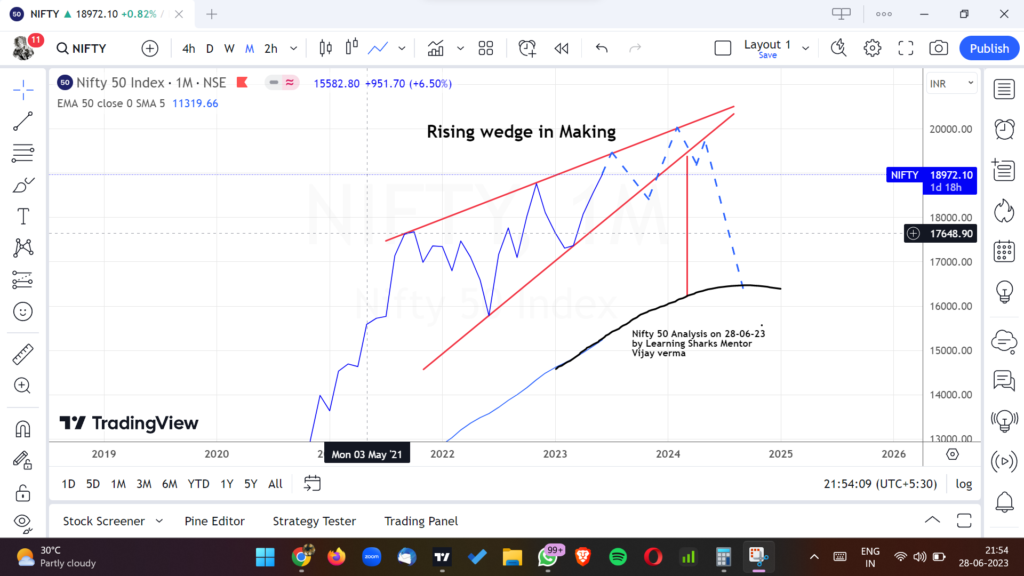
Al-though, corrections are healthy and necessary but will come to that in a second. NIFTY 50 and Sensex both have created an all-time high. Surprisingly, we have spotted a pattern in it. It’s called a rising wedge pattern ( in making).

What is the rising wedge pattern?

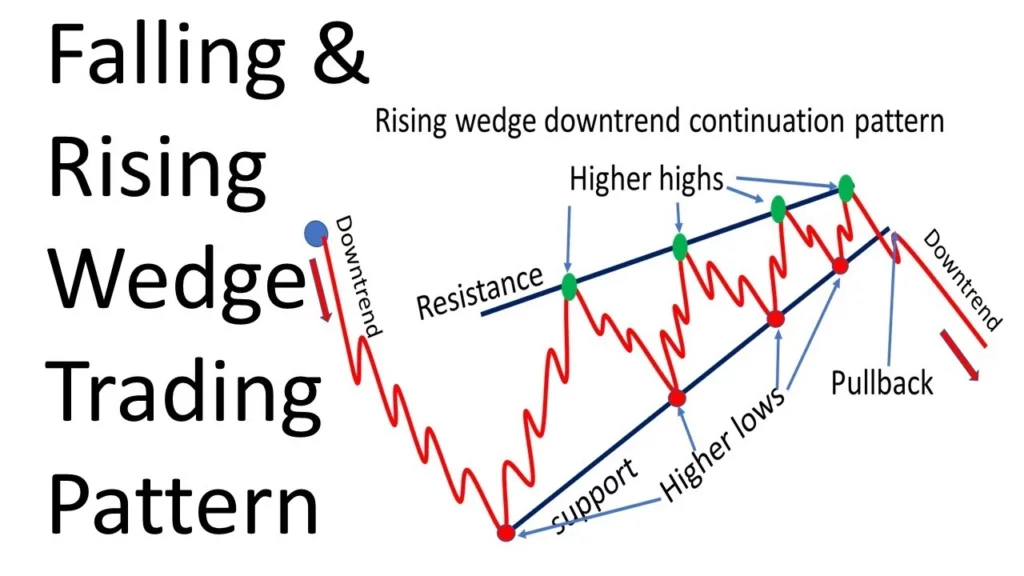
A rising wedge pattern is a technical chart pattern that frequently appears when the financial markets are on an uptrend. Two trendlines that converge towards one another, with the lower trendline being steeper than the higher trendline, are drawn to create it. Within the wedge formation, the price has a propensity to produce higher highs and higher lows.

Let’s just apply this to the Nifty 50 chart. Here’s what it looks like

It certainly looks like touching a further 20,000 benchmark. Before, giving us that most awaited fall that all PE or put holders waiting for. Our advice would be to play carefully, and not to be a victim of this euphoria.

Disclaimer: This is not financial advice or call. The analysis done above is merely for educational purposes. Please make your investment according to your own financial advisor. To know more about the pattern click here, Follow us on insta

Bharat Petroleum to raise Rs 18,000 crore via rights issue of shares

Earlier this month, BPCL had informed exchanges that its board of directors will consider the various modalities for capital infusion

State-run Bharat Petroleum Corporation Ltd (BPCL) has received the board’s go-ahead to raise up to Rs 18,000 crore through rights issue of shares to eligible shareholders.
A rights issue is a method of generating capital that involves allowing existing shareholders to buy more new shares in the company.

The board of directors of the state-run Bharat Petroleum Corporation Ltd (BPCL) has approved a Rs 18,000 crore rights issue of shares to eligible shareholders.

  • The money will be raised subject to acquiring all necessary statutory clearances, according to the company’s exchange filing on Wednesday.
  • BPCL shares closed 2.11 percent higher on the NSE at Rs 365.85 a share on Wednesday, ahead of the company’s board meeting.
  • On the BSE on Tuesday, BPCL shares closed 0.52 percent higher at Rs 360.20 a share.

BPCL told exchanges earlier this month that its board of directors will evaluate several modalities for capital infusion, including rights concerns for accomplishing energy transition, net zero, and energy security goals.

A rights issue is a method of generating capital that involves allowing existing shareholders to buy more new shares in the company.

The business stated in the filing that the detailed parameters of the rights issue, including but not limited to the issue price, right entitlement, record date, timing, and terms of payment, will be communicated separately after Board approval in due course.

BPCL to shut half of Mumbai refinery

According to a company official, Bharat Petroleum plans to shut down half of its crude processing capacity at its 240,000 bpd Mumbai refinery in western India for a month beginning September 21 for maintenance.

According to him, the refinery aims to shut down a 120,000 bpd crude unit, a fluid catalytic cracker (FCCU), a continuous catalytic reformer, and a catalytic cracker, among other units.

He also stated that the refiner intends to close a bitumen plant there for 15 days beginning in mid-August.

CONCLUSION

FOR MORE INDO CLICK THIS

SITE: https://learningsharks.in/

FOLLOW OUR

PAGE: https://www.instagram.com/learningsharks/#

10 Best Telegram Channels for Intraday Trading [In 2023]

Timing is crucial in the Indian stock market. Your fortunes might change drastically in a single day.

So it seems to reason that you would want to get the most precise and up-to-date information about market trends.

This is where intraday trading Telegram channels come in helpful.

Finding the finest Telegram channels for intraday trading and sifting through the noise is getting more and more challenging.

The top 10 intraday Telegram channels are listed below, and they will give you all the data and analysis you need to succeed in the market.

1. Honest Stock Marketer

It is safe to say that Honest Stock Marketer has delivered honest and successful intraday trading suggestions based on its 10k+ subscribers in such a short time.

In contrast, the premium group offers various advantages, such as 3–4 Stock Option and Stock Future Calls, Live Guidance and Support, and Daily 6-7 Sure Bank Nifty Trades.

  • 10,100+ subscribers
  • Budget-friendly premium channel
  • 90 to 95% accuracy stated in the bio.

Join for the best free intraday tips Telegram channel “Honest Stock Marketer” here: https://telegram.me/honeststockmarketer

2. Trade Onomics

TradeOnomics offers “INTRADAY EDUCATIONAL TRADES ON STOCKS/INDEX” with the goal of generating steady earnings. The trading tactics presented here include Nifty, Bank Nifty, and Stock Options Trades.

During live market hours, TradeOnomics offers live support for risk management. You can also seek the opinions of experts on the stocks you are interested in as well as your portfolio.

  • The @TradeOnomics_Support channel offers live assistance.
  • 7800+ subscribers
  • Obtain comprehensive transaction reports during trading hours.

You can access TradeOnonmics at this link: https://telegram.me/TradeOnomics

3.Intraday Equity Trade

Intraday Equity Trade is where knowledge and technology come together. The algorithm used by the founders was created specifically to identify potential market trends before they materialised.

Here, you get flashes of unidirectional commerce. This specially created algorithm functions on everything and everything. You name it, they have it—from futures to commodities and money.

“Trade using ALGO and without feeling!” This channel states as much in its introduction, and it still holds true today.

  • Best for trading with less risk
  • thorough investigation for each call
  • 2,447+ readers

Sign up to trade equity intraday here: https://telegram.me/IntradayEquityTrade

4. Trade On Data Institute

A project of a team that works there for the subscribers and has various seasoned traders and investors,

For new investors who are unsure of how the market operates and how profits are made, administrators have primarily concentrated on providing educational courses.

The Trade on Data Institute is unique in that it has a dedicated Twitter account for its team called Trade on Data Team (@TradeOnDataTeam), which investors and traders may use to ask the team any questions for free.

  • With more than 45,500 subscribers
  • Doubt clearing live sessions
  • provided are programmes and courses for learning.

Click the hyperlink: https://telegram.me/BankNifty_Nifty_ProTraders

5.Stock Tips Intraday

Stock Tips Intraday has a sizable community of more than 106K+ students, seasoned traders, and novice investors. It has recently received many favourable ratings, making it one of the finest intraday tips suppliers on Telegram.

Even though the channel only has a few recommendations to offer for free, you still get real-time updates and advice that is helpful for intraday trading beginners.

  • Free calls inside the day on Telegram
  • Accurate analytics-based stock information
  • No additional fees

The channel can be found at https://t.me/stock_tips_intradays

6.Stock Master

The Stock Master bundle is all-inclusive for new users. Every trading day, you receive two to three sizable intraday calls, and in recent months, your accuracy rate has improved to a respectable 95%.

Additionally, the professionals here offer trade levels for both the buy and sell sides. One of the greatest Telegram channels for intraday calls is Stock Master, which is also secure for beginners.

  • Approximately 75,000 followers
  • Expert trading analysis
  • using the premium edition of F&O Trade Setups

Here is a link to the Stock Master channel: https://telegram.me/Stock_Masters

7.Shree Ganesh Stocks and Investments

Shree Ganesh Stocks and Investments, an authorised and reputable sub-broker with the well-known IIFL Securities portfolio management service provider, has built a responsive community on its Telegram channel.

Both short-term and long-term investment advice is provided on the channel. You can select from a variety of premium channels here that are divided into many categories, including

  • Options on equity
  • Futures
  • Stocks
  • Indices

COMMODITY CURRENCY
Beginners in the industry can get assistance opening a Demat account, as well as answers to all of their questions about investing, in addition to intraday trading advice.

Cost-effective premium options with 85%+ accuracy and more than 1500 active traders

Follow this link to sign up for Shree Ganesh Stocks and Investments: https://telegram.me/shreeganeshstocksandinvestments

8.Wealth Citi

On all days with busy trading, Wealth Citi shares two to three trading suggestions per day. As Wealth Citi was developed to assist newcomers in learning the art of minimising losses and maximising returns in the intraday setup, here you will find all trading-based educational advice.

With more than 5.8K followers, this educational trading advice channel also provides new users with exclusive Demat account opening packages.

  • Offers specific to trading apps
  • Swing Trade Formations
  • Very few fees for a premium account

Start here to gain knowledge about trading with Wealth Citi: https://telegram.me/s/wealthciti

9. Bulls Bears Traders

Bulls Bears Traders, one of the most trustworthy names on this list, is an NIFM-certified intraday trading source that has consistently ranked highly on intraday trading telegram group rankings.

For intraday investors of all skill levels and backgrounds, the channel offers free calls. Bulls Bears Traders is the greatest intraday trading advisor in its class thanks to its outstanding 90% accuracy rate.

You can also choose the premium jackpot channel, which costs just Rs. 5999 for 90 days of trading.

  • There are several trade and instructional lessons.
  • 8400+ subscribers
  • Offer both decent option calls and hero zero calls.

Here is the link to join Bulls Bears Traders’ intraday Telegram group: https://telegram.me/bullsbearstraders

10.NSE STOCK PRO

On its Telegram channel, NSE Stock Pro has a solid track record of offering intraday trading advice and educational content.

With around 130K followers, this is a well-known analytics-driven Telegram group for investors and intraday trading. The premium club offers advantages like Daily Bank Nifty Trades, F&O Trades, and more for a low price of Rs. 5k.

  • Customised assistance for paying customers
  • 2–6 intraday trades per day
  • Individual trading solutions

Click the following link to join the NSE STOCK PRO Telegram channel: https://telegram.me/s/nsestockpro

FOLLOW OUR WEBSITE: https://learningsharks.in/

FOLLOW OUR PAGE: https://www.instagram.com/learningsharks/