Earlier this month, BPCL had informed exchanges that its board of directors will consider the various modalities for capital infusion
A rights issue is a method of generating capital that involves allowing existing shareholders to buy more new shares in the company.
The board of directors of the state-run Bharat Petroleum Corporation Ltd (BPCL) has approved a Rs 18,000 crore rights issue of shares to eligible shareholders.
The money will be raised subject to acquiring all necessary statutory clearances, according to the company’s exchange filing on Wednesday.
BPCL shares closed 2.11 percent higher on the NSE at Rs 365.85 a share on Wednesday, ahead of the company’s board meeting.
On the BSE on Tuesday, BPCL shares closed 0.52 percent higher at Rs 360.20 a share.
BPCL told exchanges earlier this month that its board of directors will evaluate several modalities for capital infusion, including rights concerns for accomplishing energy transition, net zero, and energy security goals.
A rights issue is a method of generating capital that involves allowing existing shareholders to buy more new shares in the company.
The business stated in the filing that the detailed parameters of the rights issue, including but not limited to the issue price, right entitlement, record date, timing, and terms of payment, will be communicated separately after Board approval in due course.
BPCL to shut half of Mumbai refinery
According to a company official, Bharat Petroleum plans to shut down half of its crude processing capacity at its 240,000 bpd Mumbai refinery in western India for a month beginning September 21 for maintenance.
According to him, the refinery aims to shut down a 120,000 bpd crude unit, a fluid catalytic cracker (FCCU), a continuous catalytic reformer, and a catalytic cracker, among other units.
He also stated that the refiner intends to close a bitumen plant there for 15 days beginning in mid-August.
Timing is crucial in the Indian stock market. Your fortunes might change drastically in a single day.
So it seems to reason that you would want to get the most precise and up-to-date information about market trends.
This is where intraday trading Telegram channels come in helpful.
Finding the finest Telegram channels for intraday trading and sifting through the noise is getting more and more challenging.
The top 10 intraday Telegram channels are listed below, and they will give you all the data and analysis you need to succeed in the market.
1. Honest Stock Marketer
It is safe to say that Honest Stock Marketer has delivered honest and successful intraday trading suggestions based on its 10k+ subscribers in such a short time.
In contrast, the premium group offers various advantages, such as 3–4 Stock Option and Stock Future Calls, Live Guidance and Support, and Daily 6-7 Sure Bank Nifty Trades.
TradeOnomics offers “INTRADAY EDUCATIONAL TRADES ON STOCKS/INDEX” with the goal of generating steady earnings. The trading tactics presented here include Nifty, Bank Nifty, and Stock Options Trades.
During live market hours, TradeOnomics offers live support for risk management. You can also seek the opinions of experts on the stocks you are interested in as well as your portfolio.
The @TradeOnomics_Support channel offers live assistance.
7800+ subscribers
Obtain comprehensive transaction reports during trading hours.
Intraday Equity Trade is where knowledge and technology come together. The algorithm used by the founders was created specifically to identify potential market trends before they materialised.
Here, you get flashes of unidirectional commerce. This specially created algorithm functions on everything and everything. You name it, they have it—from futures to commodities and money.
“Trade using ALGO and without feeling!” This channel states as much in its introduction, and it still holds true today.
A project of a team that works there for the subscribers and has various seasoned traders and investors,
For new investors who are unsure of how the market operates and how profits are made, administrators have primarily concentrated on providing educational courses.
The Trade on Data Institute is unique in that it has a dedicated Twitter account for its team called Trade on Data Team (@TradeOnDataTeam), which investors and traders may use to ask the team any questions for free.
Stock Tips Intraday has a sizable community of more than 106K+ students, seasoned traders, and novice investors. It has recently received many favourable ratings, making it one of the finest intraday tips suppliers on Telegram.
Even though the channel only has a few recommendations to offer for free, you still get real-time updates and advice that is helpful for intraday trading beginners.
The Stock Master bundle is all-inclusive for new users. Every trading day, you receive two to three sizable intraday calls, and in recent months, your accuracy rate has improved to a respectable 95%.
Additionally, the professionals here offer trade levels for both the buy and sell sides. One of the greatest Telegram channels for intraday calls is Stock Master, which is also secure for beginners.
Shree Ganesh Stocks and Investments, an authorised and reputable sub-broker with the well-known IIFL Securities portfolio management service provider, has built a responsive community on its Telegram channel.
Both short-term and long-term investment advice is provided on the channel. You can select from a variety of premium channels here that are divided into many categories, including
Options on equity
Futures
Stocks
Indices
COMMODITY CURRENCY Beginners in the industry can get assistance opening a Demat account, as well as answers to all of their questions about investing, in addition to intraday trading advice.
Cost-effective premium options with 85%+ accuracy and more than 1500 active traders
On all days with busy trading, Wealth Citi shares two to three trading suggestions per day. As Wealth Citi was developed to assist newcomers in learning the art of minimising losses and maximising returns in the intraday setup, here you will find all trading-based educational advice.
With more than 5.8K followers, this educational trading advice channel also provides new users with exclusive Demat account opening packages.
Bulls Bears Traders, one of the most trustworthy names on this list, is an NIFM-certified intraday trading source that has consistently ranked highly on intraday trading telegram group rankings.
For intraday investors of all skill levels and backgrounds, the channel offers free calls. Bulls Bears Traders is the greatest intraday trading advisor in its class thanks to its outstanding 90% accuracy rate.
You can also choose the premium jackpot channel, which costs just Rs. 5999 for 90 days of trading.
There are several trade and instructional lessons.
8400+ subscribers
Offer both decent option calls and hero zero calls.
On its Telegram channel, NSE Stock Pro has a solid track record of offering intraday trading advice and educational content.
With around 130K followers, this is a well-known analytics-driven Telegram group for investors and intraday trading. The premium club offers advantages like Daily Bank Nifty Trades, F&O Trades, and more for a low price of Rs. 5k.
We will delve into the idea of market capitalization and examine its significance in the financial world in this extensive tutorial. Market capitalization is a crucial indicator that analysts and investors use to determine the size and worth of a firm. We may make wise investment selections and acquire a competitive edge in the financial markets by comprehending the complexities of market capitalization.
Learning about Market Capitalization
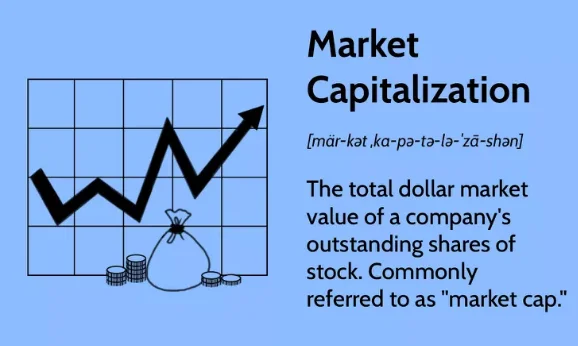
Market capitalization, also known as market cap, is a metric used to determine how much a firm is worth overall on the stock market. It is determined by dividing the current stock price of the company by the total number of outstanding shares. Market capitalization gives an overview of a company’s value and enables investors to evaluate it in relation to competing firms.
How Important Market Capitalization Is
Market capitalisation is important for a number of financial research and investing processes. Here are some main arguments in favour of market cap as a crucial indicator:
1.Dimension and size
The market capitalisation of a corporation can be used to estimate its size and scope. It offers a rapid evaluation of a company’s large-cap, mid-cap, or small-cap stock status. This categorization aids investors in assessing the rewards and risks of a particular investment in a company.
2.Investment Techniques
A common criterion for investment strategies is market capitalization. Different investment strategies, like growth investing or value investing, could concentrate on businesses with a range of market caps. Investors can tailor their investment strategy by studying the market capitalization of a company.
3.Market Indices
The composition of market indices is largely influenced by market capitalisation. Companies are included in well-known indices like the S&P 500 and Dow Jones Industrial Average according to their market capitalization. Since these indices are more significantly impacted by companies with greater market capitalisation, they serve as crucial benchmarks for investors and investment managers.
Market Capitalization Subtypes
Large-cap, mid-cap, and small-cap are the three primary divisions of market capitalisation. Let’s look more closely at each category:
1.Large Cap
Market capitalisation for large-cap corporations is typically greater than 1000 Crore. These businesses are frequently well-established, financially secure, and well-known. Apple, Microsoft, and Amazon are a few examples of large-cap firms. Large-cap stocks are typically seen as less risky investments since they frequently have established markets and a history of reliable performance.
2.Mid Cap
Market capitalisation for mid-cap corporations ranges from 200 crores to 1000 Crore.These businesses are growing and have the potential to develop significantly. Mid-cap stock investing provides a balance between risk and possible gain. Shopify, Square, and Zoom Video Communications are some examples of well-known mid-cap enterprises.
3.Smalll-Cap
Market capitalisation for small-cap firms is less than 200 crores . These businesses, which are frequently at the beginning stages of expansion, might present excellent investment prospects. Small-cap stock investing, however, can be riskier and more volatile. Lemonade, Zscaler, and Farfetch are a few examples of small-cap enterprises.
Market capitalization influences
The market capitalization of a corporation can be impacted by numerous variables. These aspects must be taken into account while assessing investment prospects. The following are important things to bear in mind:
Financial Results: A company’s market capitalization can be strongly impacted by its financial performance, including revenue growth, profitability, and cash flow. Strong financial performance frequently draw investors, increasing market capitalization.
Market and Industry Trends: Market capitalisation can be influenced by industry and market dynamics. Market valuations for businesses involved in fast-growing industries or cutting-edge technology developments are generally higher.
Investor attitude: Market capitalisation can be significantly impacted by investor emotion and market perception. A company’s market cap may increase due to favourable news, new products, or business alliances, while it may decrease due to unfavourable developments or unfavourable investor sentiment.
Market Position and Competition: Market capitalization can be impacted by industry competition as well as a company’s position in the market in comparison to its competitors. Companies that rule their respective marketplaces or upend entire sectors frequently fetch higher valuations.
Conclusion
A crucial indicator that sheds light on a company’s worth and size is market capitalization. Investors can make wise investing decisions if they comprehend the idea of market capitalization and its importance. If you’re thinking about large-, mid-, or small-cap companies, understanding market size can help you weigh the rewards and dangers. To successfully negotiate the volatile financial markets, stay aware of the elements determining market capitalization.
Star Housing Finance’s shares rose 3% to Rs 46.75 on Wednesday, giving the business a market valuation of more than Rs 350 crore.
Star Housing Finance shares rise after management rejig, expansion plans
The multibagger home finance provider is trying to improve its position in Western India, particularly Rajasthan, and has just restructured its senior management.
The BSE-listed rural oriented home finance player has appointed Kalpesh Dave as CEO and Anoop Saxena as COO, accelerating its growth trajectory and strengthening its position in the market, the business said in an exchange filing.
Star Housing Finance’s shares rose 3% to Rs 46.75 on Wednesday, giving the business a market valuation of more than Rs 350 crore.
The stock has returned 50% since hitting a 52-week low of Rs 31.26 on July 1, 2022. From its Covid-19 lows, the stock has returned 300 percent.
The decision to expand into larger premises in Jaipur is a testament to the company’s outstanding successin the previous year and continuous progress in the current fiscal year, according to an exchange filing.
“This expansion is consistent with Star HFL’s strategic plans to capitalise on the enormous potential of Rajasthan’s rural housing finance sector.”
Star HFL, headquartered in Mumbai, has been designated as a principle lending institution (PLI) under the Pradhan Mantri Awas Yojana (PMAY). Star HFL is a rural-focused housing financing firm that operates in rural and semi-urban areas to assist first-time EWS/LIG house buyers with the acquisition or construction of low-cost housing units.
Cyient DLM is selling its shares at a price range of Rs 250-265 per share, with a lot size of 56 equity shares. The sale will end on Friday, June 30.
Cyient DLM IPO booked 4.4 times on day 2 so far; retail portion subscribed 15.9x
Investors bid for 5,88,34,048 equity shares, or 4.41 times, according to BSE statistics, compared to the 1,33,32,297 equity shares offered for subscription by 12 noon on Wednesday, June 28, 2023 (Day 2).
Cyient DLM’s Rs 592 crore initial public offering (IPO) continued to witness significant interest from investors on the second day of the bidding process.
The allocation for individual investors was filled 15.91 times, while the allocation for non-institutional bidders was filled 6.20 times.
Only 4% of the allocations were reserved for qualified institutional bidders, while 62% were reserved for employees.
The issue was completed in a little more than three hours on day one, with an overall subscription of 2.65 times.
“Over the FY 21-23 period, Cyient DLM’s revenue growth lags peers at 15% CAGR, but its strong order book provides decent visibility of accelerated growth in the future.”
With Cyient’s solid parentage and a long history of industry competence, an experienced Board and senior management team, and a subscribe tag, the firm is well prepared to cater to possibilities in the sector,” stated Hem Securities.
Mutual funds are one of the best ways to save and invest money for future returns. Several mutual funds are available based on market capitalization and risk tolerance.
If you are a beginner who is just getting started in the stock market, you may come across stock market jargon such as large-cap funds, mid-cap funds, blue chip companies, and many more. Let us start with the fundamentals and define market capitalization.
Understanding Market Capitalization
Market capitalization refers to the market value of all the shares owned by a company’s shareholders. The stock market determines a company’s worth.
It is also defined as the sum of all outstanding shares’ market value. It is calculated by multiplying the total number of outstanding shares of a company by the current market price of one share, also known as the ‘market cap’.
What are large-cap, mid-cap, and small-cap companies, and how do they differ? SEBI (Securities Exchange Board of India) established regulations in 2017 to classify companies based on their market capitalization.
The differences in these market capitalizations are now detailed below.
Large-cap Companies
The SEBI has developed company classification criteria. Large-cap companies are the top 100 publicly traded companies in the United States based on market capitalization. ‘Large-cap funds’ refer to mutual funds that invest in large-cap companies.
Large-cap companies typically have a strong track record. These companies have a significant market value (market cap). These are also referred to as ‘blue-chip stocks’. These companies have a market capitalization of Rs.20000 crores or more and a strong market presence.
Mid-cap Companies
SEBI established a rule in 2017 that defines mid-cap companies as those with market capitalizations ranging from 101 to 25000 crore. rupees. These companies’ market capitalizations will range between Rs.5000 and Rs.20000 crores. ‘Mid-cap funds’ are mutual funds that invest in mid-cap stocks.
Mid-cap companies have a similar track record to large-cap companies, but the difference is noticeable. Mid-cap funds take on more risk than large-cap funds. Due to their limited market presence, mid-cap companies may or may not be included in broad market indexes.
Small-cap Companies
Small-cap companies are defined as those ranked 251st or lower in terms of market capitalization. These companies have a market capitalization of less than Rs.5000 crores. ‘Small-cap funds’ are mutual funds that invest in small-cap stocks.
Small-cap companies do not have a long history. A start-up or a company in development, for example, can fall into the small-cap sector. Because of their small market presence, these companies are rarely included in broad market indices.
Let us examine the distinctions between Large-cap, Mid-cap, and Small-cap funds in terms of risk profile, liquidity and volatility, as well as returns and growth.
Differences Between Large, Mid and Small-Cap Funds
Here is the difference between small cap mid cap and large cap based on various factors-
RISK PROFILE
Large-cap funds
Large-cap funds have a lesser risk profile compared to the others. In large-cap funds, they invest in stocks that are in the top 100 companies. For example, Nifty 50 stocks.
Mid-cap funds
Mid-caps are slightly riskier than large-cap stocks and less risky than small-cap stocks.
Small-cap funds
Small-cap stocks are riskier than the other two. Despite the risk, these stocks have great growth potential.
LIQUIDITY AND VOLATILITY
Large-cap funds
Large-cap funds are usually less volatile unless there is some news. They are stable and provide good liquidity and good returns.
Mid-cap funds
Mid-cap funds have moderate volatility and moderate liquidity.
Small-cap funds
Small-caps stocks are more volatile and have less liquidity.
RETURNS
Large-cap funds
Large-cap offers a steady and consistent return, and they have less volatility. They have provided an average return of 7% in the past 5 years.
Mid-cap funds
The average returns of mid-caps from the past 5 years were around 10.28%. They offer better returns compared to large-cap funds.
Small-cap funds
Despite being the highest risk scheme, they offer very good returns. The average of the last 5 years has been 14.74%.
Who Should Invest in Small Cap Vs Mid Cap Vs Large Cap?
Large-cap funds
For conservative investors who are looking for long-term returns, a large-cap is the best option. If you are not expecting an aggressive return, you can go with large-cap funds.
Mid-cap funds
The risk involved in mid-cap funds is slightly higher than in large-cap funds. This is suitable for investors who are moderate risk-tolerant with a long-term investment horizon.
Small-cap funds
These are best for short-term investors. Aggressive investors with high-risk tolerance can go for these funds. Good research is required before investing in a small-cap fund.
GROWTH
Large-cap funds
These companies have a good reputation and higher chances of generating stable returns.
Mid-cap funds
Moderate potential for growth.
Small-cap funds
Considered to have more growth potential than large and mid-cap fund
Key Takeaways to Get from the Difference Between Large Cap, Mid Cap, And Small Cap Funds
Large-cap funds are less risky than small and mid-cap funds.
Small and mid-cap funds have higher growth potential than large-cap funds.
Large-cap funds are good for conservative investors.
Mid and small-cap funds are suitable for medium-risk takers to aggressive investors.
Select equities, according to experts, could be purchased on dips, but there are better possibilities, such as manufacturing, capex-led enterprises, and banking.
Infosys, TCS, Wipro: These Nifty IT stocks destroyed wealth in last 2 years. Is it time for bottom fishing?
Despite the current recession in the United States and Europe, the country’s information technology (IT) majors have lagged the benchmark equity indices over the last two years. According to data, four companies in the Nifty IT have drained investors’ wealth since June 2021.
Wipro was the index’s biggest loss, falling 30.11 percent. The company’s shares fell to Rs 382.60 on June 27, 2023, from Rs 547.40 on June 28, 2021.
During that time, the NSE IT index fell by 0.92 percent, while the NSE Nifty index increased by 19 percent.
The index’s other notable losers were Infosys (down 18.62%), Mphasis (down 10.25%), and Tata Consultancy Services (down 4.18%).
“In the last 12-15 months, earnings estimates for Indian IT companies have been reduced, and premium valuations have normalised to long-term average valuation multiples.”
However, given to global concerns and further downward revisions in consensus profit projections, the underperformance could persist in the near future,” Dua noted.
On the other hand, Persistent Systems shares surged the most in the Nifty IT index. The stock rose 81% to Rs 4,891.90 a share on June 27, 2023, from Rs 2,702.25 on June 28, 2021.
“IT is looking reasonable; however, mid-cap IT is looking even better,” said Sandeep Raina, Head of Research at Nuvama Professional Clients Group. However, one must recognise that there are better possibilities, such as manufacturing, capex-led enterprises, and banking.”
YES Bank share price: The 14-day relative strength index (RSI) for the stock was 48.85. A value less than 30 is considered oversold, while a value more than 70 is considered overbought. The stock of the corporation has a price-to-equity (P/E) ratio of 64.33. It has a price-to-book ratio (P/B) of 1.13.
YES Bank shares up 25% in a year; what’s next: Rs 14 or Rs 20?
YES Bank Ltd shares have increased by about 25% in the last year. Nonetheless, the stock has dropped approximately 26% year to date (YTD). It was last seen selling 0.06 percent higher today at Rs 16.06.
At this price, it was 35.11 percent lower than its one-year high of Rs 24.75, which was reached on December 14, last year. Nonetheless, it has risen 27.87% since its 52-week low of Rs 27.86 on July 1, 2022.
According to the technical setup, analysts believe the stock is ‘bearish’. The counter could find support at Rs 15.70, followed by Rs 15, Rs 14.50, and Rs 14.
In terms of levels, the stock is likely to find immediate opposition from the 200-SMA (Simple Moving Average), which is located around the Rs 17-odd zone, followed by a negative gap of Rs 18.60-19.65 in the same period.
In the short term, a daily close above this resistance could lead to a goal of Rs 19.80. The support level will be Rs 15.70.”
investors should take advantage of this opportunity to liquidate the stock because there could be another correction in the coming weeks, pushing the counter much lower to Rs 15 levels.”
“YES Bank is trading at an important level of Rs 16 and right now it’s looking bearish,” stated VLA Ambala, Research Analyst at Stock Market Today.
CONCLUSION
Furthermore, rating agency Moody’s maintained its ratings on four of YES Bank’s instruments while granting the private lender a’stable’ credit outlook. Moody’s reaffirmed YES Bank’s long-term foreign currency issuer rating of Ba3, long-term (local and foreign currency) deposit rating of Ba3, baseline credit assessment (BCA) and adjusted BCA at b1, and senior unsecured (Foreign Currency) medium-term note programme rating of (P)Ba3.
In this comprehensive guide, we will delve into the world of large cap stocks and investigate their potential for investors looking for stability and long-term growth. We understand the importance of providing valuable insights and actionable information to help you make informed investment decisions as a leading authority in the field of finance and investing. Whether you are an experienced investor or are just starting out, this guide will provide you with the knowledge you need to navigate the world of large cap stocks and potentially outperform your competitors.
Large Cap stocks
Understanding Large Cap Stocks
Large cap stocks are companies with a high market capitalization, typically greater than $1000 billion. These businesses are frequently well-established, well-known players in their respective industries. Investing in large cap stocks has several advantages, including stability, liquidity, and the possibility of receiving consistent dividend payments. Investors can mitigate some of the risks associated with smaller, less-established companies by focusing on companies with a proven track record and significant market presence.
Key Benefits of Investing in Large Cap Stocks
Stability and Reliability: Large cap stocks are known for their consistency and dependability, making them an appealing option for conservative investors. These businesses have typically weathered economic downturns, demonstrating resilience and adaptability to changing market conditions. Investing in large cap stocks can provide a sense of security because you are investing in companies that have a track record of success.
Liquidity: The high liquidity of large cap stocks is one of their primary advantages. These stocks are actively traded and have a large number of buyers and sellers in the market due to their large market capitalization. This liquidity enables investors to easily enter and exit positions, ensuring that their investments are not trapped in illiquid assets.
Dividend Income: Many large-cap stocks are well-known for paying out consistent dividends. These firms frequently have consistent cash flows and a strong commitment to returning value to shareholders. Investors can benefit from regular dividend income by investing in large cap stocks, which can be reinvested or used to supplement overall investment returns.
Strategies for Investing in Large Cap Stocks Successfully
To increase your chances of success when investing in large cap stocks, you must take a methodical approach and use tried-and-true strategies. Consider the following key strategies:
Fundamental Analysis When evaluating large cap stocks, thorough fundamental analysis is critical. Examining a company’s financial statements, analyzing its competitive positioning, and assessing its growth prospects are all part of this process. Investors can make informed decisions about a company’s future growth and profitability by understanding its underlying fundamentals.
Diversification Diversification is a fundamental investing principle that also applies to large cap stocks. You can reduce the impact of any individual company’s performance on your overall portfolio by spreading your investments across different sectors and industries. Diversification reduces risk and increases the possibility of long-term consistent returns.
Long-Term Perspective Investing in large cap stocks necessitates a long-term outlook. While there may be short-term market fluctuations, it is critical to focus on the underlying fundamentals of the companies in which you invest. Long-term investing allows you to ride out market volatility while potentially benefiting from the compounding effects of growth and dividend reinvestment.
Regular Monitoring and Review It is critical to regularly monitor your investments and review your portfolio to ensure that your strategy remains aligned with your financial goals. Keep up with company news, industry trends, and market developments that may have an impact on your investments. You can make timely adjustments to your portfolio if you stay informed.
Pros of Large Cap Stocks
Stability: Large cap stocks are more stable than smaller, riskier stocks. These firms are frequently well-established, with a proven track record of success, giving investors a sense of stability and lower volatility.
Market Presence: Large cap stocks typically have a strong market presence as well as brand recognition. Their products or services are well-known, and they frequently rule their respective industries. This market dominance can translate into a competitive advantage and a better chance of long-term success.
Liquidity: Large cap stocks have high trading volumes and liquidity due to their large market capitalization. This means that investors can easily buy and sell these stocks without affecting the market price significantly. Liquidity provides flexibility and allows investors to enter and exit positions quickly.
Dividends Payments: Many large-cap stocks have a history of paying dividends to shareholders. These dividends can provide investors with a consistent stream of income, making large cap stocks appealing to income-focused investors such as retirees or those looking for regular cash flow from their investments.
Access to Institutional Investors: Large cap stocks are frequently included in major market indexes like the S&P 500. Because of this inclusion, institutional investors like mutual funds and pension funds are more likely to invest in these stocks. The presence of institutional investors can help to boost demand and liquidity.
Cons of Large Cap Stocks
Slower Growth: While large cap stocks provide stability, they may experience slower growth than smaller, more agile businesses. The larger the company, the more difficult it is to maintain high growth rates. Investors looking for rapid growth may need to look beyond large cap stocks.
Lower Risk-Reward Ratio: Because large cap stocks are more stable in general, they may have lower risk-reward ratios than smaller stocks. While this may benefit conservative investors, it may limit the potential for significant capital appreciation over a shorter time frame.
Limited Agility: Large cap companies frequently face difficulties in quickly adapting to market changes or implementing innovative strategies. Bureaucracy and a more complex decision-making process can impede their ability to respond quickly to emerging trends, potentially leading to missed opportunities.
Market Saturation: In some industries, large cap companies may face market saturation, making significant growth difficult. Large cap stocks may find it difficult to maintain high levels of expansion as their markets mature and become highly competitive.
Potential Regulatory Scrutiny: Due to their size and market influence, large cap companies may face more regulatory scrutiny than smaller companies. Increased regulations or legal challenges can have an effect on their operations, financial performance, and, eventually, stock prices.
Conclusion
Investing in large cap stocks provides a number of benefits, including stability, liquidity, and the possibility of consistent dividend income. You can position yourself for stock market success by understanding the unique characteristics of large cap stocks and implementing proven investment strategies. Remember to conduct thorough fundamental analysis, diversify your portfolio, keep a long-term perspective, and monitor your investments on a regular basis. You are now well-equipped to navigate the world of large cap stocks and potentially outperform your competitors.
The classification of a company’s stocks is determined by its market capitalization. Such classification is variable and can change as a company’s market valuation changes.
Mid Cap Stocks
Understanding Mid-Cap Stocks
Mid-cap stocks have a market capitalization of between$200 Crore and $1000crore These businesses are frequently in a growth phase, looking to expand their operations and gain a larger market share. Mid-cap stocks offer an excellent balance between the stability of large-cap stocks and the growth potential of small-cap stocks.
Benefits of Investing in Mid-Cap Stocks
Growth Potential: Mid-cap stocks are well-known for their high growth potential. Because these companies are still growing, they have plenty of room for expansion in their respective industries. By investing in mid-cap stocks, you position yourself to benefit from their upward trend, which has the potential to generate significant returns over time.
Market Opportunity: Mid-cap companies frequently operate in niche markets or emerging industries, providing investors with one-of-a-kind investment opportunities. These firms are adaptable and have the potential to alter existing market dynamics. You can profit from these market opportunities by identifying mid-cap stocks with promising business models and growth prospects.
Lower Valuations: Mid-cap stocks are typically undervalued when compared to large-cap stocks. This is due to the market’s preference for larger, more established firms. The lower valuations of mid-cap stocks allow investors to purchase shares at a more appealing price, increasing the potential for capital appreciation.
Diversification: Mid-cap stock investing allows for effective portfolio diversification. You spread your investment risk across different market segments by including mid-cap stocks alongside large-cap and small-cap stocks. This diversification strategy can help to reduce the impact of market volatility while also improving overall portfolio performance.
Strategies for Investing in Mid-Cap Stocks
Thorough Research and Analysis It is critical to conduct extensive research and analysis before investing in any mid-cap stock. Examine the financial health, competitive advantage, growth prospects, and management team of the company. Look for mid-cap stocks that have a proven track record of revenue and earnings growth, as well as long-term business models.
Industry and Market Analysis Learn about the industry dynamics and market trends affecting the mid-cap stocks you’re considering. Examine the competitive landscape, market share, and potential entry barriers. Keep abreast of industry news, economic indicators, and regulatory changes that may have an impact on the performance of your investments.
Fundamental Analysis Assess the intrinsic value of mid-cap stocks using fundamental analysis techniques. Take into account the price-to-earnings (P/E) ratio, the price-to-sales (P/S) ratio, and earnings per share (EPS). Compare these metrics to industry averages to identify stocks that are undervalued or overvalued.
Technical Analysis Incorporate technical analysis tools into your mid-cap stock investments to identify entry and exit points. To spot patterns and understand stock price movements, use charts, trend lines, and key technical indicators. This analysis can assist you in making sound investment decisions.
Long-Term Investment Approach While mid-cap stocks can provide short-term gains, investing for the long term is often more prudent. These stocks may take some time to reach their full potential for growth. You can maximize the value appreciation of quality mid-cap stocks by holding them for an extended period of time.
Pros and Cons of Mid-Cap Stocks
Pros of Mid-Cap Stocks
Growth Potential: Mid-cap stocks are well-known for their growth potential. These businesses are expanding in order to gain a larger market share. Mid-cap stocks allow investors to participate in the company’s growth while potentially earning large returns.
Market Opportunity: Mid-cap companies frequently operate in niche markets or emerging industries. These firms have the agility and potential to disrupt existing market dynamics, providing investors with one-of-a-kind investment opportunities.
Lower Valuations: Mid-cap stocks are frequently undervalued when compared to large-cap stocks. The market focuses on larger, more established companies, resulting in lower valuations for mid-cap stocks. This can be advantageous for investors looking to purchase stocks at low prices.
Diversification: Including mid-cap stocks in an investment portfolio can help with diversification. Investors can spread their risk and potentially improve overall portfolio performance by diversifying across market segments such as large-cap, mid-cap, and small-cap stocks.
Cons of Mid-Cap Stocks
Higher Volatility: Mid-cap stocks can be more volatile than large-cap stocks. Mid-cap stocks may be more sensitive to market fluctuations, economic conditions, or company-specific news due to their lower market capitalization. This increased volatility may result in larger price swings and, as a result, higher investment risk.
Concerns about liquidity: Mid-cap stocks may have lower trading volumes than large-cap stocks. Lower liquidity can make it more difficult to buy or sell shares at desired prices, especially during periods of market stress or low trading volumes.
Information Availability: Mid-cap stock information may not be as readily available as large-cap stock information. This can make it more difficult for investors to collect comprehensive data and conduct extensive research before making investment decisions.
Higher Risk of Business Failure: Mid-cap companies are still in a growth phase, and not all will meet their expansion targets. When compared to more established large-cap companies, mid-cap stocks carry a higher risk of business failure.
Conclusion
Investing in mid-cap stocks can be a profitable strategy for those looking for a good mix of growth potential and stability. Remember to do extensive research, analyze market trends, and use fundamental and technical analysis techniques. You can position yourself for success in the world of mid-cap stock investing by implementing these strategies.
Remember that staying informed and adapting your strategy as market conditions change is the key to successful investing. Congratulations on your investment!