
Learning sharks-Share Market Institute


Rajouri Garden  8595071711 7982037049  Noida 8920210950 , and  Paschim Vihar  7827445731  

Fee revision notice effective 1st Jan 2026; No change for students enrolled before 15th Jan 2026

Download “Key features of Budget 2024-2025here

Comprehensive Guide to Effective Risk Management in the Stock Market

Risk management is the process of identifying, assessing and controlling financial, legal, strategic and security risks to an organization's capital and earnings.
Risk Management in Stock Market

Introduction

Risk management is critical in the stock market. The stock market is a naturally volatile environment in which risks can arise from a variety of sources, including market trends, economic conditions, company performance, and geopolitical events. As a result, investors must have a well-defined risk management strategy in place to help them mitigate potential losses and maximize returns.


Investors can make informed investment decisions and reduce the impact of market fluctuations on their portfolios by implementing risk management techniques. In this context, the purpose of this essay is to investigate the concept of risk management in the stock market, its significance, and the various strategies that investors can employ to effectively manage risk.

Understanding Risk in the Stock Market

Defining Risk

In the context of the stock market, risk refers to the possibility of loss or fluctuation in investment value. It is influenced by a variety of factors, including market volatility, economic conditions, company-specific events, and geopolitical influences. As an investor, you must recognize and assess these risks in order to protect your capital and maximize your returns.

Types of Risks in Stock Market Investing

  1. Market Risk: Market risk is caused by macroeconomic factors such as interest rates, inflation, and market conditions in general. It affects all securities and is impossible to completely eliminate. Diversification and asset allocation, on the other hand, can help to mitigate its impact.
  2. Company-Specific Risk: This type of risk is related to specific businesses and their operational, financial, or management issues. Poor earnings, legal disputes, or changes in leadership can all have a significant impact on a company’s stock price.
  3. Liquidity Risk: Liquidity risk refers to the difficulty of buying or selling shares without causing significant price changes. Liquidity risk is higher in stocks with low trading volumes and few market participants.
  4. Regulatory Risk: Changes in regulations or shifts in government policies can have a significant impact on stock prices. Investors must keep up to date on regulatory developments that may affect their investments.
  5. Currency Risk: Currency risk occurs when investing in foreign markets because fluctuations in exchange rates can affect investment returns. When considering international investments, it is critical to assess currency risk.

Key Strategies for Effective Risk Management

1. Diversify Your Portfolio

Diversification is a fundamental risk-management strategy that entails spreading investments across various asset classes, industries, and geographical regions. You can reduce the impact of individual stock or sector-specific risks by diversifying your portfolio. It is recommended that you diversify your investments across stocks, bonds, commodities, and other asset classes based on your risk tolerance and investment objectives.

2. Conduct Thorough Research

In the stock market, knowledge is power. Conduct extensive research on companies, industries, and market trends before investing. Financial statements, annual reports, news articles, and analyst opinions can all be used to gain insight into the potential risks and rewards of various investments. This information will help you make better decisions and reduce risks.

3. Set Realistic Financial Goals

Setting clear financial objectives is critical for effective risk management. Define your investment goals, time horizons, and risk tolerance. Setting realistic goals allows you to align your investment strategy and avoid unnecessary risks. Review and update your goals on a regular basis to account for changes in your financial situation and market conditions.

4. Implement Stop Loss Orders

Stop loss orders are effective risk management tools that sell a stock automatically if it reaches a predetermined price. They assist in limiting potential losses by executing trades when the market moves against you. Stop loss orders can give you peace of mind and protect your investments during market volatility.

5. Stay Informed and Adapt

The stock market is volatile, and staying up to date on market developments is critical. Subscribing to reputable financial news sources, following industry experts, and monitoring economic indicators are all good places to start. Furthermore, remain flexible in the face of changing market conditions and adjust your investment strategy accordingly. This proactive approach will allow you to detect and respond to potential risks in real time.

How Does Risk Management Work?

Risk management involves identifying potential risks, assessing their likelihood and potential impact, and implementing risk-mitigation or risk-aversion strategies.

Several steps are usually involved in the risk management process:

  1. Risk Identification: The first step in risk management is identifying potential risks to the investment portfolio. This can be accomplished through a variety of methods, including historical data analysis, market research, and expert opinions.
  2. Risk Assessment: After identifying potential risks, they are evaluated based on their likelihood of occurrence and potential impact on the investment portfolio. This step entails determining the severity of the risk and the likelihood of its occurrence.
  3. Risk Evaluation: Once the risks have been assessed, they are ranked in order of priority and importance. This step entails determining which risks are the most critical and must be addressed immediately.
  4. Risk Treatment: The final step in the risk management process is to put in place strategies to mitigate or avoid the risks that have been identified. Diversification, hedging, and active portfolio management are all methods for accomplishing this.

Conclusion


Finally, risk management is an important aspect of stock market investing. Because the stock market is inherently volatile and rife with risks, implementing a well-defined risk management strategy is critical for mitigating potential losses and maximizing returns. The importance of risk management in the stock market cannot be overstated, as it allows investors to navigate the market’s complexities and achieve their investment goals while maintaining some control over their portfolios. Investors can maximize their returns and achieve long-term financial success by prioritizing risk management in their investment strategy.

FOR MORE INFO CLICK THIS SITE:https://learningsharks.in/

FOLLOW OUR PAGE:https://www.instagram.com/learningsharks/?hl=en
PVRINOX share price today! Gst update from 18% to 5%

p

While the entertainment industry is not loyal, people enjoy visiting the theatre. If you happen to invest in this share, this might be the right time to have a look at the GST update.

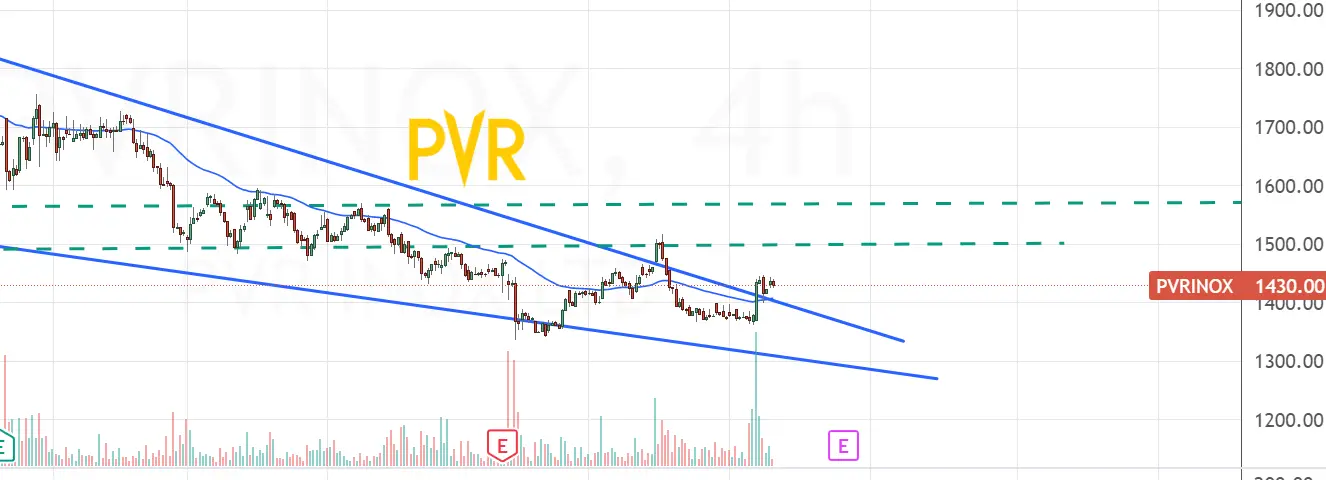
Currently, The stock is trading at 1430, and majorly falling in a falling wedge pattern. If you do not know what is falling wedge pattern, click here to learn from our ” stock market chart patterns” page.

PVRINOX

Let’s look at the fundamentals of this stock.

Profit & Loss

Consolidated Figures in Rs. Crores / View StandalonePRODUCT SEGMENTS

Mar 2012Mar 2013Mar 2014Mar 2015Mar 2016Mar 2017Mar 2018Mar 2019Mar 2020Mar 2021Mar 2022Mar 2023
Sales +5188061,3481,4771,8502,1192,3343,0863,4142801,3313,751
Expenses +4416881,1331,2711,5511,7991,9332,4992,3386161,2252,703
Operating Profit761192152062993204015871,076-3361061,048
OPM %15%15%16%14%16%15%17%19%32%-120%8%28%
Other Income +106112455230323846932668
Interest18378078848184128482498498572
Depreciation365694117115138154191542575614753
Profit before tax3132521214515319429990-939-681-209
Tax %18%-39%4%7%32%37%36%37%70%20%28%-61%
Net Profit +25445012999612418927-748-489-336
EPS in Rs9.0810.4712.712.8619.5819.0824.8437.814.95-123.07-80.04-34.20

Although fundamentals do not play a vital role in a single-day movement, this upcoming move could be news driven. As of now, the price is 1426, PVRINOX can touch up to 1577 which is about 10% from here.

Disclaimer: This is a buying call, we are not authorised to give any tips. This is merely for an educational purposed, do your research properly before entering.

#pvrinox #pvrinoxshareprice #stockmarket #stockmarketnews

10 Best YouTube Channels to Learn About Indian Stock Market in 2023!

List of the Top YouTube Channels for Stock Market Education: A stock market is a common option for people who want to build up their money over time. To succeed in the stock market, you must first comprehend how it operates before taking the appropriate actions to increase your profits.

Those who are inexperienced with the Indian stock market may find it challenging to obtain their bearings. The procedure can be made easy and uncomplicated with the help of the top YouTube channels for learning the stock market. New investors should familiarise themselves with the basics of the stock market before starting to invest.

You may increase your understanding of the stock market by watching these YouTube videos while lounging on the couch. One of the most well-known and well-liked websites on the Internet right now is YouTube. The number and calibre of videos on YouTube are extraordinary, and you might be astonished to find that they post 300 hours of video per minute.

List of Best YouTube Channels To Learn Share Market

All skill levels, including beginners, intermediates, and experts, can find content on YouTube. If they are interested in investing, beginners can learn about the basics of the stock market and where to put their money. You can browse for more helpful videos if you already know everything and want to become an expert.

You can watch as many videos as you want on YouTube, and it’s actually not possible to see them all. By subscribing to several financial market-related YouTube channels, you may stay up to date on the most recent news and happenings.

In no particular order, the following Ten YouTube Channels are the top ones to watch to learn about the Indian stock market:

1. Convey by FinnovationZ

Covey by Finnovationz, the #1 YouTube channel for learning about the Indian stock market, is run by Prasad Lendwe. Videos on financial management are available on this channel, along with courses and book summaries on the stock market and mutual funds. The 2.12 million subscribers to FinnovationZ’s channel have viewed more than 270 million of its more than 320 videos.

The majority of the programmes on this channel are in Hindi, however they are very easy to understand. There aren’t many better locations than this one to master the basics of stock market investing. These aspects make this channel one of the top YouTube stock market channels.

Click on this Youtube channel: https://www.youtube.com/@namaskarprasad/about

2. Trade Brains

One of the greatest share market channels in India and a well-known financial education platform for online stock market learning is Trade Brains. Over 250 films on trading and investing in the stock market are available on Trade Brains’ YouTube channel. Additionally, they provide a range of seminars and courses on subjects like technical analysis, stock trading, signals, and much more. You’ll learn a lot whether you’re a beginner, an expert, or somewhere in between.

Click on this Youtube channel:https://www.youtube.com/@TradeBrains

3. Pranjal Kamra

He is a well-known YouTuber with a channel devoted to financial planning, stock market education, career guidance, and other related subjects. He refers to his one-of-a-kind approach to teaching issues to his 1.25 million subscribers as “Kamra’s Finology.”

He makes sure to simplify complex market jargon in his films by breaking them down into simpler terms. The principles will be simpler to understand for those who are new to the stock market. He teaches you how to trade more effectively and the importance of saving and investing. It is considered to be the top YouTube channel for the Indian stock market as a result.

Click on this Youtube channel:https://www.youtube.com/@pranjalkamra

4. Sunil Miglani

He is a well-known expert on the psychology of the stock market. He has also decided to use these ideas in mentorship and life change. There will be a tonne of knowledge available on a range of stock market-related subjects, human psychology, valuations, and a Q&A session with Sunil Miglani.

Additionally, he is well-versed in stock chart patterns. With over 600 videos and over 1 million subscribers, Sunil has a sizable YouTube following. In actuality, his television appearances on financial markets are what helped him become well-known.

By subscribing to this channel, stock market beginners can learn the basics of investing.

Click in this Youtube channel:https://www.youtube.com/@SunilMinglani

5. Nitin Bhatia

He blogs as well as having a YouTube account. He is one of the top YouTubers with over 900,000 subscribers. He publishes videos on stock trading and other monetary subjects.

Nitin releases a new video every day at 9.30 p.m., and he has already published over a thousand of them. Each of his stock market films is succinct and jam-packed with insightful knowledge. His channel includes a plethora of tools for those just starting out, including how-to videos, trading rules, beginner’s guidance, and more.

Click on this Youtube channel:https://www.youtube.com/@NitinBhatia

6. Elearn Markets

Because it takes place in a virtual setting, it’s one of the greatest YouTube channels for the Indian stock market. 1000 videos and over 700,000 subscribers can be found on its YouTube account.

Because they offer information that individuals find both intriguing and easy to understand, they have a growing base of subscribers. One of Elearn markets’ most well-liked parts is “Meet the Market Rockstars”. They ask high-earning market participants about their prior experiences in this chapter.

Click on this Youtube channel:https://www.youtube.com/@Elearnmarkets

7. Trading Chanakya

Another great resource for learning about Indian stock market technical analysis is this YouTube video. By watching the videos on this channel, which are appropriate for both beginners and experts, you can learn more about the stock market and other pertinent subjects. You may expect a plethora of knowledge from the content on this channel because there are over 900 videos already available.

They average three videos every week and have close to 400 thousand subscribers. This is your best option if you’re looking for a channel containing a tonne of high-quality videos about trading strategies. Visit his YouTube page.

Click on this Youtube channel:https://www.youtube.com/@TradingChanakya

8. CA Rachana Ranade

CA This list of the top YouTube Channels to Learn Share Market includes Rachana Ranade, a well-known financial instructor. CA Rachana wants to increase financial literacy in India and provide the most simple stock market education possible. Her ten years of expertise instructing over 10,000 students in person and over 500,000 students online has inspired us to make a difference.

Click on this Youtube channel:https://www.youtube.com/@CARachanaRanade

9. Yandnya Investment Academy

Due to its outstanding knowledge on investing and the stock market, it is one of the most popular YouTube channels for the Indian stock market. Because of the lucidity of their videos, which are also available in Hindi and English, this channel is well-liked by fans. This channel offers a lot of knowledge on a variety of subjects, including taxes, mutual funds, the stock market, and others.

Nearly 200 000 videos on their YouTube channel have had over 5.5 million views, and they have 600 000 subscribers. Whiteboard videos are typically posted since they are more detailed and easier to follow.

Click on this Youtube channel:https://www.youtube.com/@InvestYadnya

10. Asset Yogi

Asset Yogi is a financial education channel on YouTube that doesn’t focus on any one area of personal finance. It makes sense that they address business, investing, and financial subjects in their videos. Asset Yogi’s goal is to make financial education accessible to all people.

You will get access to cutting-edge data and resources through this route that were previously only available to huge organisations. This channel tops our list of the Best YouTube Channels To Learn Share Market, with over 125 million views and 3.2 million subscribers.

Click on this Youtube channel:https://www.youtube.com/@AssetYogi

FOR MORE INFO CLICK THIS SITE:https://learningsharks.in/

FOLLOW OUR PAGE:https://www.instagram.com/learningsharks/?hl=en

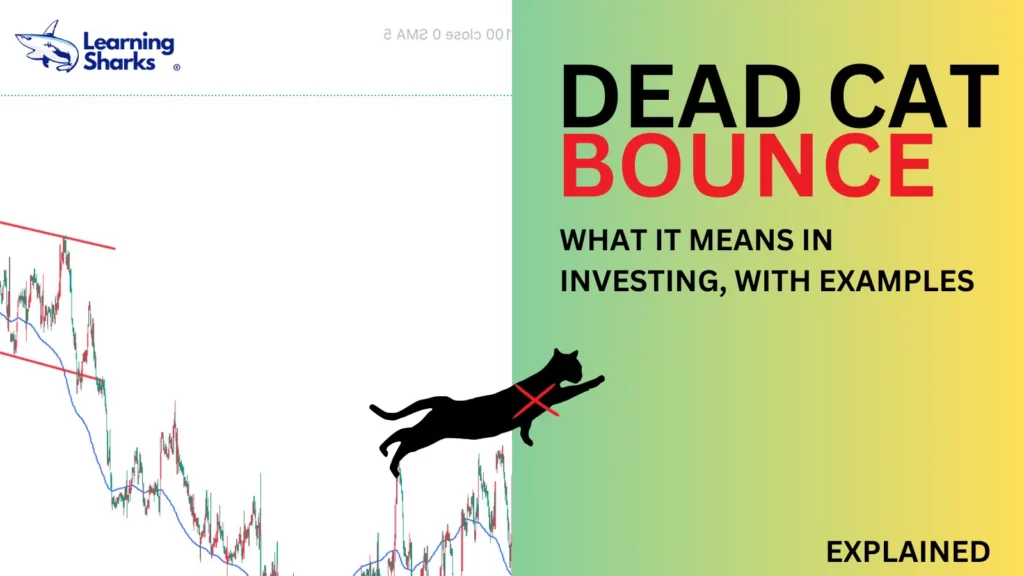
The Dead Cat Bounce: A Market Phenomenon Explained

What Is a Dead Cat Bounce? A dead cat bounce is a temporary, short-lived recovery of asset prices from a prolonged decline or a bear market that is followed by the continuation of the downtrend. Frequently, downtrends are interrupted by brief periods of recovery—or small rallies—during which prices temporarily rise. The name "dead cat bounce" is based on the notion that even a dead cat will bounce if it falls far enough and fast enough. It is an example of a sucker's rally.

Introduction

In the world of finance and investing, a wide range of market behaviour are described using a variety of terminologies. They include “dead cat bounce.” Despite having a rather strange name, this phenomena has significant ramifications for traders and investors alike. The definition of a dead cat bounce, its causes, and the appropriate responses from market participants will all be covered in this essay.

Understanding the Dead Cat Bounce

A “dead cat bounce” is a figurative term for a brief and transient rise in the price of a sinking asset or investment. By comparison, even a dead cat will momentarily bounce if dropped from a very high place. In the financial markets, a stock or index may experience a brief bounce after a steep decline, giving the impression of a potential recovery.

Causes of a Dead Cat Bounce

Numerous factors could cause a dead cat bounce.

Here are some examples of usual causes:

  • Technical adjustments may be necessary after significant declines in markets with high volatility.
  • Oversold situations can lead to short-term purchasing pressure and a temporary increase, which technical analysts can spot.
  • Investor psychology: When a stock has a sharp decrease, those looking for a good deal are lured to it because they believe the price has come to a beneficial level. This rush of buyers may lead to a brief return even if the root causes of the decline are not changed.
  • Short sellers may be forced to buy shares in order to close out their positions in a heavily shorted stock where traders bet on the price falling if there is a swift price turnaround or positive news.

Consequences for Market Participants

Traders and investors need to comprehend the dead cat bounce phenomena and its effects:

  • False Hope: A dead cat bounce can deceive investors into believing that a market or stock is about to make a robust recovery. To use caution, however, and to determine the primary reasons for the early decline.
  • Trading possibilities: Despite the dead cat bounce’s brief existence, those looking to profit from market unpredictability may find trading possibilities there. For smart traders who can exactly time their entry and exits, the price swings brought on by this phenomenon may be lucrative.
  • Risks over the long term: While a dead cat bounce may offer some solace, it is not usually a sign that the long-term trend is shifting. Investors should undertake adequate research and consider the underlying factors that led to the decline before making a decision on an investment.

Conclusion

The market term “dead cat bounce” refers to a momentary rise in the value of a declining asset. Market participants must comprehend this idea in order to prevent falling into traps and making hasty investment decisions based on brief price changes. By conducting thorough research, looking into fundamental concerns, and considering market patterns, investors can more effectively navigate the complexity of financial markets and make intelligent investment selections.

A dead cat may quickly come back to life, but it still serves as a metaphor for the need for careful research and thoughtful consideration when making investments.

Learn more about these phrases by visiting our  courses.

The idea of the dead cat bounce is frequently referenced. For more details, consult the following sources:

  1. Investopedia – “Dead Cat Bounce”: https://www.investopedia.com/terms/d/deadcatbounce.asp This article provides a comprehensive definition of the dead cat bounce phenomenon, along with examples and insights into its causes and implications.
  2. The Balance – “Understanding the Dead Cat Bounce in Stocks”: https://www.thebalance.com/dead-cat-bounce-definition-and-example-4172336 This resource offers a detailed explanation of the dead cat bounce, including its origins, characteristics, and strategies for trading during such market conditions.
  3. Seeking Alpha – “The Dead Cat Bounce”: https://seekingalpha.com/article/237438-the-dead-cat-bounce This article explores the dead cat bounce from an investor’s perspective, discussing how it can create trading opportunities and the importance of distinguishing between short-term rallies and long-term trends.
  4. Financial Times Lexicon – “Dead Cat Bounce”: https://lexicon.ft.com/term?term=dead-cat-bounce The Financial Times Lexicon provides a brief but informative definition of the dead cat bounce phenomenon and its significance in financial markets.

CHECK OUT OUT LATEST STOCK MARKET COURSES: https://learningsharks.in/share-stock-trading-courses-online/

FOLLOW OUR PAGE: https://www.instagram.com/learningsharks/

10 Most Frequently Asked Questions for Stock Market?

With the continued growth and evolution of the world economy, many individuals are becoming more and more interested in investing their money in the stock market. No matter if you’re a seasoned investor or just getting started, it’s critical to understand the stock market and its complexity. In order to help you comprehend the process, we’ve created a list of the top 10 stock market queries.

1. What is Stock Market?

On the  stock market , stocks of publicly traded companies can be bought and sold. This market is driven by a network of exchanges, including the NASDAQ and the New York Stock Exchange (NYSE). Prices for these enterprises are affected by supply and demand as well as a number of other factors, such as business performance, the release of economic data, and investor sentiment.

2. How Does the Stock Market Work?

When a company decides to go public, shares of stock are issued, and these shares are subsequently traded on a stock exchange. As an investor, you can buy these shares directly from the company or through a broker. The value of your investment will change based on how the company and the market perform.

3. What is a Stock?

A sort of ownership stake in a company is a stock, often known as a share or equity. A stock gives you ownership in a small portion of the company, the right to a portion of the profits, and the power to vote on important corporate decisions.

4. How Do I buy Stock?

You can buy stocks through a broker both offline and online. There are many different brokerages to pick from, and each offers different prices, services, and investment options. Conducting research and comparing several brokers is essential if you want to choose the best broker for your needs and objectives.

5. What is a Brokerage Account?

A brokerage account is a type of financial account that lets you buy and sell stocks, bonds, and other types of assets. A  broker can assist you in opening a brokerage account, and you can make one-time or recurring deposits into it.

6. What is Dividend?

A  Dividend  is a payment made by a company to its stakeholders, usually in the form of cash or additional shares. Dividends are paid out from a company’s profits, which can be a sizable source of income for investors.

7. What is Bull Market?

A  bull market, is a market that has experienced an extended period of rising stock prices. During a bull market, investor spirits are frequently high and the market is seen as having a significant potential for development and profitability.

8. What is Bear Market?

A bear market which is the reverse of a bull market, is characterised by a protracted period of falling stock prices. During a bear market, investor sentiment is often negative and the market is thought to be a bad place to invest.

9. What is Stock Index?

A  stock index is a statistical measure of the performance of a collection of stocks. Some of the most well-known stock indices include the Dow Jones Industrial Average, the NASDAQ Composite, and the S&P 500. These indices give investors a fast overview of the performance of the stock market and serve as a benchmark for their own investments.

10. What is an Initial Public Offering (IPO)?

Through an initial public offering (IPO), a privately held company is listed on a stock exchange. New shares of stock must be issued to the public as part of this process, and the stock must also be listed on a stock exchange.

CHECK OUT OUT LATEST STOCK MARKET COURSES: https://learningsharks.in/share-stock-trading-courses-online/

FOLLOW OUR PAGE: https://www.instagram.com/learningsharks/

10 Important Things to Consider Before Purchasing a Stock

Because you are investing your hard-earned money when you choose to purchase a stock for investment purposes, you must conduct thorough research. Finding a stock at a good price should be your objective while investing for the long run.

However, you should do extensive research, examine the stock’s fundamentals, and decide whether it fits in your portfolio before putting all of your faith in a company.

As an investor, you must do adequate research since when you buy a stock in a firm, you also become a shareholder in that business.

Ten things you should know about a company before investing in its stock are listed below.

1.Time Horizon:

Your time horizon must be established before buying a stock because it will affect whether or not you should buy it. Your investing time horizon can be short, medium, or long term depending on your financial goals.

  • Short Term: Any investment that you plan to hold for a year or less is considered short-term. You should choose dependable blue-chip stocks that pay dividends if you want to invest in a company and hold it for less than a year. The businesses are less risky and have a solid financial standing.
  • Medium Term: An investment that you plan to hold for one to 10 years is considered medium term. Invest in high-quality, low-risk stocks from emerging markets for medium-term investing.
  • Last but not least, long-term investments are ones that you plan to hold for longer than ten years. These investments have time to recover if something goes wrong and can offer a sizable return.

2.Investment Strategy:

Research a variety of investing strategies before buying a stock, then choose the one that best fits your investing philosophy.

The three fundamental types of strategies used by the top investors are as follows:

  • Value Investing-Investing in shares of stock that are undervalued relative to their competitors in the hopes of making a profit is known as value investing. This strategy has helped Warren Buffett amass huge wealth.
  • Growth Investing- Stock investments that exceed the market in terms of revenue and earnings growth are referred to as “growth investments.” Growth investors believe that these stocks’ upward trends will persist, offering them a chance to profit.
  • Income Investing: Last but not least, investors should look for top-notch stocks that pay sizable dividends. These dividends generate income that can be used for personal expenses or reinvested to increase future earnings. As a result, consider the strategy that most closely matches your investment style before buying a stock.

3. Check Fundamentals before buying a stock:

Investors should examine a stock’s fundamentals before buying it.

By comparing stock market prices to fair market value, well-known investors like Warren Buffett made a lot of money. A cheap stock, in his opinion, will eventually rise to its fair or intrinsic value.

Some of the most important ratios to look at before buying a company are as follows:

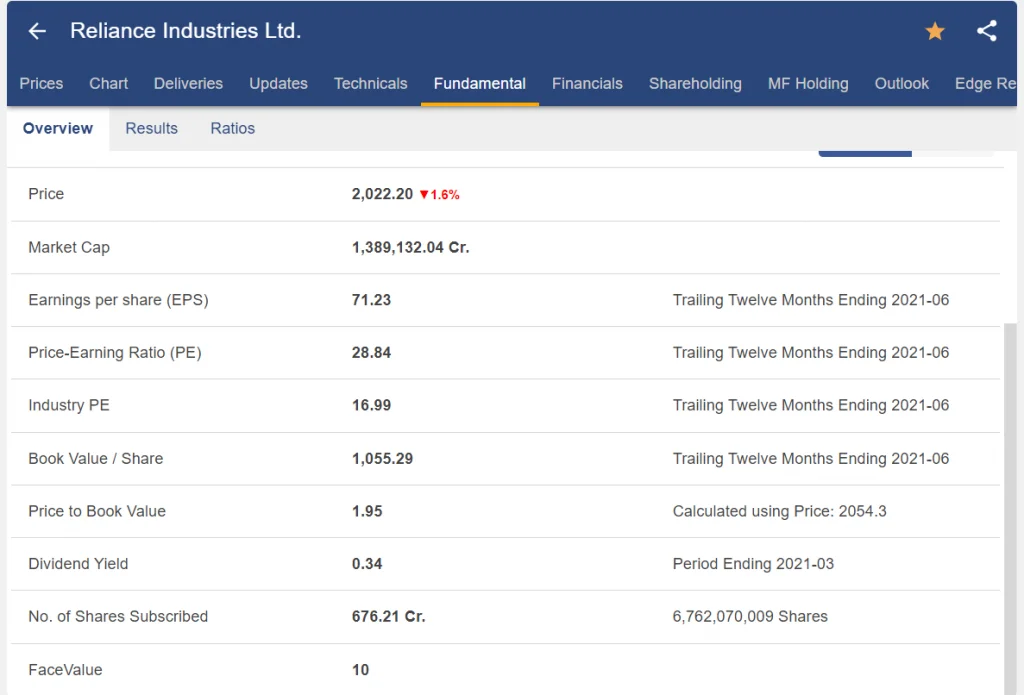
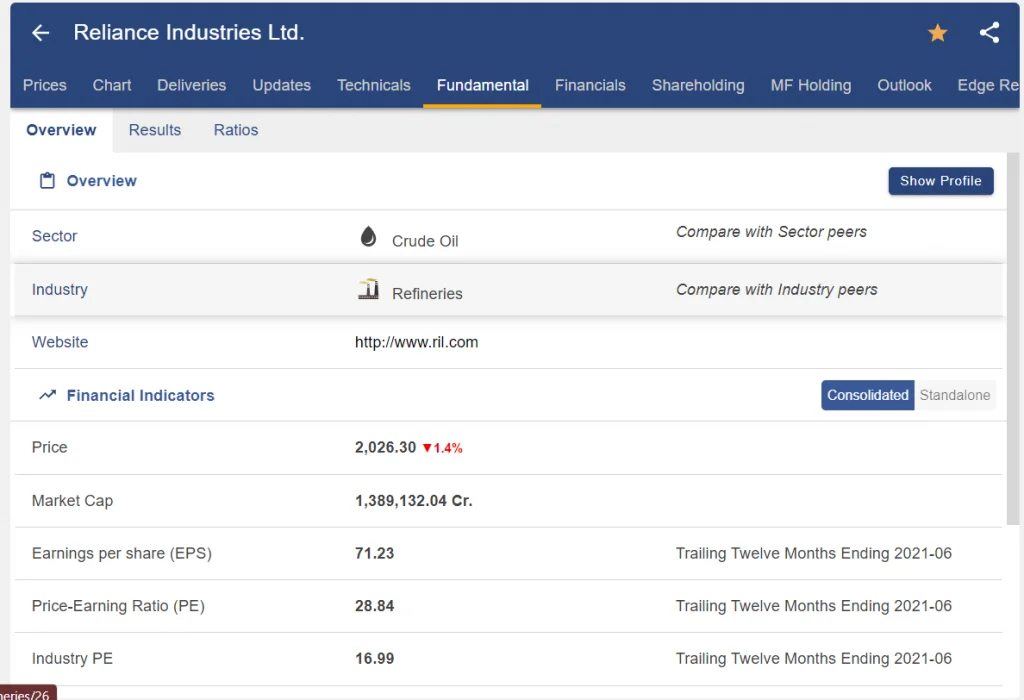
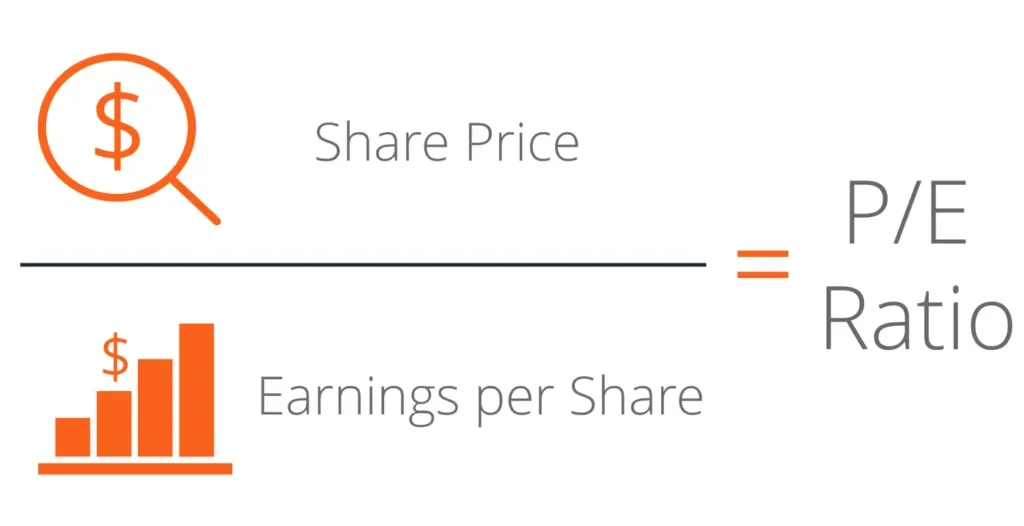
  • P/E ratio (price-to-earnings ratio):A company’s price is compared to its earnings per share (EPS) using the P/E ratio. For instance, if a corporation has a share price of 20 rupees and earns an earnings per share of 1 rupee annually, its P/E ratio is 20, meaning that the share price is 20 times the annual earnings of the company.
  • Debt to Equity Ratio: This ratio tells you how much debt the company has in relation to its equity. Being overly indebted is undesirable since it signals impending bankruptcy.
  • Ratio of Price to Book Value (P/B Ratio) :The P/B ratio divides the number of outstanding shares by the net value of the company’s assets, which is calculated by dividing the stock price by that amount.
Check Fundamentals before buying a stock

4. Stock Performance compared to its peers:

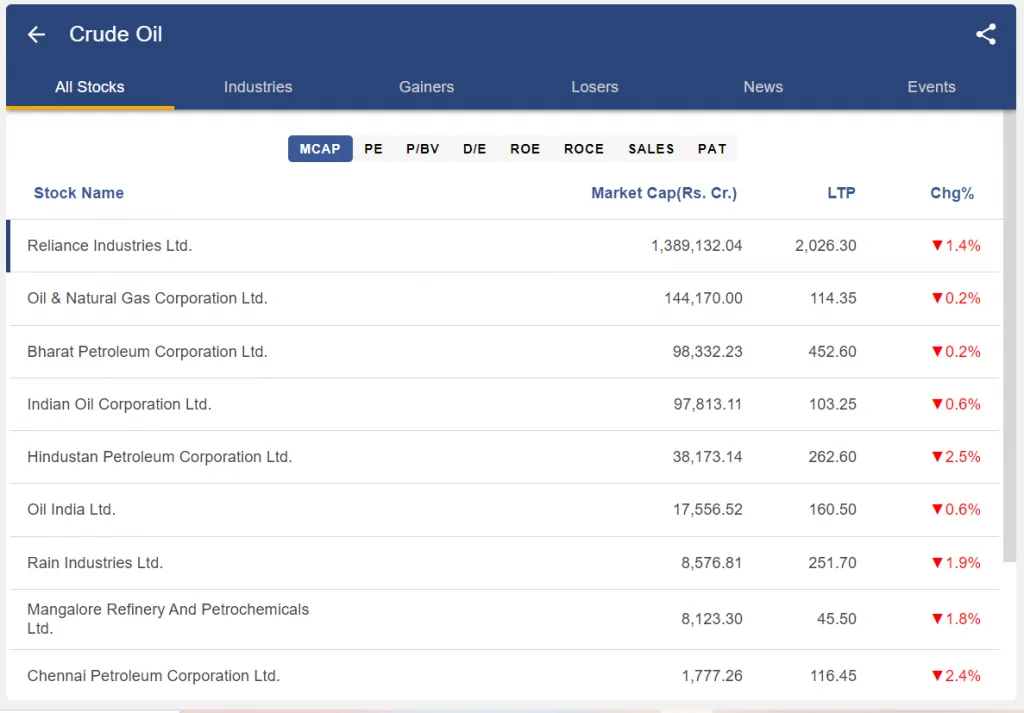
Investors might also think about how the firm has performed in comparison to its competitors. Companies can compare themselves to their rivals using tools like Stock Edge and Google Finance.

5. Shareholder Pattern:

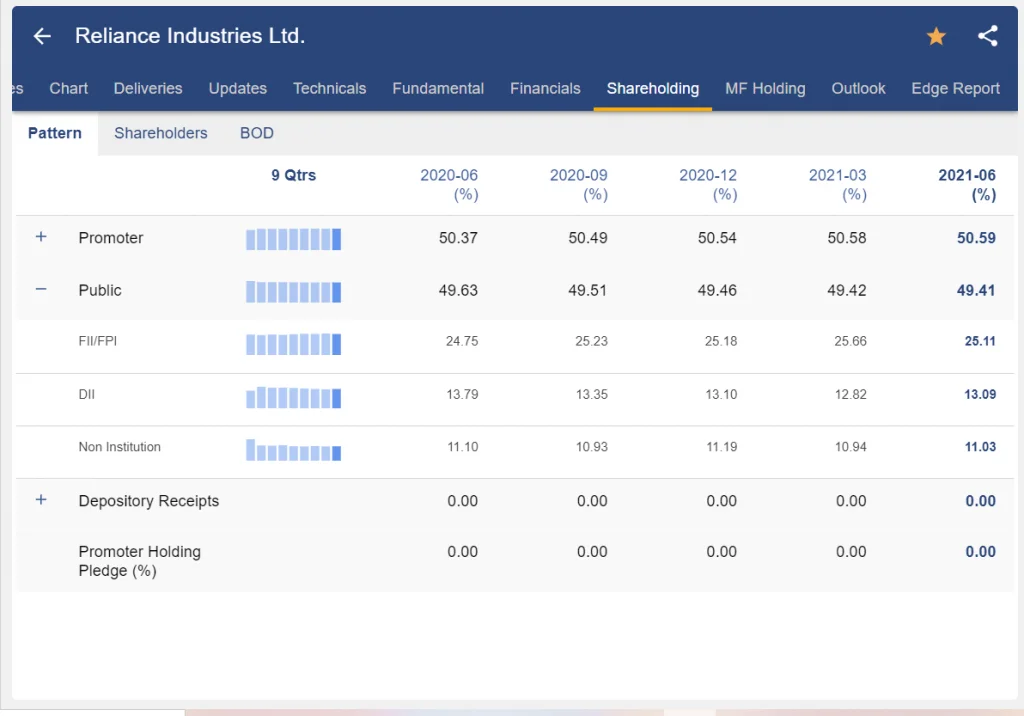
Investors should look at the shareholding structure before buying a stock.

Promoters are organisations that significantly affect a company. They might be major shareholders in the business or occupy important executive positions.

Investors should therefore put their money into businesses where the promoter owns a sizable portion as well as those where both domestic and foreign institutional investors possess sizable portions.

6. Mutual Funds Holding:

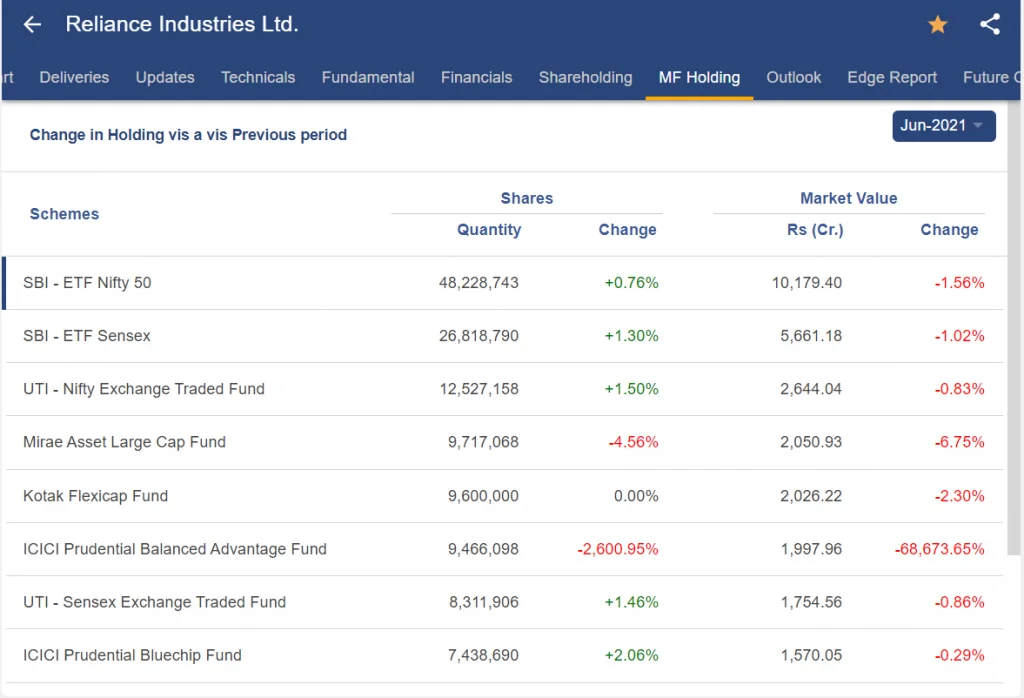
A stock is frequently considered to be a safer investment than other stocks that are not held by any mutual funds when a significant number of mutual funds own it.

7. Size of the Company:

The amount of risk you are willing to take on when buying a stock is greatly influenced by the size of the company you are interested in investing in.

Consider the size of the company in relation to your time horizon and risk tolerance before buying a stock.

As seen below, the market capitalization of publicly traded companies can be used to estimate their size.

8. Dividend History:

The term “dividend stock” refers to securities that distribute dividends to investors as a share of their earnings.

Investors who employ the income investing approach may want to think about buying these dividend stocks.

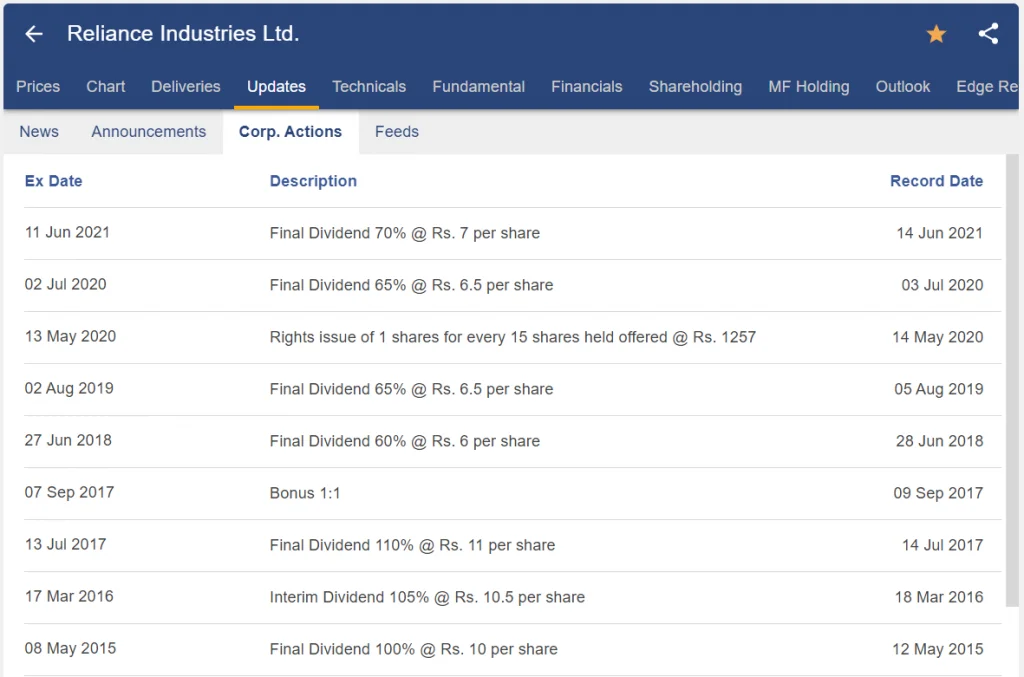
Before buying a company’s stock, an investor should research the company’s dividend history if their objective is to generate income from their assets.

The company’s dividend yield, which is presented as a percentage, may be taken into consideration by income investors desiring a high level of income in comparison to the stock price.

9. Revenue Growth:

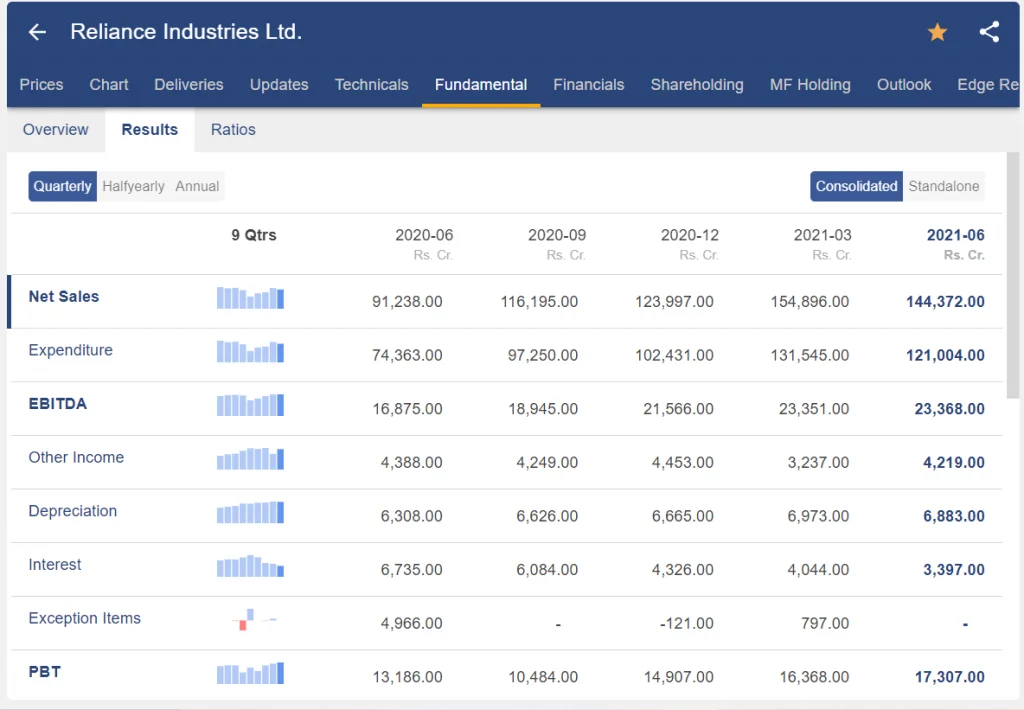
Investors should look for companies that are expanding before buying a company. This can be evaluated by looking at its profitability and revenue.

10. Volatility:

High volatility stocks will rise quickly on bullish days and plunge sharply on bearish days.

If a recent advance starts to reverse after you invest in a low-volatility, slow-moving stock, you can cash out your gains before they disappear.

Fast-moving stocks, on the other hand, give you less time to withdraw your money from the investment, and you run the risk of losing money if the trend changes.

FOR MORE INFO CLICK THIS SITE:https://learningsharks.in/

FOLLOW OUR PAGE:https://www.instagram.com/learningsharks/?hl=en
Investing in the Best Stocks for Long-Term Growth

Understanding Long-Term Investing

Before delving into the best stocks for long-term growth, it is critical to first understand what long-term investing entails. Long-term investing entails holding stocks and other securities for an extended period of time, usually several years or more. This strategy allows investors to profit from market trends, compound returns, and reduce short-term volatility.

The Benefits of Long-Term Investing

Long-term investing has several advantages that make it an appealing strategy for investors looking for significant growth. Here are some key advantages:

  1. Compound Returns: Investors can benefit from the compounding effect by reinvesting earnings, dividends, and capital gains over time. This can significantly increase their investment returns over time.
  2. Reduced Market Timing Risks: Even for seasoned investors, timing the market and making short-term gains can be difficult. Long-term investing reduces the impact of short-term market fluctuations, allowing investors to concentrate on the bigger picture.
  3. Opportunity for Wealth Creation: Historically, the stock market has outperformed most other long-term investment options. Investing in high-quality stocks has the potential to generate significant wealth and help investors achieve their financial goals.

Identifying the Best Stocks for Long-Term Growth

We carefully analyzed various factors that contribute to a company’s long-term success to help you identify the best stocks for long-term growth. We have compiled a list of key considerations when evaluating potential investments based on our extensive research and expertise in the field.

1. Strong Financial Performance

It is critical to evaluate a company’s financial performance when evaluating stocks for long-term growth potential. Consistent revenue growth, strong profitability, and a healthy balance sheet are all desirable. Companies with a history of financial stability and growth are more likely to deliver positive long-term returns.

2. Competitive Advantage

Long-term success requires investing in companies that have a sustainable competitive advantage. Look for companies with unique products, strong brand recognition, superior technology, or a large market share. A competitive advantage provides a solid foundation for growth and can assist a company in overcoming market challenges.

3. Industry Growth Potential

When choosing stocks for the long term, look for industries with significant growth potential. Look for industries that are poised to grow significantly as a result of favorable trends, changing demographics, or technological advancements. Investing in such companies can increase your chances of achieving exceptional long-term returns.

4. Management Quality and Vision

The management team of a company is critical to its long-term success. When considering an investment, consider the management team’s expertise, experience, and track record. A company’s ability to navigate challenges and capitalize on opportunities is indicated by strong leadership and a clear strategic vision.

5. Dividends and Shareholder-Friendly Policies

While not all stocks pay dividends, investing in companies with a track record of consistent dividend payments can provide extra income while also contributing to long-term growth. Additionally, companies that prioritize shareholder-friendly policies, such as share buybacks or dividend increases, frequently demonstrate their commitment to delivering value to shareholders.

Key Considerations for Successful Long-Term Investing

1. Time Horizon:

Long-term investing necessitates a lengthy time horizon. It is critical to align your investment decisions with your financial goals and the time required to achieve them. Long-term investments, such as retirement savings, can be allocated to assets with higher growth potential and longer time horizons.

2. Patience and Discipline:

Long-term investing requires patience and discipline. It is critical to stick to your investment strategy and avoid making rash decisions based on short-term market fluctuations. Stick to your plan, review your portfolio on a regular basis, and make adjustments as needed, but avoid reacting rashly to market noise.

3. Research and Due Diligence:

For identifying suitable long-term investment opportunities, thorough research and due diligence are required. Understand the fundamentals of the assets in which you are investing, including the company’s financial health, competitive position, and industry trends. This knowledge will assist you in making sound investment decisions and selecting assets with high long-term growth potential.

4. Regular Portfolio Review:

While long-term investing requires patience, it is still necessary to review your portfolio on a regular basis. Examine the performance of your investments, rebalance as needed, and look for new opportunities that align with your long-term objectives. Regular portfolio reviews ensure that your investments remain consistent with your changing financial goals.

Conclusion

Long-term investing is an effective strategy for financial success. Investors can maximize their wealth-building potential by focusing on the long term, taking advantage of compounding returns, and sticking to a well-thought-out investment plan. Remember that long-term investing requires patience, discipline, diversification, and ongoing portfolio evaluation. Begin investing with a long-term perspective today to lay the groundwork for a prosperous financial future.

FOR MORE INFO CLICK THIS SITE:https://learningsharks.in/

FOLLOW OUR PAGE:https://www.instagram.com/learningsharks/?hl=en

Long-Term Stocks to Invest in 2023

Long-term investing is a popular investment strategy used by astute retail investors to grow their funds. Benjamin Graham, the father of value investing, defined investing intelligence as someone who does not try to time the market but values ‘time in the market’ by selecting investment options that suit you best rather than investing based on hearsay.

When looking for the best stocks to buy in India for the long term, financials must be considered alongside fundamentals and qualitative aspects such as management quality and efficiency. For investors, long term usually means more than 5 years.

This blog has compiled a list of the best Long Term Investment Stocks for 2023.

Best Stocks to Buy in India for Long Term in 2023

 Here is a list of the best shares to buy for long term

S.No.Long Term Stocks IndiaIndustry
1.Reliance IndustriesMultinational Conglomerate
2.Tata Consultancy Services (TCS)Information Technology
3.InfosysInformation Technology
4.HDFC BankBanking
5.Hindustan UnileverFMCG

Best Long Term Stocks India: Overview

The following are some of the choices to invest in for a long term-

1) Reliance Industries

Reliance Industries Limited is an India-based company that operates in the Oil to Chemicals (02C), Oil and Gas, Retail, Digital Services, and Financial Services segments. It is one of the best long-term investments to make.

2) Tata Consultancy Services (TCS)

Tata Consultancy Services Limited (TCS) is an Indian company that offers information technology (IT) services as well as digital and business solutions. It is one of the safest stocks to invest in in India.

3) Infosys

Infosys Limited provides consulting, technology, outsourced services, and next-generation digital services. It is a world-class global leader in digital services and consulting.

4) HDFC Bank

HDFC Bank Limited (the Bank) is a private sector bank based in India. The bank provides a wide range of banking services, including commercial and investment banking on the wholesale side and transactional/branches banking on the retail side.

5) Hindustan Unilever

Hindustan Unilever Limited is a consumer goods company based in India. It is a subsidiary of the British corporation Unilever. It is headquartered in Mumbai and is one of the world’s most well-known FMCG companies. As a result, its stock is frequently a top choice among investors.

Conclusion

This was the list of the top long-term stocks to invest in in 2023. Time allows your returns to compound. If you do not withdraw your returns or interest earned in the middle, your returns will compound on an accumulated number rather than just your principle; your returns will compound exponentially.

Time allows us to eliminate volatility and short-term risks. If you invest Rs 1,000 in year one and earn 10% returns, you will have Rs 1,100 at the end of the year. If you let your money compound over time and do not redeem your returns, you will receive Rs 1,100 in returns the following year.

Repeat this exercise for larger sums of money and for a longer period of time. This is due to the fact that the essence and magic of any investment are in the long run.

FOR MORE INFO CLICK THIS SITE:https://learningsharks.in/

FOLLOW OUR PAGE:https://www.instagram.com/learningsharks/?hl=en

Understanding the Price-to-Earnings Ratio (P/E Ratio)

A high P/E ratio could mean that a company's stock is overvalued, or that investors are expecting high growth rates in the future.
price-to-earnings (P/E)

Introduction

The price-to-earnings (P/E) ratio is a popular financial metric that helps investors determine the worth of a company’s stock. It is a necessary tool for assessing investment opportunities and understanding market sentiment toward a specific stock. This article delves into the complexities of the P/E ratio, its significance, and how investors can use it effectively.

What is the Price-to-Earnings Ratio?

The price-to-earnings ratio, also known as the P/E ratio or simply P/E, is a valuation ratio that compares a company’s stock price to its earnings per share (EPS). It is calculated by dividing a company’s stock market price per share by its earnings per share over a specific time period.

KEY TAKEAWAYS

  • The price-to-earnings (P/E) ratio compares the share price of a company to its earnings per share.
  • A high P/E ratio may indicate that a company’s stock is overvalued or that investors anticipate rapid growth in the future.
  • Companies that have no earnings or are losing money do not have a P/E ratio because the denominator is empty.
  • In practice, two types of P/E ratios are used: forward and trailing P/E.
  • A P/E ratio is most valuable to an analyst when compared to similar companies in the same industry or for a single company over time.

Why is the P/E Ratio Important?

The P/E ratio reveals important information about the market’s expectations and perception of a company’s future earnings potential. Investors can determine whether a stock is overvalued or undervalued by comparing its P/E ratio to that of its peers or the industry average. A high P/E ratio indicates that investors expect future earnings growth to be strong, whereas a low P/E ratio indicates lower growth expectations or potential undervaluation.

Interpreting the P/E Ratio

Understanding High P/E Ratios

A high P/E ratio indicates that investors are willing to pay a premium for the company’s stock because of strong growth prospects or market optimism. It could indicate a company with innovative products, a strong market position, or plans to expand into new markets. However, before making investment decisions based solely on a high P/E ratio, it is critical to consider other factors such as the company’s financial health, competitive landscape, and industry trends.

Analyzing Low P/E Ratios

A low P/E ratio, on the other hand, may indicate that the market is pessimistic about the company’s future prospects. It could be an indication of potential undervaluation, creating an opportunity for value investors. A low P/E ratio, on the other hand, should prompt further investigation into the underlying reasons, such as declining earnings, poor management, or adverse market conditions, to determine whether the stock is a value trap or a genuine investment opportunity.

Different Types of P/E Ratios

Trailing P/E Ratio

The trailing P/E ratio, also known as the historical P/E ratio, is calculated using past earnings data for a company. It gives a snapshot of how the market perceives the company’s past performance. The trailing P/E ratio is commonly used to compare a company’s valuation to its historical trends or the valuation of its competitors.

Forward P/E Ratio

The forward P/E ratio considers a company’s projected earnings for future periods. It takes into account analyst forecasts and market expectations for future growth prospects. Investors frequently use the forward P/E ratio to assess a company’s earnings growth potential and make informed investment decisions.

Limitations of the P/E Ratio

While the P/E ratio is a valuable tool, it does have certain limitations that investors should be aware of:

  1. Earnings Manipulation: Companies can artificially inflate or deflate the P/E ratio by manipulating earnings figures. As a result, it is critical to thoroughly examine a company’s financial statements and assess the quality and sustainability of its earnings.
  2. Variations by Industry: Because of differences in growth rates, risk profiles, and business models, average P/E ratios vary by industry. Comparing the P/E ratios of companies in different industries may not yield accurate results.
  3. Cyclical Nature: The P/E ratio can fluctuate significantly depending on the economic cycle and market conditions. P/E ratios tend to contract during economic downturns or periods of uncertainty, while they expand during bullish market phases.

Advantage of P/E Ratios

  • Relative Valuation: The P/E ratio allows investors to compare a company’s stock valuation to that of its peers or the industry average. This comparative analysis aids in the identification of undervalued or overvalued stocks within a specific sector. Investors can make more informed investment decisions by examining the P/E ratios of similar companies.
  • Future Earnings Growth Expectations: The P/E ratio reveals the market’s expectations for a company’s future earnings growth. A high P/E ratio indicates that investors expect strong earnings growth, which can be advantageous for investors looking for high-growth opportunities. A low P/E ratio, on the other hand, may indicate lower growth expectations, potentially attracting value investors looking for undervalued stocks.
  • Quick Investor Sentiment Analysis: The P/E ratio provides a snapshot of market sentiment toward a company’s stock. A high P/E ratio indicates that investors are optimistic about the company’s growth prospects. A low P/E ratio, on the other hand, may indicate skepticism or concerns about the company’s performance. Understanding investor sentiment can assist investors in determining market expectations and sentiment toward specific stocks.
  • Benchmarking Tool: The P/E ratio enables investors to compare the valuation of a company to its historical performance or competitors in the same industry. Investors can determine whether a company’s current valuation is above or below historical averages by examining the trend of its P/E ratio over time. Furthermore, comparing a company’s P/E ratio to that of its industry peers aids in identifying outliers and providing a broader perspective on relative valuations.
  • Market Timing: The P/E ratio can be useful in market timing strategies. During periods of high P/E ratios, investors should be cautious because stocks may be overvalued. When P/E ratios are low, it may indicate a potential buying opportunity because stocks may be undervalued. Market timing strategies, on the other hand, should be approached with caution and supported by thorough analysis of other indicators.
  • Financial Analysis Simplified: The P/E ratio simplifies the assessment of a company’s financial health and valuation. It simplifies complex financial data into a single metric that is understandable to both novice and experienced investors. This ease of use enables quick company comparisons and aids in the initial screening process when researching potential investment opportunities.

Conclusion


The price-to-earnings ratio is a basic tool that helps investors determine the relative value of a company’s stock. Investors can make informed decisions, identify potential investment opportunities, and manage their portfolios more effectively if they understand the P/E ratio and its implications. However, in order to gain a comprehensive understanding of a company’s financial health and market outlook, it is critical to consider the P/E ratio in conjunction with other financial metrics and conduct extensive research.

FOR MORE INFO CLICK THIS SITE:https://learningsharks.in/

FOLLOW OUR PAGE:https://www.instagram.com/learningsharks/?hl=en

Value Stocks vs. Growth Stocks: A Comprehensive Comparison

Introduction

In today’s volatile financial environment, investors are frequently faced with a critical decision: Should they invest in value stocks or growth stocks? This article will provide a comprehensive comparison of these two investment strategies, allowing you to make more informed decisions and achieve better stock market results.

Understanding Value Stocks

Value stocks are shares of companies that the market believes are undervalued. When compared to their peers, these stocks frequently trade at a lower price-to-earnings (P/E) ratio, indicating that the market may have overlooked their true worth. Value investors seek out these opportunities, believing that the market will eventually recognize these companies’ intrinsic value, resulting in a rise in stock prices.

KEY TAKEAWAYS

  • Because of their future potential, growth stocks are expected to outperform the overall market over time.
  • Value stocks are thought to trade at a discount to their true value.
  • The decision between a growth or value stock strategy must be made in light of the investor’s time horizon and risk tolerance.

Embracing Growth Stocks

Growth stocks, on the other hand, are companies that have a high potential for future growth. These firms frequently operate in emerging industries or have innovative business models capable of driving significant revenue and earnings growth. Growth investors seek out such companies and are willing to pay a premium for their shares, betting on their ability to deliver impressive long-term returns.

Performance Comparison

We will look at a number of key factors to assess the performance of value and growth stocks.

Historical Returns

Value stocks have historically outperformed growth stocks over the long term. During market downturns or when investors shift their focus to more conservative investments, these stocks tend to perform well. Value stocks frequently provide stability and income through dividends, making them appealing to value investors.

Growth stocks, on the other hand, have the potential for explosive price appreciation, particularly during bull markets. When the economy is expanding and investors are willing to take on more risk, these stocks tend to perform well. Growth stocks, on the other hand, can be more volatile and subject to market fluctuations.

Valuation Metrics

When evaluating value stocks, investors frequently consider valuation metrics such as price-to-earnings (P/E), price-to-book (P/B), and dividend yield. These metrics assist in determining whether a stock is undervalued in comparison to its intrinsic value.

Growth stocks, on the other hand, are assessed using metrics such as the rate of revenue growth, the rate of earnings growth, and the forward price-to-earnings ratio (Forward P/E). Investors in growth stocks are concerned with the company’s ability to grow its market share in the future.

Risks and Considerations

Value Stocks

While value stocks can provide stability and income potential, they are not without risk. Some important factors to consider when investing in value include:

  1. Value traps: Some businesses may appear to be undervalued, but they have underlying issues that prevent them from reaching their full potential.
  2. Economic Factors: Value stocks are susceptible to economic conditions and may underperform during recessions.
  3. Market Sentiment: The performance of value stocks can be influenced by investor sentiment, resulting in short-term fluctuations.

Growth Stocks

Investors should be aware of the following risks when investing in growth stocks:

  1. Concerns about valuation: High-growth stocks frequently trade at premium valuations, leaving little room for error.
  2. Competitive Environment: Rapidly growing industries attract fierce competition, which can have an impact on a company’s growth trajectory.
  3. Market Volatility: Growth stocks are more volatile, with large price swings in response to market conditions.

Conclusion

Finally, the decision between value stocks and growth stocks is ultimately determined by your investment objectives, risk tolerance, and market outlook. Both strategies have their advantages and potential returns, but they also have their drawbacks.

Understanding the characteristics and considerations of each strategy allows you to make informed investment decisions that are in line with your financial goals. To maximize your investment outcomes, conduct thorough research, diversify your portfolio, and seek advice from financial professionals.

FOR MORE INFO CLICK THIS SITE:https://learningsharks.in/

FOLLOW OUR PAGE:https://www.instagram.com/learningsharks/?hl=en