
Learning sharks-Share Market Institute


Rajouri Garden  8595071711 7982037049  Noida 8920210950 , and  Paschim Vihar  7827445731  

Fee revision notice effective 1st Jan 2026; No change for students enrolled before 15th Jan 2026

Download “Key features of Budget 2024-2025here

Multibagger Stocks

Multibagger stocks are equity shares of a company that generate returns multiple times higher than its associated cost of acquisition.
MultibaggerStocks

Equity shares of a company that generate returns many times greater than their associated acquisition costs are known as “multibagger stocks.” Peter Lynch created these stocks first, and he wrote about them in his book “One Up on Wall Street.”

What are Multibagger Stocks?

Companies that exhibit strong management and production practices and have tremendous growth potential issue multibagger shares. Additionally, it demonstrates the company’s excellent research and development capabilities, which helped this product achieve a high level of market demand.

Multibagger stocks, however, may occasionally signify the emergence of an economic bubble in a nation, which could have unfavorable long-term effects on the nation’s financial system.

What Characteristics Should a Company Possess to Generate Multibagger Shares?

Multibagger stocks are associated with manifold returns on investments. Such profits can only be realised if companies possess certain characteristics, such as:

  • Advanced Research and Development Skills

Strong company growth is related to a sizable amount of product sales in the market. Such businesses must deliver high-quality products that greatly satisfy customers in order to accomplish this.

Companies must make a sizable investment in product research and development in order to list their securities as Multibagger stocks on the stock exchange.

New businesses that introduce products with a wide range of potential customers and no direct competitors are likely to experience tremendous market demand. By issuing Multibagger stocks, these companies can increase their paid-up capital.

Companies that control a market through monopoly or duopoly status can also be categorized as Multibagger share issuers. Entry restrictions and aggressive pricing strategies can both help businesses generate more revenue overall.

  • High Growth 

By examining an issuing company’s performance, you can quickly identify Multibagger stocks. Top contenders are companies with a history of high profit generation and little debt.

High earnings per share are another benefit of multibagger shares, increasing your dividend income relative to your investment. These businesses frequently have low debt-to-equity ratios, a sign of adept financial management. The price to earnings growth ratio (PEG) is also high because the returns on a single share are many times greater than the initial investment.

  • Excellent Management Skills

Multibagger stocks are released by businesses with qualified and seasoned managers. As a result of poor coordination between the production and sales chains, proper flow is unlikely to be maintained in the production chain when management is inefficient.

These businesses also employ a number of analysts to determine the best price points in order to maximize revenue.

Why Should You Invest In Multibagger Stocks?

Multibagger stocks are renowned for multiplying your wealth because they offer such high rates of return. For instance, if you invest Rs. 100 in such shares, you can expect to make profits of Rs. 1000 (10 times the original investment; tenbagger stock).

However, in order to ensure significant capital gains through the conversion of funds to finished goods sold on the market, investments in multibagger shares must be held for a minimum period of time. The money raised by listing shares on a stock exchange is used for both product development and production, effectively generating high profits through significant sales volume.

What Is The Risk Associated With Multibagger Shares?

In India, multibagger stocks must be bought in large quantities if one is to become wealthy. Therefore, if a person is caught in a market downturn, the loss he or she suffers would also be significant.

Many investors who purchase Multibagger shares run the risk of falling victim to a value trap or an economic bubble. Companies that trade at high prices may be an indication that an asset bubble is developing in the nation, where the good being produced is in high demand because of general market conditions.

Similar to value traps, Multibagger stocks are increasingly susceptible to them.A company’s products might appear to be a profitable investment choice today, but they would result in losses over time. Investors anticipate a sharp increase in the price of these shares in the future. However, because the asset has no intrinsic value, this circumstance never occurs.

Before buying Multibagger stocks, investors should carefully examine a company’s financial statements and the current state of the stock market.

What are Alternative Investment Options Available To An Individual?

Risk-averse individuals willing to participate in stock market investments can choose several other tools for their portfolio:-

  • Debt funds:-These mutual funds’ corpus consists primarily of corporate debt securities. Debt financing is a liability for businesses, so it is paid back initially when revenue is generated, lowering associated risks. People with low risk tolerance may prefer to invest in one of the many debt mutual funds registered with SEBI over the multibagger stock list in India. For maximum return realization with minimal risk, portfolio managers of such funds also include a variety of government securities and liquid money market instruments.
  • Hybrid Funds:-These hybrid funds, also referred to as balanced advantage funds, seek to achieve the ideal balance between risk and return. The portfolio of such funds includes both equity and debt securities. Equity stocks in the corpus can generate enormous returns, and the presence of debt-oriented securities can reduce the volatility of such funds due to market influences.
  • Large-cap funds:- Multibagger shares are typically issued by newly established businesses, raising the level of investment risk.On the other hand, large-cap funds opt to invest in the equity securities of businesses with a market capitalization of more than Rs20,000 crore. These businesses have a solid track record and demonstrated financial stability, which lowers the likelihood of receiving subpar returns. Large-cap companies have sufficient financial resources to withstand any downturn in the stock market as well, protecting investors’ capital. Investors looking to significantly increase their wealth through capital appreciation of respective securities should look into multibagger stocks in India. The capital gain profits are enormous because the incremental value of these stocks is many times greater than the acquisition cost.

FOR MORE INFO CLICK THIS SITE:https://learningsharks.in/

FOLLOW OUR PAGE:https://www.instagram.com/learningsharks/?hl=en

Equity Share Capital

equity share capital is the portion of a company's capital that is raised by issuing shares to shareholders in exchange for ownership of the company
Equity Share Capital

Every business requires significant working capital to keep things running smoothly. This type of capital is useful when the company’s regular operations are hampered by financial constraints. Companies frequently use their equity shares to raise the necessary capital known as equity share capital.

What are Equity Shares?

Individuals must first become acquainted with the meaning of equity shares in order to comprehend equity share capital.

Ordinary shares or equity shares that represent a company’s ownership stake. A company’s shares also serve as a source of investment for the company.

Individuals who own equity shares are also said to own a portion of a company.

The benefits of equity share capital to shareholders are–

  • Fair liquidity: Share prices are directly proportional to fluctuations in the market or to the company’s revenue generation. They may even be affected on both.
  • Profitability: Investors not just benefit from the capital appreciation feature of equity shares but also earn regular dividends on their investments.
  • Control on management: Shareholders with a significant per cent of shareholding can influence a company’s management significantly.

What is Equity Share Capital?

The capital raised by a company through the issuance of shares is known as equity share capital or share capital. It is the money that business owners and investors put into a company’s capital to help it grow or expand its operations.

Why Company Issues Equity Shares?

A company will typically invite the general public to purchase its shares in order to gain fractional ownership of the company. Dividends are paid to shareholders who own stock.

Typically, a large privately held company will issue stock for public trading on a stock exchange.

However, capital generation is the primary reason why both small and large companies issue shares to the general public in the first place.

The equity share capital thus raised through the issuance of equity shares is used to further the company’s business venture.

Furthermore, having a large capital base allows them to improve their market creditworthiness.

When a company issues shares for purchase by investors, it also offers the opportunity to earn a portion of its profits as well as a stake in its equity.

Types of Equity Share Capital?

Several types of equity shares help companies generate equity share capital.

The following highlights types of equity share capital –

  • Authorised share capital: The maximum amount of capital that a company can issue is known as authorised share capital. Companies can increase their permissible limit for authorizing shares after obtaining permission from the relevant authority and paying the required fees.
  • Issued share capital: The shares that a company offers to its investors are referred to as issued share capital.
  • Subscribed share capital: It is the portion of the issued share capital that the investors agree on and accept.
  • Right shares: Right shares are the shares that are issued to individuals after they have invested in equity shares. They are issued to protect the ownership of existing investors.
  • Sweat equity shares: Companies give shares to their employees or directors as a token of appreciation for a job well done. These are referred to as sweat equity shares.
  • Paid-up capital: It is a portion of the subscribed capital in which the company invests.
  • Bonus shares: These shares are distributed to investors as a dividend.

Risks Associated with Equity share capital?

The drawbacks of equity shares tend to magnify the risks that are associated with equity share capital.

Risks while trying to Generate Equity Share Capital –

  • No Takers

A company may issue equity shares to the general public. Investors nowadays have a better understanding of how the investment market works and which activities will be more beneficial to them. They gather extensive data and analyze an investment option to assess its prospects before investing.

If a company’s shares do not meet the requirements or expectations of its investors, they will not invest in them. The company will fail to generate equity share capital if there are no buyers in the stock market.

  • Insufficient Capital Generation

Even if a company is able to acquire enough shareholders in exchange for their company shares, the likelihood of generating enough capital is still quite low.

Investors can choose from a variety of equity share options on the stock exchange market. The availability of a large number of investment options frequently limits the possibility of generating sufficient equity share capital, rendering efforts to issue shares ineffective.

  • Higher Liabilities

Companies that issue a large number of shares at a low face value risk losing more investors than they bargained for.

Having a large shareholder base is effective only when the number of shareholders is kept within a manageable range. When the number becomes unmanageable, the company’s liability burden increases because they must pay a larger portion of the returns as a dividend than they had bargained for. A higher liability burden defeats the purpose of raising equity share capital and is also detrimental to the company’s long-term viability.

To keep track of their equity share investments, shareholders can set up an equity share capital account and keep a ledger for such transactions. Companies that sell equity shares should keep an equity share capital account to track the growth of their equity share capital.

FOR MORE INFO CLICK THIS SITE:https://learningsharks.in/

FOLLOW OUR PAGE:https://www.instagram.com/learningsharks/?hl=en

What Is Intraday Trading?

Purchasing and selling securities listed in a stock exchange on the same day is known as intraday trading.
Intraday Trading

Intraday trading refers to buying and selling securities listed on a stock exchange on the same day. The primary goal of using this method is to realize capital gains on purchased securities while also minimizing risks by keeping money invested for an extended period of time.

How to Do Intraday Trading

When making such investments, it is critical to identify the best intraday stocks because the risks are relatively higher.

  • Choose Highly Liquid Stocks:- Liquidity is a key feature of intraday stocks because such trading would be impossible without it. Equity shares of small and mid-cap companies can be easily bought and sold, and they are subject to significant volatility as a result of market fluctuations. The cyclical variations should be carefully observed by analyzing 52-week high and low values, as this provides a precise idea of whether an individual should invest long or short.
  • Volatility :- The best intraday stocks have price fluctuations that range from medium to high. In general, market value fluctuations of more than 3% should be avoided when performing intraday trading, as the risk of incurring a loss is high in the event of an adverse downturn in an economy’s stock market.
  • Strong Correlation :- It is best to buy an intraday share that has a high correlation with a reputable stock exchange’s benchmark index. When the index value fluctuates, substantial movement in share prices can be observed. Because benchmark indices are composed of shares of top companies listed on a stock exchange, it is reasonable to expect fluctuations to move upward, barring any economic abnormalities. If this rule is followed, capital appreciation through intraday trading will be significant.
  • Higher Trade Volume:- Intraday investors can monitor a security’s trade volume index to identify price fluctuations. A higher trade volume index indicates either excessive demand or supply, depending on the performance of the underlying company. In such cases, capital appreciation gains can be earned through both purchase and sale transactions.

Benefits of Intraday Trading

Transacting in intraday share has the following advantages-

  • Reduced Risk:- Because securities are purchased on the same day in intraday trading, the risk of incurring significant losses is reduced. However, in the case of standard trading, where the principal is locked in for an extended period of time, price changes can be significant, leaving an investor worse off in the event of a stock market downturn.
  • Lower Commission Charges:- Stockbrokers charge nominal fees when transacting in intraday trading stocks because delivery expenses of transferring security in an investor’s name are waived. Stock transaction tax, trade fees, services tax, and so on are all included in brokerage fees, and such deductions reduce an investor’s income.Brokerage fees on intraday trading stocks are typically one-tenth of what is charged for standard trading.
  • Higher Profits :- Intraday trading is known to produce massive wealth creation for investors when proper investment strategies are used. Capital appreciation is simple to achieve in a rising stock market. In order to profit from adverse market conditions, intraday share traders use the method of short selling.
  • Liquidity:- Another advantage of intraday trading is that total financial resources invested can be recovered quickly at any time. It is not obstructed by an asset purchase transaction. This preserves an investor’s liquidity requirements to meet any personal needs.
  • Capital Gains Through Market Fluctuations:- Investors can profit from intraday trading in both bullish and bearish markets, depending on the investment strategy used. Purchase and sale of securities listed on a stock exchange can result in capital appreciation during a bull market. Profits can be made by short-selling financial instruments during a stock market downturn.

Associated Risks

For adequate profits, an investor must have extensive knowledge of the stock market’s intricate workings. It may appear overwhelming to a novice investor seeking capital gains. In such cases, it is critical to select securities from appropriate companies, which necessitates a careful examination of financial records.

When it comes to intraday trading stocks, market volatility is crucial. Investors may suffer losses as a result of unexpected market fluctuations. Market technical analysis is based on past volatility and thus may not be 100% accurate in all cases.

Alternative Trading Methods 

Investors wary of intraday trading in the stock market can choose from various trading methods, such as:

  • Standard Trading 

Individuals can invest in stocks of various companies using this trading method. It is typically undertaken for a longer period of time, allowing investors to profit from both capital appreciation and periodic dividend payments.

However, such trading must be conducted through a brokerage company, from which payments are withheld as percentages of total profits. Brokerage fees only make up a small portion of the total income generation because investors receive regular returns on their invested securities. Additionally, a lot of brokerage firms offer guidance on the market’s most lucrative investable securities, serving as a reliable investment choice for new investors.

  • Momentum Trading  

The main goal of momentum trading is capital growth. Investors buy securities with a strong potential for future growth, but market fluctuations keep the prices in check. Stocks of companies that are underperforming either relatively or absolutely can be chosen using relative or absolute momentum investment strategies.

  • Swing Trading 

Swing trading uses short-term investment strategies to produce capital gains, much like momentum trading. In such situations, volatile stocks are targeted, and acquired shares are sold off as soon as a significant change in price is noticed.

Tips to Follow for Intraday Trading

  • Research: thorough investigation and analysis of the current market environment, knowledge of the company’s foundations, and familiarity with macroeconomic factors like the country’s debt situation or currency movements.
  • Invest the Extra:Trading intraday carries significant risk. You should only invest what you can afford to lose, according to advice.
  • Don’t Overtrade:A predictable pattern is not always followed by the stock market. Trading only a few scripts at a time is the best strategy for intraday trading.
  • Performance Evaluation:Trading within a day is fluid. It will be easier for you to determine what worked and what didn’t if you keep track of your results, including wins and losses. You can improve your trading decisions in the future by reviewing your past performance.
  • Intraday Trading Indicator: You need to conduct a thorough analysis when it comes to booking profits in intraday trading. For the same purpose, specific signs must be observed. It’s a common misconception that intraday advice is the Holy Grail, but this is not entirely true. When used in conjunction with a thorough plan to maximize returns, intraday trading indicators can be helpful.

FOR MORE INFO CLICK THIS SITE:https://learningsharks.in/

FOLLOW OUR PAGE:https://www.instagram.com/learningsharks/?hl=en
What is Online Trading in Stock Market?

Online trading allows you to trade independently, without a broker's interference
Online Trading

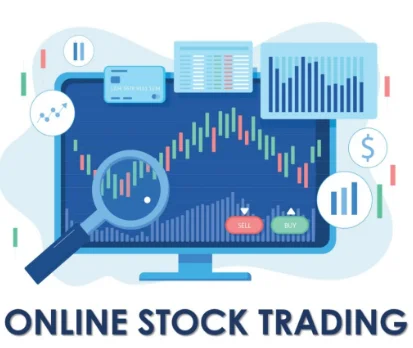
The process of buying and selling shares has been significantly streamlined and accelerated by online trading. Thanks to the internet, which has completely changed how trading is done today, trading can now be done immediately and remotely from any location. A trader or investor’s life depends on it. It is simpler to buy and sell financial products including stocks, bonds, NCDs, equities, and ETFs through an online trading platform.

A shareholder who wished to buy shares in the past had to call their broker and request to buy equities at a specific price. After discussing the share’s current market price with their client, the broker will then confirm the order. After this tedious process, the order would be registered on the stock exchange.

HOW TO TRADE ONLINE?

  • The first step in starting to trade online is to apply for a Demat and trading account with a Depository Participant and finish all necessary documentation processes. When choosing a broker, it is essential to look for certification from the Securities and Exchange Board of India (SEBI) and registration with all stock markets.
  • Before you start trading online, you must have a thorough understanding of how the stock market works. In a number of courses, the fundamentals of online trading are discussed. You should also keep an eye on financial news, websites, and podcasts to stay current on the financial markets.
  • Additionally crucial are developing a strategy and a plan. Before you begin investing with real money, it is advised that you start out by practising with a demo trading account.

Think carefully about your financial strategies. You should plan out how much you want to invest in a specific business in advance.

Because stock trading is a long-term investment, becoming a successful investor necessitates having all of your bases covered.

BENEFITS OF ONLINE TRADING?

1.Ease of use: Everything that can be done online makes life easier and more convenient. Online trading enables traders to do deals quickly and easily. If you have an online demat account and a working internet connection, you can save time and effort.

2.Less Expensive: Executing your trades requires paying a broker a fee or commission, which raises your costs. However, when you trade online, you pay a price, or a brokerage fee, that is far less than the commission charged by the broker.

3.Total Control: Trading online gives you complete control over your portfolio, giving you additional leverage over your assets. Now, you have the freedom to trade anytime the market is open and decide for yourself without consulting a broker.

4.Watch Your Investment Whenever: Investments can be monitored at any time via websites and mobile applications. Viewing real-time gains and losses allows you to make an informed decision about the stocks you want to keep or sell.

HOW DOES ONLINE TRADING WORK?

You now fully understand the definition of “what is meant by online trading?” Now is the time to learn how to conduct a deal or how online trading works. The order to buy or sell shares is executed in a matter of seconds. The actions are detailed below:

1.The trade is carried out in accordance with the best purchase and sell prices when you place a buy or sell order.
2.Following execution, stockbrokers and exchanges send clients a deal confirmation message.
3.A contract note with details on the transactions is sent to the clients by the stockbroker.
4.The trade is completed and the clearing process is initiated after the buy and sell orders are matched.
5.All deals in the equity sector are subject to the T+2 settlement cycle. Exchanges have created a T+1 settlement cycle that will be carried out in stages as of right now.
6.The next step involves finalising the deal for the buyers and sellers and fulfilling the financial commitments mentioned in the clearance step.

7.If both the buyer and the seller receive the securities and the money, the trade is regarded to have been resolved.
8.Following the aforementioned procedures, the shares are transferred via the relevant depositories to the buyer’s Demat account, and the sale proceeds are credited to the seller’s account.

ONLINE TRADING VS OFFLINE TRADING

  • The benefits of online business over offline trading have become clear with the growth of the internet over the past twenty years. We’ll talk about a few differences between online and offline trading.
  • Trading is simple because to online trading, which obviates the need for a broker. On the other hand, a trader using an offline account is entirely dependent on the broker’s services and is given particular instructions. The broker is used for all trading. This dependence does not exist when you decide to trade online.
  • Convenience: As long as you have access to the internet, you can trade online at any time and from any location. On the other hand, you must physically visit the broker’s office when trading offline.
  • Trading commissions: Online trading has incredibly low brokerage costs, which boosts earnings. Brokers and brokerage companies, on the other hand, in offline trading demand exorbitant expenses that lower your earnings.

THINGS TO REMEMBER BEFORE YOU START ONLINE TRADING

  • It is necessary to have a trading and Demat account.
  • Pick a broker that will meet your needs.
  • Before making any trades, gather enough data and perform analysis.

HOW TO MAKE LOTS OF MONEY IN ONLINE TRADING

1.Examine current trends: Many reputable sources offer information on market trends. A stock trading newspaper like Bloomberg BusinessWeek, Traders World, Investor’s Business Daily, Kiplinger, or Investor’s Business Daily might be something you’d like to subscribe to.You might also sign up for the blogs of trustworthy market analysts like Abnormal Returns, Deal Book, Footnoted, Calculated Risk, or Zero Hedge.

2.Pick a trading website. Some of the best options include Scottrade, OptionsHouse, TD Ameritrade, Motif Investing, and TradeKing. Make sure you are aware of any transaction fees or percentages that will be charged before selecting a website to utilise.

  • Verify the service’s dependability before using it. Take a look at online reviews of the business.
  • Pick a company that provides services like a mobile app, tools for investor education and research, low transaction costs, data that is simple to understand, and 24/7 customer assistance.

3.Open a trading account on one or more websites: Even though you won’t need more than one, you might want to start with two or more so you can eventually choose the one you prefer.

  • Review the minimum balance requirements for each website. Your budget may prevent you from creating accounts on more than one or two websites.
  • You might be unable to use other trading platforms due of their higher minimum investment requirements if you start small.

4.Experiment with trading before investing real money. Websites like ScottradeELITE, SureTrader, and OptionsHouse offer simulated trading environments where you may test your trading methods without taking any real financial risks. Of course, you cannot make money this way, but you also cannot lose it.Trading in this manner may help you become used to the approaches and decision-making techniques you will use when trading, but it is typically a subpar representation of actual trading.

  • There will be a delay when buying and selling stocks in real trading, which can result in prices that aren’t what you were expecting for. Trading in digital money will also not fully prepare you for the pressure of trading in real money.

5.Select dependable stocks: Although you have numerous possibilities, you should eventually purchase shares from companies that are leaders in their area, have a good track record of success, a strong brand, a sound business strategy, and a product or service that people consistently want.

Look at a company’s public financial filings to find out how profitable it is. A more profitable company often has a more profitable stock. The most recent annual report of each publicly traded firm can be found there, along with comprehensive financial data. If it isn’t on the website, get in touch with the company and request a paper copy.

FOLLOW OUR WEBSITE: https://learningsharks.in/

FOLLOW OUR PAGE: https://www.instagram.com/learningsharks/

27+ Best Whatsapp Groups For Stock Market India [For 2023]

Nowadays, everyone wants to participate in the stock market, but doing so without adequate understanding is highly risky. To learn about the stock market, you can use a variety of sites, including WhatsApp, Telegram, Instagram, and Youtube.

In this article, you can get a list of the top and busiest WhatsApp groups for beginners and traders.

1. TRADE WARRIORS

Joining Link: https://chat.whatsapp.com/invite/KRSA13uZuwHAyXuI7ZL9FN

Trade Warriors is one of the most popular stock market WhatsApp groups. The traders get information from them, ranging from fundamental to sophisticated. Additionally, they help you create a trading account directly on their website. The group consists of close to 500 individuals. If you want daily updates and debates, you must join this group.

2. STOCK MARKET INDIA

Joining Link: https://chat.whatsapp.com/invite/5jYTYClqzr52pbiv4R2mIU

Although they supply all academic information, they are not SEBI Registered Research Analysts.

Additionally, you get free calls from this group based on fundamental and technical analysis.

3. TRADES TIME

Joining Link: https://chat.whatsapp.com/HWOMzXQqqeWCjRKco8G4VI

The admin of TRADES TIME said “Always do smart trading and Book profit in small points.”

You will also get a VIP membership in this group. This is the best group for secure trade.

4. SOCIAL MARKET LEARNINGS

Joining Link:https://chat.whatsapp.com/B5TXYReUkGv4qVNfo6HB6Z

The Stock Market Learnings group posts daily trading position books and sporadically flashes free cryptocurrency deals. The main objective of the club is to share knowledge and teaching resources. The group is not SEBI-registered.

5. STOCKVICHAAR

Joining Link: https://chat.whatsapp.com/invite/6gyb0ocix5eBOb0Xu5fytg

Based on (W.D.GANN) theory and his mathematical computations, we provide instructional advice concerning nifty stocks and stock futures.

Please click the aforementioned link to see live demo calls. You will receive intraday and positional calls.

6. STOCK MARKET TIPS

Joining Link: https://chat.whatsapp.com/Kjr7dmMnMUf4J0jiwKlSQe

By competent experts, a popular WhatsApp group called Stock Market Tips is run. They provide the best trading advise available. A group of about 450 persons joined.

7. STOCK TRADING GROUP

Joining Linkhttps://chat.whatsapp.com/invite/8v4OSNPdvTZ7y7GThG5c2U

If you want a guaranteed return on your investment, you have to join the Stock Trading Group. The community has 400 content members. The advisors are also available for queries from the group members.

8. STOCK MARKET KE NAWAB

Joining Link: https://chat.whatsapp.com/JHFSBI7XVbBCYwwq0NVg8V

Stock Market Ke Nawab is the second-best organisation for stock market advice. You can get the best YouTube advice videos right here. Furthermore, they provide free live video calls.

9. TRADE WITHOUT FEAR

Joining Link: https://chat.whatsapp.com/CJcBhaPcOVG2Gokrh7ePGx

The group’s motto is “Learn and Earn”. This group is perfect for newcomers and traders. They provide the best trading strategies. Additionally, there are 1-2 free calls offered each day.

10. STOCK FUTURE TRADE

Joining Link: https://chat.whatsapp.com/DB8dAIugIPb8AyiDfsRFAm

If you’re looking for the best nifty and banknifty options advisors, join the Stock Future Trade club. They offer Option Trades for Nifty, Bank Nifty, and Stocks, as well as both free and premium services.

One of the fastest-growing WhatsApp groups for option trading!

11. CAPISTOCKS FINANCE

Joining Link: https://chat.whatsapp.com/DxOBdDonrw33sq9vCRjnpe

WhatsApp’s most popular stock market group. They provide the proper guidance to their participants. Here, you can obtain free stock market resources like e-books, courses, and tools.

12. STOCK MARKET SCHOOL

Joining Link: https://chat.whatsapp.com/B4mjoqQzgQgHn103kgKN6F

They provide stock options, intraday trading, swing trading, short-term and long-term calls, Nifty and Bank Nifty, and Nifty options. They are not SEBI-registered. Overall, you have access to a wealth of resources for learning about trading.

OTHERS BEST WHATSAPP GROUP FOR STOCK MARKET

Group NameGroup Link
Market of WorldGroup link
BANKNIFTY & NIFTY OPTIONSGroup link
Stock AddaGroup link
Investing GuruGroup link
Nifty TraderGroup link
Om Sai Share Trading AcademyGroup link
 The Index PointsGroup link
PROFIT DYNAMICGroup link
Art of TradingGroup link
TradersvenueGroup link
THE STOCKS BULLGroup link
BANKNIFTY MASTERGroup link
Secret Trading TerminalGroup link
Daily Sharemarket IndiaGroup link
STOCKEST.IVGroup link
STOCK MARKET FUND MANAGERGroup link
Trading AcademyGroup link

FOLLOW OUR WEBSITE: https://learningsharks.in/

FOLLOW OUR PAGE:https://www.instagram.com/learningsharks/

Understanding the News and Market Sentiment Analysis?

It involves using natural language processing (NLP) and machine learning techniques to analyze text data and extract insights.
News and market Sentiment Analysis

Examining news stories, social media posts, and other information sources to determine the general sentiment and prospective effects on financial markets is known as “news and market sentiment analysis.” In order to analyse text data and extract insights, machine learning and natural language processing (NLP) approaches are used.

Understanding how news events and public opinion can affect market patterns, investor behaviour, and stock prices is the aim of news and market sentiment analysis. Investors, traders, and financial institutions can make better decisions and modify their strategies by tracking and analysing news sentiment.

News and market sentiment analysis involves several crucial steps:

  • Data collection: gathering news articles, social media posts, and other pertinent textual data from a variety of sources, including financial blogs, forums, news websites, and social media platforms.
  • Sentiment analysis: Using NLP methods to ascertain the sentiment that the text is expressing. This can be accomplished using a variety of techniques, including rule-based strategies, machine learning models, and deep learning models. The emotion might be scaled on a scale or categorised as good, negative, or neutral.
  • Finding the major themes or subjects mentioned in news stories or social media messages is known as topic extraction. In this step, comparable papers are grouped together using methods like topic modelling or clustering.
  • Assessing the potential effects of news sentiment on financial markets using market impact analysis. To understand the connection between news sentiment and market movements, sentiment scores may be correlated with market data, such as stock prices, trading volumes, or other pertinent indicators.
  • Visualisation and reporting: Using dashboards, reports, or visualisations to meaningfully present the analysis’ findings. This makes it easier for stakeholders to understand the insights and come to data-driven decisions.
  • Financial experts, traders, and investors can benefit from the news and market sentiment research. Market participants can forecast market trends, spot potential hazards or opportunities, and modify their investing strategy as necessary by keeping an eye on news sentiment.
  • It’s important to remember that news and market sentiment research is not a perfect method of forecasting changes in the market. To make wise investment decisions, it should be one of the tools in a thorough analysis that takes into account a variety of elements, including fundamental and technical analysis.

How Does it Work in Stock Market?

Understanding the possible effects of news events on stock prices and investor sentiment in the stock market can be greatly aided by news and market sentiment analysis. This is how it usually goes:

  • Information gathering: From a variety of sources, pertinent news stories, press releases, social media posts, and other textual information about particular stocks or the market as a whole are gathered.
  • Sentiment analysis: To analyse the gathered information and ascertain the sentiment expressed in the text, natural language processing techniques are used. This entails putting the emotion into categories like good, negative, or neutral as well as quantifying it using a scale.
  • Evaluation of the market’s impact: The sentiment analysis findings are tied to market information, such as past stock prices, trading volumes, and other financial indicators. This makes it easier to comprehend how market movements and news emotion are related.
  • Event-driven analysis: Significant newsworthy occurrences or announcements pertaining to certain companies or industries are identified, and their potential effect on stock prices is evaluated using sentiment analysis. Stock prices may rise in response to good news like excellent earnings reports or the introduction of new products, but they may fall in response to bad news like regulatory problems or subpar financial performance.
  • Market participants, such as traders, investors, and financial institutions, can incorporate the findings from sentiment analysis into their trading methods and decision-making procedures. According to the findings of the sentiment research and the evaluation of the market impact, they might, for instance, change the allocation of their portfolio, add or remove positions, or set stop-loss orders.
  • Monitoring in real-time: By doing news and sentiment analysis in real-time, market players may keep up with the most recent news developments and sentiment changes. This enables them to respond swiftly to shifting market circumstances and make wise trading selections.

It’s crucial to remember that news and market mood research should be used in conjunction with other types of analysis, such as technical analysis and fundamental analysis, which focus on price patterns and market trends respectively. Combining different analytical stances can offer a more thorough comprehension of the stock market and assist investors in making more educated selections.

Advantages and Disadvantges of News and Market Sentiment Analysis?

Advantages of News and Market Sentiment Analysis

  • Market sentiment and news analysis can be used to spot emerging trends and market sentiment changes early on, before they are reflected in stock prices. Investors may get an advantage in spotting investment possibilities or hazards by monitoring news events and emotion in real-time.
  • Enhanced decision-making: Sentiment analysis can provide new views and insights to investment decision-making processes. It can aid investors in determining how the market feels about particular stocks or sectors, allowing them to decide more intelligently how to allocate their portfolios, whether to enter or depart, and how to manage risk.
  • Risk reduction: News and sentiment analysis of the market can be used to identify potential dangers related to certain stocks or market sectors. Investors can proactively change their positions or put risk mitigation techniques into place by keeping an eye out for negative sentiment or news events that could have a negative impact.
  • Enhanced market comprehension: Investors’ understanding of market dynamics can be improved by analysing news mood and its effect on the market. Identification of the variables affecting stock prices, market volatility, and investor mood is aided by this. Using this information can help you create a more thorough investing plan.

Disadvantages of News and Market Sentiment Analysis

  • Data correctness and reliability: It might be difficult to ensure that the data utilised for sentiment analysis is accurate and reliable. The accuracy of sentiment analysis results may be impacted by biases, inaccurate facts, or subjective opinions present in news stories and social media posts. To address this problem, careful data selection and validation are essential.
  • Overusing sentiment analysis: Using sentiment analysis alone to make investing decisions can be dangerous. Sentiment is only one component of market analysis; to make well-rounded investment decisions, it should be combined with other types of analysis including fundamental and technical analysis.
  • Market noise and efficiency: Stock prices are updated swiftly after fresh information enters the market. The market may have already adapted to the news event or attitude shift by the time sentiment analysis is carried out and taken into account, thereby reducing the strategy’s profitability.
  • Sentiment analysis requires analysing human emotions and opinions, which can be complex and subject to subjectivity. Sentiment analysis results can vary because various people may perceive the same sentiment in different ways. Understanding the context and intricacies of the analysed text data demands skill.
  • Sentiment analysis may have difficulty analysing or predicting extreme or unanticipated events that have the potential to have a big impact on markets, such as natural disasters, geopolitical crises, or unexpected economic developments. These things can lead to quick market changes that sentiment analysis might miss.

Conclusion

In conclusion, news and market sentiment analysis has a number of benefits for traders and investors. It can improve decision-making procedures, reduce risks, and increase general market understanding. It can also offer early insights into developing industry trends. Investors may be able to acquire a competitive advantage in spotting investment opportunities and managing their portfolios by monitoring news events and sentiment in real-time.

There are drawbacks to think about though. Important things to be aware of include data accuracy and dependability, the danger of relying too heavily on sentiment analysis, market efficiency and noise, problems with interpretation, and the difficulty to foresee black swan events. To make well-rounded financial decisions, sentiment analysis should be utilised as a complimentary technique in conjunction with other types of analysis.

Investors can ultimately traverse the complex and changing stock market landscape with the aid of news and market sentiment analysis. Investors can make more informed decisions and modify their strategy to fit shifting market conditions by integrating sentiment analysis with other analytical techniques and retaining a critical viewpoint.

FOLLOW OUR WEBSITE: https://learningsharks.in/

FOLLOW OUR PAGE:https://www.instagram.com/learningsharks/

Stock Market Index

A stock market index is constructed by choosing equities from similar companies or those that match a predetermined set of criteria.
stock market index

Stock market indexes represent a specific group of shares chosen based on criteria such as trading frequency, share size, and so on. In the stock market, the sampling technique is used to depict market direction and change through an index.

Stock Market Index Definition

A stock market index is a statistical measure of financial market fluctuations. The indices are performance indicators that show how a specific market segment or the market as a whole is performing.

A stock market index is created by selecting equities from similar companies or those that meet a set of criteria. These shares are already listed and traded on the exchange. Share market indices can be constructed using a variety of variables, such as industry, segment, or market capitalization.

Each stock market index tracks the price movement and performance of the underlying stocks. Simply put, the success of any stock market index is proportional to the performance of the index’s constituent stocks. In layman’s terms, if the prices of the stocks in an index rise, so does the index as a whole.

Types of Stock Market Indices

a) Sectoral Index

Both the BSE and the NSE have some powerful indicators for evaluating companies in a specific industry. Indices such as the S&P BSE Healthcare and NSE Pharma are well-known for being good predictors of changes in the pharmaceutical industry. The S&P BSE PSU and Nifty PSU Bank Indices, which are indices of all listed public sector banks, are another notable example. However, neither exchange is required to have equivalent indexes for all industries, despite the fact that this is a significant cause in general.

b) Benchmark Index

The Nifty 50 index, which consists of the top 50 best-performing equities, and the BSE Sensex index, which consists of the top 30 best-performing stocks, are NSE and BSE indicators, respectively. This group of stocks is known as a benchmark index because they use the highest standards to regulate the companies they choose. As a result, they are widely regarded as the most trustworthy source of information about how markets function in general.

c) Market Cap Index

Few indices choose companies based on their market capitalization. The stock exchange market value of any publicly traded corporation is referred to as market capitalization. Companies with a lower market capitalization, as defined by the Securities Exchange Board of India (SEBI), are represented by indices such as the S&P BSE and NSE small cap 50.

d) Other Kinds of Indices

Several other indices, including the S&P BSE 500, NSE 100, and S&P BSE 100, are slightly larger and contain a greater number of stocks. You might have a low risk tolerance, but Sensex stocks might have a high risk tolerance. Investment portfolios are not intended to meet all needs. As a result, investors must maintain focus and invest in areas where they are confident.

Formation of an Index

Equities with similar market capitalizations, business sizes, or industries are combined to form a stock market index. Following that, the index is calculated based on the stock selection. Each stock, however, will have its own price, and the price range in one stock will not be the same as the price range in another. As a result, adding the prices of all the stocks does not yield the index value.

As a result, assigning weights to stocks comes into play. The weightage of each stock in the index is determined by its current market price or market capitalization. The weight defines how stock price fluctuations affect the index value. The two most common stock market indices are:

a) Market Cap Weightage

Market capitalization is the total market value of a company on the stock exchange. It is calculated by multiplying the stock price by the total number of outstanding shares issued by the corporation. A market-cap-weighted index, on the other hand, selects stocks based on their market capitalization relative to the index’s overall market capitalization.

Assume a stock has a market cap of Rs100,000 and the underlying index has a total market cap of Rs2,000,000.

As a result, the stock will receive a 50% weightage. An investor should keep in mind that a company’s market capitalization changes every day as its price changes, and as a result, the weightage of the stock changes daily. Several indices in India use free-float market capitalization. In this case, the total number of shares listed by corporations is not used to calculate market capitalization. They instead rely on the number of publicly traded shares.

b) Price Weightage

In this method, the index value is calculated using market capitalization rather than the stock price of the company. As a result, higher-priced stocks receive a greater weightage in the index than lower-priced stocks.

FOR MORE INFO CLICK THIS SITE:https://learningsharks.in/

FOLLOW OUR PAGE:https://www.instagram.com/learningsharks/?hl=en

What is an Investment Horizon Period in Smart Money?

The investor may invest in the securities from a few days or hours to a few years to a few decades, depending upon the need for funds and the risk capability of the investor.
Investment Horizon

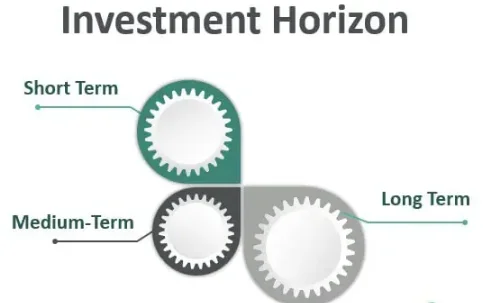
An investment horizon period calculates how long you intend to invest in something, whether it is a collection of portfolio assets or a major life event like home ownership or retirement planning. You can decide how risky or aggressive your portfolio can be using time horizons. Investments with shorter time horizons should be less hazardous, such bonds and mutual funds.
You have less time to recover your losses from a high-risk investment if your investing horizon is short. However, if you have a long investment horizon, you have a little more time to withstand market volatility.

Despite the fact that they may sound comparable, long- and short-term investments are different. Your investment horizon determines how long you intend to keep investing. Given that you won’t be retiring anytime soon, retirement investing in your 30s would be seen as long-term. However, as you get older and closer to retirement, your investing time would be deemed short-term.

The underlying idea is that the majority of wise investments should increase in value over time. You can probably afford to be more active in the early years in order to take advantage of possibilities if you don’t need to withdraw your money from the markets for a time. After that, you can taper your investment mix to become more cautious as you approach your time objective. This will assist in securing earlier gains.

What are Long-Term Horizon Investments?

Similar to long-term investments, long-term horizon investments are made with the intention of increasing in value over time. For retirement or education savings, for instance, a long-term perspective investing strategy is ideal. These investments should be better equipped to withstand financial volatility since it tends to balance out the longer you retain your assets because they have years to grow before you need to withdraw your money.

A long-term horizon investing strategy’s initial asset allocation may be more aggressive. Since stock returns can be bigger than those of more cautious funds or bonds, the majority tend to be stock-heavy early on.

You would have more time for assets to appreciate as you drew closer to retiring if you started investing for retirement in your 20s or 30s. Thus, since you have more time for volatility to calm down, you would probably be better off taking a more aggressive approach earlier on.

What are Short-Term Horizon Investments?

Investments with a short time horizon are at the other end of the risk and time continuum. A short-term view indicates that you want to take money out of your investments more quickly. Saving for a vehicle or a house are two typical short-term investments.

If your primary short-horizon investment goal is to build a portfolio that is heavily weighted in stocks, you face a considerable risk of having your assets lose value if the market declines. Because of this, investing with a short-term view typically entails being cautious: consider bonds, funds, and some alternative assets.

Most investors who are approaching retirement are best suited by a short-term horizon investing plan. At age 55, keeping too much money in equities puts you at risk of suffering significant losses if the market declines.

What are Medium -Term Horizon Investments?

The medium-term investment horizon has a time restriction of three to ten years, and the risk is generally modest, though it can occasionally be significant. Investments can be made in mutual funds, shares, derivatives, commodities, medium-term bank deposits, etc. The risks and rewards associated with the securities are moderate.

The Importance of Long- and Short-Term Investments

It’s not necessary to choose between long- and short-term investments because they frequently complement one another. Stocks are more volatile than bonds but may produce higher profits over the long run than bonds, whereas bonds are long-term investments that help you develop steady returns. Additionally, you are free to sell at any time, without any conditions.

To either cash out soon or to increase your retirement nest egg as early as possible, a long-term horizon portfolio needs to set the correct pace for growth while controlling risk. Short-horizon investing entails adopting a more cautious stance while still allowing for some leeway for volatility and growth.

Your portfolio must be viewed as a balance between these two investing horizons. Being overly active in the near term could expose you to market conditions, which could potentially erase your gains. Going too cautious with your long-term investing portfolio could result in you missing out on higher returns that could have increased your nest egg earlier.

How Does it Affect Mutual Funds?

The duration and risk characteristics have an impact on the mutual fund’s investment. According to the demands of the consumers, it typically invests in mutual funds; they make investments in short-, medium-, and long-term plans. A mutual fund is categorised as both a short-term and long-term plan, just like investment programmes. Because mutual funds are regarded as solid investments, those who want to make them can do so through the investing horizons as well.

The managers of this horizon are contacted by the mutual fund companies as well for mutual fund investments. As a result, mutual fund businesses benefit from it.

Conclusion

The phrase “investment horizon” refers to the duration of an investment. A time horizon is another name for it. The funds are placed in safe securities throughout this time frame, which also results in lower returns. When funds are deposited over a medium period of time and invested in shares, derivatives, mutual funds, etc., the returns are also moderate. Consider a longer holding period for the investment. In that situation, the money is invested in risky assets like the foreign currency market, hedge funds, the real estate industry, etc., where the returns are larger over the long term.

FOR MORE INFO CLICK THIS SITE :https://learningsharks.in/

FOLLOW OUR PAGE: https://www.instagram.com/learningsharks/?hl=en

Understanding the Large Transactions in Smart Money?

large transactions in smart money involve substantial financial investments by experienced investors who employ advanced technologies, data analysis, and industry expertise to identify promising opportunities.
Large Transactions

Large transactions in smart money refer to significant financial transactions conducted within the realm of smart money, which typically involves the use of advanced technologies, automation, and data-driven decision-making. Smart money refers to capital invested by experienced and knowledgeable investors who have a deep understanding of the market and seek to generate high returns on their investments.

In the context of large transactions, smart money investors often allocate substantial amounts of capital into specific opportunities that they believe have the potential for significant growth or profitability. These transactions can take various forms, including venture capital investments, private equity deals, mergers and acquisitions, and strategic partnerships.

Smart money investors leverage their expertise, industry knowledge, and extensive networks to identify and evaluate attractive investment opportunities. They conduct thorough due diligence, analyzing financial data, market trends, competitive landscapes, and other relevant factors to assess the potential risks and rewards of the transaction.

Large transactions in smart money typically involve substantial amounts of money, sometimes reaching millions or even billions of dollars. The investment decisions are driven by a combination of quantitative analysis, qualitative assessments, and the investor’s experience and instincts.

Smart money investors aim to add value to their investments beyond just providing capital. They often offer strategic guidance, mentorship, and industry connections to the companies they invest in, intending to accelerate their growth and enhance their chances of success.

Moreover, smart money investors may actively participate in the management and decision-making processes of the invested companies, ensuring alignment with their investment goals and helping them navigate challenges and capitalize on opportunities.

Large transactions in smart money can have a significant impact on the companies involved, as well as the overall economy. They can fuel innovation, support entrepreneurial ventures, create jobs, and contribute to economic growth.

However, it’s important to note that not all large transactions involve smart money. While smart money investors typically target high-potential opportunities, there are also large transactions driven by other factors such as market speculation, market manipulation, or strategic considerations that may not necessarily be aligned with long-term value creation.

In summary, large transactions in smart money involve substantial financial investments by experienced investors who employ advanced technologies, data analysis, and industry expertise to identify promising opportunities. These transactions can have a transformative impact on companies and the economy, driving growth, innovation, and value creation.

Importance of large transactions

The importance of large transactions lies in their potential to have a significant impact on the entities involved, as well as the broader economy. Here are some key reasons why large transactions hold importance:

  1. Economic Growth: Large transactions, especially in the form of mergers and acquisitions, can stimulate economic growth. They lead to the consolidation of resources, expertise, and market share, which can result in increased productivity, job creation, and overall economic development.
  2. Market Dynamics: Large transactions can reshape market dynamics by altering competitive landscapes, market concentrations, and industry structures. They have the power to disrupt existing market conditions, introduce new players, and drive innovation, ultimately leading to enhanced competition and consumer benefits.
  3. Industry Transformation: In many cases, large transactions are instrumental in driving industry-wide transformations. They can facilitate the adoption of new technologies, business models, and market strategies, leading to advancements and improvements across sectors. These transactions often serve as catalysts for change and evolution within industries.
  4. Capital Allocation: Large transactions involving smart money investors allocate significant amounts of capital to specific opportunities. This capital infusion helps businesses access the necessary resources to expand, innovate, and pursue growth strategies. It facilitates the efficient allocation of financial resources towards high-potential ventures.
  5. Value Creation: Large transactions can create substantial value for the entities involved, including shareholders, investors, employees, and other stakeholders. Through synergies, economies of scale, and operational efficiencies, these transactions aim to unlock new growth opportunities and generate higher returns on investment.
  6. Strategic Alignment: Large transactions often enable companies to align their strategic goals and capabilities with complementary entities. This alignment can result in improved operational efficiency, expanded market reach, diversified product portfolios, and shared expertise. It allows companies to capitalize on synergies and gain a competitive advantage.
  7. Investor Confidence: Large transactions can instill investor confidence and attract capital to the market. The execution of significant transactions signals positive prospects and growth potential, attracting both domestic and foreign investors. This infusion of investment can further stimulate economic activity and provide opportunities for additional value creation.
  8. Innovation and Research: In certain cases, large transactions facilitate the pooling of resources and expertise, enabling increased investment in research and development. This can lead to advancements in technology, product innovation, and scientific breakthroughs, benefiting society as a whole.

Overall, large transactions play a vital role in shaping the business landscape, driving economic growth, and fostering innovation. They represent significant opportunities for companies to unlock value, achieve strategic objectives, and contribute to the overall development of industries and economies.

Advantages and Disadvantages of Large Transactions

Advantages of Large Transactions in Smart Money:

  1. Access to Capital: Large transactions in smart money provide companies with significant funding to fuel their growth and expansion plans. This capital infusion can help businesses develop new products, enter new markets, and invest in research and development.
  2. Expertise and Guidance: Smart money investors bring not only financial resources but also industry knowledge, experience, and networks. Their involvement can provide valuable guidance, strategic direction, and operational expertise to the invested companies, helping them navigate challenges and make informed decisions.
  3. Accelerated Growth: With the support of smart money investors, companies can potentially experience accelerated growth. The additional capital and expertise can help them scale their operations, penetrate new markets, attract top talent, and implement effective business strategies.
  4. Increased Credibility: Large transactions with smart money investors can enhance a company’s reputation and credibility in the market. The association with reputable investors can instill confidence in other stakeholders such as customers, suppliers, and potential partners, leading to new business opportunities and partnerships.
  5. Networking Opportunities: Smart money investors often have extensive networks within the industry. Their connections can open doors to valuable partnerships, strategic alliances, and distribution channels that can benefit the company’s growth trajectory.

Disadvantages of Large Transactions in Smart Money:

  1. Loss of Control: When companies engage in large transactions with smart money investors, they often have to dilute their ownership stakes. This means giving up a portion of control and decision-making authority to the investor, which may not always align with the original vision or goals of the company’s founders.
  2. Potential Conflicts of Interest: Smart money investors may have conflicting interests with the company or its founders. Their focus on generating returns on investment may sometimes diverge from the long-term objectives or values of the company, leading to potential conflicts and compromises.
  3. High Expectations and Pressure: Smart money investors expect a significant return on their investment. This can create high expectations and put pressure on the company to deliver rapid growth and profitability. The added pressure can sometimes lead to short-term decision-making or neglecting other important aspects of the business.
  4. Loss of Flexibility: Large transactions with smart money investors often come with specific terms and conditions that can limit the company’s flexibility in making certain strategic decisions. The investor’s approval may be required for significant actions, which can slow down decision-making processes.
  5. Exit Strategy Challenges: Smart money investors typically aim to exit their investments and realize their returns within a certain timeframe. This can create pressure on the company to meet specific milestones or achieve liquidity events, which may not always align with the company’s organic growth trajectory or long-term vision.

It’s important to note that the advantages and disadvantages can vary depending on the specific circumstances and the dynamics between the company and the smart money investor. Companies should carefully evaluate the potential benefits and drawbacks before entering into large transactions with smart money investors and consider whether the partnership aligns with their long-term objectives and values.

Conclusion

In conclusion, large transactions, particularly those involving smart money investors, hold great importance in the business world and the broader economy. These transactions have the potential to drive economic growth, reshape market dynamics, and foster industry transformations. By allocating substantial capital and leveraging expertise, large transactions facilitate strategic alignment, value creation, and innovation. They attract investor confidence, stimulate job creation, and contribute to overall economic development. However, it is essential for companies to carefully consider the advantages and disadvantages associated with such transactions to ensure alignment with long-term goals and values. Overall, large transactions play a pivotal role in shaping industries, driving progress, and creating opportunities for sustainable growth and prosperity.

FOR MORE INFO CLICK THIS SITE :https://learningsharks.in/

FOLLOW OUR PAGE: https://www.instagram.com/learningsharks/?hl=en

Understanding Short-Term Investments: A Comprehensive Guide

Short-term investments are also holdings that a company owns but intends to sell within a year.
Short Term Investments

Introduction

Welcome to our in-depth guide to short-term investments. In this article, we’ll look at short-term investments, also known as temporary investments. We hope to give you a thorough understanding of the concept, benefits, risks, and strategies associated with short-term investments. Whether you’re a first-time investor or an experienced investor looking to improve your portfolio, this guide will provide you with the information you need to make sound investment decisions.

What are Short-Term Investments?

Short-term investments are financial assets that are expected to be held for a short period of time, typically three to twelve months. These investments are distinguished by their transient nature, with the primary goal of preserving capital and generating modest returns in a short period of time. They allow investors to temporarily park their funds while they await other investment opportunities or to meet specific financial goals in the near future.

Types of Short-Term Investments

1. Treasury Bills

Treasury bills, also known as T-bills, are government-issued short-term debt instruments. Because of their low risk of default, they are regarded as one of the safest types of short-term investments. Treasury bills typically have maturities ranging from a few days to a year and are sold at a discount to face value, with the difference representing the investor’s return.

2. Certificates of Deposit

Banks and financial institutions offer Certificates of Deposit (CDs) as time deposits. They have fixed maturities and pay a fixed interest rate for the term specified. CDs are popular among conservative investors looking for stable short-term investment opportunities because of their low risk and guaranteed returns.

3. Money Market Accounts

Banks and credit unions offer money market accounts that pay interest. They combine the benefits of a savings and checking account, allowing for easy access to funds while earning a higher interest rate than a standard savings account. Money market accounts typically have limited check-writing capabilities and may have a higher minimum balance requirement in order to earn the advertised interest rate.

4. Short-Term Bonds

Short-term bonds are debt securities issued by governments, municipalities, and corporations that typically have maturities ranging from one to five years. These bonds pay fixed interest payments at regular intervals until the bond matures. They offer a higher yield than other short-term investments but come with a slightly higher level of risk.

5. Commercial Paper

Commercial paper is a type of unsecured promissory note issued by corporations to fund short-term obligations like payroll and accounts payable. These notes are usually issued for a few days to nine months and are sold at a discount to their face value. Commercial paper has competitive yields and is popular among institutional investors looking for relatively safe short-term investment options.

Benefits of Short-Term Investments

  • Liquidity: Short-term investments are highly liquid, allowing investors to quickly access their funds when needed.
  • Capital Preservation: These investments are designed to preserve capital rather than generate high returns, making them suitable for risk-averse investors.
  • Diversification: Short-term investments, when included in a well-rounded portfolio, can help diversify risk and provide stability during market fluctuations.
  • Flexibility: Short-term investments provide flexibility, allowing investors to adjust their strategies and capitalize on emerging opportunities.

Risks of Short-Term Investments

  1. Interest Rate Risk: Changes in interest rates can affect the yield and market value of short-term investments.
  2. Risk of Inflation: If the rate of inflation exceeds the rate of return on investment, the purchasing power of the funds may deteriorate over time.
  3. Credit Risk: Credit risk exists in certain short-term investments, such as commercial paper, because the issuing entity may fail to meet its financial obligations.
  4. Market Fluctuations: Short-term investments are not immune to market volatility, and their value can fluctuate depending on economic conditions and investor sentiment.

Strategies for Short-Term Investments

  • Laddering: Laddering is the practice of distributing investments across multiple short-term instruments with staggered maturity dates. This strategy helps to preserve liquidity while potentially increasing returns.
  • Yield Optimization: Investors can investigate various short-term investment options to identify those that provide the highest yields while posing the least risk.
  • Interest Rate Trends: Staying up to date on interest rate trends can help investors make timely decisions about their short-term investments.
  • Regular Portfolio Review: Reviewing your short-term investment portfolio on a regular basis allows you to assess performance, adjust strategies, and ensure alignment with your financial goals.

Conclusion

Finally, short-term investments are critical components of a well-diversified investment portfolio. You can optimize your financial goals by understanding the types, benefits, risks, and strategies associated with short-term investments. When choosing short-term investment options, keep your risk tolerance, financial objectives, and time horizon in mind. You can navigate the world of short-term investments and improve your overall investment strategy by taking a balanced approach and conducting thorough research.

FOR MORE INFO CLICK THIS SITE:https://learningsharks.in/

FOLLOW OUR PAGE:https://www.instagram.com/learningsharks/?hl=en