Price of Zomato: The 14-day relative strength index (RSI) for the security was 64.31. Oversold is defined as a value below 30, and overbought as a value beyond 70. The price-to-earnings (P/E) ratio of the company’s stock is 603.43, while the price-to-book (P/B) ratio is 3.39.
Shares of Zomato have a one-year beta of 1.66, which indicates strong volatility.
On Monday, shares of online food aggregator Zomato Ltd. declined, ending a five-day gaining streak. Over its previous level of Rs 82.47, the shares ended 2.78 percent lower at Rs 80.18. On Friday of previous week, it reached a 52-week high price of Rs 85.25.
At its closing price today, it has increased by 49.59% over the last 12 months and 33.08% so far in 2023. Analysts claim that the company’s most recent earnings and global corporate restructuring have increased investor trust.
According to the technological setup, support for the counter may be found between Rs. 70 and 75, while Zomato may encounter opposition between Rs. 85 and 90. One of the analysts added that the stock might surpass the Rs.100 mark by the end of 2023.
The stock has given a price volume breakout over Rs 73-75 levels, according to Osho Krishan, Senior Analyst, Technical & Derivative Research at Angel One. The stock’s prospects is still encouraging, in our opinion.
“The stock has witnessed a decent spurt from the consolidation phase of Rs 75 zone to resists near the peak of Rs 85 level with some profit booking witnessed,” said Vaishali Parekh, Vice-President of Technical Research at Prabhudas Lilladher.
The 14-day relative strength index (RSI) for the counter was 64.31. Oversold is defined as a value below 30, and overbought as a value beyond 70. The price-to-earnings (P/E) ratio of the company’s stock is 603.43, while the price-to-book (P/B) ratio is 3.39. A one-year beta of 1.66 for the stock indicates strong volatility.
“Zomato is doing great for the last six months, especially after restructuring its global business,” says Vaibhav Kaushik, Research Analyst at GCL Broking. All drawbacks have now been factored in. By the end of the year, we have a target price of Rs 133.
Companies try to gain a competitive edge in today’s fiercely competitive business environment by successfully reaching their target audience. Market segmentation emerges as a critical tactic, enabling businesses to target particular customer groups with their marketing initiatives. Because of this, companies are better able to comprehend customer needs, improve their goods and services, and ultimately spur growth. In this thorough article, we delve into market segmentation from all angles, revealing its importance, advantages, and how it enables businesses to thrive in a constantly changing marketplace.
What is Market Segmentation?
Market segmentation, as its name implies, is the process of dividing a larger market into different segments based on shared traits, requirements, or behaviors. Each segment represents a uniform group of people who have comparable tastes, passions, and spending habits. Businesses can develop targeted marketing strategies by gaining insights into the various needs of their customer base through the identification of these segments.
Importance of Market Segmentation
Market segmentation is essential to business success and comes with a number of noteworthy benefits. Let’s examine some of the main justifications for market segmentation’s importance:
1. Enhanced Customer Understanding
Businesses can better understand their customers by segmenting the market. They can examine psychographic elements like lifestyle, values, and interests as well as demographic data like age, gender, income, and location. This thorough understanding enables companies to develop customized marketing materials, goods, and experiences that appeal to their target market.
2. Improved Marketing ROI
Businesses can more efficiently allocate resources and optimize their marketing efforts with segmentation. Companies can deliver highly relevant messages and offers to targeted segments by customizing marketing campaigns, which boosts engagement, conversion rates, and overall return on investment (ROI).
3. Targeted Product Development
Product development is influenced by market segmentation, which offers insights into consumer preferences and unmet needs within particular segments. Businesses can customize their goods or services to meet these particular needs, resulting in increased customer satisfaction and a competitive advantage in the market.
4. Competitive Advantage
Businesses can spot market gaps and unearth untapped opportunities by understanding market segments. Companies can set themselves apart from rivals and establish themselves as the go-to solution provider for particular customer groups by focusing on underserved or ignored segments.
Types of Market Segmentation
Let’s now investigate the various kinds of market segmentation frequently used by businesses:
1. Demographic Segmentation
Customers are categorized using demographic segmentation based on factors like age, gender, income, education, occupation, marital status, and more. The segmentation approach helps businesses tailor their marketing strategies by offering insightful information about consumer behavior patterns and purchasing power.
2. Psychographic Segmentation
Focusing on customers’ lifestyles, personalities, attitudes, values, and interests is known as psychographic segmentation. Businesses can design marketing campaigns that are in line with the beliefs and motivations of their target market by understanding the psychographic characteristics of that market. This leads to stronger relationships and increased brand loyalty.
3. Geographic Segmentation
Based on geographic factors like location, climate, population density, or cultural preferences, geographic segmentation divides the market. This segmentation strategy acknowledges the impact of regional factors on consumer behavior and enables companies to tailor their offerings to particular regions or nations.
4. Behavioral Segmentation
Customers are categorized using behavioral segmentation based on their purchasing habits, product usage, brand loyalty, or desired advantages. Businesses can target the particular behaviors and needs of each segment by adjusting their marketing strategies based on an analysis of how customers interact with their goods or services.
The Process of Market Segmentation
Successful market segmentation requires a methodical approach that includes the following crucial steps:
1. Research and Data Collection
Conducting in-depth market research and data collection is the first step in market segmentation. Businesses use a range of research techniques, including surveys, focus groups, interviews, and data analysis, to learn more about their target market.
2. Identifying Segmentation Variables
Businesses decide which segmentation variables are pertinent based on the research’s findings. Depending on the niche market and sector, these variables may be of a demographic, psychographic, geographic, or behavioral nature.
3. Segmenting the Market
Businesses decide which segmentation variables are pertinent based on the research’s findings. Depending on the niche market and sector, these variables may be of a demographic, psychographic, geographic, or behavioral nature.
4. Developing Personas
Following the identification of market segments, businesses develop fictional personas of each segment’s typical customers. Personas enable companies to humanize their target market and gain a deeper understanding of their needs, wants, and pain points.
5. Tailoring Marketing Strategies
Businesses can create specialized marketing plans for each market segment by having a clear understanding of each one. These tactics ought to take into account the target audience’s particular traits, tastes, and behaviors.
Conclusion
Businesses looking to succeed in a crowded market can use market segmentation as a potent tool. Companies can create targeted marketing campaigns, provide individualized experiences, and gain a competitive advantage by thoroughly understanding their customers. Improved customer satisfaction, higher return on investment, and the capacity to quickly adjust to changing market trends are all benefits of effective market segmentation. Embrace market segmentation as a pillar of your business strategy to fully realize the enormous potential for success and growth it offers.
Stocks signify ownership in a company that is publicly traded. When you buy stock in a company, you become a shareholder with the right to a share of the company’s assets and earnings. On stock exchanges like the New York Stock Exchange (NYSE) or the London Stock Exchange (LSE), stocks are typically bought and sold. Stock investments may have the potential to increase in value and pay dividends.
Types of Stocks
Common Stocks: The most popular kind of stocks on the market are common stocks. You may receive dividends and have voting rights in the company’s decision-making as a common stockholder.
Preferred Stocks: Over common stocks, preferred stocks have some advantages. Priority is given to preferred stockholders when it comes to receiving dividends and getting their money back in the event of a liquidation. They typically do not have voting rights, though.
How Stocks Work
Trading accounts are used to buy and sell stocks. Investors have the option of holding stocks in their portfolio for the long term or trading them quickly in the hopes of making a profit. Several variables, such as market demand, company performance, prevailing economic conditions, and investor sentiment, have an impact on stock prices.
Risks Associated with Stocks
Investing in stocks comes with inherent risks, including:
Market Volatility: Due to the state of the market and investor activity, stock prices can change significantly.
Company Performance: Stock prices may decrease as a result of unfavorable financial results, management problems, or bad news..
Economic Factors: Stock market performance may be impacted by inflation, interest rate changes, or economic downturns.
What are Shares?
Shares, which are frequently used interchangeably with stocks, refer to a company’s ownership units. Shares specifically refer to ownership in a corporation, as opposed to stocks, which have a more general definition and can represent ownership in any type of company. Shares and stocks essentially convey the same idea, but the terminology may change depending on the situation.
Types of Shares
Different share classes with unique traits can be issued by corporations. Here are a few typical examples:
Ordinary Shares: Investors who purchase ordinary shares, also referred to as common shares, may be eligible for dividends and voting rights. They give the business a share of their ownership..
Preference Shares: Similar to preferred stocks, preference shares give shareholders specific preferences. These could include increased claim to company assets in the event of liquidation and priority dividend payments.
How Shares Work
An initial public offering (IPO) is how a business issues shares when it decides to go public. On the stock market, these shares can then be purchased and sold. Depending on the kind of shares they own, shareholders can benefit from things like voting rights, dividends, and a piece of the company’s assets.
Key Differences Between Stocks and Shares
Although shares and stocks are frequently used interchangeably, there are some distinctions:
Scope of Ownership: Shares relate specifically to ownership in corporations, whereas stocks can refer to ownership in any type of company.
Terminology: Shares are a particular subset of stocks that relate to ownership in a corporation, whereas stocks is a more general term.
Legal Implications: While stocks may not always have the same legal context as shares, shares frequently have legal implications, such as voting rights.
Conclusion
In conclusion, anyone entering the world of investing needs to understand the distinction between stocks and shares. Common and preferred stocks are two different types of stocks that represent ownership in a publicly traded company. Conversely, shares signify particular ownership stakes in a corporation. Investors have the chance to benefit from a company’s success and expansion through shares and stocks.
Thank you for visiting our thorough guide to the most popular market indicators used by investors to assess the health of the US stock market and economy. We will give you in-depth explanations of these indicators’ significance and how they can assist you in making wise investment decisions in this article.
1. Gross Domestic Product (GDP)
One of the key market indicators used to evaluate the state of the US economy is GDP. The total value of goods and services produced within the nation’s borders is measured. GDP growth is denoted by an increase, while a decline could signify a slowdown. Investors closely monitor GDP to assess the state and trajectory of the economy as a whole.
2. Unemployment Rate
Another important metric that reveals the health of the labor market and the economy as a whole is the unemployment rate. An economy with a low unemployment rate is likely to be healthy because it means that a sizable portion of the labor force is employed. On the other hand, a high unemployment rate might indicate a weak economy. Investors can better predict changes in the stock market by keeping track of changes in the unemployment rate.
3. Consumer Price Index (CPI)
The Consumer Price Index tracks changes in an assortment of goods and services’ average prices over time. It is employed to keep an eye on economic inflationary trends. Rising inflation reduces purchasing power, which has an impact on both investors and consumers. Investors can evaluate the effect of inflation on the stock market and modify their investment strategies by understanding CPI data.
4. Stock Market Indexes
The overall performance of the US stock market is monitored using several stock market indices as benchmarks. The Dow Jones Industrial Average (DJIA), the S&P 500, and the NASDAQ Composite are the three indexes that receive the most attention. These indexes are made up of a chosen selection of stocks that represent different economic sectors. To assess market trends and choose which investments to make, investors examine the performance of these indexes.
5. Interest Rates
The Federal Reserve’s control over interest rates has a big effect on how the economy as a whole and the stock market operate. Interest rate changes have an impact on borrowing costs, consumer spending, and business profitability. Low interest rates make it more affordable for businesses to borrow money, which helps the economy grow. On the other hand, higher interest rates may result in less borrowing and a slower rate of economic growth. In order to predict market movements, investors keep a close eye on interest rates.
6. Earnings Reports
Publicly traded companies’ earnings reports offer significant insights into their financial performance. Positive earnings reports frequently result in a rise in investor confidence and stock prices. On the other hand, unfavorable earnings can cause market turbulence. Investors examine earnings reports to assess the profitability and expansion potential of specific businesses as well as the market as a whole.
7. Economic Indicators
Retail sales, housing starts, and manufacturing activity are just a few examples of the economic indicators that offer insightful data on various industries and the overall economy. Investors can use these indicators to evaluate the state of the economy and spot new trends. Investors can assess the overall health of the economy and make more informed decisions about sector-specific investments by keeping an eye on economic indicators.
Conclusion
In conclusion, for investors looking to navigate the US stock market and make wise decisions, understanding the most popular market indicators is essential. Investors can gain important insights into the state of the economy and modify their investment strategies by keeping an eye on indicators such as GDP, unemployment rate, CPI, stock market indices, interest rates, earnings reports, and economic indicators.
A broker is essential in the world of financial markets because they make it easier to buy and sell different financial instruments. Brokers act as a bridge between traders and the markets with their skill and knowledge, ensuring smooth and effective transactions. We will examine the duties, functions, and significance of brokers in this article, illuminating the crucial elements that make them indispensable in the financial sector.
What is a Broker?
A broker is a person or business that connects buyers and sellers in the financial markets. By connecting buyers and sellers or connecting them to the appropriate trading venues, they make it possible for market participants to execute trades. Licensed professionals with extensive knowledge of financial instruments, market dynamics, and regulatory frameworks are brokers in the majority of cases. They serve as dependable counselors, assisting their clients as they navigate the complex financial environment.
Types of Brokers
Brokers come in a variety of forms, with each one specializing in a different aspect of the financial markets. Here are a few typical examples:
Stock Brokers: On behalf of their clients, stock brokers facilitate the buying and selling of stocks and other securities. They carry out trades on stock exchanges, guaranteeing the prompt and accurate fulfillment of orders.
Forex Brokers: Trades can take part in the foreign exchange market thanks to forex brokers. Investors can speculate on changes in exchange rates because they offer access to currency pairs and trading platforms.
Commodity Brokers: Trades in commodities like gold, oil, wheat, and natural gas are facilitated by commodity brokers who are experts in doing so. They support hedging, physical delivery, and price discovery for these commodities.
Real Estate Brokers: In property transactions, real estate brokers help both buyers and sellers. They guide clients through the complexities of the real estate market, facilitate negotiations, and guarantee that everything is done legally.
Insurance Brokers: Between people or companies looking for insurance and insurance companies, insurance brokers act as middlemen. They assess their clients’ requirements, suggest appropriate policies, and aid in the resolution of claims.
Functions of a Broker
To ensure smooth transactions and deliver value to their clients, brokers carry out a variety of tasks. Among the crucial duties are:
Market Access: Brokers give their clients access to various financial markets so they can buy or sell the assets they want. For effective execution, they keep in touch with exchanges, liquidity providers, and other market players.
Order Execution: Brokers carry out client orders when they are placed. By obtaining competitive prices and reducing transaction costs, they aim for best execution.
Research and Analysis: Brokers frequently provide research and analysis services to help clients make wise investment choices. Based on their knowledge and access to pertinent data, they offer market insights, reports, and recommendations.
Risk Management: By providing clients with risk assessment tools, hedging techniques, and advice on risk mitigation, brokers assist clients in managing risk. They support portfolio diversification and put client-specific risk management strategies into practice.
Regulatory Compliance: Brokers make sure that all applicable laws, rules, and standards are followed. To safeguard clients’ interests and preserve market integrity, they keep the required licenses current and follow regulatory requirements.
The Importance of Brokers in Financial Markets
The effectiveness, liquidity, and stability of the financial markets are significantly influenced by brokers. Here are some major arguments for the necessity of brokers:
Market Liquidity: By connecting buyers and sellers, brokers promote liquidity by ensuring a steady stream of trading activity. Their involvement increases market depth and facilitates effective price discovery.
Expertise and Guidance: Brokers have a thorough understanding of the financial markets, which allows them to provide their clients with professional advice and direction. They assist investors in navigating complicated investment options, streamlining portfolios, and spotting advantageous trading opportunities.
Transaction Efficiency: Brokers increase the effectiveness of transactions thanks to their knowledge and access to cutting-edge trading tools. They use technology to speed up trading by minimizing slippage, executing trades quickly, and doing so.
Risk Mitigation: Brokers support clients in minimizing investment-related risks. They assist in protecting clients’ capital and providing protection from market volatility by offering risk analysis, diversification strategies, and risk mitigation techniques.
Market Transparency: By disseminating data on market trends, prices, and trading volumes, brokers help to increase market transparency. The market participants benefit from this transparency because it breeds confidence.
Conclusion
Brokers are crucial players in the financial markets because they connect traders with the intricate world of finance. Investors seeking efficient and secure trading experiences can benefit greatly from their expertise, market access, and variety of services. Brokers are essential in enabling people and businesses to navigate the complex financial landscape, whether by executing trades, offering research insights, or managing risks.
Welcome to our in-depth guide to portfolio management, the practice of strategically allocating funds among various assets to generate the best returns while assuming the lowest possible risk. The fundamental ideas, tactics, and best practices that can assist you in efficiently managing your investment portfolio will be covered in this article. Portfolio management expertise is essential for long-term financial success, regardless of your status as an individual investor, business, or institution.
Understanding Portfolio Management
Defining Portfolio Management
The systematic process of building, optimizing, and maintaining an investment portfolio designed to achieve particular monetary objectives is referred to as portfolio management. It involves selecting investments wisely and distributing capital among a variety of assets, including stocks, bonds, mutual funds, real estate, and commodities. Through proper asset allocation, diversification, and ongoing monitoring, the ultimate goal is to balance increasing returns and reducing risks.
The Importance of Portfolio Management
For a number of reasons, effective portfolio management is crucial.
Risk Management: The goal of portfolio managers is to lessen the effect of market volatility on the overall portfolio by diversifying investments across various asset classes and industries. This strategy protects against potential losses and reduces risk.
Capital Preservation: Portfolio managers actively manage the investments they have made while looking for opportunities for growth. They also periodically rebalance their portfolios. They continuously evaluate the performance of the portfolio and make changes to adapt to shifting market conditions and financial objectives.
Optimized Returns: The goal of portfolio managers is to produce consistent and competitive returns over the long term by utilizing a variety of investment strategies. Better investment decisions can be made thanks to their knowledge of market trends, thorough research, and opportunity identification.
Key Principles of Portfolio Management
Asset Allocation
An essential component of effective portfolio management is asset allocation. It entails allocating funds among various asset classes, including stocks, bonds, and cash equivalents, in accordance with an investor’s risk appetite, time horizon, and financial objectives. Each asset class’s potential returns and risks are taken into account in a well-balanced portfolio.
The most effective asset allocation is made possible by the efficient frontier, a visual representation. It shows the asset combination that provides the best expected return for a particular level of risk. Portfolio managers can effectively manage asset allocation to maximize returns and reduce risk by carefully examining historical data, market trends, and economic indicators.
Diversification
By spreading investments across various assets, industries, and geographical areas, diversification is a key strategy used in portfolio management to lower risk. Portfolio managers can lessen the impact of any negative events or market fluctuations on the overall portfolio by avoiding over-concentration in a single investment.
The assets in a well-diversified portfolio typically have different risk and return profiles. By balancing gains in one asset class with potential losses in another, this diversification encourages stability and reliable performance.
Risk Management
Risk management is prioritized by portfolio managers using a variety of techniques and strategies, such as:
Risk Assessment: It is essential to carefully evaluate the risk involved with each investment. To assess potential risks, portfolio managers look at variables like historical volatility, company financials, market trends, and geopolitical events.
Stop-loss Orders: Stop-loss orders are put into use to automatically sell a security if its price drops below a predetermined level, thereby reducing potential losses. This risk management tool guards against sizable declines in specific investments.
Hedging: To lessen the effects of unfavorable price changes in the market, portfolio managers may employ hedging strategies like options contracts or futures. These derivative financial products offer some protection against possible losses.
Continuous Monitoring and Rebalancing
Portfolio management is an ongoing process that calls for regular rebalancing and constant monitoring. Over time, changes in market conditions, economic variables, and individual investments may affect how well a portfolio performs. Optimal asset allocation is maintained by routine portfolio reviews, assessments of the portfolio’s alignment with financial objectives, and necessary adjustments.
To restore the desired allocation, rebalancing involves buying or selling assets within the portfolio. By doing this, it is ensured that the portfolio continues to follow the intended risk and return objectives. Investors can profit from new opportunities and adjust to shifting market dynamics by actively managing their portfolios.
Conclusion
Portfolio management is a complex process that calls for knowledge, restraint, and a thorough comprehension of market dynamics. You can optimize your investment portfolio to achieve long-term financial success by adhering to the key principles outlined in this manual, such as strategic asset allocation, diversification, risk management, and continuous monitoring.
It’s important to consult with a qualified financial advisor or portfolio manager who can adjust strategies to your unique needs and goals because portfolio management is highly personalized. The first step to achieving financial security and maximizing returns is to create a well-structured portfolio that is in line with your risk tolerance and financial goals.
Set out on your path to effective portfolio management with confidence!
Welcome to our thorough short selling guide. We will delve deeply into the idea of short selling in this article, examining its nuances, tactics, and potential risks. Our goal is to give you a thorough understanding of this investment strategy so you can use it to your advantage when making decisions in the financial markets.
What is Short Selling?
An investment strategy known as short selling enables investors to make money when the value of an asset declines. Selling borrowed assets in the hopes that their value will decline is known as short selling, in contrast to traditional investing, where investors buy low and sell high. By employing this strategy, investors can profit from both rising and falling markets, potentially increasing their returns.
The Mechanics of Short Selling
Let’s go through a step-by-step procedure to better understand the short selling process:
Identifying an Opportunity: The first step in short selling is to choose an asset you think will lose value. In this stage, in-depth research, analysis, and market knowledge are essential.
Borrowing the Asset: You borrow an appropriate asset from a broker or another investor who already owns it once you’ve found it. Then, this lent asset is offered for sale.
Selling the Asset: You then proceed to sell the borrowed asset on the open market at the going rate. The resulting money is kept as security.
Waiting for the Price to Fall: As a short seller, you anticipate the asset’s price to fall in the future. You can repurchase the asset for less if your prediction comes true.
Closing the Position: To close your short position, you buy back the same number of shares you borrowed and return them to the lender. The difference between the initial selling price and the repurchase price represents your profit or loss.
Short Selling Strategies
1. Fundamental Analysis
Fundamental analysis is a strategy employed by short sellers to identify overvalued assets. It involves evaluating various factors such as financial statements, industry trends, and competitive positioning to determine the intrinsic value of an asset. By identifying assets that are likely to decline in value, short sellers can profit from their anticipated downward trajectory.
2. Technical Analysis
Technical analysis focuses on historical price patterns and market trends. Short sellers using this strategy analyze charts, indicators, and trading volumes to predict future price movements. By identifying potential resistance levels or patterns signaling a trend reversal, short sellers can take advantage of downward price movements.
3. Contrarian Approach
The contrarian approach involves going against prevailing market sentiments. Short sellers employing this strategy look for assets that are overhyped or excessively valued due to market speculation. By taking a contrarian stance, short sellers can profit from market corrections when the price of the asset adjusts to its intrinsic value.
Risks and Considerations
While short selling presents opportunities for profit, it is important to be aware of the associated risks. Here are some key considerations:
Unlimited Loss Potential: Unlike traditional investing, where losses are limited to the initial investment, short selling carries the risk of unlimited losses. If the price of the asset rises significantly instead of falling, the short seller may face substantial losses.
Margin Calls: If the borrowed asset’s price rises significantly, the broker may issue a margin call, requiring the short seller to deposit additional funds as collateral or close the position. Failure to meet a margin call can result in forced liquidation of the position.
Market Volatility: Short selling can be particularly challenging in volatile markets, where rapid price movements can increase the risk of significant losses or unexpected margin calls.
Conclusion
Short selling is a sophisticated investment strategy that offers the potential for profits in both rising and falling markets. By understanding the mechanics of short selling and employing effective strategies, investors can capitalize on opportunities presented by declining asset prices. However, it is crucial to carefully consider the risks involved and conduct thorough research before engaging in short selling activities.
In your daily lives, you must have come across terms like “stock market” and “share market.” What then is the stock market? If you are merely an average investor, you can get by without giving this term much thought. However, having some fundamental knowledge is crucial if you plan to stick with it and want to learn how to trade shares. A stock exchange is a fundamental marketplace where buyers and sellers can transact in publicly traded shares during market hours. There are two main stock exchanges in India. The Bombay Stock Exchange (BSE) and the National Stock Exchange (NSE) are the two. So let’s start by learning the fundamentals of the stock market.
Why invest in share market?
Warren Buffet once said, “Investing is laying out more money now, to get more money back in the future.” Although some believe that “investing in shares” is a risky proposition, studies have shown that choosing the right shares and holding them for a long time may be the key to beating inflation. Additionally, it might even be a more advantageous investment choice than buying gold or real estate. Having said that, investing in the appropriate shares can assist traders in turning a profit.
How to Invest in Share Market?
You must open a Demat and trading account in order to invest in the stock market. That is required.
After that, select the shares you want to buy and sell by logging into your trading and Demat accounts. Make certain you have enough money in your account to purchase those shares. You must provide the required supporting documentation. Your account will be opened once the verification process is complete.
The price range at which you want to buy and sell shares is up to you to decide. then watch for the buyer or seller to carry out that demand.
You either receive shares or money for the stocks you purchased or sold once the transaction is complete.
Types of share market
The Share market can be classified into two types, namely the Primary and Secondary Markets.
PRIMARY MARKET
SECONDARY MARKET
A company must first trade on the Primary market before it can be listed on the stock market. If a company is selling shares for the first time, it is known as an Initial Public Offering (IPO), and the goal of entering the primary market is to raise money.
The shares are traded on the secondary market after being sold on the primary market. The stock exchange is where secondary market transactions, or trades, take place. In this case, the investors trade shares among themselves at a predetermined price. Typically, a broker serves as an intermediary to make these transactions possible.
What Is Traded On The Share Market?
There are four types of financial instruments that are traded on the stock exchange. They are as follows : –
Shares – It stands for a portion of equity ownership in a business. Shareholders are people who own stock in a company.
Bonds – A company issues bonds to the public as a means of raising capital. Bonds are the issuer’s collateral for loans. Instead of going to a bank, the business gets its funding from the bond buyers. It provides a fixed rate of return to its investors.
Mutual Funds –Companies called mutual funds pool money from many investors and invest it in a variety of securities, including stocks, bonds, and short-term debt.
Derivatives – Financial instruments known as derivatives derive their value from an underlying asset such as stocks, currencies, commodities, etc. Common examples of derivative instruments include futures and options.
How are Shares Priced in the Market and Who Determines the Price?
The price of a company’s shares is influenced by supply and demand in the market after its shares begin to trade openly on a stock exchange. If there are favorable factors, there will be a high demand for its shares, which will increase the share price.
Share Market Basics – Important Terms
Now that you have an idea of what the share market is, let’s take a look at some of the common, yet important terms that are used by traders and investors.
Demat Account: A demat account is a digital account used to store electronic holdings of securities like shares, bonds, and mutual fund units.
Stock Broker: The stock exchange and a trader or investor are connected through a stock broker. For the trader or investor, the broker places buy and sell orders on the stock exchange.
Trading Account: An electronic account offered by a stock broker is a trading account. The account can be used by buyers and sellers of shares and other securities on the stock exchange.
Portfolio: A portfolio is a grouping of investments made by an investor. It may be made up of various varieties of the same asset class or entirely different asset classes.
Index:A stock index is a grouping of stocks that are traded on stock exchanges. It can be used to gauge the performance of the stock market overall or just one particular sector.
Sensex:The Bombay Stock Exchange (BSE) created the broad market index known as Sensex. It consists of the top 30 BSE-listed companies in terms of market capitalization. Many important economic sectors and industries are represented among the index’s component parts.
Nifty: The National Stock Exchange created the broad market index known as Nifty. The top 50 NSE-listed companies in terms of market capitalization make up this group. Similar to the Sensex, the Nifty index consists of stocks from important economic sectors and industries.
Bullish Market: A market is considered to be bullish if stock prices have been increasing for some time.
Bearish Market: A market is referred to as a bearish market if stock prices have been declining for a while.
Opening Price: The price at which an asset is traded for the first time during a trading session is known as the opening price.
Closing Price: The price at which an asset’s final trade in a trading session is completed is known as the closing price.
Bid Price: The bid represents the highest price that the asset’s buyer is prepared to offer. Through the trading portal of the stockbroker, you can view the specifics of the list of bids for any asset.
Ask Price:The ask is the lowest price at which an asset’s seller is prepared to dispense with it. The trading portal for the stockbroker allows users to view the specifics of the list of asks for any asset.
Dividend: Companies occasionally give their shareholders a portion of their profits. A dividend is the name given to this profit distribution. Cash or additional shares may be distributed as dividends.
Derivatives: Financial instruments known as derivatives are special in that they derive their value from the value of an underlying asset. Derivatives can be freely traded on exchanges, just like shares. Futures and options are the two main derivatives that can be traded.
On Monday, Vikas Lifecare’s shares increased by roughly 3% to Rs 3.15, commanding a market valuation of more over Rs 450 crore.
The business segments in which Vikas Lifecare is active include master-Batches, compounds, and commodity polymer and rubber.
INTRODUCTION
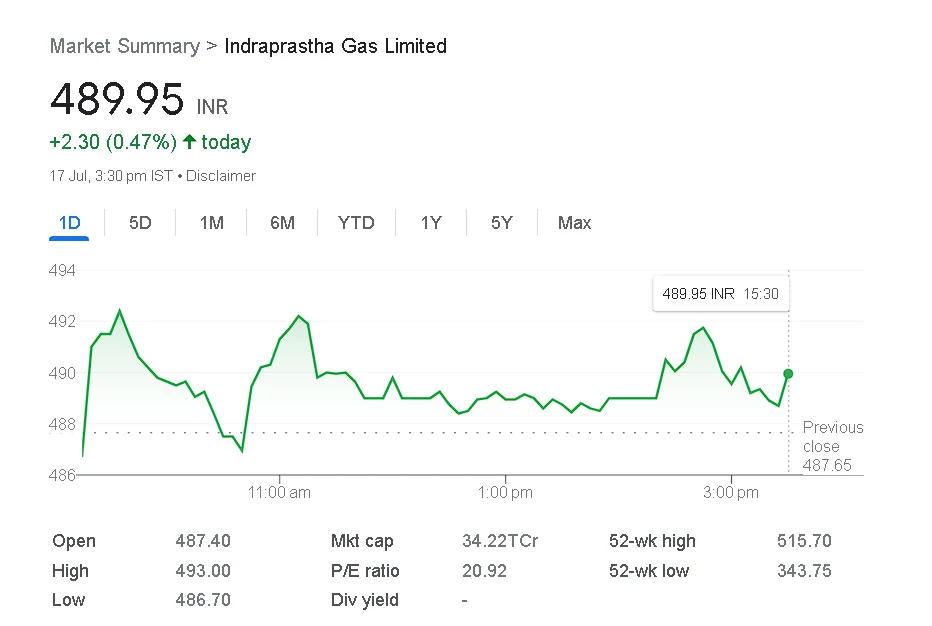
Following the company’s announcement that it had entered into a joint venture (JV) agreement with Indraprastha Gas (IGL), via its subsidiary, to establish a new production facility, shares of Vikas Lifecare increased by 3% on Monday during trade.
The first integrated smart metre manufacturing plant in India will be established through a joint venture between Vikas Lifecare’s subsidiary Genesis Gas Solutions and Indraprastha Gas Limited (IGL), according to the business in an exchange filing.
The company noted in the exchange filing that the planned joint venture’s name is IGL Genesis Technologies and that it was established on June 15, 2023. It stated that the factory will require capital investments of Rs 110 crore.
Following the news, Vikas Lifecare’s shares increased by roughly 3% on Monday to Rs 3.15, resulting in a market valuation of more over Rs 450 crore.
In accordance with the joint venture agreement, Genesis subscribed 4,90,000 equity shares, or 49% of the newly incorporated entity’s capital, compared to 5,10,000 equity shares, or 51%, subscribed by IGL.
In addition to building a gas metre manufacturing facility, the company will continue to sell, distribute, and supply gas metres as well as continue to offer services for metre asset management.
The business segments in which Vikas Lifecare is active include master-batches, compounds, and commodity polymer and rubber.
We think it’s important to give people useful information and insights so they can successfully navigate the complicated world of money. We shall examine the main stock market sectors in-depth in this post, illuminating their traits and giving readers a clearer grasp of their importance. You will have a strong basis to better comprehend and analyse the stock market’s movements after reading this article.
The Benefits of Knowing Stock Market Sectors
It is crucial to comprehend the numerous sectors that make up this enormous financial landscape while investing in the stock market. Groups of businesses with comparable operations or traits make up the sectors of the stock market. By grouping companies into sectors, investors can receive insights into the general performance and trends within particular industries, enabling them to make more educated investing decisions.
Exploring the Different Stock Market Sectors
1.The Tech Sector
Businesses that create and produce technological goods and services are included in the technology industry. It consists of a wide variety of companies, including software developers, hardware producers, and semiconductor companies. With technical breakthroughs fueling innovation and influencing our modern environment, the technology sector continues to be a major player in the stock market.
2.Financial Sector
Businesses that offer financial services, like banks, insurance companies, and investment firms, make up the majority of the financial industry. By offering a wide range of financial products and services to people, companies, and governments, this industry greatly boosts economic growth. Investors typically pay close attention to the financial sector since it can be a reliable sign of the state of the market as a whole.
3.Healthcare Sector
The healthcare sector includes medical facilities, medicines, biotechnology, medical equipment, and healthcare services. As the demand for healthcare increases globally, this industry presents excellent investment prospects. The success of healthcare equities can be significantly impacted by changes in demographics, technology, and regulations.
4.Industry Discretionary for Consumers
Retail, media, entertainment, and leisure are just a few examples of the non-essential goods and services that businesses in the consumer discretionary sector offer. This industry is significantly impacted by consumer purchasing patterns and the state of the economy. When examining consumer discretionary equities, it is essential to comprehend consumer patterns and behaviour.
5.Energy Sector
Energy-related businesses are engaged in the discovery, production, reprocessing, and distribution of energy sources like oil, gas, and renewable energy. This industry’s importance to the economy grows as the world’s energy consumption rises. The performance of energy equities can be significantly impacted by geopolitical developments, technological improvements, and environmental policies.
6.Commercial Sector
The industrial sector includes all aspects of construction, engineering, manufacturing, and transportation. Infrastructure growth and economic activity are strongly related to this industry. Investors should pay close attention to the industrial sector’s performance since it might reveal information about the state of the economy as a whole.
7.Sector of consumer staples
Consumer staples sector businesses offer necessities like food, beverages, household goods, and personal care products. Because these products are regarded as necessary regardless of economic situations, this industry is relatively resilient to economic downturns. Investors seeking security and reliable payouts usually choose for consumer staples.
8.Materials Industry
The extraction, processing, and distribution of raw materials and commodities are all activities carried out by businesses in the materials sector. Infrastructure growth and industrial activity are intricately tied to this sector of the economy. Government regulations, global supply and demand conditions, and commodity prices can all have a big impact on how well materials stocks do.
9.Property Sector
The real estate industry consists of businesses engaged in the creation, acquisition, and management of real estate, including residential, commercial, and industrial assets. Real estate investment trusts (REITs) are typically linked to this industry. Real estate performance is influenced by a number of factors, including interest rates, population growth, and monetary conditions.
10.Sector of Utilities
Businesses that supply necessary services like power, gas, and water are included in the utilities sector. This industry is relatively steady and less prone to economic volatility because these services are regarded as essentials. Investors generally view utilities as protective equities that offer reliable dividend payments.
Conclusion
Gaining a solid understanding of the major stock market sectors can help investors better analyse and evaluate market patterns. Technology, banking, healthcare, consumer discretionary, energy, industrial, consumer staples, materials, real estate, and utilities are just a few examples of the industries that each bring their own potential and difficulties. As you traverse the world of investing, keep in mind to perform extensive research and keep up with market trends to make wise investment decisions.