Learning sharks-Share Market Institute


Rajouri Garden  8595071711 7982037049  Noida 8920210950 , and  Paschim Vihar  7827445731  

Fee revision notice effective 1st Jan 2026; No change for students enrolled before 15th Jan 2026

Download “Key features of Budget 2024-2025here

7 best stocks for today and their technical analysis

The first the stock for today’s market are :

1.Reliance

A market trend refers to the general direction in which the prices of financial assets, such as stocks, bonds, commodities, or currencies, are moving over a specific period of time.
Market Trends

realince seems to be closest to its 52 week high. Should you buy right now?

In my opinion, \

\\Disclamer: This is just my opinion, not a financial advise. please contact your financial advisor for your investments.

What is Share Market?How does it Work?

Investors can buy and sell ownership interests in publicly traded firms on the share market, often known as the stock market or equity market. It serves as a platform for individuals and groups to invest in companies and take a stake by buying shares.

When a company goes public, shares are issued to represent ownership in the enterprise. Investors can buy and sell these shares based on their evaluations of the company’s performance and potential for the future because these shares are then swapped on the stock market. The financial performance of the company, the status of the economy, investor attitude, and market movements are just a few of the many factors that affect share prices.

The stock market’s main goals are to give investors access to liquidity so they may swiftly buy or sell shares on the exchange and to give firms a means of raising capital through initial public offerings (IPOs) and follow-up issues.

The stock market is crucial to the health of the economy as a whole because it offers investors the possibility to earn from capital gains and dividends while also enabling businesses to raise money for expansion and development. Investors should conduct their research and use caution because there are risks involved with stock market investing. It is crucial for someone who has no experience investing in the stock market to speak with financial advisors.

How Does It Work?

The operation of the stock market involves a number of significant players and procedures. Here is a little explanation of how it operates:

  • Businesses that seek to raise capital for development or other purposes may decide to go public. To do this, they issue shares to the broader public through an Initial Public Offering (IPO). Several factors, such as the company’s financial performance and potential for future growth, are taken into consideration when determining the initial price for its shares during an IPO.
  • Once they become available on the market, individual and institutional investors can purchase the company’s shares through a stockbroker or an online trading platform. Investors buy shares in the expectation that they would appreciate over time and, if the company pays dividends, result in capital gains and dividends.
  • Stock exchanges: The majority of share trading takes place on stock exchanges, which are regulated marketplaces where buyers and sellers come together to complete trades. Among the well-known stock exchanges are the New York Stock Exchange (NYSE), NASDAQ, London Stock Exchange (LSE), and Tokyo Stock Exchange (TSE).
  • The two main prices for each share reported on the exchange are the “bid” price and the “ask” price. The bid price is the highest price a buyer is willing to pay for a share, while the ask price is the lowest price a seller is willing to accept for their share. When these prices coincide, the shares are traded.
  • Investors can use market orders and limit orders, two different kinds of orders, to purchase or sell shares. With a market order, shares are bought or sold at the best available price. The ability to set a specific price at which they are willing to buy stock is provided by a limit order, on the other hand.
  • Market makers are employed by several stock exchanges to encourage liquidity and effective trading. Market makers are individuals or organisations that are willing to buy or sell shares at the quoted bid and ask prices. They help guarantee that there is always a market for the shares and limit significant price fluctuations.

Advantages and DisAdvantages of Share Market?

Advantages of Share Market

  • Large profits could be made through stock market investments, especially in the long run. Successful enterprises can expand rapidly, giving their investors a capital gain.
  • Ownership in prosperous businesses: You become a part-owner of a company when you buy shares, and you stand to profit from its expansion and profits. In addition, some companies distribute dividends to their owners, which is another reliable source of income.
  • Liquidity: The stock market is often quite liquid, making it very easy to buy and sell shares. Investors can readily convert their investment into cash when needed thanks to this liquidity.
  • Diversification: Investing in the stock market enables you to diversify your portfolio by dividing your money across several firms and industries. Diversification can assist reduce risk by reducing the effects of a single investment’s poor performance.
  • Accessibility: Individual investors now have an easier time investing in the stock market thanks to the growth of online trading platforms and brokerage services, which provides an opportunity for wealth creation and financial progress.

DisAdvantages of Share Market

  • Share prices in the market can change significantly due to a number of factors, such as the status of the economy, global politics, and investor sentiment. Market fluctuations can result in significant financial losses for investors, particularly if they have short investment horizons.
  • Risk of Loss: Because there are inherent risks when investing in the stock market, there is no guarantee that you will make money. In extreme cases, businesses may even file for bankruptcy, erasing all investment. Poor performance by some businesses may result in falling share prices.
  • Making emotional decisions: Due to market volatility and unpredictability, investors are prone to making emotional decisions, such as panic selling during market downturns or chasing speculative assets without performing appropriate research.
  • Investment success on the stock market requires both time and in-depth research on businesses, markets, and economic trends. Maintaining knowledge of appropriate facts is essential for making sensible investment decisions.
  • Political and Regulatory Risks: The stock market is affected by governmental policies and changes to the regulatory environment. Market mood and investment performance may be impacted by changes in regulations or political upheaval.

Conclusion

In Conclusion, there are opportunities and difficulties for investors in the stock market. It gives people and groups a platform to invest in companies, buy stock in them, and perhaps profit from dividends and capital growth. The advantages of stock market investing include the potential for large returns, ownership in profitable companies, liquidity, diversity, and increased accessibility via online trading platforms.

However, investing in the stock market has a number of significant disadvantages. Market volatility, loss risk, the need for time and research, regulatory and political issues, and the risks of short-term speculation are just a few of the factors that investors must take into mind.

To successfully navigate the stock market, people should have a long-term perspective, diversify their portfolios, and make well-informed decisions based on in-depth research. By consulting with financial professionals and maintaining a disciplined approach to investing, risks can be minimised and possibilities given by the stock market can be maximised. As with any investment, achieving financial goals through stock market participation takes careful planning, prudent risk management, and a commitment to education.

FOR MORE INFO CLICK THIS SITE:https://learningsharks.in/

FOLLOW OUR PAGE:https://www.instagram.com/learningsharks/?hl=en

Share Market Explained: A Comprehensive Guide

Introduction

Thank you for visiting our thorough guide to the stock market. This article will examine every facet of the stock market, arming you with the knowledge and in-depth insights you need to make wise investing choices. Investors purchase and sell shares of publicly listed corporations on the share market, also known as the stock market or equity market, which is a dynamic and ever-changing financial environment. Our objective is to arm you with the knowledge you need to properly navigate the stock market as well as to fully comprehend how it operates.

Understanding the Share Market

What is the Share Market?

In order to exchange shares of publicly traded corporations, buyers and sellers congregate on the stock market. When a business wishes to go public, it conducts an initial public offering (IPO) to sell shares of its ownership to the general public. Then, these shares are purchased and sold on a number of stock exchanges across the world, including the London Stock Exchange (LSE) in the UK, the New York Stock Exchange (NYSE), or NASDAQ in the United States.

How Does the Share Market Work?

The supply and demand laws provide the basis of how the stock market functions. A stock’s price tends to increase when there is strong demand for it, and vice versa. Numerous variables, such as the company’s financial performance, industry trends, economic indicators, and geopolitical events, have an impact on the dynamics of supply and demand.

The Benefits of Investing in the Share Market

There are many benefits to investing in the stock market, making it a desirable way to build money and increase one’s financial standing. Among the main advantages are:

  1. Potential for High Returns: In the past, the stock market has offered better returns than other conventional investing options, such bonds or savings accounts.
  2. Diversification: Spreading risk and lowering exposure to individual company volatility may both be accomplished by investing in a number of equities.
  3. Dividend Income: Many businesses provide their shareholders dividends out of their profits, creating a steady flow of money.
  4. Liquidity: High liquidity on the stock market enables investors to purchase and sell shares very fast.

Types of Investments in the Share Market

1. Stocks (Equities)

Shareholders are entitled to a piece of a company’s assets and income when they purchase stocks, which reflect ownership in the business. Common stocks and preferred stocks are the two types of equities that may be categorized.

2. Bonds

Bonds are debt instruments that governments or enterprises issue to raise money. Investing in bonds is similar to lending money to the issuer, who will pay you interest on a regular basis and refund the principle when the bond matures.

3. Mutual Funds

Mutual funds aggregate the capital of many investors and use it to buy a variety of stocks, bonds, and other assets. They are overseen by qualified fund managers.

Developing an Investment Strategy

1. Define Your Goals

It’s critical to establish your financial goals before you begin investing. Are you attempting to support your child’s education, your own retirement, or any of these goals? Each objective could call for a different strategy to investments.

2. Assess Your Risk Tolerance

Knowing your risk tolerance is crucial since it dictates the level of volatility you can accept in your investing. Younger investors with longer time horizons can usually afford to take greater risks, but investors who are getting close to retirement may favor a more cautious strategy.

3. Diversify Your Portfolio

A basic tenet of effective investment is diversification. You may lower risk and boost the possibility of consistent returns by diversifying your investments over a range of assets, sectors, and geographical locations.

Conclusion

In conclusion, investors looking to increase their wealth over the long term have a plethora of possibilities available to them on the stock market. Making educated selections requires a thorough understanding of investments, including their functions, advantages, and sorts. Keep in mind that investing has dangers, and it is always advised to seek guidance from a skilled financial advisor.

FOR MORE INFO CLICK THIS SITE:https://learningsharks.in/

FOLLOW OUR PAGE:https://www.instagram.com/learningsharks/?hl=en

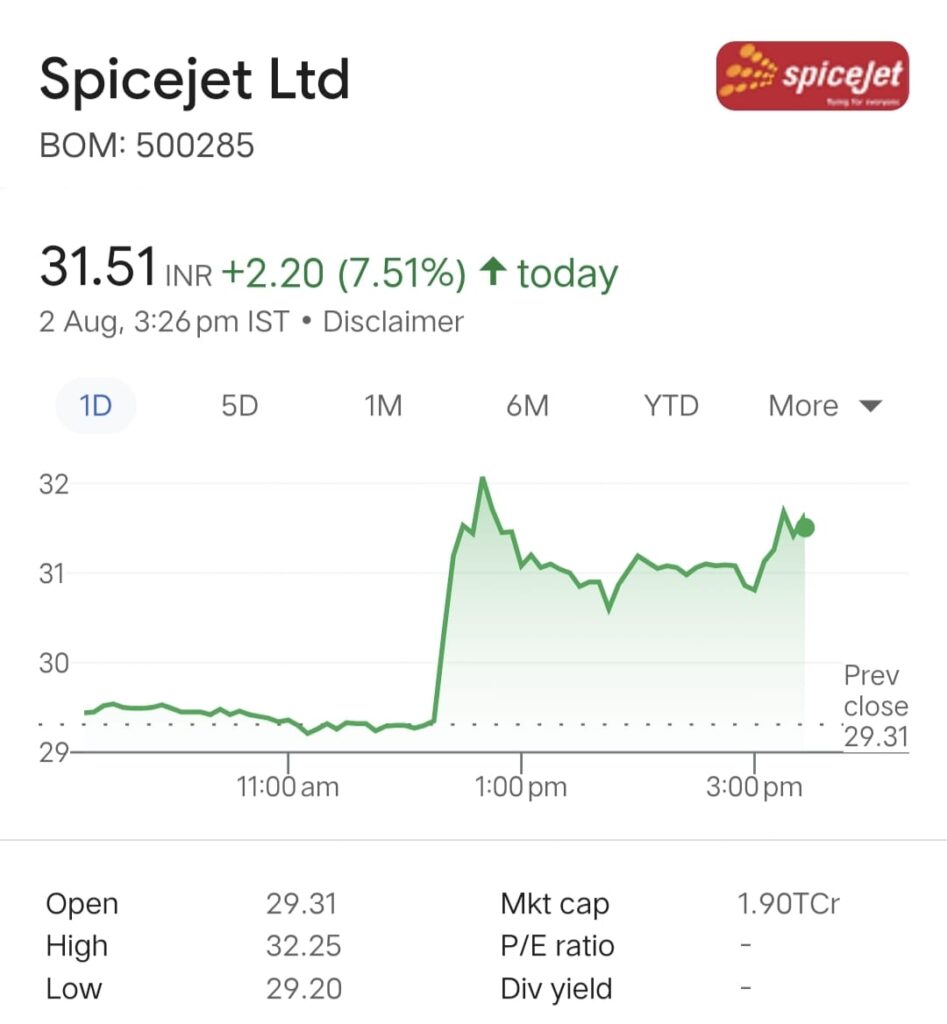
SpiceJet shares jump 10% today amid heavy volumes; here’s why

SpiceJet share price: SpiceJet also announced that it would ask shareholders for permission to re-appoint Singh as the company’s managing director for a term of three years beginning on May 21, 2023, as well as to approve his Rs 60 lakh monthly salary and a 2.50 per cent profit-sharing share.

The 30-share BSE Sensex pack lost more than 1,000 points and is now trading below the 65,450 mark, while the larger NSE Nifty pack lost more than 300 points and is now trading below the 19,450 level.
SpiceJet stock price: From its previous close of Rs. 29.31, the stock increased by 10.03% to reach a day high of Rs. 32.25.

INTRODUCTION

  • In strong trading volume, SpiceJet Ltd. shares climbed substantially on Wednesday, extending their gains for the third straight session.
  • On the BSE, over 54.78 lakh shares were traded today, far exceeding the volume of 10.85 lakh shares traded throughout the previous two weeks.
  • Today, there were 6,38,473 buy orders and 18,84,250 sell orders for the same number of shares.

In addition, SpiceJet announced that it would ask shareholders for their consent to re-appoint Singh as managing director of the business for a term of three years beginning on May 21, 2023, as well as to approve his request for a salary of Rs 60 lakh per month and a 2.50 percent profit-sharing share.

  • The stock was last observed trading above the 5-day, 10-day, 20-day, 30-day, 50-day, and 100-day simple moving averages (SMAs), but below the 150-day and 200-day SMAs, according to the technical setup.
  • In comparison to a negative price-to-book (P/B) value of 0.30, the company’s stock has a negative price-to-equity (P/E) ratio of 0.89.

According to Trendlyne statistics, the stock has an average target price of Rs 44, indicating a possible upside of 42%.

CONCLUSION

FOR MORE INFO CLICK THIS SITE:https://learningsharks.in/

FOLLOW OUR PAGE:https://www.instagram.com/learningsharks/?hl=en

Understanding the Forward Market: A Comprehensive Guide

Forward contract pricing is based on interest rate discrepancies.
Forward Market

Introduction

We will dig into the idea of the forward market in this extensive guide, examining its nuances, capabilities, and usefulness in the financial industry. The forward market is an essential part of the world financial system because it gives people and companies useful tools for managing risk and securing future transactions.

What is a Forward Market?

A financial over-the-counter (OTC) market where players trade forward contracts is referred to as the forward market. These agreements between two parties are for the purchase or sale of a certain item at a defined price on a given date in the future. The forward market provides for settlements at a later period, often ranging from a few days to many months, in contrast to regular spot markets, where transactions take place instantly.

Key Features of Forward Contracts

1. Customization

One of the primary advantages of the forward market is the flexibility it offers in contract customization. Parties involved in a forward contract have the freedom to tailor the terms according to their specific needs, such as choosing the contract size, maturity date, and underlying asset.

2. Hedging Against Price Fluctuations

Forward contracts are useful risk management instruments that give participants the ability to insure against changes in the price of the underlying asset. Businesses dealing with commodities, currencies, or other volatile assets would especially benefit from this since it gives them pricing certainty and lessens the impact of market volatility.

3. Absence of Intermediaries

Forward contracts are often private agreements made directly between the two parties involved, unlike futures contracts sold on exchanges. Greater privacy and personalization are possible, but there is also a counterparty risk because there is no clearinghouse to ensure that the contract will be fulfilled.

How Does the Forward Market Work?

1. Market Participants

A wide spectrum of players, including businesses, financial institutions, investors, and speculators, are catered to by the forward market. Each participant may engage in forward contracts for a variety of reasons, including hedging, speculation, or arbitrage.

2. Role of Financial Institutions

In order to make forward contracts possible, financial institutions are essential. They serve as middlemen, bringing together buyers and sellers and seeing to it that the contracts are properly carried out. Financial institutions may also provide advice services to customers looking for help navigating the difficulties of the forward market.

3. Pricing Mechanism

The current spot price of the underlying asset, interest rates, the length of time before maturity, and market demand are some of the variables that affect how much forward contracts cost. To arrive at a fair value for the contract, these factors are taken into account throughout the process of setting the forward price.

Forward Market vs. Futures Market

The forward market and the futures market are fundamentally different from one another, even if they have many things in common.

Similarities:

  • Both transactions involve purchasing and selling contracts for a future payment.
  • Both markets are available for hedging and speculating by participants.

Differences:

  • Standardization: Forward contracts can be customized and are traded over the counter in contrast to futures contracts, which are standardized and transacted on exchanges.
  • Counterparty Risk: Forward transactions have direct counterparty risk, but futures contracts are protected by the presence of a clearinghouse.
  • Regulation: While the forward market operates with fewer regulatory restrictions than the futures market, the futures market is subject to strict regulatory scrutiny.

Risks Associated with the Forward Market

Forward contracts have inherent risks, just like any other financial product, which participants must take into account.

1. Price Risk

Price risk refers to the probability that the market price of the underlying asset may change negatively and result in one of the parties to the contract suffering financial losses.

2. Counterparty Risk

Forward contracts don’t have the clearinghouse protection, thus there is a chance that one party may break their contractual duties, thereby causing financial losses for the other side.

3. Liquidity Risk

It may be difficult to exit or join positions quickly in the forward market for some assets due to a lack of liquidity, especially for less frequently traded instruments.

Conclusion

In conclusion, the forward market is essential to the world’s financial system since it gives players useful instruments for risk management, price hedging, and contract customization. For people, companies, and investors looking to make wise financial decisions, understanding the subtleties of the forward market is crucial. Always consider the dangers involved as you investigate the potential of the forward market, and where necessary, seek the advice of experts.

FOR MORE INFO CLICK THIS SITE:https://learningsharks.in/

FOLLOW OUR PAGE:https://www.instagram.com/learningsharks/?hl=en

The London Stock Exchange (LSE)

The London Stock Exchange (LSE) rivals the New York Stock Exchange (NYSE) in terms of market capitalization, trade volume, access to capital, and trade liquidity.
London stock exchange

Introduction

This comprehensive introduction to the London Stock Exchange (LSE), one of the most prominent financial exchanges in the world, is your warm invitation. We examine the history, organizational structure, distinctive qualities, and numerous factors that lead to the LSE’s significance in the finance industry as we dive into the LSE’s complexity in this article.

History of the London Stock Exchange

The London Stock Exchange was born in the 17th-century coffeehouses of London. A group of stockbrokers established the first exchange in 1698, and through time it evolved into the LSE that is in existence today. Over the years, the exchange has expanded tremendously as a result of changes in market dynamics and developments in technology.

Structure and Operations

Main Market

Most of its listings take place on the LSE’s Main Market, which caters to established, major corporations. This area is home to reputable domestic and international businesses from many industries. Strict regulatory criteria are followed by businesses listed on the Main Market, assuring responsibility and transparency.

Alternative Investment Market (AIM)

The Alternative Investment Market (AIM) provides a platform for smaller and emerging companies to access the capital markets. AIM offers a more hospitable regulatory setting that enables companies to acquire capital for expansion and innovation. It has become more well-known as a place to start for entrepreneurial activities as a result of a number of remarkable success stories that have surfaced over the years.

Trading Mechanism

The London Stock Exchange (LSE) operates the London Stock Exchange Electronic Trading Service (SETS), which is a platform for electronic trading. This method allows for efficient and transparent trading of derivatives, bonds, and stocks. SETS provides market players with access to real-time trade data, ensuring fair price discovery.

Key Market Indices

FTSE 100

The main index of the London Stock Exchange is the FTSE 100 index, sometimes referred to as the “Footsie.” It shows the performance of the top 100 firms listed on the exchange based on market capitalization. The FTSE 100, a well-liked yardstick for the UK stock market, is keenly followed by investors all over the world.

FTSE 250

The FTSE 250 index is made up of the 250 businesses that follow the FTSE 100 in terms of market capitalization. It provides more investment choices and a broader view of mid-cap firms’ performance for investors.

FTSE All-Share

The FTSE All-Share index covers the whole spectrum of companies listed on the LSE. It includes companies from the FTSE 100, FTSE 250, and other more niche market categories. The FTSE All-Share index provides a complete evaluation of the performance of the UK stock market.

Benefits of Listing on the London Stock Exchange

Access to Capital

Companies with LSE listings have the opportunity to raise capital from a range of investors, including institutional investors, individual investors, and players in global markets. Growth, R&D, and other strategic objectives can be supported by this financial accessibility.

Enhanced Visibility and Reputation

Being listed on the LSE enhances a company’s visibility and reputation, which instills trust in stakeholders and investors. It indicates commitment to rigorous governance norms and procedures, which may attract investors and possible business partners.

Liquidity and Trading Volume

Due to its large trading volume and liquidity, the LSE offers a liquid market for listed securities. large liquidity ensures the ease with which investors may purchase and sell shares, and market players seeking vibrant and active trading environments are drawn to markets with large trading volumes.

The Impact of Technology on the London Stock Exchange

The advancement of technology has had a huge influence on the LSE as well as the whole financial industry. The advent of computerized trading systems, algorithmic trading, and high-frequency trading has transformed the efficiency and speed of trading activities. These technical advancements have increased market access, facilitated better price discovery, and encouraged more market openness.

Conclusion

The London Stock Exchange (LSE) is a symbol of outstanding financial achievement and significance on a worldwide level. Thanks to its extensive history, wide range of market areas, and technical improvements, the LSE continues to play a significant role in facilitating capital creation and fostering economic progress. Whether you are a business searching for capital or an investor looking for possibilities, the London Stock Exchange (LSE) offers a platform that blends heritage, innovation, and great market performance.

FOR MORE INFO CLICK THIS SITE:https://learningsharks.in/

FOLLOW OUR PAGE:https://www.instagram.com/learningsharks/?hl=en

Top 10 Rules for Successful Trading?

If someone wants to learn how to trade stocks profitably, they merely need to spend a few time online to find advice like “plan your trade; trade your plan” and “keep your losses to a minimum.” These tidbits appear more like a diversion to inexperienced traders than helpful advice.

The following advice will boost your chances of succeeding in trading.

KEY LEARNINGS

  • Instead of as a job or a hobby, trade professionally.
  • Consider your options while keeping learning.
  • Set realistic goals for your company.

Rule 1: Always put a trading plan into action.

A set of guidelines known as a trading strategy specifies the parameters for each purchase’s entry, exit, and money management.

Test a trading concept with the technologies of today before putting actual money at risk. A backtest, which enables you to ascertain whether your trading concept is practical, can be carried out using prior data. A strategy can be employed in live trading after it has been developed and backtesting yields encouraging results.

Rule 2: Trade in a professional manner.

Trading must be viewed as a full- or part-time business, not as a pastime or a profession, if you want to be successful.

If learning is viewed as a hobby, it isn’t genuinely prioritised. Lack of a consistent paycheck while working could be irritating.

Trading involves costs, losses, taxes, uncertainty, stress, and risk because it is a business. You must conduct research and develop a plan if you want to enhance the trading potential of your company.

Rule 3: Utilise technology to its fullest extent

Trading is a cutthroat industry. It’s acceptable to assume that the party on the other side of a contract is utilising all currently accessible technologies to their fullest extent.

Traders can monitor and analyse markets in a wide range of ways thanks to charting software. Using historical data to backtest a theory helps to avoid expensive mistakes. We can follow trading from anywhere thanks to market alerts on smartphones. For instance, a speedy internet connection is a common piece of technology that could improve trading success.

Trading may be enjoyable and rewarding if you use technology to your advantage and stay current with new items.

Rule 4: Protect your trading money.

It takes effort and time to save enough money to open a trading account. Repeating the process can make it more challenging.

It’s crucial to understand that safeguarding your trading funds doesn’t guarantee you’ll never lose a trade. Every trader has suffered a setback. Avoiding pointless risks and doing everything you can to keep your trading business profitable are both essential components of capital protection.

Rule 5: Gain market knowledge.

It takes effort and time to save enough money to open a trading account. Repeating the process can make it more challenging.

It’s crucial to understand that safeguarding your trading funds doesn’t guarantee you’ll never lose a trade. Every trader has suffered a setback. Avoiding pointless risks and doing everything you can to keep your trading business profitable are both essential components of capital protection.

Rule 6: Wait until you can afford to lose before taking chances.

Make sure the funds in that trading account are refundable before investing real money. The trader should continue saving if it isn’t till it is.

The mortgage or college costs should not be paid with funds from a trading account. Never let traders believe that these other significant obligations are only a source of credit.

Even losing money can be terrible. Even more so if the money in question was money that was never in risk to begin with.

Establish a Fact-Based Methodology, Rule 7

It is worthwhile to take the time to create a trustworthy trading method. The notion that trading is “so easy it’s like printing money” can lead you to fall for one of the trading scams that are widely publicised online. But a trading plan should be created using facts rather than relying on sentiment or hope.

For traders who are less eager to learn, the quantity of information available online is frequently simpler to browse. If you wished to start a new career, you had to complete at least one or two years of college or university education before you were eligible to apply for positions in the new profession.

Rule 8: Always use stop losses

A stop loss indicates the maximum risk a trader is willing to take on each transaction. The stop loss limits the trader’s exposure during a transaction and can be expressed as a percentage or a dollar amount. Because we know we can only lose a certain amount on any one trade, using a stop loss helps reduce some of the stress associated with trading.

Even if the transaction is profitable, it is terrible practise to not employ a stop loss. Using a stop loss to close off a losing transaction is still excellent trading as long as it adheres to the trading plan’s rules.

Rule 9: Know when to stop trading.

An poor trading strategy and an ineffective trader are two reasons to stop trading.

When tested historically, an unsuccessful trading strategy results in more losses than expected. That occurs. The markets may have changed, or the volatility may have decreased. The trading strategy is simply not working as expected for any reason.

Keep your coolness and emotionlessness. Reviewing the trading strategy is necessary before changing it or beginning a new one.

A poor trading strategy is a problem that has to be fixed. The trading industry does not have to vanish as a result.

Rule 10: Keep Your Distance When Trading

When trading, always keep the overall picture in mind. We shouldn’t be shocked by a bad deal; it happens in business. A successful business can only be started by taking the initial step. successful business. The long-term benefits are what really matter.

Emotions have less of an impact on a trader’s performance after they embrace wins and losses as a normal part of the trading process. The truth is that there’s always a chance of losing a trade. This is not meant to suggest that we can’t become excited when a transaction is really lucrative.

To maintain perspective when trading, set realistic goals. Your company should generate a respectable return in a reasonable amount of time.

FOR MORE INFO CLICK THIS SITE:https://learningsharks.in/

FOLLOW OUR PAGE:https://www.instagram.com/learningsharks/?hl=en
Stock Market Courses Online Free?

share market courses - Learning sharks and Trading Academy Basic Trading Courses | Experts Trading Institute
stock market courses online free with certificate stock market courses in delhi online stock market courses in delhi fees top 10 stock market institute in delhi best institute for stock market courses in delhi stock market courses near me top 10 stock market training institutes in india stock market courses for beginners

There are numerous websites that provide free stock market courses:

  • Massive Open Online Course (MOOC) platform Coursera collaborates with renowned institutions of higher learning to provide courses online. They provide a number of free courses about investing, money, and the stock market.
  • Udemy: Another online learning environment, Udemy provides classes on a variety of topics, including the stock market. Some classes don’t cost anything, while others do.
  • The non-profit educational organisation Khan Academy provides free online classes on a range of topics, including investing and finance.
  • Investopedia Academy: The well-known investing and finance website Investopedia provides online classes on a range of topics, including the stock market. Some of their courses can be taken for no cost, while others cost money.
  • YouTube: A lot of independent investors and financial professionals have produced free films on the stock market, investing, and finance on YouTube.
    Learning Sharks: One of the top institutions for stock market education, noted for its high-quality instruction and fierce competition. On this website, the core modules are fee-based. Though this page contains free stock market knowldge online.

These courses can be a great place to start if you’re interested in learning more about the stock market or investing, but they might not provide you a comprehensive grasp of the subject. It is essential to approach free online courses cautiously and to increase your vigilance and study before enrolling.

Should I Enrol in a Free or Paid Course?

You should enroll in a paid or free stock market course depending on the amount of knowledge and help you need, as well as your ambitions. Here are some ideas to consider:

  1. Learning ObjectivesIf you’re just getting started and want to understand the stock market on a fundamental level, a free course may be adequate. However, if you want to learn more sophisticated strategies and have a deeper grasp of stock market investing, a paid course might be a better option.
  2. Content Quality: Paid courses frequently provide a more extensive learning experience with top-notch tools. Free courses, on the other hand, could not cover every aspect of the subject or just contain a small quantity of information.
  3. Support and Interaction: Paid courses usually provide more contact and assistance, including opportunities for questions, personalized attention, and comments on your progress.
  4. Credibility: Paid courses provided by well-known institutions and organizations sometimes have a higher degree of legitimacy and come with an official certificate of completion.

Your goals, the caliber of the course material, and the level of assistance you require will all influence whether you choose a free or paid stock market course. If you are just starting out and want to have a fundamental understanding of the stock market, a free course can be a good option. But if you’re serious about investing and want a deeper understanding, investing in a paid course might be a better choice.

The following websites provide free online stock market education:

  1. Coursera: https://www.coursera.org/courses?query=stock%20market
  2. Udemy: https://www.udemy.com/topic/stock-market/
  3. Khan Academy: https://www.khanacademy.org/economics-finance-domain/core-finance
  4. Investopedia Academy: https://www.investopedia.com/academy/
  5. YouTube: https://www.youtube.com/results?search_query=stock+market+course

Note: In addition to offering free courses, some websites might also offer premium courses. To make sure that the courses you select are of excellent quality and in line with your learning objectives, it is crucial to thoroughly examine the course content and instructors.

FOR MORE INFO CLICK THIS SITE:https://learningsharks.in/

FOLLOW OUR PAGE:https://www.instagram.com/learningsharks/?hl=en

Understanding Market Risk: A Comprehensive Guide

Market risk, or systematic risk, affects the performance of the entire market simultaneously.
Market risk

Introduction

Investors encounter a variety of concerns in the constantly changing financial landscape. Every investor has to understand market risk in order to make wise choices and succeed. We will go deeply into the idea of market risk, its varieties, and how it affects investing in this extensive book. Our goal is to arm you with the information needed to successfully and confidently navigate the financial markets.

What is Market Risk?

Market risk, also known as systematic risk or non-diversifiable risk, is the possibility of suffering losses as a result of unfavorable changes in the market. It has an influence on all investments and the overall performance of the financial market. Market risk, as contrast to unsystematic risk, cannot be removed via diversification because it is a natural part of investment.

Understanding the Types of Market Risk

1. Equity Risk

Equity risk is the most common type of market risk and arises due to fluctuations in stock prices. It is influenced by various factors, including company performance, economic conditions, geopolitical events, and investor sentiment. Investors in stocks must be aware of this risk as the value of their portfolios can fluctuate significantly based on market movements.

2. Interest Rate Risk

Changes in interest rates may have an effect on fixed-income assets like bonds, which is what interest rate risk is all about. Rising interest rates cause the value of current bonds to decline, potentially resulting in losses for investors who sell their bonds before they mature. On the other hand, lowering interest rates may cause bond prices to increase, resulting in profits for investors.

3. Currency Risk

Investors who are exposed to overseas assets or engage in international commerce are subject to currency risk, commonly referred to as exchange rate risk. Changes in exchange rates can have an effect on the value of assets made abroad and produce gains or losses when converting such investments back to their home currencies.

4. Commodity Risk

Investments in commodities like gold, oil, or agricultural items are linked to commodity risk. Investment values may significantly fluctuate as a result of price volatility in these markets.

5. Systemic Risk

Risks such as economic downturns, financial crises, or regulatory changes are referred to as systemic risks since they have an impact on the whole financial system. It is difficult to forecast and may have broad effects on many asset types.

Managing Market Risk

Understanding and controlling market risk is essential for long-term success as an investor. Here are some methods for reducing market risk:

1. Diversification

Spreading assets over a variety of asset classes, industries, and geographic areas is a fundamental risk management strategy. Investors can do this to lessen their exposure to certain market moves and shield their portfolios against big losses.

2. Hedging

Investors can utilize financial products like options or futures to hedging their current positions against prospective losses. Using it can help investors preserve their investment positions while providing adequate protection against unfavorable market swings.

3. Dollar-Cost Averaging

Regardless of the market’s current price levels, investors who use the dollar-cost averaging approach continually invest a certain sum of money in it at regular intervals. This method helps to develop a disciplined investing approach and lessens the influence of market volatility on total investments.

4. Risk Tolerance Assessment

Determining the best investing plan requires knowing one’s risk tolerance. Investors must assess their capacity and desire to withstand adverse market volatility and adjust their portfolio as necessary.

Conclusion

Gaining financial stability requires understanding the complexities of market risk, which is an inescapable component of investment. Investors may successfully handle the difficulties presented by market risk by diversifying their investments, using hedging measures, and determining their risk tolerance. Remember that the secret to success in the fast-paced world of finance is an informed and methodical approach to investing.

FOR MORE INFO CLICK THIS SITE:https://learningsharks.in/

FOLLOW OUR PAGE:https://www.instagram.com/learningsharks/?hl=en
What is Market Trends:Also Discuss Its Types?

A market trend refers to the general direction in which the prices of financial assets, such as stocks, bonds, commodities, or currencies, are moving over a specific period of time.
Market Trends

The overall direction that the values of financial assets, such as stocks, bonds, commodities, or currencies, are moving over a certain period of time is referred to as a market trend. Trends can go in one of three directions: upward (bullish), downward (bearish), or even sideways. For traders and investors to make wise judgements, understanding and recognising market patterns is essential.

How to Spot a Market Trend

There are several ways to spot Market Trends, including:

  • Pricing Patterns: Examining pricing patterns and charts might aid in spotting trends. A downtrend has lower highs and lower lows, whereas an uptrend has higher highs and higher lows.
  • Moving Averages: Moving averages can be used to illustrate the general trend direction by averaging out price changes over time.
  • Draw trendlines to visually validate trends by joining consecutive lows in an uptrend or consecutive highs in a decline.
  • Technical Indicators: Oscillators such as the Moving Average Convergence Divergence (MACD) and Relative Strength Index (RSI) can identify overbought or oversold levels, assisting in trend identification.
  • Volume Analysis: Examining trade activity coupled with price changes reveals a trend’s strength and viability.
  • Fundamental Analysis: Fundamental variables that might affect and validate market trends include company earnings and economic data.

Different trends:

  • Primary Trend: The price movement of an asset over the long term is known as the primary trend, sometimes referred to as the major trend. The most important trend, it might last from months to years. Investors frequently try to match their plans with the main trend.
  • Secondary Trend (Intermediate Trend): Within the major trend, there is a more recent movement known as the secondary trend. The normal duration is between a few weeks and several months. Secondary downtrends (corrections) can happen during a primary uptrend, and vice versa.
  • Minor Trend (Short-term Trend): The shortest-term movement, lasting a few days to a few weeks, is the minor trend. News, current affairs, or brief changes in public opinion could have an impact. For short-term trading possibilities, traders frequently concentrate on tiny patterns.

How Trends Importance in Stock Market?

It is impossible to overstate the significance of trends in the stock market. Market trends offer vital information about the general direction of asset values, assisting traders and investors in making wise choices and effectively managing risk. Why it’s crucial to comprehend patterns in the stock market is explained here:

  • Making Strategic Decisions: Investors can match their investing plans with the market’s dominant direction by identifying and tracking market trends. Understanding the course of a trend, whether it is bullish (uptrend) or bearish (downtrend), enables investors to make decisions that are more likely to result in gains.
  • Risk management: Trends offer a structure for evaluating risks. Investors can assess the potential risk of a trade or investment by spotting trends. For instance, compared to trading against the trend, entering a trade in the direction of the main trend could be less risky.
  • Entry and quit Points: Trends can be a great resource for figuring out when to enter and quit a trade. To maximise possible returns, investors might try to enter positions on uptrend pullbacks or downtrend short-term bounces.
  • Confirmation of research: Taking market movements into account can frequently improve fundamental and technical research. By following the current trend, a fundamental study that predicts a successful company may be more appropriately timed.
  • Timing of Investments: Trends assist investors in determining the best time to allocate funds to various assets. In a bull market, for instance, investors would put more money into equities, whereas in a bear market, they might put more money into defensive assets.
  • Following patterns can help to reduce emotional bias in decision-making. Investors are less likely to respond impulsively to short-term price swings when they are aware of the overall trend.
  • Trends might be helpful when making long-term financial plans. Investors might modify their portfolios to favour asset types that follow the current trend.
  • Trend analysis is a fundamental component of technical analysis. The idea of trends is the foundation for chart patterns, trendlines, moving averages, and other technical tools. These instruments are used by technical analysts to forecast future price fluctuations.
  • Trends are a reflection of investment behaviour as well as market mood. Knowing trends helps market players better understand how they are responding to news, geopolitical events, economic data, and other variables.
  • Profit Opportunities: By using the right tactics, such as trend following, trend reversal, or breakout trading, traders can profit from both upward and downward trends.

Advantages and DisAdvantages of Trends

Benefits of Trend Following:

  • Trends offer a clear indication of the general market trend, which helps traders and investors make decisions.
  • Higher Probability deals: Trading in the trend’s direction will boost your chances of making deals that are profitable.
  • Reduced Risk: Following the trend helps reduce risk by avoiding deals that go against it and may result in losses.
  • Trends provide strategic entrance and departure points, allowing for better timing of purchases and sales.
  • Confirmation: The legitimacy of trading and investment decisions is increased when trends support other types of analysis.
  • Following trends lessens emotional bias, encouraging disciplined and logical trading behaviour.

Problems of Blindly Following Trends

  • Late Entry: Following a trend too late may cause you to miss out on profitable possibilities or enter at a possible turning point.
  • False Breakouts and Reversals: Trends occasionally encounter false breakouts and reversals, which causes losses for trend-following traders.
  • Rapid trend fluctuations can create whipsaw markets, which can result in losses for traders who are unable to swiftly react.
  • Market noise: Trends may not be obvious in turbulent or sideways markets, which can confuse traders and result in bad trading decisions.
  • Neglecting Fundamentals: By concentrating only on technical patterns, traders run the risk of failing to take into account crucial fundamentals that affect asset values.
  • Corrections and Overextension: Trading strategies that follow trends may be caught off guard by abrupt corrections that follow overextended trends.

Benefits of a Contrarian Strategy (Against the Trend)

  • Early Opportunities: Contrarian traders are able to identify prospective reversals before they happen, which can result in greater gains.
  • Less Congested Trades: By avoiding congested trends, contrarian trading lessens competition and possible price distortions.
  • Lower entrance Points: Trading against the trend can lead to lower entrance costs, which may maximise gains.
  • Flexibility: Traders who take a contrarian approach are well-equipped to negotiate altering market sentiment and spot turning points.

Benefits of a Contrarian Approach:

  • High chance: Trading against the trend might be riskier and carry a higher chance of losing money if the expected reversal does not occur.
  • Reversals are difficult to predict with accuracy, and poorly timed transactions can result in severe losses.
  • Emotional Stress: Trading against the direction of the market can lead to increased emotional stress for contrarian traders.
  • False reversals can occur in the markets, which can cost contrarian traders money.

Conclusion

In conclusion, trends provide traders and investors with insightful information that helps them make decisions and raises the likelihood that their transactions will be profitable. While it might be beneficial to follow trends because it is clear and reduces risk, doing so blindly can result in missed chances and losses. Contrarian techniques have advantages in that they may provide early entry points and adaptability, but they also carry greater risks and difficulties. Striking a balance when utilising trend analysis as one of many tools in a thorough trading or investment plan is the key.

FOR MORE INFO CLICK THIS SITE:https://learningsharks.in/

FOLLOW OUR PAGE:https://www.instagram.com/learningsharks/?hl=en