
Learning sharks-Share Market Institute


Rajouri Garden  8595071711 7982037049  Noida 8920210950 , and  Paschim Vihar  7827445731  

Fee revision notice effective 1st Jan 2026; No change for students enrolled before 15th Jan 2026

Download “Key features of Budget 2024-2025here

What is Debt Market ?

Investors trade debt securities on a platform called the debt market. Companies and governmental entities issue these securities to raise money for various purposes, including infrastructure development and company operations.

Connecting borrowers and lenders, enabling the movement of funds, and encouraging investment all depend on the debt market. Treasury bills, governmental bonds, and corporate bonds are some of the assets traded in the debt market. Investors get coupon payments as recurrent interest payments.

Due to the consistent income stream they offer, these assets are regarded as a secure investment alternative. Despite without acquiring ownership or equity in the issuer, investors contribute significantly to economic growth and stability by funding organizations such as governments and corporations.

Debt Market Explained

One of the biggest in Asia, the Indian debt market offers a potential alternative to conventional banking channels for financing needs. The government securities market (G-Sec) and the corporate bond market are its two primary subcategories.

  • Government Securities Market

The market for government securities includes securities issued by the federal and state governments to cover the budget gap. The RBI issues sovereign securities on behalf of the Indian government. These securities, often referred to as G-Secs, are seen as lower-risk investments and offer greater liquidity than corporate bonds. Additionally, the government issues Treasury bills to meet its short-term borrowing needs.

  •  Corporate Bond Market

A variety of financial instruments, including corporate bonds, debentures, public sector unit (PSU) bonds, and financial institution bonds, are available on the non-Gsec corporate bond market. Corporate bonds are debt securities that private corporations issue to raise money for operations, growth, and other capital requirements.

A company’s debt load increases when it issues bonds because it is required to make contractual interest payments to bondholders. No rights to the company’s future earnings or ownership in the borrower are granted to bondholders. The borrower is solely responsible for paying back the borrowed amount and any accumulated interest.

Several factors contribute to the perception of bonds as comparatively low-risk investments. First of all, compared to stock market volatility, bond market returns are less dramatic. Second, bondholders are paid first precedence over other expenses in the event that the company experiences financial difficulties. Bond returns, however, are often lower than those of other investing options like stocks and mutual funds.

The debt market offers investors a number of advantages that make it a desirable investment choice. To name a few:

●    High liquidity

Debt securities are exchanged every day, giving investors significant liquidity and the chance to immediately withdraw their investment capital.

●    Fixed Income

Debt securities give investors a steady revenue stream in the form of set interest payments.

●    Low-risk investment

Because they can generate a steady, predictable income stream with little fluctuation, debt securities are frequently seen as low-risk investment options.

●    Diversification

Through the debt market, investors have the opportunity to diversify their investment holdings by including a mix of debt and equity investments.

Types of Debt Markets

Debt markets are a key component of the financial environment. These marketplaces can be categorized broadly into two groups:

1. Primary

The platform where freshly produced debt securities are initially issued and sold to obtain funds is known as the primary market. Governments and businesses in this market start the debt financing process by offering shares, bonds, bills, and notes to investors. Companies can raise money to finance their operations, infrastructure expansion, and other initiatives using the main market as a platform. To safeguard investors, the Securities and Exchange Commission (SEC) imposes stringent regulations in the primary markets.

The primary market is shut down once all of the debt instruments included in the initial offering have been sold. This method allows investors to buy debt instruments directly from issuers, with all proceeds going to the issuer.

2. Secondary

After shutting the primary market, the secondary market, also known as the resale market, opens. Investors purchase and sell already-issued debt securities on this market. Each bond’s price and yield are decided by the secondary market’s movements. Investors purchase securities from other investors rather than the issuer directly.

The price of debt instruments on the secondary market is determined by market supply and demand, as opposed to the primary market, where they are all sold at a set price. The price of the bond will increase if there is a rise in demand, whereas the price will decrease if there is a rise in supply.

Since none of the bonds are registered on the stock exchange, they are all traded over the counter (OTC) in the secondary market. Brokers are contacted by investors to set up a sale or buy. Investors can readily enter or depart the secondary market, which is thought to be more liquid than the primary market.

Who can invest in debt markets?

Debt markets provide a variety of investors with investment options who may have various financial objectives, investment preferences, and risk tolerances. Due to the lesser risks involved with debt products compared to equities instruments, some investors prefer to engage in the debt markets. While debt markets offer investment choices that provide a fixed rate of return, some investors might be hoping for profits that are guaranteed.

For investors who would rather forgo conducting lengthy research, debt markets can be useful. Debt markets offer a reasonably stable and predictable investment environment in contrast to equity markets, which necessitate regular monitoring of market trends, economic data, and company-related updates.

Debt markets also give investors the option to put their money in storage and leave it there without having to worry about it too much. For investors who have a limited tolerance for risk or who want to diversify their portfolio with safer investing options, this can be crucial.

Conclusion

An essential but frequently ignored sector of the investment world is the debt market. Investors have a reliable and secure investing alternative, even though it might not offer as much excitement as the stock market. The debt market is a viable option to take into account if you’re a risk-averse investor, are searching for assured profits, or simply want to store your money without worrying about price changes. With a fundamental knowledge of the market and how it functions, you can start looking into the many investing opportunities and start assembling a diverse portfolio that includes debt instruments.

FOR MORE INFO CLICK THIS SITE:https://learningsharks.in/

FOLLOW OUR PAGE:https://www.instagram.com/learningsharks/?hl=en

What is Share Capital?

The money raised by a business to issue shares to the general public is referred to by the definition of share capital. Share capital is, to put it simply, the cash that shareholders invest in a company. It is a reliable source of long-term capital that supports efficient operations, financial growth, and profitability.

Capital primarily refers to the resources utilized to operate a firm. Alternately, it might be the funding needed to start a business. Share capital and capital are both interchangeable terms. The percentage of capital or interest held by a corporation is referred to as its share capital in the Indian Companies Act.

The money raised by the sale of common or preferred stock is referred to as a company's share capital.
Share capital

The maximum share capital is stated in the Company’s Memorandum of Association. By amending its Memorandum of Association, the firm may raise the maximum share capital. A business limited by stock additionally issues shares of capital, whereas a company limited by guarantee has no capital.

In a balance sheet, share capital is classified as a liability from the perspective of financial reporting. In the event of liquidation, the shareholders are given the remaining assets once all debts have been settled.

Classes of Share Capital

Generally, a firm can choose between two share capital classes:

A.    Preferred Share Capital
The money raised through the issuance of shares with privileged rights is known as preferred share capital. Fixed dividends are included under preferential rights. Additionally, stockholders who own preferred shares are entitled to receive funds before common shareholders. Preferred dividends must be paid by a corporation regardless of cash flows or debt instruments. The business has the option to pay preferred equity holders dividends in the future or at maturity.

 
B.    Common or Equity Share Capital
The share capital acquired through the issue of common shares is referred to as common equity. The shareholders receive a portion of the profits and voting rights through equity share capital. The business is not required to pay dividends, though. The business may additionally issue right issues or bonus shares to its common shareholders.

Types of Share Capital 

1.    Authorized Share Capital
Authorized share capital refers to the maximum number of shares a company may issue. The Memorandum of Association limits the authorized capital to a fixed amount. Authorized share capital is more than the total outstanding shares. 

A company may increase its authorized capital for several reasons, such as acquiring another company or employee stock options. Any change in the authorized capital requires shareholder approval since an increase in the authorized capital may shift the balance of power between the shareholders and other stakeholders. 

2.    Unissued Share Capital

Shares that have not yet been issued must be given to customers or staff members. Unissued stock is held in reserve by the corporation and has no effect on shareholders. Unissued shares are in control of the Board of Directors. The secondary market does not allow trading of unissued shares.

The majority of businesses hold a sizeable portion of their unissued shares. Unissued share capital has little value. The goal is to eventually sell or distribute unissued shares at a profit. Unissued shares may be used by the business to reduce debt or raise funds for fresh initiatives. If required, directors may even assign unissued shares to a minority shareholder.

3.    Issued Share Capital

The number of shares a corporation issues to its shareholders is known as the issued share capital. Common equity shares and preferred stock make up the issued share capital.

It makes up a significant portion of the shareholder’s money listed under liabilities on a balance sheet. Analysts also assess the value of common equity stock using issued capital. As an illustration, ABC Ltd. issues a million shares with a face value of Rs. The price per share set by the corporation is Rs. 15. Therefore, from the initial share sales, ABC Ltd. receives Rs. 10,000. The company’s reserves are made up of the surplus amount of Rs. 5000.

4.    Subscribed Capital

The authorized share capital of a corporation is the same as the registered capital. The subscribed capital makes up a portion of the issued capital. Investors commit to acquiring or subscribing to a company’s shares. The subscribed share capital payment may be made in installments.

The part of a company’s issued capital that has been accepted by the public is known as subscribed capital. The public expresses interest in a business by subscribing to its publication. Only a portion of the share capital may be issued by a firm at a time.

It might eventually issue more shares. Additionally, the firm may only demand partial payment of the share’s full face value.

5.    Paid-Up Capital

A company’s paid-up capital is the investment it receives from issuing shares. A business typically issues new capital to raise money. The company’s paid-up capital consists of new share capital. The minimum paid-up capital required is Rs. 1 lakh, as per the Companies Act of 2013.

Paid-up To do a fundamental analysis, capital is required. A business that has little paid-up capital could need to borrow money to fund its operations. High paid-up capital, on the other hand, denotes less reliance on borrowed money.

6.    Called-Up Capital

The corporation asks its shareholders to contribute a portion of the capital following the issue of shares. As a result, called-up capital provides greater investment and payment terms flexibility.

7.    Reserve Share Capital
Share capital that a corporation can only access in the event of bankruptcy is referred to as reserve capital. Only after passing a specific resolution is the corporation able to issue reserve share capital. A business cannot change its articles of organization to issue reserve share capital, as well. Reserve share capital is used to simplify liquidation. Reserve capital, which is subject to numerous limitations, serves as the business’s emergency funds.

FOR MORE INFO CLICK THIS SITE:https://learningsharks.in/

FOLLOW OUR PAGE:https://www.instagram.com/learningsharks/?hl=en

Mastering Intraday Stock Trading: A Comprehensive Guide

Mastering intraday trading can result in amazing returns and substantial financial gains in the quick-paced world of stock trading. In this extensive book, [Your Company Name] will provide the tactics, techniques, and insights that will help you surpass the competition and succeed in intraday stock trading because we at [Your Company Name] understand the nuances of intraday trading like no one else.

Intraday Stock Trading

Understanding Intraday Trading

Buying and selling stocks during the same trading day is known as intraday trading, also referred to as day trading. This strategy needs quick decision-making, a thorough grasp of market patterns, and the capacity to profit from brief price changes. Contrary to long-term investment, which involves holding assets for lengthy periods of time, intraday traders take advantage of volatility to generate quick profits.

Key Advantages of Intraday Trading

  1. Quick Profit Opportunities: Due to the many price changes that take place throughout a single trading day, intraday trading has the ability to generate profits quickly.
  2. Liquidity: Intraday traders can swiftly turn their holdings into cash because positions are opened and terminated within the same day, assuring strong liquidity.
  3. Risk Management: Due to the fact that positions are not exposed to overnight market fluctuations, which may cause surprise losses, intraday trading enables more precise risk management.
  4. Flexibility: Traders can modify their strategy in real-time to respond to market movements and profit from breaking news and trends.

Crafting Your Intraday Trading Strategy

Technical Analysis

The basis for intraday trading methods is technical analysis. Trading professionals can find probable entry and exit points by examining price charts, patterns, and indicators. Common implements are:

  • Candlestick Patterns: The identification of patterns like the Doji, Hammer, and Engulfing can reveal future price reversals.
  • Moving Averages: Different moving averages (such as simple and exponential) can be used to spot trends and possible levels of support and resistance.
  • RSI and MACD: Timing trades is made easier with the help of the Relative Strength Index (RSI) and Moving Average Convergence Divergence (MACD), which show overbought or oversold conditions.

Risk Management

In intraday trading, risk control is crucial. Use the strategies listed below to protect your money:

  • Set Stop-Loss Orders: Establish a specified exit point to reduce potential losses in the event that your trade goes wrong.
  • Position Sizing: Never put more than a modest portion of your overall cash at danger in a single transaction.

Fundamental Analysis

While technical analysis is frequently used in intraday trading, it’s also important to keep a watch on pertinent news and events. Stock prices can be quickly impacted by unexpected market-moving news, providing trading opportunities.

Developing a Winning Mindset

Discipline, concentration, and emotional restraint are necessary for intraday trading. To develop a winning mindset, adhere to the following guidelines:

  • Patience: Wait for the best trading opportunities rather than seizing every opening.
  • Continuous Learning: Keep abreast on trading trends, economic indicators, and market developments.
  • Embrace Losses: Recognize that losing trades are inevitable. Take what you can from them and modify your tactics.

FOR MORE INFO CLICK THIS SITE:https://learningsharks.in/

FOLLOW OUR PAGE:https://www.instagram.com/learningsharks/?hl=en

What is Commodity Trading?

Commodities can be categorized into several groups, including agricultural products (such as grains, livestock, and dairy), energy resources (like oil, natural gas, and coal), metals (such as gold, silver, and copper), and other raw materials.
commodity trading

The term “commodity trading” describes the purchasing and selling of essential agricultural and mineral products as well as raw materials. These goods, which are referred to as commodities, are typically exchanged on specific exchanges or markets. Agricultural items (such grains, livestock, and dairy), energy resources (like oil, natural gas, and coal), metals (like gold, silver, and copper), and other raw materials are some of the different categories under which commodities can be divided.

Commodity trade has a variety of uses, such as:

  • Price Discovery: Based on supply and demand dynamics, commodity markets offer a forum for buyers and sellers to agree on the fair market value of a variety of commodities.
  • Hedging: To control the risks brought on by price volatility, businesses and manufacturers engage in commodities trading. To protect oneself against prospective price decreases, a farmer, for instance, can use futures contracts to lock in a price for their products in advance.
  • Speculation: Those traders and investors who think they can forecast price changes may buy and sell commodities in an effort to profit from these price shifts.
  • Investment: Trading in commodities can be included in investment portfolios, providing diversification and the chance to profit from prospective price increases.
  • Supply Chain Management: Businesses that produce, manufacture, or distribute goods can leverage trade to streamline their supply chains by securing a consistent flow of raw materials at set costs.
  • Global Trade: By offering a standardised platform for buyers and sellers from all over the world to transact in different commodities, commodity markets facilitate international trade.

There are various ways to trade commodities, such as spot trading (immediate delivery of the commodity), futures trading (agreement to buy or sell the commodity at a fixed price on a future date), options trading (contracts that grant the holder the right but not the obligation to buy or sell the commodity), and derivatives trading (financial contracts based on the value of the underlying commodity).

The inherent volatility of commodity prices, geopolitical concerns, weather conditions that affect agricultural products, and other factors make it necessary to remember that commodity trading carries risks. As a result, traders on the commodity markets need to be well-versed in market dynamics and risk-taking techniques.

How does it work in Stock Market?

Contrary to conventional commodities like raw resources or agricultural goods, commodity trading on the stock market takes a slightly different shape. Participants in the stock market can exchange “commodity derivatives,” financial contracts tied to commodities, as opposed to exchanging tangible things. These derivative contracts are those whose value is based on changes in the underlying prices of commodities. Here is how stock market commodity trading operates:

  • Futures Contracts: Trading commodities through futures contracts is a frequent practise on the stock market. An agreement between two parties to buy or sell a particular quantity of a commodity at a predetermined price on a future date is known as a futures contract. These contracts are exchanged on commodity exchanges and are standardised. By purchasing or selling futures contracts, investors can make predictions about how commodities prices will change in the future.
  • Exchange-Traded Funds (ETFs): Commodity-focused ETFs are another option for investing in commodities on the stock market. These are investment funds that maintain a portfolio of assets, frequently made up of commodities or securities with a commodity theme. Investors can access a diverse basket of commodities by purchasing shares of a commodity ETF without actively trading futures contracts.
  • Options contracts: Options are yet another derivative utilised in the trade of commodities. The holder of a commodity options contract has the choice, but not the responsibility, to purchase or sell a commodity within a set time period and at a predetermined price. Options can be used for risk management, speculating, and hedging.
  • Commodity-Linked Stocks: The stock values of some corporations are tightly correlated with particular commodities. For instance, the price of crude oil has an impact on the stock prices of oil and gas firms. The movements of the underlying commodities are indirectly exposed through investments in these stocks.
  • Indices and Futures Index Funds: Some financial products, such as indices and futures index funds, monitor a collection of commodities’ performance. These goods can be traded like equities on the stock market and provide exposure to a wider variety of commodities.
  • Investors require a brokerage account with access to commodities trading in order to trade commodities on the stock market. Commodity futures trading tools and information are available on several online brokerage platforms.

It’s crucial to remember that dealing in commodities on the stock market comes with its own set of dangers and difficulties. Various factors, including supply and demand, current geopolitical events, economic indicators, and climatic conditions, can cause commodity prices to fluctuate. Due to this volatility, investors should be well-versed in risk management techniques and the commodities market before participating in commodity trading.

Advantages and Disadvantages of Commodity Trading

Advantages:

  • Commodities provide an alternative to traditional equities and bonds for diversifying investment portfolios, potentially lowering overall portfolio risk.
  • A hedge against currency depreciation, certain commodities, such as gold and other precious metals, have a tendency to preserve their value during times of inflation.
  • Global Demand: Because commodities are driven by global demand, the state of the local economy may not have as much of an impact on their prices.
  • Potential for Profit: Because commodities can undergo large price swings, there are chances for traders and investors to profit from these changes in the market using smart trading and investing tactics.
  • Commodities are a tool that can be used in risk management. By diversifying their portfolios with commodities, investors may safeguard their holdings and producers can protect themselves from price swings.
  • Balance of a portfolio: Adding commodities can improve the overall balance of a portfolio because their performance may not always be correlated with that of other asset classes.

Disadvantages:

  • Commodities are notorious for their price volatility, which can cause significant losses for traders and investors who do not appropriately manage risk.
  • Lack of Income: Many commodities do not generate income, making them less appealing to income-oriented investors than equities, which frequently give dividends or interest payments.
  • Limited Ownership: Investors who trade commodity derivatives do not actually own the underlying commodities; instead, they possess contracts that are based on the underlying commodities’ price movements. This can make it harder for them to gain immediate gain from the underlying asset.
  • Complexity: It takes a certain amount of knowledge and investigation to comprehend commodities markets, supply and demand variables, and the effects of geopolitical events.
  • Physical Storage and Delivery: Logistics for physical storage and delivery of some commodities, such as metals or agricultural items, can be difficult, particularly for small-scale dealers.
  • Market Manipulation: Just like in any other financial market, market manipulation has the potential to affect commodity prices, which would have an effect on traders and investors.
  • Regulatory Risks: Regulations governing commodity markets are constantly changing, which may have an impact on investor involvement and trading conditions.
  • Concerns about liquidity: Compared to more established financial markets, some commodities markets may have less liquidity, which could make it harder to execute trades at desired pricing.
  • Information overload: For some investors, keeping up with issues such as global supply and demand, geopolitical developments, and macroeconomic indices that affect commodity prices can be daunting.

Conclusion

In conclusion, commodities trading contributes to the financial landscape as a dynamic and diversified area. It provides traders, investors, and enterprises with a variety of opportunities and problems. Commodity trading has several benefits, including the opportunity for diversification, protection against inflation, and the potential for profiting from price swings. Additionally, commodities are essential for managing supply chains and international trade, which strengthens the connection between national economies.

These advantages, however, are accompanied by certain drawbacks. Due to the inherent volatility of commodity prices, there might be major financial risks that must be carefully managed. Additionally, a knowledgeable approach is required due to the complexity of commodity markets, the lack of income production, and regulatory constraints.

FOR MORE INFO CLICK THIS SITE:https://learningsharks.in/

FOLLOW OUR PAGE:https://www.instagram.com/learningsharks/?hl=en
What is Stock Market?

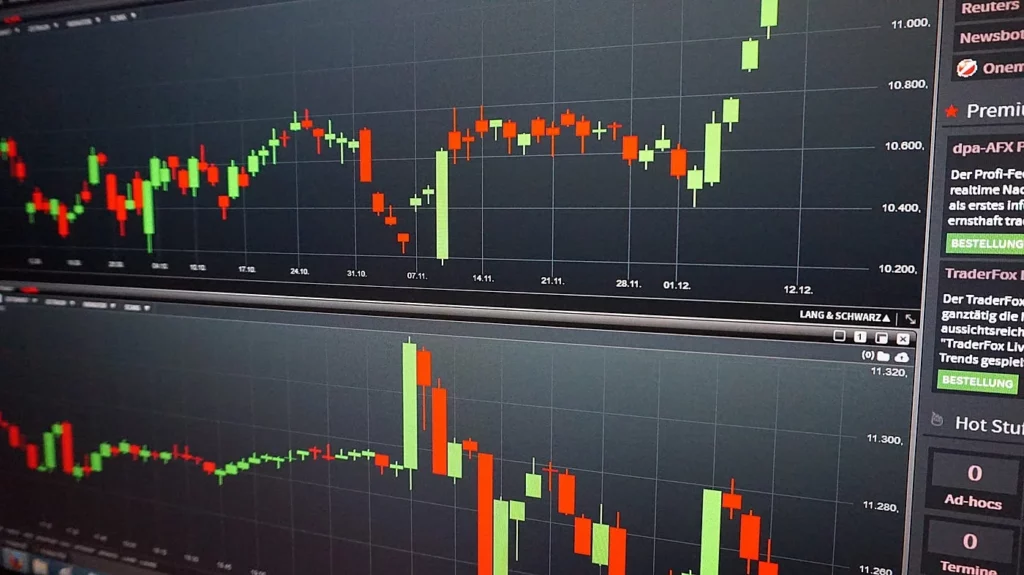
The phrase “stock market” describes a number of marketplaces where shares of publicly traded firms can be purchased and sold. Such financial transactions take place on official exchanges and in over-the-counter (OTC) markets that adhere to a predetermined set of rules.

The terms “stock exchange” and “stock market” are frequently used interchangeably. On one or more of the stock exchanges that make up the broader stock market, traders purchase and sell shares of stock.

The New York Stock Exchange (NYSE) and the Nasdaq are two of the most significant U.S. stock exchanges.

Understanding the Stock Market

Securities buyers and sellers can connect, communicate, and conduct business on the stock market. The markets provide price discovery for stock in firms and act as a gauge for the state of the national economy. Because market participants compete on an open market, buyers and sellers may be sure that they will receive a fair price, a high level of liquidity, and transparency.

The London Stock Exchange was the first stock exchange, and it got its start in a café where traders gathered to trade shares in 1773.

Philadelphia hosted the country’s first stock exchange in 1790.

The Buttonwood Agreement, which gave its name after the buttonwood tree under which it was signed, opened New York’s Wall Street in 1792. The document, which was signed by 24 merchants, established the first securities trading association in the United States. In 1817, the traders changed the name of their company to the New York Stock and Exchange Board.

How the Stock Market Works

Market participants can trade shares and other qualifying financial products in a secure and regulated environment with little to no operational risk on the stock market. The stock markets serve as primary markets and secondary markets, respectively, and operate in accordance with the regulator’s prescribed guidelines.

The stock market, which serves as a main market, enables businesses to issue and sell their shares to the general public for the first time through an initial public offering (IPO). This practice aids businesses in obtaining the funding they want from investors.

What Are the Functions of a Stock Market?

Price transparency, liquidity, price discovery, and fair dealings in trading operations are all guaranteed by the stock market.

The stock market ensures that all interested market players have access to information regarding all purchase and sell orders, aiding in the fair and open pricing of stocks. The market also makes sure that the right purchase and sell orders are efficiently matched.

Stock markets must encourage price discovery, in which all of a stock’s buyers and sellers work together to decide the price. Order placement should be immediate for those who are competent and eager to trade, and the market should make sure that orders are filled at a reasonable price.

How Stock Markets Are Regulated?

Most nations have a stock market, and each is regulated by a local financial regulator or monetary authority, or institute. The SEC is the regulatory body charged with overseeing the U.S. stock market.

The SEC is a federal agency that works independently of the government and without political pressure. The mission of the SEC is stated as “protecting investors, maintaining fair, orderly, and efficient markets, and facilitating capital formation.”

What Is the Significance of the Stock Market?

A free-market economy includes the stock market as one of its elements. It enables businesses to raise funds by selling stock shares and corporate bonds, and it gives investors a chance to profit from the business’s financial success through capital gains and dividend payments. The stock market serves as a platform for directing individual investors’ savings and investments into profitable business ventures, which helps the nation’s capital formation and economic expansion.

What Is an Alternate Trading System?

Alternative trading systems are venues for matching large buy and sell transactions and are not regulated like exchanges. Dark pools and many cryptocurrency exchanges are private exchanges or forums for securities and currency trading and operate within private groups.

Who Helps an Investor Trade on the Stock Market?

By purchasing and selling stocks, stockbrokers operate as go-betweens for investors and stock exchanges, and portfolio managers are experts who manage client portfolios, or collections of assets, for investment. Investment bankers serve businesses in a variety of capacities, such as those engaged in upcoming mergers and acquisitions or private businesses seeking to go public through an IPO.

FOR MORE INFO CLICK THIS SITE:https://learningsharks.in/

FOLLOW OUR PAGE:https://www.instagram.com/learningsharks/?hl=en

Understanding Market Risk: A Comprehensive Guide

Introduction

Investors deal with a variety of concerns in a volatile financial climate. Understanding market risk is essential for successful investing and well-informed decision-making. The idea of market risk, its varieties, and how it affects investment will all be covered in great detail in this thorough book. We want to give you the information you want so that you can successfully and confidently negotiate the financial markets.

What is Market Risk?

Market risk, also known as systematic risk or non-diversifiable risk, is the possibility of losses brought on by unfavourable market movements. It has an impact on each investment as well as the overall health of the financial market. Contrary to unsystematic risk, market risk is an intrinsic part of investment and cannot be removed through diversification.

Understanding the Types of Market Risk

1. Equity Risk

Equity risk, the most prevalent type of market risk, is brought on by variations in stock prices. It is impacted by a variety of factors, such as investor behaviour, economic conditions, company performance, and geopolitical developments. Investors in stocks should be aware of this risk because market swings can result in significant changes to the value of a portfolio.

2.Rate of Interest Risk

The prospective effects of interest rate changes on fixed-income assets, such as bonds, are what interest rate risk is all about. As interest rates increase, the value of current bonds declines, potentially resulting in losses for investors who sell their bonds before they maturity. On the other hand, a drop in interest rates may result in an increase in bond prices, which would be beneficial for investors.

3.Currency Risk

Investors that are exposed to foreign assets or participate in international trade are subject to currency risk, also referred to as exchange rate risk. Changes in currency rates may have an impact on the value of assets purchased abroad, and the translation of such investments back into their home currencies could result in gains or losses.

4.Commodity Risk

Investments in commodities like gold, oil, or agricultural goods are associated with commodity risk. Investment values may significantly vary as a result of the price volatility in these markets.

5.Systemic Risk

Risks like economic downturns, financial crises, or regulatory changes are referred to as systemic risks since they have an impact on the entire financial system. It is difficult to forecast and could have a significant impact on a variety of asset classes.

Managing Market Risk

Long-term success for an investor depends on their ability to recognise and control market risk. The following are some methods for reducing market risk:

1.Diversification

Spreading assets across several asset classes, industries, and geographical areas is a crucial risk management strategy. Investors can use this to lessen their exposure to particular market swings and safeguard their portfolios against big losses.

2.Hedging

Using financial products like options or futures, investors can use their current positions to protect themselves against potential losses. When used properly, it can help investors preserve their investment positions and provide adequate protection from unfavourable market swings.

3.Average Dollar Cost

Regardless of the market’s current price levels, investors who use the dollar-cost averaging approach continually invest a specific sum at regular intervals. This tactic lessens the effect of market volatility on all assets and promotes the growth of a disciplined investing approach.

4.Evaluation of risk tolerance

Choosing the best investing plan requires understanding one’s risk tolerance. The ability and desire of investors to bear unfavourable market volatility must be assessed, and they must then adjust their portfolio accordingly.

Conclusion

Financial stability can only be attained through comprehending the intricacy of market risk, an essential component of investment. Investors can successfully handle the difficulties presented by market risk by diversifying their investments, using hedging measures, and assessing their risk tolerance. Keep in mind that the secret to success in the fast-paced world of finance is a logical and informed approach to investment.

FOR MORE INFO CLICK THIS SITE:https://learningsharks.in/

FOLLOW OUR PAGE:https://www.instagram.com/learningsharks/?hl=en
How do I start with Stock Trading?

Starting a stock trading business can be a thrilling venture, but it’s crucial to approach it with the correct information and mindset. Here is a step-by-step instruction sheet to get you going:

  • Educate Yourself: Before you begin trading, it’s essential to comprehend the fundamentals of the stock market, the trading process, the various order types, and the elements that affect stock prices. To assist you in learning the foundations, there are a tonne of books, classes, and videos available online.
  • Establish Specific Objectives: Decide what you hope to accomplish through stock trading. Are you seeking immediate financial gain, long-term investments, or a combination of the two? You can make wise selections if you have clear objectives.
  • Learn how to study and analyse stocks by reading this. Find businesses that, in your opinion, have a competitive advantage, great growth potential, and excellent financials. Keep a watch out for market developments and news that could affect the stocks you’ve chosen.
  • Select a Trading Platform: In order to carry out your trades, you’ll need a trading platform. There are numerous platforms for online brokerage, each with unique features, costs, and resources. Choose a platform based on your needs after researching many options.
  • Create a Trading Account: After deciding on a platform, you must create a trading account. In order to do this, you must provide personal information, have your identification confirmed, and deposit the initial investment into your account.
  • Practise with Simulated Trading: The majority of platforms provide simulated or paper trading, allowing you to test your trading skills with fictitious funds before putting real money at risk. This is a fantastic opportunity to refine your abilities and tactics without running the danger of financial loss.
  • Create a Trading Strategy: Select a trading strategy in line with your objectives and risk tolerance. Day trading, swing trading, and long-term investment are a few popular approaches. You will approach purchasing and selling stocks based on your plan.
  • Manage Risk: In stock trading, risk management is essential. Diversify your portfolio to spread risk, and never invest more than you can afford to lose. To reduce potential losses on your trades, think about using stop-loss orders.
  • When you’re ready to begin trading with real money, start small by using a modest sum of money. By doing this, you can get experience without taking a big risk.
  • Continue Your Education: As the stock market changes continually, there is always more to learn. Keep up with business news, economic indicators, and market movements. Based on your experiences, keep improving your trading methods.
  • Control your emotions: They might have a big impact on your trading selections. Try to maintain discipline and refrain from taking hasty decisions motivated by greed or fear.
  • Track and Assess: Keep a log of all your trades, along with the justifications for each choice. You can use this to evaluate your accomplishments and errors and subsequently improve your techniques over time.

Keep in mind that there are no guarantees of profit while trading stocks; there is risk involved. It’s crucial to exercise self-control, be persistent, and set reasonable goals. Before making important selections, think about asking for guidance from financial experts or seasoned traders if you’re uncertain about any area of trading.

FOR MORE INFO CLICK THIS SITE:https://learningsharks.in/

FOLLOW OUR PAGE:https://www.instagram.com/learningsharks/?hl=en
Day Trading for Beginners

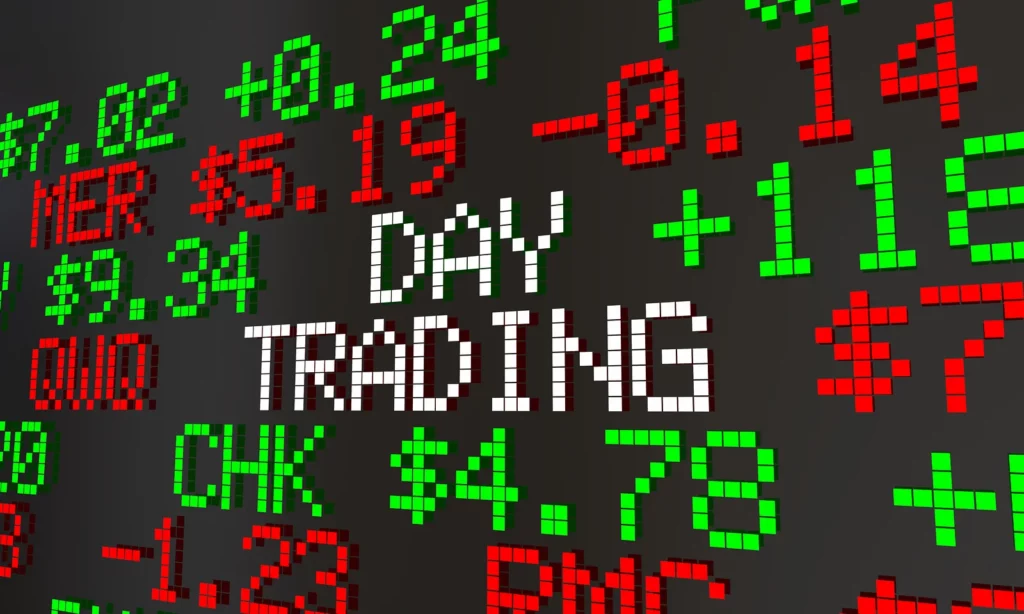
Day traders often make multiple trades throughout the day, capitalizing on small price fluctuations.
Day Trading

Introduction

Day trading is a short-term trading strategy that entails purchasing and selling financial assets on the same day in an effort to capitalize on rapid price swings. A strategy known as day trading is frequently applied to highly liquid assets such as stocks, currencies, options, and futures. Examining price charts and locating trade chances with the aid of technical indicators are both included. This quick-paced technique necessitates continuous attention, risk management expertise, and emotional restraint because traders must react swiftly to market moves. Day trading carries a high level of risk, and inexperienced traders who are unprepared could sustain significant losses despite the potential for quick gains. People who are interested in day trading need to do their research, be cautious when engaging in the activity, and have a strategy in place.

Day Trading Basics – Definition

Day trading or intraday trading refers to buying or selling equities on the same day. Day traders have the option of buying first and selling later or vice versa. They buy when the market is rising and sell when it is falling. Day trading is often quite popular in the stock, currency, and F&O (Futures and Options) markets. Day traders locate liquid, extremely volatile momentum equities on the stock market, where they make their entry and exit decisions.

Day traders frequently employ a lot of leverage. Leverage can greatly increase their profit margin, but if the business doesn’t work out as expected, it can also result in a sizable financial burden. Day traders need good vision because they have to continually evaluate charts and the news.

There are three different types of traders on the stock market: fundamental, technical, and news-based. Fundamental day traders use fundamental analysis, such as price-earnings, beta, book value, balance sheet, etc., to find opportunities. Technical day traders assess a stock’s momentum and place exact bets using instruments like the MACD, Bollinger Band, RSI, and others. Additionally, news-based day traders trade the stocks that are most likely to be affected by the day’s most significant news after reading or listening to it. News-based traders monitor a variety of factors, including macroeconomic information, corporate profitability, sectoral news, interest rates, and market sentiment generally.

The emotions of traders and investors as a whole cause changes in the stock market. As an illustration, although some traders may detect an opportunity and invest significantly, others may detect danger and withdraw their funds. Day traders aim to make money due to the erratic volatility of stock prices.

Top Strategies Employed by Day Trading Beginners

Different day trading strategies are used by both inexperienced and seasoned traders to make money. The primary methods day traders employ to trade equities profitably are listed below:

  • Momentum Trading– Momentum trading involves both finding the market trend and following the waves. A market trend could be bullish, bearish, or sideways.
  • Scalping– Scalping is the technique of making a number of very quick trades and then collecting the proceeds.
  • Range Trading – Finding support and resistance levels to gauge when to enter and exit a trade is the technique of range trading. Utilizing the Fibonacci Retracement level indicator while drawing support and resistance lines is common.
  • High-Frequency Trading (HFT) -HFT uses an automated computer-based trading method to monitor price fluctuations and carry out deals automatically.

Benefits of Day Trading

  • Profiting from quick price movements and possibly turning a profit in just one trading day are both possible with day trading.
  • No Overnight Risk: Because day traders terminate their positions by the end of the day, they minimize their exposure to overnight market risks like earnings announcements or geopolitical developments.
  • Increased Liquidity: To enable quick entry and exit from positions without too much price slippage, day traders focus on highly liquid assets.
  • Flexibility: Because day trading may be done as a full-time or part-time enterprise, it gives traders the freedom to manage their time and obligations.
  • Lower Margin Requirements: Some brokers have lower margin requirements, allowing day traders to hold greater positions with less capital.
  • Frequent Trading Opportunities: In active markets, day traders may find a variety of trading opportunities throughout the day, increasing their chances of discovering profitable setups.
  • Day traders get immediate feedback on their trades, allowing them to quickly examine and tweak their tactics.
  • Emotional Control: Day trading necessitates self-discipline and emotional control, which can promote personal growth and better judgment.
  • Reduced Exposure to Market Events: Day traders are protected from the risk of large price gaps that could develop between trading days by completing positions before the market closes.

FOR MORE INFO CLICK THIS SITE:https://learningsharks.in/

FOLLOW OUR PAGE:https://www.instagram.com/learningsharks/?hl=en

How to Invest in the Share Market?

Especially for beginners, investing in the stock market can be challenging. There are two categories of stock markets: primary and secondary share markets, which you should be aware of if you wish to invest in stocks.

Investing in the Primary Share Market

A key means of investing in the stock market is through an Initial Public Offering (IPO). Following receipt of all investor applications for an IPO, a company counts the applications and allots shares in accordance with demand and supply. You require a Demat account with electronic copies of your shares in order to invest in the primary and secondary markets. A trading account is also necessary because it will facilitate online share purchases and sales.

In exceptional circumstances, a trader may also be able to apply straight from their bank account. Application Supported by Blocked Amount (ASBA) is a procedure that simplifies IPO applications filed through net banking.

According to the ASBA procedure, if someone asks for shares for Rs. 1 lakh, the money will be blocked into their bank account rather than being given to the company. The exact amount will be debited after you receive your share allocation, and the remaining funds will then be made available. This process must be adhered to by all applications submitted to IPOs. Within a week of being distributed to traders, shares are listed on the stock exchange and can then be traded.

Investing in the Secondary Share Market

The routine buying and selling of shares or stocks is referred to as secondary share market investing or trading. Before you begin investing in the secondary share market, there are a few easy procedures to take.

  • Step 1: Open a trading and Demat account.The place to start investing in the secondary market is here. For a smooth transaction, both of these accounts should be connected to an existing bank account.
  • Step 2: Choice of shares.To sell or purchase shares, go into your trading account and select the shares you want. Make that you have the necessary funds in your account to buy those shares.
  • Step 3: Choose the price range.Set a price at which you want to purchase or sell shares. Await a response from the buyer or seller to your request.
  • Step 4: Finish the transaction.When the deal is done, you get paid in shares or cash depending on whether you bought or sold the stocks.

Make sure to keep in mind both the length of time you plan to have your investments in place and the financial objectives you hope to accomplish with them.

Documents required for opening a Demat/Trading Account

To begin investing in the share market, you need to have the following documents:

  • PAN Card
  • Aadhaar Card
  • Name on a cancelled cheque from their active bank account showing IFSC Code, account number, Account holder’s name, and signature.
  • Documents detailing that the applicant earns a steady income.
  • A proof of address that is based on a list of documents that have been accepted by your broker, depository participant, or bank
  • Passport-sized photographs of the applicant.

Things to keep in mind before investing

Even if stock trading isn’t as challenging as it may seem, it is possible to get caught up in the world of trading without ultimately benefiting from it. Keep the following things in mind before investing to avoid this result:

Diversify your portfolio

A good portfolio is one that is diverse. If one asset class makes up the majority of your portfolio, you won’t receive a consistent flow of cash when that instrument has a downturn. Financial gurus advise adding different asset classes to balance out the low points of one asset class. For instance, investments in bonds or other debt instruments frequently used to offset equity. A portfolio with this balance can protect its owner from a period of market catastrophe.

Understand your investor profile

Your investor profile might help you choose the instruments that fit your risk tolerance the best. This enables you to be sure that the level of risk you are accepting is appropriate for your lifestyle.

Create an investment plan

If you have an investment strategy that specifies the amount of revenue you want to generate from your investments and the time frame you might need to remain invested to generate that amount, you can prevent potential issues down the line.

Conclusion

A few important factors should be kept in mind when investing in the stock market. These include organizing your investments, determining your level of risk tolerance, and making sure your portfolio is diverse. Reach out to our skilled traders at IIFL and take advantage of our stock advice services right away if you’re having trouble choosing the proper shares, planning your investments, or establishing goals in accordance with your degree of acceptable risk.

FOR MORE INFO CLICK THIS SITE:https://learningsharks.in/

FOLLOW OUR PAGE:https://www.instagram.com/learningsharks/?hl=en
Mastering the Dynamics of the Share Market

The stock market is a major player in the complex world of finance, driving economies and influencing investment choices. Our in-depth manual goes into the basics of the stock market to provide you a thorough understanding of its workings, trading procedures, and crucial trading methods.

Understanding the Share Market

A lively market where investors can buy and sell shares of publicly traded corporations is the share market, sometimes known as the stock market. These shares provide investors a stake in a company’s expansion and success as well as ownership in it. The basic goal of the stock market is to make it easier for buyers and sellers to trade securities, allowing businesses to raise money for expansion while providing investors with a chance to profit from their investments.

Navigating the Market Segments

The primary market and secondary market are the two main divisions of the share market.

Primary Market

Companies first make their Initial Public Offerings (IPOs) to the public on the primary market. By offering new shares to investors, it gives businesses a way to raise money. The company’s expansion and development are directly influenced by investors in the primary market.

Secondary Market

Shares can be purchased and sold on the secondary market after they are issued on the primary market. The vast majority of trade activity occurs here. Shares are traded between investors, and prices change according to supply and demand dynamics, firm performance, societal trends, and geopolitical issues.

The Mechanics of Trading

There are a number of clearly defined steps involved in trading on the stock market.

  1. Order Placement: Through brokerage companies or internet trading platforms, investors place orders for the purchase or sale of shares. Market orders and limit orders are the two primary categories of orders. While limit orders are only carried out when the stock reaches a certain price, market orders are carried out instantly at the current market price.
  2. Order Matching: Prices and time priorities are used to match orders. The trading mechanism at the stock market matches buy and sell orders, ensuring honest and open transactions.
  3. Execution: Once an order is matched, the transaction is completed, and the buyer becomes the new owner of the shares.

Strategies for Success

It takes strategic thinking and well-informed decisions to navigate the stock market. Here are some crucial tactics:

  1. Research and Analysis: Before investing, thoroughly investigate the companies. To make wise decisions, examine financial accounts, market trends, and company performance.
  2. Diversification: To lower risk, diversify your investments across several industries and businesses. Your portfolio is better protected by diversification from the effects of one company’s underwhelming performance.
  3. Long-Term Perspective: Instead of attempting to time the market, take a long-term approach. Over time, patient investors typically see superior returns.

Conclusion

A important ability in the always changing world of finance is being able to navigate the share market’s fluctuations. Investors can optimize returns, make informed judgments, and actively take part in the expansion of businesses and economies by understanding the market’s subtleties, segments, and trading procedures. Recall that individuals that approach the stock market with diligence, forethought, and a dedication to long-term success are rewarded.

FOR MORE INFO CLICK THIS SITE:https://learningsharks.in/https://learningsharks.in/