Learning sharks-Share Market Institute


Rajouri Garden  8595071711 7982037049  Noida 8920210950 , and  Paschim Vihar  7827445731  

Fee revision notice effective 1st Jan 2026; No change for students enrolled before 15th Jan 2026

Download “Key features of Budget 2024-2025here

The Dynamics of Greed

Psychology and Risk Management

What to expect
Risks
• Position sizing
• illusion of control
• Accepting critisism
• Paralyzed by fear
• Loss is a feedback, not a failure
• The flexible trader
• Focusing on the positive
• Short straddle
• The dynamics of greed
• The herd mentality
• Notes

The Dynamics of Greed

Gordon Gecko states that “Greed is Good” in the feature film “Wall Street.” Although it might spur you on to pursue perfection and keep you going when things get tough, greed has drawbacks. It is frequently asserted that fear and greed are what drive the markets. The general populace naturally yearns for riches and all the benefits that money may offer. The general public invests in stocks because they are zealous and think that doing so will help them reach their financial objectives. However, when the price starts to fall, they become concerned about losing their investment and sell, frequently too soon and at a loss.Market dynamics are driven by the dynamics of greed.


You can become a trader driven by greed. A difficult career is trading. Not everyone succeeds. You must research the markets and discover how to profit from their movement. This is not straightforward to do. The search for profitable trading methods never ends. You could discover a tactic that performs well initially, but as market conditions shift, the tactic loses its effectiveness. Making money in the aftermarket market is the challenge. Why even try? You won’t succeed if you aren’t motivated to succeed. You won’t keep trying. You won’t attempt to overcome one setback after another. Greed has a strong motivating effect.

If you’re like most people, your dream is to live forever in happiness.

People have long believed that they could solve all of their issues if they had unlimited wealth, but this belief is frequently untrue. Human minds have the capacity to deceive themselves into thinking that outlandish desires can come true. Money cannot purchase happiness, yet it may be wonderful to have enough riches to make your life more comfortable. However, the desire for wealth and the knowledge of how to acquire significant fortune through trading serves as a tremendous incentive. It can be beneficial at times to indulge in imagination and take pleasure in the drive for success. In times of adversity, it keeps us going. It provides us a goal to work for.

learning sharks stock market institute

Monster: greed

However, there are drawbacks to greed. Although money can be a strong incentive, many individuals are aware that it cannot fix all of our issues. Furthermore, our subconscious ideas and emotions frequently have the power to influence us against our will. When everything seems to be working against us, we can lose hope since we know that money won’t fix our problems. We must recognise how greed can be both a motivation and a hindrance. It may cause us to lose concentration on our trading strategy.


 

We could become so preoccupied with making money that we lose sight of the benefits of trading. Trading presents a mental difficulty. Through practise and experience, you can improve your trading abilities and take pride in the fact that you have mastered a skill that few people have attained. Don’t devote all of your attention to making more money. Instead, concentrate on honing your talents and relishing the trading experience. In the long run, you’ll discover that you’ll like the game, and oddly, you’ll trade more profitably when you don’t worry about the short-term results.

Our location

Focusing on the Positive

Psychology and Risk Management

What to expect
Risks
• Position sizing
• illusion of control
• Accepting critisism
• Paralyzed by fear
• Loss is a feedback, not a failure
• The flexible trader
• Focusing on the positive
• Short straddle
• The dynamics of greed
• The herd mentality
• Notes

Focusing on the Positive

Focusing on the positive, is the common for traders to become fixated on their mistakes when attempting to face the demands of trading, to the point where they begin to believe they will never be able to master the markets. However, it’s frequently lot more fruitful to highlight what you are doing well rather than what you are doing incorrectly. Only after you’ve recognised your strengths should you focus on pinpointing your weaknesses and making a few tiny improvements. You will undoubtedly experience some frustration and possibly disappointment if you first concentrate on what you’re doing incorrectly. However, initially concentrating on what you are doing well will make you feel upbeat.
 

We are frequently encouraged as kids to become self-conscious of our limitations. We learn to anticipate suffering the consequences of our errors. Soon we begin to ignore our limitations in order to avoid punishment. Furthermore, when restrictions are concealed, no action is made to address the issue until a catastrophe occurs. To embrace failure, though, is a different strategy. Like expressing, “I have faith in my overall abilities. In order to trade even better, I’m going to attempt to see what could go wrong. Instead of viewing a failure as a terrifying occurrence, adopt a more proactive, problem-solving mindset. Failure can be viewed as a chance for improvement and advancement.

learning sharks stock market institute

Consider a diligent trader who is unsuccessful due to the employment of faulty, unreliable trading tactics. A trader has a lot of things going for him or her if they have enough trading capital, understand how to map out every component of a trading plan (such as entry, exit, and risk control tactics), and can follow the plan. It’s critical to identify these assets right away. You become upbeat and prepared to pay close attention to the few things that are going wrong as a result.


You can more readily develop the abilities necessary to engage in profitable trading if you have this vigour and excitement (In this particular case, you can focus on learning and executing winning trading strategies, while feeling assured that other sub-skills have been mastered).

Different traders have various resources and restrictions. Some traders may employ sound trading techniques, but they lack the discipline to stick to their trading plan. Many people may be able to identify some of their trading plan (like risk management), but they might not be able to specify all of it (such as entry and exit strategies). Whatever it is you’re “wrongly” doing, it’s critical to recognise these problems and resolve them. However, if you dwell on the bad too much, you’ll end up feeling let down. Prioritize the good first.


Our location

The Flexible Trader

Psychology and Risk Management

What to expect
Risks
• Position sizing
• illusion of control
• Accepting criticism
• Paralyzed by fear
• Loss is a feedback, not a failure
• The flexible traders
• Focusing on the positive
• Short straddle
• The dynamics of greed
• The herd mentality
• Notes

The Flexible Traders

The successful trader is adaptable. When it comes to carrying out a trade, flexible traders are unconcerned. They don’t second-guess their plan of action. They conduct their research, create a sound trading strategy, and when the right opportunity arises, they act without restraint. They do not challenge it. They don’t experience any self-criticism. Just like they do. They grab their winnings and go if the trade is profitable. In fact, even when they lose, they continue to trade.


They are aware that the ability to execute trade after trade with assurance and adaptability is essential for successful trading. The greater your degree of adaptability, the higher your chances of achieving and sustaining profitability.

A trader’s flexibility is influenced by both situational and personality factors. Although it can be challenging in some situations, cultivating an attitude of carelessness is important. For instance, you will never feel at rest if you are undercapitalized and have good reasons to worry losing the money you are trading. You’ll instinctively understand that you can’t afford to lose. You must trade with funds you can afford to lose and practise sound risk management. You may feel comfortable that everything will be okay in the long run if you know that you have very little to lose on any given deal and that, in the worst-case situation, you can still make a profit.

learning sharks stock market institute

Then, you can develop the carefree outlook that serves as the cornerstone of a flexible trading strategy.

Nevertheless, some people have personalities that are rigid and unbending. It has many roots in experiences from early in life. Parents may have been harsh critics who instilled in their children the idea that making a mistake would have catastrophic consequences. Even as adults, some people second-guess every choice in order to avoid the terrifying consequences of making the wrong choice. When it comes to trading, there isn’t much you can do most of the time; sure, it’s important to take measures in life, like making sure you keep an eye on your speed when driving to avoid receiving a ticket or getting into an accident.

Unfavorable events like earnings reports, interest rate increases, or significant national events are certainly something you should prepare for, but most of the time, the markets are unexpected. You must accept the offers made by the marketplace. You are unable to control the marketplace. You need to be more carefree in your attitude. It is hard to take into account every element that could work against a deal. It’s essential to merely do your best effort, engage in the trade, and see the results. The rigid trader, however, finds it difficult to accomplish that. Unyielding traders believe they have total control over their future.


Our location

Loss is Feedback, Not Failure

Psychology and Risk Management

What to expect
Risks
• Position sizing
• illusion of control
• Accepting critisism
• Paralyzed by fear
• Loss is a feedback, not a failure
• The flexible trader
• Focusing on the positive
• Short straddle
• The dynamics of greed
• The herd mentality
• Notes

Loss is Feedback, Not Failure


Trading demands “thick skin,” just like any difficult activity. Criticism cannot readily injure a person. Being entirely open to criticism of any kind is necessary so that adjustments to one’s trading strategy can be addressed right away before losses accumulate. It takes the right mentality to be able to view criticism, which typically manifests as losses, from the appropriate angle. Instead of viewing criticism as a sign of personal failure, one must view it as unbiased input.

Most people start to establish their perspective on criticism at a young age. When kids are initially obliged to control their needs and impulses, such as when they are potty trained, according to Sigmund Freud, it may begin to develop.

However, other psychoanalysts contend that children’s ability to deal with the difficulties they face in school has a significant impact on how they learn to manage criticism.


Either a sense of superiority or inferiority develops in children. No matter when it occurs, there are huge variations in how people respond to criticism. Some people are particularly sensitive to criticism, whereas others like it.

learning sharks stock market institute

Some people have extremely thin skin. They have spent their entire lives trying to find ways to shield themselves from punishment and broken feelings. Since they were frequently severely disciplined as children, they now have a tendency to anticipate punishment when they do anything wrong. They constantly search for what is “right” and what is “bad,” and they make every effort to avoid doing the latter. But this tendency has drawbacks as well.


One learns to view situations as either right or wrong, in black-and-white terms. One anticipates either being praised or penalised. One tends to avoid taking chances when they place too much emphasis on determining if their activities are right or bad.


One is prone to be cautious. One doesn’t learn how to make costly errors or how to bounce back from them since opportunities aren’t taken. When one has a setback, it is perceived as a terrifying event rather than as an opportunity to advance and find new approaches. Events, such as trading losses, are perceived as failures on a human level rather than as purely objective feedback that needs to be swiftly assessed so that adjustments may be made.


It’s imperative that you learn to evaluate a setback more objectively if you have problems seeing it as nothing more than honest feedback. Keep in mind that no one is watching you from behind.


Feel free to engage in any activity you like. Consider your trade with the same objectivity and dispassion that you do routine activities like driving a car.


Most people, for the most part, concentrate on the act of driving a car in a very detached and objective manner. You don’t think about how well you make a turn when you’re driving (in good weather on your typical route).

You just concentrate on the subsequent action, or the next item. There isn’t any self-criticism. You’re at ease. You are prepared to see the ensuing events.

Trading can be approached objectively in a similar way. Consider it in the same way as you would a driving lesson.


If you devote enough time and energy to developing your trading talents, you will eventually turn into a successful trader.


But you must maintain objectivity while doing so. Think about the procedure. Get as much feedback as you can and treat it as unbiased knowledge that will help you improve your trading abilities.


Profitable trading requires a particular talent. You’ll need to have the ability to view setbacks in the correct context if you want to master it.


Do not interpret setbacks as failures on your part. Do not at anyway personalise them. They only provide you with factual information that helps you gauge how well you are doing. Embrace the criticism.


Our location

Paralyzed by a Fear of Failure

Psychology and Risk Management

What to expect
Risks
• Position sizing
• illusion of control
• Accepting critisism
• Paralyzed by fear
• Loss is a feedback, not a failure
• The flexible trader
• Focusing on the positive
• Short straddle
• The dynamics of greed
• The herd mentality
• Notes

Fear of Failure

Paralyzed by a Fear of Failure Atychiphobia is an intense fear of failure. Recently, Rohan made five consecutive losing trades. He is now hesitant to make another trade because his confidence has been damaged. Why should I try again? he asks himself. I’ll just lose one again. I don’t believe I can handle losing one more time. How we approach trading is influenced by our mindset and expectations. Rohan’s attitude has shifted as a result of recent failures, which have been numerous. He is shocked, and he expects to lose rather than succeed. His fear of failing has now rendered him helpless. He is having difficulty putting on a different trade. But in order to trade well, you must make the law of averages work in your favour.

learning sharks stock market institute

Finding the fundamental presumptions that underpin this anxiety and disputing them is the most effective strategy to eliminate fear of failure. A fear of failure frequently has to do with a person’s propensity to avoid dealing with issues head-on. We have a tendency to think that it is easier to reject the presence of our worries than to face them. Thankfully, we can frequently overcome this fear by learning that facing our anxieties isn’t as challenging as we anticipate it to be.

The idea that one must be supremely competent, adequate, and successful is another fundamental tenet that underpins the fear of failure. Such a belief causes anxiety and fear, which in traders frequently results in hesitancy and self-doubt. It’s clear how we came to hold this belief.

If we have the mindset that we must always be successful, we will use all of our limited mental capacity worrying about the negative effects Paralyzed by a Fear of Failure, rather than concentrating on what we are doing right now to carry out our present trading strategy. The majority of the time, traders who think they must be really proficient worry about what they did incorrectly, what could go wrong, and how they will recover if they fail. These ideas detract from the present experience and make it difficult to accurately and consistently interpret current market behaviour. Realizing that these ideas underlie your fear of failing and the emotional repercussions of maintaining them are crucial.


You can overcome your worries by rejecting them and neutralising them.

Let go of your fear of failure if you want to succeed in trading. You don’t need to be flawless. One is destined to make mistakes every now and again, as any seasoned trader will tell you, and if you are concerned with avoiding them, you’ll be so anxious and afraid that you will make even more blunders. Therefore, keep in mind that it is not helpful to think that you must be fully competent, adequate, and successful. No trader can meet that bar, and ironically, if you do, you’ll struggle to regularly and profitably trade.


Our location

Accepting Criticism

Psychology and Risk Management

What to expect
Risks
• Position sizing
• illusion of control
• Accepting critisism
• Paralyzed by fear
• Loss is a feedback, not a failure
• The flexible trader
• Focusing on the positive
• Short straddle
• The dynamics of greed
• The herd mentality
• Notes

1. Accepting Criticism.

The drive to be correct is a common trait among new traders. Because of how strong this innate human propensity is, inexperienced traders make poor trading decisions in an effort to avoid having to accept that they are mistaken. For example, they might continue holding onto a lost trade in order to record losses. In an effort to Accepting Criticism, avoid dealing with the repercussions of a poor trading concept, they could delay or postpone completing a trade. A compulsion to be correct can be oppressive in many ways. A trader who has to be right may hold back during crucial times in the middle of a trade rather than feeling free and innovative.

learning sharks stock market institute

Why is it so difficult to receive feedback, whether it comes from a person or the markets? The fact that we connect criticism with emotions of inadequacy is one of the key causes. We have a tendency to attach a lot of psychological weight to any form of negative feedback or criticism. It feels like our parents or professors are chastising us for acting immorally. But this is erroneously assumed. Criticism need not be motivated by feelings. It’s important to accept criticism and feedback kindly. It’s just feedback; it’s not personal. You can use this knowledge to better your trading skills if you can learn to downplay its emotional value and see it as cold, objective data.


We have an illogical drive to be perfect, which is another reason why it’s challenging to accept criticism. We frequently believe that if we are not always correct, we will not succeed. This notion is something we pick up in school. We were typically only given one opportunity to submit a term paper or take a test in school. You can’t learn to polish your talents in most educational settings since you can’t repeat tests or write term papers. This mentality is one that many people bring to trading. But it’s not necessary that it do. You can make a transaction, learn from your mistakes, and make another trade if you do little practise trades, for instance.

There is no justification for refusing to take criticism. In fact, you should look for success in trading, either by placing trades and watching what happens or talking to a trading coach. The more knowledge you acquire about yourself, the more likely it is that you can improve your abilities. So, seek out feedback. Accept your limitations without fear. You’ll develop your abilities to the point where you can trade the markets profitably and skillfully if you can endure all the criticism you can discover.


Our location

illusion of control

Psychology and Risk Management

What to expect
Risks
• Position sizing
• illusion of control
• Accepting critisism
• Paralyzed by fear
• Loss is a feedback, not a failure
• The flexible trader
• Focusing on the positive
• Short straddle
• The dynamics of greed
• The herd mentality
• Notes

1.– Illusion of Control bias


Every stock market in the globe is very large. It has a large number of members who frequently buy and sell assets. None of the buyers or sellers has complete control over what happens in the market because there are so many of them and the money is divided among them. The reality is that probabilities form the foundation of the investment markets. Anyone who asserts they can anticipate the result of financial markets with 100 percent accuracy is unquestionably mentally biassed. An illusion of control bias is the name given to this bias. This essay will explain what this bias is and how it impacts a typical investor’s decision-making.


Illusion of Control Bias: What is it?


Investors sometimes have a tendency to think they have some degree of control over the results of the stock market, which is known as illusion of control bias. Some investors don’t think they have total control. Many of them do, however, think they have some sway on the market. Due to the size of the investment markets, where trillions of dollars are traded each week, this is typically not the case. Therefore, it’s possible that an individual investor or even a small to mid-sized organisation is mistaken in thinking that they have control over the market.

It’s possible that some of the investor’s short-term projections will come true.


On the other hand, it can just be a coincidence and not ultimately prove anything. Because they use strategies like limit orders, etc., to purchase and sell shares, investors frequently feel in control of their portfolios. However, because prices fluctuate within a certain range, it frequently only results in pointless buying and selling. The perception of overconfidence is directly related to the delusion of control bias.


How Can Investor Illusion of Control Hurt Them?


The portfolio of investors may suffer significantly from a mistaken sense of control. The following are some examples:

Investors buy penny stocks due to the illusion of control. This is due to the fact that they think that because the company is small, they can use their wealth to buy a sizable interest in it, giving them power over the outcome. However, because to the nature of their respective industries, many of these penny stocks are inherently dangerous. Investors only lose more money as a result of this control illusion!


Investors that have a sense of control frequently think of themselves as industry gurus. As a result, they focus the majority of their portfolio on just one particular area or business. Given that the portfolio is not diversified, here is where the issue first arises. If a negative event occurs, an undiversified portfolio is likely to see significant value swings.

Investors who have a false sense of control miss opportunities when they present themselves. They might have missed advantageous entry and exit points in a specific stock as a result of a delusion of control.


How might this illusion be avoided?


Since we’ve established that this kind of illusion is terrible for investors, it’s important to learn how to identify it and eliminate it from our thinking in order to make wise judgments.

Realizing there is no assurance when it comes to investing is the first and most important step. The return on investment serves as compensation for taking on risk. So, ideally, there wouldn’t be a need for a reward either if there was no danger!


Investors need to be aware that all forms of investment include the use of probability, thus a variety of outcomes are possible but impossible to control. Investors should strive to compile a list of all the variables that might affect a stock’s price in order to fully drill home this concept. They would discover that there are factors at the level of the government, of the competitors, of the macroeconomy, of the market, and so forth. It is nearly hard to govern this complex system because of the large number of different factors at play.

Position sizing

Psychology and Risk Management

What to expect
Risks
• Position sizing
• illusion of control
• Accepting critisism
• Paralyzed by fear
• Loss is a feedback, not a failure
• The flexible trader
• Focusing on the positive
• Short straddle
• The dynamics of greed
• The herd mentality
• Notes

1.– Gambler’s fallacy

Let’s assume you Position sizing, are looking at the nifty chart. Let us just assume that these are some valid points for now.

  1. Nifty is reached its highest point ever at 10K.
  2. Given that it is a psychological level, many market participants may book profits at this moment.
  3. All-time high suggests there are no points of resistance
  4. Over the past few weeks, Nifty has been on a strong rising trend.
  5. Maybe around these levels, Nifty might consolidate.
  6. Maybe a 2% to 3% correction before the rally keeps going?

Indicates that taking a short position or perhaps buying puts is appropriate. You may do an analysis that is as basic as this or as complex as reviewing time series data and modelling it using cutting-edge statistical or machine learning methods.

Whatever you do, there is no assurance in the markets. You cannot predict the outcome with a single strategy. It’s suggests that the draws in question are reasonably random. Your chances of winning can certainly increase depending on how insightful your analysis is, but there is no guarantee and you must accept that markets are indeed random.

Imagine that you have performed a cutting-edge analysis and that you have just placed a bet on Nifty when the stop loss triggers. You persist and place another transaction, only to be stopped out once more to your dismay. Say the next four deals are repeated in this cycle.

You are confident in the accuracy of your analysis, yet your stop-loss is consistently being hit. What should you do given that you still have funds in your account to place bets, are adamant that your analysis is accurate and the markets will turn around, and still have a healthy appetite for risk?

Which option are you likely to take?

Traders frequently think that when they enter the “next” trade, long streaks will terminate. For instance, although the trader in this instance has suffered 6 losses in a row, his confidence that the 7th deal will be profitable is now very strong. This is referred to as the “Gambler’s fallacy.”

When dealing with random drawings, the likelihood of losing on the seventh transaction is actually the same as it was when you first placed your wager. The likelihood that you will succeed on your subsequent trade does not increase just because you have a string of losses.

Due to the “Gamblers Fallacy,” traders frequently increase their bet quantities without fully understanding the chances. In actuality, the gamblers fallacy destroys your position sizing philosophy and is the main cause of trading account erasure.

Also, this functions on the other side. Imagine being given the opportunity to see six or ten straight wins. Regardless of what you bet, the exchange is in your favour.

Which of the following are you most likely to do now that you are on your eleventh trade?

  1. If you had enough money to stop trading, would you do so?
  2. Would you take a similar amount of risk again?
  3. Would you increase the amount you bet?
  4. Will you play it safe, perhaps safeguard your winnings, and thus place a smaller wager?
  1. It’s likely that you’ll select the fourth choice. You obviously want to keep your gains and avoid giving up everything you have made in the markets, but you would also want to make a trade given your impressive winning streak.

Another instance of the “gamblers fallacy.” You are essentially reducing your position size for the eleventh trade because the results of the first ten trades have such a significant impact on you. In actuality, the chances of this new trade winning or losing are the same as those of the prior 10 wagers.

This may explain why some traders end up generating very little money, despite entering winning trading cycles.

Position sizing is the cure for the “Gambler’s Fallacy.

2. Overcoming trauma

The money we bring to the table is the raw material in the trading industry. How can you make money if you don’t have enough money to trade with? Therefore, in addition to protecting our cash, we must also preserve the earnings we make.

By extending this idea, we may say that if you put too much money at risk on a single deal, you run the risk of losing it all and being left with very little money.

Now, if you are trading with a small amount of capital, each trade you make will seem to be overly risky.

The climb back to where you started will be Herculean task (in terms of capital).

Lets look at this table.

   
Starting Capital             1,000
   
DrawdownStarting CapitalEfforts
5%                     9505.3%
10%                     90011.1%
15%                     85017.6%
20%                     80025%
25%                     75033%
30%                     70043%
35%                     65054%
40%                     60067%
45%                     55082%
50%                     500100%
55%                     450122%
60%                     400150%
65%                     350186%
70%                     300233%
75%                     250300%
80%                     200400%
85%                     150567%
90%                     100900%
95%                       501900%

What do you then? You typically take higher risks in the hopes of earning bigger gains, and if the transaction fails, you effectively succumb to the “recovery trauma” phenomenon.

The precise reason you shouldn’t put too much money at risk in any one deal, especially if you have little capital. Remember that if you can manage to stay in the game for a longer period of time, your chances of making good money in the markets increase. In order to stay for a longer period of time, you need to have enough capital, and in order to have enough capital, you need to risk the right amount of money on each trade.

It ultimately comes down to trying to achieve longer-term “consistency” in the markets, and in order to achieve consistency, you must position sizing your trades really effectively.

Our location

Risks

Psychology and Risk Management

What to expect
Risks
• Position sizing
• illusion of control
• Accepting critisism
• Paralyzed by fear
• Loss is a feedback, not a failure
• The flexible trader
• Focusing on the positive
• Short straddle
• The dynamics of greed
• The herd mentality
• Notes

2.1 – Acclimating to risk

A trader must also lose every rupee for every rupee they make in profits.

This leads us to the conclusion that there must be another group of traders that constantly lose money. What is Risk Management If one group of traders continuously makes money.

As opposed to the group of traders that consistently lose money, this group of traders making money is typically small.


Their approaches to money management and their perceptions of risk distinguish these two groups. According to Mark Douglas’ book, “The Disciplined Trader,” money management and strategy account for 80% of a trader’s performance. 


Similarly, Risk assessment plays a big part in money management and related areas. So in this way, understanding risk and its many forms become vital at this stage. For this reason, let’s simplify risk to its most basic level in order to comprehend it better.

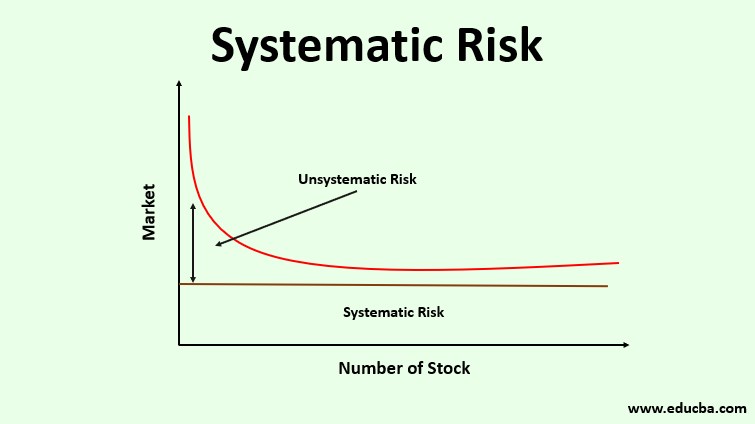
The likelihood of losing money is the typical layperson definition of risk in the context of the stock market. You run the risk of losing money when you trade in the markets, so be aware of this. For instance, whether you like it or not, when you purchase a company’s shares, you are taking a risk. Additionally, risk can be divided into two categories at a very high level: systemic risk and unsystematic risk.


Why do you stand to lose money, if you think about it? Or otherwise, what may cause the stock price to decline? There are a lot of reasons, as you can imagine, but here are a few:


  1. Declining business outlook
  2. decreasing profit margins
  3. management incompetence
  4. Margin reduction due to competition

Each of these has some level of risk. In fact, there may be a number of additional, related reasons, and the list is endless. You’ll notice that each of these hazards has one thing in common: they are all risks that are particular to the company.


The simple fact is that the events involving the corporation are solely to blame for the decline in stock price. The price decline is unaffected by any further outside causes. The decline in stock price at that time can only be attributed to internal or company-specific issues, which is a better way to phrase it. Unsystematic risk is the word used frequently to describe the danger of financial loss brought on by company-specific (or internal) factors.


You can diversify unsystematic risk by investing in a few different businesses rather than putting all of your money in one (preferably from different sectors). This is referred to as “diversification.” Investment diversification significantly lowers unsystematic risk.

learning sharks stock market institute
Stock Market Internship Learning is not all that you do at Learning sharks. Of course, there is no proof that you can swim unless you dive and survive in water. Trading and investing in the market is not as easy as you might think it is. It requires a lot of discipline and practice. We will provide Stock Market Internship make you put hundred trades in the market before you stake your money in it.
 

Learning sharks start  programme assures what you have been taught during the course goes into action.

Systemic risk is the riskthat all stocks on the markets face. Systemic risk is caused by common market factors including the macroeconomic environment, current politics, geographic stability, monetary system, etc. The following are a few key systemic issues that can cause stock prices to decline:

  1. decline in GDP
  2. increases in interest rates
  3. Inflation
  4. fiscal shortfall
  5. Geographical danger

Systemic risk, however, can be “hedged.” Hedging is a skill, a method one would do to eliminate systemic risk. Hedging might be compared to holding an umbrella on a gloomy day. You pull out your umbrella as soon as it starts to rain, covering your head right away.

Therefore, keep in mind that diversification and hedging are not the same thing when we discuss hedging.

Many market players mistake hedging for diversification. They are distinct from one another. Keep in mind that we diversify to reduce unsystemic risk. We utilise hedging to reduce systemic risk; nonetheless, it is important to note that no investment or trade in the market should ever be regarded as safe.

Expected Return (2.2)

Before, we return to the subject of risk, we’ll quickly discuss the idea of “Expected Return.” Everyone naturally wants to see a return on their investments. The expected return on investment is simple to understand; it is the return you would anticipate.

If you put money into Infosys with the expectation of getting a 20% return in a year, then 20% is all you can expect to get back.

Why is this significant, especially considering that it seems obvious? In finance, the concept of “anticipated return” is very important. This is the value we enter into a number of formulas, such as portfolio optimization or a straightforward assessment of the equity curve.

The expected return of a portfolio can be calculated with the following formula –

E(RP) = W1R1 + W2R2 + W3R3 + ———– + WnRn

Where,

E(RP) = Expected return of the portfolio

W = Weight of investment

R = Expected return of the individual asset

In the above example, the invested is Rs.25,000/- in each, hence the weight is 50% each. Expected return is 20% and 15% across both the investment. Hence –

E(RP) = 50% * 20% + 50% * 15%

= 10% + 7.5%

17.5%

Conclusion

  1. Lessons to be learned from this chapter
  2. You are exposed to both unsystemic and systemic risk when you purchase a stock.
  3. The risk that exists within the corporation is the unsystemic risk with respect to a stock.
  4. Unsystemic risk only affects the stock, not its competitors.
  5. Simple diversification can reduce unsystematic risk.
  6. The danger that permeates the system is called systemic risk.
  7. Systemic risk permeates all stock markets.
  8. To lessen systemic risk, one can use hedging.
  9. Since no hedge is perfect, there is always some risk involved with trading in the markets.
  10. The probabilistic anticipation of a return is known as the anticipated return.
  11. The anticipated return does not ensure that it will occur.
  12. The expected return for the portfolio can be estimated using the formula E(RP) = W1R1 + W2R2 + W3R3 + ———- + WnRn.

Our location

What to expect in stock market psychology

Psychology and Risk Management

What to expect
• Risks
• Position sizing
• illusion of control
• Accepting critisism
• Paralyzed by fear
• Loss is a feedback, not a failure
• The flexible trader
• Focusing on the positive
• Short straddle
• The dynamics of greed
• The herd mentality
• Notes

1.1 – An exceptional possibility

We are eager to explore two significant and connected market subjects.What to expect in stock market psychology, “Risk Management and Trading Psychology.” Risk management may appear simple, but “psychology” may be uninteresting. I assure you that both of these subjects have the potential to expand trade opportunities. For instance, risk management goes beyond the typical subjects of position sizing, stop loss, and leverage.

It is not what you are thinking. While trading psychology is a mirror of your activities in the markets, it also enables you to evaluate and determine why and how you made a specific trade or investment profitable or unsuccessful.

What to expect?

We can give you a basic overview of What to expect in stock market psychology, but as we go through, I reserve the right to make minor, if any, changes to the learning technique.

Consequently, we are focusing on two primary issues here:

  1. Risk management
  2. Trading psychology

The methods you use to control risk depend on where you stand in the market. When you have a single position in the market, for instance, your risk management strategy is quite different from that of numerous positions, which is again very different from that of a portfolio, which is different still.

I shall discuss the following subjects as I try to explain the aforementioned:

  1. Risk and all of its guises
  2. Position sizing: I suppose this one must be covered.
  3. individual position risk
  4. Hedging and multiple position risk
  5. Using options to hedging
  6. Portfolio characteristics and risk assessment
  7. Worth at Risk
  8. The effect of asset allocation on risk (and returns)
  9. The portfolio equity curve’s insights