Learning sharks-Share Market Institute


Rajouri Garden  8595071711 7982037049  Noida 8920210950 , and  Paschim Vihar  7827445731  

Fee revision notice effective 1st Jan 2026; No change for students enrolled before 15th Jan 2026

Download “Key features of Budget 2024-2025here

Understanding Fixed Exchange Rate: A Comprehensive Guide

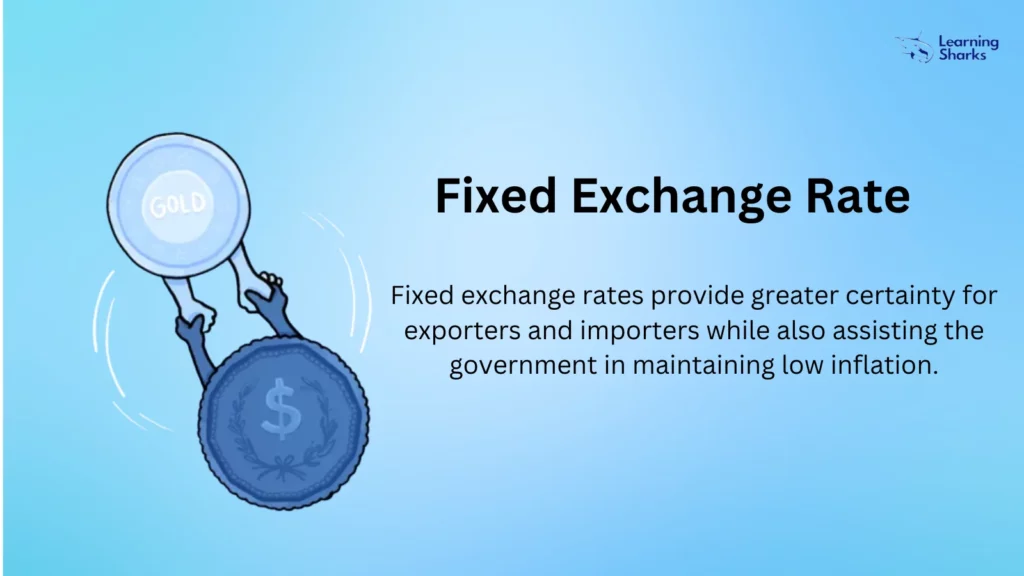
Fixed Exchange Rate

Introduction

We will delve into the concept of fixed exchange rates in this comprehensive guide and provide you with a thorough understanding of its implications, benefits, and challenges. As a leading authority in international finance, our goal is to provide you with the knowledge you need to navigate the complexities of fixed exchange rates.

What is a Fixed Exchange Rate?

A fixed exchange rate monetary system is one in which the value of one currency is tied to the value of another currency, a basket of currencies, or even a commodity such as gold. A fixed exchange rate, as opposed to a floating exchange rate, which fluctuates based on market forces, remains relatively stable over time.

Advantages of Fixed Exchange Rates

Price Stability

The assurance of price stability in international trade is one of the primary benefits of a fixed exchange rate. Businesses and individuals involved in cross-border transactions can forecast and plan their financial activities with greater certainty if the exchange rate remains consistent. This stability fosters market trust and confidence, thereby stimulating economic growth.

Facilitates Trade

Fixed exchange rates can help international trade by lowering the risk of currency fluctuations. Businesses that export or import goods and services can rely on stable exchange rates to calculate accurate costs and devise competitive pricing strategies. This predictability encourages trade partnerships and fosters international economic cooperation.

Monetary Discipline

A fixed-rate regime frequently necessitates stricter monetary policies. To keep the pegged value, governments must follow responsible fiscal policies, such as controlling inflation and keeping healthy foreign exchange reserves. Long-term benefits of this discipline include increased investor confidence and economic stability.

Challenges of Fixed Exchange Rates

Limited Monetary Policy Flexibility

Countries have limited flexibility in implementing monetary policies to address domestic economic challenges under a fixed exchange rate system. The central bank cannot freely adjust interest rates or intervene in the foreign exchange market to stabilize the currency because the exchange rate is fixed. A country’s ability to respond effectively to economic shocks can be hampered by a lack of flexibility.

Speculative Attacks

Fixed exchange rate systems are vulnerable to currency traders’ speculative attacks. Traders may engage in large-scale speculative transactions to force a currency devaluation if they believe it is overvalued or under significant pressure. Such attacks can cause financial instability and disrupt an economy’s normal operation.

Economic Divergence

Countries with different economic fundamentals may experience diverging economic outcomes in a fixed exchange rate system. Maintaining a fixed exchange rate, for example, can create imbalances and hinder competitiveness if one country has higher inflation or slower economic growth than its trading partners. This can lead to trade deficits, unemployment, and other economic difficulties.

Comparison with Floating Exchange Rates

To appreciate the implications of each system, it is critical to understand the key differences between fixed and floating exchange rates. While fixed exchange rates provide stability, floating exchange rates provide greater flexibility and can assist countries in adjusting to economic shocks. The decision between these systems is influenced by a country’s specific circumstances, economic goals, and policy preferences.

Advantage and Disadvantage of Fixed Exchange Rate:-

Advantage:-

  • Price Stability: Fixed exchange rates provide certainty and stability in international trade, allowing businesses to more accurately plan and forecast.
  • Trade Facilitation: Stable exchange rates promote trade by reducing uncertainty and exchange rate risk, as well as encouraging partnerships and economic cooperation among nations.
  • Monetary Discipline: Maintaining a fixed exchange rate frequently necessitates responsible fiscal policies, such as inflation control and the accumulation of foreign exchange reserves, which can lead to long-term economic stability.

Disadvantage:-

  • Limited Monetary Policy Flexibility: Fixed exchange rates limit a country’s ability to implement independent monetary policies, limiting a country’s options for addressing domestic economic challenges.
  • Vulnerability to Speculative Attacks: Fixed exchange rate systems can be vulnerable to speculative attacks by currency traders, potentially causing financial instability and disrupting economic functioning.
  • Economic Divergence: Countries with different economic fundamentals may face difficulties in maintaining a fixed exchange rate, resulting in imbalances, trade deficits, and other economic problems.

Conclusion


Finally, for businesses, policymakers, and individuals involved in international finance, a thorough understanding of fixed exchange rates is critical. While fixed exchange rates provide price stability and facilitate international trade, they also have drawbacks such as limited monetary policy flexibility and vulnerability to speculative attacks. To determine the best approach for a given economy, it is critical to weigh the benefits and drawbacks of fixed exchange rates versus alternative systems such as floating exchange rates.

FOR MORE INFO CLICK THIS SITE:https://learningsharks.in/

FOLLOW OUR PAGE:https://www.instagram.com/learningsharks/?hl=en
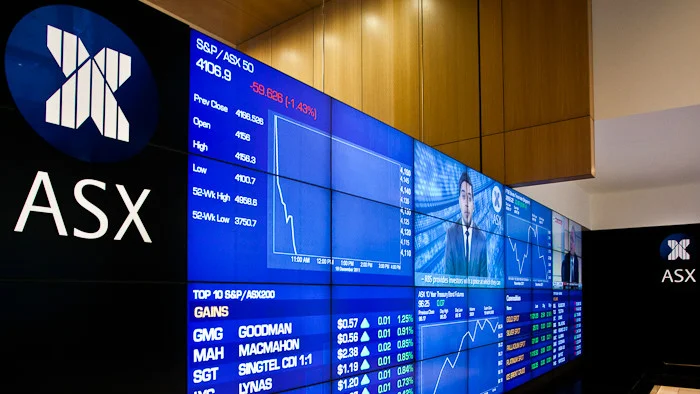
Understanding the Australian Securities Exchange (ASX)

ASX is consistently ranked among the top exchanges globally
Australian securities exchange

Introduction

Welcome to our in-depth look at the Australian Securities Exchange (ASX). We are committed to providing you with the most accurate and valuable information about the ASX as industry-leading experts in finance and investing. In this article, we will go over the ASX’s history, structure, operations, and the various investment opportunities it provides. By the end, you’ll have a firm grasp on the ASX and how it works.

What is the Australian Securities Exchange (ASX)?

The Australian Securities Exchange, or ASX, is the country’s primary securities exchange. It is one of the Asia-Pacific region’s largest and most influential financial markets. The ASX, which was founded in 1987, is critical in facilitating the trading of various financial products such as equities, derivatives, and fixed-income securities.

History of the ASX

The ASX has a long history dating back to the early nineteenth century. It was originally known as the Sydney Stock Exchange, and it was established in 1871. Several other regional stock exchanges merged with the Sydney Stock Exchange over time, resulting in the establishment of the Australian Stock Exchange in 1987. The ASX became a public company in 2006 and changed its name to the Australian Securities Exchange.

Structure and Operations

The ASX operates as a vertically integrated exchange group, providing a wide range of services to market participants. It consists of multiple market platforms, each serving a specific asset class. The key components of the ASX’s structure include:

  1. Primary Market: The primary market facilitates companies seeking to list their securities on the ASX through initial public offerings (IPOs). It is the process of creating and distributing new shares to investors.
  2. Secondary Market: The majority of trading on the ASX takes place in the secondary market. It enables investors to buy and sell existing securities such as stocks, ETFs, and other financial instruments.
  3. ASX Trade: ASX Trade is the electronic trading platform that market participants use to execute ASX trades. It uses a centralized order book system to ensure accurate price discovery and transparent transactions.
  4. ASX Clearing and Settlement: Post-trade services provided by ASX Clearing and Settlement include clearing, settlement, and risk management. These functions ensure that transactions are settled properly and that counterparty risks are kept to a minimum.
  5. ASX Compliance: ASX Compliance is in charge of monitoring and enforcing ASX listing rules compliance. It ensures that listed companies follow all disclosure and governance requirements.

Investment Opportunities on the ASX

For both retail and institutional investors, the ASX provides a diverse range of investment opportunities. The following are some of the most important investment options available on the ASX:

1. Equities

On the ASX, investors can trade a wide range of equities representing various industry sectors and market capitalizations. The ASX provides a platform for investing in both domestic and international equities, whether you are looking for blue-chip stocks, growth-oriented companies, or dividend-paying investments.

2. Exchange-Traded Funds (ETFs)

Because of their low costs and diverse exposure, ETFs have grown in popularity among investors. The ASX offers a diverse range of ETFs, allowing investors to gain exposure to a variety of asset classes such as stocks, bonds, commodities, and currencies.

3. Derivatives

The ASX is a major trading venue for derivatives such as futures and options contracts. Derivatives enable investors to hedge risks, speculate on price movements, and better manage their investment portfolios.

4. Fixed-Income Securities

Investors looking for consistent income streams can look into the ASX’s fixed-income securities. Government bonds, corporate bonds, and hybrid securities are examples of these securities. They provide regular interest payments as well as capital stability.

5. Initial Public Offerings (IPOs)

Participating in initial public offerings (IPOs) can be an exciting way for investors to get in on the ground floor of a company’s growth. The ASX facilitates new company listing, allowing investors to invest in promising businesses and potentially profit from their future success.

Advantages of Investing on the ASX

Individuals and institutions alike can benefit from investing on the ASX. Here are some of the key advantages of using the ASX as your investment platform:

  1. Diversification: The ASX provides investors with access to a diverse range of investment options, allowing them to diversify their portfolios across asset classes and industries. Diversification reduces risk while increasing potential returns.
  2. Liquidity: The ASX, as one of the world’s largest stock exchanges, provides high liquidity, allowing investors to easily buy and sell securities. This liquidity allows for efficient price discovery while also lowering transaction costs.
  3. Regulatory Framework: The ASX is governed by a strict regulatory framework that encourages transparency, investor protection, and fair market practices. Investors can have faith in the market’s integrity and the dependability of listed companies’ disclosures.
  4. Stable Economy: The ASX benefits from Australia’s stable political environment, strong legal system, and well-regulated financial markets. These factors entice both domestic and international investors, resulting in long-term growth opportunities.

Conclusion

Finally, the Australian Securities Exchange (ASX) is a well-known financial marketplace that provides a wide range of investment opportunities. The ASX provides a platform for you to participate in the dynamic world of finance, whether you are a seasoned investor or just starting out. The ASX continues to play an important role in shaping Australia’s financial landscape, thanks to its rich history, comprehensive structure, and diverse range of investment options. Begin exploring the ASX today to capitalize on the potential for growth and wealth creation.

FOR MORE INFO CLICK THIS SITE:https://learningsharks.in/

FOLLOW OUR PAGE:https://www.instagram.com/learningsharks/?hl=en

Why is Learning Sharks considered to be the best Stock Market Institute?

Are you a novice or a professional? Students who are total beginners enrol with us. We advise being familiar with stock market fundamentals first. Not just the definitions of NSE and BSE are covered in this one-month course. or knowledge of stock market terms. It covers all facets of the stock market that you ought to be aware of. A cum trading expert will talk about these topics.

Best Training Institute for Stock Market in Noida

First off, Learning Sharks has a solid reputation as a stock market institute for stock market courses as of 2016. Share market training curricula frequently include technical and derivatives analysis in addition to teaching the basics of the stock market.
In fact, there are 15+ seasoned mentors and traders as well as 10+ premium share market courses for newbies. In a similar vein, Learning Sharks is recognised as one of the best stock market training programmes. The NSE, BSE, commodities (MCX), NCDEX, and currency markets, in addition to actual trading experience
Let’s start investing in the stock market now using mutual funds and basic research. Not to mention that in addition to intraday trading, we also prepare for NISM/NCFM certification exams and jobs.

Additionally, Our Institute offers a variety of stock market courses. Additionally, those courses will greatly aid your understanding of the stock market.

Let’s search for it now:

1. Derivative Analysis Course (futures and options)

"Transform Your Financial Future with the Stock Market Institute's Education and Support

This introductory course covers the essential knowledge you need to know about derivatives. You will learn the differences between forward, futures, options, and swaps contracts. You will also use real-world Excel examples to calculate the gains and losses related to each type of contract. By the end of this course, you will have a basic grasp of derivative contracts, enabling you to move on to more challenging topics like derivatives pricing and trading.

2. Techincal Analysis Course

cbse board result

Financial experts use technical analysis as a method to predict future market performance based on past market data. Analysts use these indicators to understand market volatility, anticipate timeframes, and evaluate price changes.

Certain financial goods may perform differently in the future, according to trends found in technical analysis. Giving advisers the information they need to make decisions on behalf of their clients, businesses, and selves is the aim of this active management technique. Technical analysts who are more knowledgeable about impending price movements can manage money more effectively for all stakeholders. Thanks to contemporary technology, these predictions are more accurate than ever.

3. Fundamental Analysis Course

Many investors buy and hold stocks as long-term investments. Therefore, conducting a fundamental analysis of an organisation is necessary to have a basic grasp of a company’s financial activities. In other words, it aids potential investors in comprehending the fundamental concept around which the business was founded. Additionally, it’s a way for investors to choose businesses with solid fundamentals and invest long-term in them. This is accomplished by looking at a variety of fundamental indicators and components.

4. Psychology and Risk Management

Psychology and risk management are last but not least. The most important section of the guide includes over a hundred topics, including what to expect, dangers, and much more.

After you complete this two-month course, you can apply for a paid internship. where you sit down with your cohort mates and conduct 100 transactions. Trades may be carried out during class time or after. A trading partner who has years of experience and who will support you will be assigned to you. He is skilled at leading a new trader. He was once a newbie himself, after all.

In addition to the lecturers and students, he will make the perfect trading partner. He is aware of your transactions through. He will stop you from making transactions that will cost you money, and he will inform all of the mentors. You’ll be encouraged when a green light indicates that the trade is acceptable.

This is it? There is one more surprise because you finished reading the entire article. We provide funding to students up to Rs. 10 million. While you’re an intern, you get to practise trading with our money.

If you can continue to be profitable, you keep the 70% profit. If you lose, it is entirely our fault. The money is absolutely real, as well.

How does that sound to you now? It seems like too good to be true. I suppose. The reason “learning sharks” is considered as the best stock market school is now clear to you.

want more time to think about it? If you want to learn from us “how to trade” in the stock market, keep reading. Take all the time you require.There isn’t any hurry.

FOLLOW OUR PAGE ON INSTAGRAM: https://www.instagram.com/learningsharks/

Stock Market Courses in Noida

1. Stock Market Crash Course

Stock market Stock exchange Stock trading Investment Stocks Share market Stock prices Stock charts Stock analysis Stock portfolio Market trends Bull market Bear market Stock market news Stock market investing Stock market tips Stock market strategies Financial markets Stock market indices Stock market volatility

Stock Market Trading and Investment Crash Course

All the techniques needed to succeed in the stock market are covered in this succinct course. This will help with the research of many stocks and aid traders in making the best trades. Are you interested in learning how to trade or invest in the stock market? Let’s be real, then! Not all information is available on YouTube. Finding a mentor from whom you can learn is the best thing you can do for yourself. Spend money right now on yourself!

The top traders and mentors in the industry will serve as your highly qualified instructors.

If you want to start trading stocks online to earn extra cash or if you want to make trading your secondary source of income, this stock market trading course is ideal for you.

Lanuage: Hindi & English

Difficulty: Beginner

(FEES MAY VARY FROM LOCATION TO LOCATION)

In this Stock Market Crash Course

You’ll gain knowledge of stock trading. Both beginners and newcomers can benefit from the training.

The two essential elements of trading are risk control and money management.

Anyone may learn how to invest effectively in the stock market, and those who genuinely get the underlying ideas and suggested techniques will be able to meet even their most challenging financial objectives and pursue the life of their dreams.

Sadly, a lot of customers lack access to crucial learning materials and best practises that could make the difference between profitable and unsuccessful stock trading.

YOU WILL LEARN TO BE A SUCCESSFUL STOCK TRADER AND INVESTOR FROM THE COMPLETE COURSE

Available Online & offline Batches

Morning Batch 10-12 PM ( Offline & Online)

Afternoon Batch 12-2 PM ( Offline & Online)

Evening Batch – 6-8 PM ( Offline & Online)

Late Evening Batch 8-10 PM ( Online )

Saturday and Sunday Batch ( ( Offline & Online)

Fee Structure

One-Time Fees: 17,000

In Installments: 18,000

(FEES MAY VARY FROM LOCATION TO LOCATION)

2. About Financial Derivatives (Options & Futures) Course

Derivative Analysis (Options & Futures) Information
As a result, derivatives are second-tier securities whose value is solely determined by the price of the primary security to which they are linked, also referred to as the underlying. Derivatives are typically thought of as professional investments.

Basic financial derivatives analysis training

You will learn the basics of derivative analysis in this introductory course, first. Additionally, You’ll be able to tell them apart. There are forward, futures, options, and swaps contracts, which is evident. Gains and losses are also computed using Excel for various contract types.

By the end of this course, you’ll also have a fundamental grasp of derivative contracts. Once more, you’ll need to advance to trickier topics like pricing derivatives. Also covered is trading in the futures market.

Available Online & offline Batches

Morning Batch 10-12 PM ( Offline & Online)

Afternoon Batch 12-2 PM ( Offline & Online)

Evening Batch – 6-8 PM ( Offline & Online)

Late Evening Batch 8-10 PM ( Online )

Saturday and Sunday Batch ( ( Offline & Online)

Language: English & Hindi

Time Duration: 1.5 Months

Fee Structure: 17,000

(FEES MAY VARY FROM LOCATION TO LOCATION)

3. Technical Analysis Course

BEST SELLING COURSE

ABOUT TECHNICAL ANALYSIS COURSE

One of the most important aspects of stock trading is technical analysis. It alludes to the idea of projecting anticipated price changes based on historical trends. Although. It is common to refer to technical analysis as the “backbone” of stock market trading. The audience for it is individuals who are just starting to learn about charts and technical analysis.

Technical analysts are traders who have no prior understanding of anything. There is information available on several websites that should be utilised, but it’s imperative that we keep organisation to prevent getting overwhelmed and that we can focus and apply our knowledge to what’s most necessary.

In addition, technical analysis places more of an emphasis on the examination of price and volume than fundamental analysis, which is more concerned with other issues.

Available Online & offline Batches

Morning Batch 10-12 PM ( Offline & Online)

Afternoon Batch 12-2 PM ( Offline & Online)

Evening Batch – 6-8 PM ( Offline & Online)

Late Evening Batch 8-10 PM ( Online )

Saturday and Sunday Batch ( ( Offline & Online)

Language: English & Hindi

Time Duration: 2 weeks

Fee Structure: 19,000

(FEES MAY VARY FROM LOCATION TO LOCATION)

4. Fundamental Analysis Course

Discover the Power of Financial Literacy at the Stock Market Institute.

ABOUT FUNDAMENTAL ANALYSIS COURSE

A method for determining a security’s basic value is fundamental analysis. It is also crucial to analyse various macroeconomic and microeconomic accounting and financial aspects. However, determining a security’s intrinsic value is the main objective of fundamental analysis. On the other side, the intrinsic worth of the security can then be contrasted with its current market price to aid in investment selections.

The end result of this fundamental analysis course will be a number that can be used to compare to the current price of a security. to determine if it is hence overvalued or undervalued.

Technical analysis makes price forecasts by analysing historical market data. Price and volume are seen to be in conflict with this approach to stock analysis.

Available Online & offline Batches

Morning Batch 10-12 PM ( Offline & Online)

Afternoon Batch 12-2 PM ( Offline & Online)

Evening Batch – 6-8 PM ( Offline & Online)

Late Evening Batch 8-10 PM ( Online )

Saturday and Sunday Batch ( ( Offline & Online)

Language: English & Hindi

Time Duration: 1.5 Month

Fee Structure: 17,000

(FEES MAY VARY FROM LOCATION TO LOCATION)

5. Shark Trade Course

Master the Art of Stock Trading with the Stock Market Institute's Comprehensive Programs

SHARK TRADER- STOCK MARKET COURSE

Stock market: The Shark Trader is a course that is divided into 5 different parts. Stock market psychology, technical analysis, fundamentals, and derivative analysis. 90% of this instruction is practical, and only 10% is theoretical.

Encouragement For Novices

YOU WILL LEARN HOW TO BE A SUCCESSFUL STOCK INVESTOR FROM THE SHARK TRADER COURSE.

You may trade successfully and confidently with the aid of the course’s in-depth, sophisticated content. You will gain a thorough understanding of what makes an effective trading strategy in addition to learning how to test and improve your own trading approach.

Available Online & offline Batches

Morning Batch 10-12 PM ( Offline & Online)

Afternoon Batch 12-2 PM ( Offline & Online)

Evening Batch – 6-8 PM ( Offline & Online)

Late Evening Batch 8-10 PM ( Online )

Saturday and Sunday Batch ( ( Offline & Online)

Language: English & Hindi

Time Duration: 3 Months

Fee Structure

One -time : 37,000

Installments: 42,000

Difficulty: Beginners

(FEES MAY VARY FROM LOCATION TO LOCATION)

6. Shark Trader Pro

Accelerate Your Investment Journey with the Stock Market Institute.

Most Valuable Stock Market Trading Course – Shark Trader PRO

SHARK TRADER PRO- TRADING AND INVESTING

This course consists of a total of 5 modules. Technical analysis, fundamental analysis, derivative analysis, stock market basics, and stock market psychology. This programme is 80% practical and only 20% theoretical.

The comprehensive, state-of-the-art information in the Shark Trader PRO course can assist you in trading successfully and confidently. You will gain a thorough understanding of what makes an effective trading strategy in addition to learning how to test and improve your own trading approach.
This course covers both intermediate and advanced concepts. You’ll go home with a fresh, less completely theoretical method for looking at data.

Available Online & offline Batches

Morning Batch 10-12 PM ( Offline & Online)

Afternoon Batch 12-2 PM ( Offline & Online)

Evening Batch – 6-8 PM ( Offline & Online)

Late Evening Batch 8-10 PM ( Online )

Saturday and Sunday Batch ( ( Offline & Online)

Language: English & Hindi

Time Duration: 6 Months

Fee Structure

One -time : 49,900

Installments: 55,500

(FEES MAY VARY FROM LOCATION TO LOCATION)

FOLLOW OUR PAGE: https://www.instagram.com/learningsharks/

Comprehensive Stock Market Strategies for Beginners

Introduction

Welcome to our beginner’s guide to stock market strategies. We will provide you with valuable insights and practical tips to help you navigate the world of stock market investing in this article. Whether you are new to investing or want to improve your investment strategy, this guide will provide you with the knowledge and tools you need to make informed decisions and potentially achieve your financial goals.

Understanding the Stock Market


Before delving into specific strategies, it’s critical to understand the stock market. The stock market is a marketplace where investors can buy and sell publicly traded company shares. It is a dynamic environment influenced by a variety of factors including economic conditions, investor sentiment, and company performance.

Setting Financial Goals


Setting clear financial goals is essential before embarking on a successful investment journey. Determine your investment horizon and risk tolerance first. Are you looking for short-term gains or long-term wealth accumulation when you invest? Assessing your financial goals will aid in the development of your investment strategy and will guide your decision-making process.

Strategy 1: Diversification


Diversification is a fundamental principle that can aid in risk management and return optimization. You can reduce the impact of any single investment on your overall portfolio by spreading your investments across different asset classes, industries, and geographic regions. This strategy reduces the risk associated with a specific company or industry, ensuring that your portfolio’s performance is not overly reliant on a single investment.

Strategy 2: Dollar-Cost Averaging


Dollar-cost averaging is an investment strategy that involves investing a set amount of money in a specific stock or fund on a regular basis. You can benefit from both high and low prices over time by investing at regular intervals, regardless of market conditions. This strategy mitigates the impact of short-term market fluctuations by allowing you to purchase more shares when prices are low and fewer shares when prices are high.

Strategy 3: Fundamental Analysis


Fundamental analysis is a method for determining the intrinsic value of a company’s stock by looking at financial statements, industry trends, competitive advantages, and management quality. You can identify stocks that are undervalued or have high growth potential by analyzing these fundamental aspects. This strategy necessitates extensive research and can be supplemented by the advice of financial experts or professional analysts.

Strategy 4: Long-Term Investing


Long-term investing entails holding investments for an extended period of time, typically years or decades. This strategy takes advantage of the power of compounding returns and allows you to profit from the stock market’s overall growth. Long-term investing allows you to potentially ride out short-term market volatility while capturing the wealth-building potential of solid, well-established companies.

Strategy 5: Risk Management


Risk management is a critical component of successful investing. It is critical to evaluate and comprehend the risks associated with each investment, as well as to implement appropriate risk management strategies. Setting stop-loss orders, diversifying your portfolio, and staying informed about market trends and news that may affect your investments are some examples.

Conclusion


To summarize, navigating the stock market as a novice can be difficult, but with the right strategies and a solid understanding of the investment landscape, you can improve your chances of success. Set clear financial goals, diversify your portfolio, consider dollar-cost averaging, conduct thorough fundamental analysis, and take a long-term view. In order to protect your investments, you should also practice sound risk management. You can achieve success by implementing these strategies and continuing to educate yourself.

FOR MORE INFO CLICK THIS SITE:https://learningsharks.in/

FOLLOW OUR PAGE:https://www.instagram.com/learningsharks/?hl=en

The Ins and Outs of Initial Public Offerings (IPOs)

Companies hire investment banks to market, gauge demand, set the IPO price and date, and more.
Initial Public Offerings

Introduction

An Initial public offering (IPO) is the process of selling shares of a private corporation to the public for the first time in a new stock issuance. An IPO allows a company to raise equity capital from the general public.

Because it typically includes a share premium for current private investors, the transition from a private to a public company can be an important time for private investors to fully realize gains from their investment. Meanwhile, public investors are permitted to participate in the offering.

KEY TAKEAWAYS

  • An initial public offering (IPO) is the process of selling shares of a private corporation to the general public in the form of a new stock issuance.
  • To hold an IPO, companies must meet the requirements of exchanges and the Securities and Exchange Commission (SEC).
  • IPOs give companies the opportunity to raise capital by selling shares on the primary market.
  • Companies hire investment banks to market their products, gauge demand, and set the IPO price and date, among other things.
  • An IPO can be viewed as an exit strategy for the company’s founders and early investors, allowing them to realize the full value of their private investment.

Understanding IPOs

Definition and Purpose

An Initial Public Offering (IPO) is the process by which a privately held company becomes a publicly traded entity by selling its stock to the general public. The primary goal of an IPO is to raise capital for the company, allowing it to fund growth initiatives, repay debts, fund R&D, or make strategic acquisitions.

Advantages of Going Public


Going public via an IPO provides several benefits to businesses. For starters, it provides access to a larger investor base, including institutional and retail investors, which can lead to increased liquidity and valuation. Second, an IPO raises the company’s visibility and credibility, making future fundraising efforts easier. Furthermore, going public can serve as an exit strategy for early investors, allowing them to sell their shares and realize profits.

The IPO Process

Preparing for an IPO

A company must conduct extensive preparation before embarking on the IPO journey. This entails putting together a team of professionals, such as investment bankers, lawyers, and accountants, to guide the company through the complex process. The team assists with due diligence, preparing financial statements, drafting the prospectus, and ensuring regulatory compliance.

Selecting Underwriters


Selecting underwriters to manage the offering is a critical step in the IPO process. Underwriters are typically investment banks or financial institutions that facilitate the public sale of shares. They aid in the determination of the offering price, the allocation of shares, and the maintenance of regulatory compliance. It is critical to select reputable underwriters with a proven track record in order to instill confidence in potential investors.

Examination by the Securities and Exchange Commission (SEC)


Once the necessary documents, such as the registration statement and prospectus, have been prepared, they are filed with the Securities and Exchange Commission (SEC). The SEC conducts a thorough review to ensure that all relevant information is disclosed and that all applicable regulations are followed. This review process aims to protect investors while also increasing market transparency.

The IPO’s marketing


The company and its underwriters launch an extensive marketing campaign to generate investor interest and maximize demand. Roadshows, presentations to institutional investors, and media outreach are all part of this. The IPO gains traction in the investment community by effectively communicating the company’s value proposition, growth prospects, and financial performance.

Pricing and Distribution


The offering price is a critical decision that influences the success of an IPO. To arrive at an appropriate price range, the company and underwriters analyze market conditions, evaluate comparable companies, and consider investor demand. To ensure a fair distribution, the allocation of shares among institutional and retail investors is carefully managed.

Going Public and After the IPO


The company becomes a publicly traded entity on the day of the IPO, and its shares are listed on a stock exchange. Trading begins, and the stock price is determined by market supply and demand dynamics. Following the IPO, the company is subject to ongoing reporting and regulatory compliance requirements, ensuring transparency and accountability to shareholders.

Key Considerations for Investors

Evaluating an IPO

To make informed decisions, investors must conduct extensive research when evaluating an IPO. The company’s financial performance, growth prospects, competitive landscape, industry trends, and management team are all important factors to consider. To assess the company’s fundamentals and the potential risks associated with the investment, it is critical to review the prospectus, financial statements, and any available research reports.

Long-Term Investment Potential

Investing in an IPO necessitates a long-term outlook, as the true value of the investment may take time to manifest. While IPOs can be exciting, it is critical to carefully evaluate the company’s business model, competitive advantage, and potential for long-term growth. Investors can make sound investment decisions by conducting thorough due diligence and seeking advice from financial professionals.

Pros and Cons

Pros:-

  • Access to Capital: IPOs allow companies to raise significant capital by selling shares to the general public. This cash infusion can be used to fund growth initiatives, expand operations, invest in R&D, or pay off existing debts.
  • Increased Visibility: Taking a company public through an IPO increases its visibility and brand recognition. It has the potential to attract the attention of potential customers, partners, and investors, resulting in new business opportunities and partnerships.
  • Valuation and liquidity: By becoming a publicly traded company, there is a chance that the market will determine the value of the company’s shares. Furthermore, shares traded on the stock exchange provide liquidity, allowing shareholders to buy and sell their shares with relative ease.
  • Exit Strategy for Early Investors: IPOs allow early investors, such as venture capitalists and angel investors, to sell their shares and realize profits. This enables them to recoup their investments and invest in new ventures.
  • Going Public Can Improve a Company’s Public Image and Credibility: Going public can improve a company’s public image and credibility. Because public companies are subject to stricter regulatory requirements and financial reporting standards, it demonstrates transparency. Customers, partners, and even talented employees may be more inclined to work for a publicly traded company as a result.

Cons:-

  • Cost and Complexity: Going public via an IPO can be an expensive and complicated process. To manage the process, businesses must hire a team of professionals, including investment bankers, lawyers, and accountants. These costs, combined with ongoing compliance costs, can be significant.
  • Increased Regulatory Burden: When compared to private companies, public companies face more stringent regulations and reporting requirements. This includes financial reporting, material information disclosure, and compliance with securities laws. The additional regulatory burden can be time-consuming and expensive for businesses.
  • Market Volatility and Investor Expectations: When a company goes public, its stock price is affected by market volatility and investor sentiment. The stock price can be influenced by external factors such as market conditions, economic trends, and industry-specific factors. Meeting investor expectations and dealing with market volatility can be difficult.
  • Loss of Control: Going public frequently results in dilution of ownership as new shareholders, including institutional investors, join. This can result in the founders and early shareholders of the company losing control. Furthermore, public companies may be subjected to increased scrutiny from shareholders, analysts, and the media, which can have an impact on decision-making processes.
  • Focus on the Short Term: Public companies are frequently under pressure to deliver short-term financial results and meet quarterly expectations. This emphasis on short-term results may limit the company’s ability to make long-term strategic decisions or invest in initiatives that will take time to pay off.

Conclusion

Finally, Initial Public Offerings (IPOs) serve as a bridge for privately held companies to enter the public markets. They allow businesses to raise capital, gain visibility, and provide early investors with an exit strategy. However, the IPO process necessitates meticulous planning, regulatory compliance, and thorough evaluation on the part of both companies and investors. You can navigate this complex landscape and make informed decisions if you understand the ins and outs of IPOs.

FOR MORE INFO CLICK THIS SITE:https://learningsharks.in/

FOLLOW OUR PAGE:https://www.instagram.com/learningsharks/?hl=en
What Is a Socially Responsible Investment (SRI)?

Socially responsible investing is the practice of investing money in companies and funds that have positive social impacts.
Socially responsible investing

Introduction

We are committed to providing you with the most comprehensive and up-to-date information on various investment strategies at our firm. In this article, we’ll look at Socially Responsible Investing (SRI) and its growing importance in today’s financial landscape. SRI, with a focus on sustainable and ethical practices, allows investors to align their financial goals with their values. Let’s look at the key aspects of SRI and how they can help us create a more sustainable future.

What is Socially Responsible Investing?

SRI, or Socially Responsible Investing, is an investment strategy that seeks to generate financial returns while also taking into account the environmental, social, and governance (ESG) factors of the companies or projects being invested in. Unlike traditional investment strategies, which are primarily concerned with maximizing financial returns, SRI incorporates ethical and environmental concerns into the decision-making process.

The Principles of Socially Responsible Investing

Environmental Considerations

SRI emphasizes environmental factors heavily. Environmentally conscious investors frequently seek opportunities in companies that actively mitigate climate change, reduce carbon emissions, promote renewable energy, and engage in sustainable practices. SRI aims to drive positive change and encourage the adoption of sustainable business practices by assisting environmentally conscious companies.

Social Considerations

SRI considers social considerations in addition to environmental factors. Fair labor practices, human rights, diversity and inclusion, and community development are all part of this. SRI investors back companies that uphold these values and actively contribute to society’s well-being. Individuals can make a positive impact on social issues while still meeting their financial goals by investing in socially responsible companies.

Governance Considerations

The policies and practices that guide a company’s decision-making processes and ensure accountability and transparency are referred to as governance. SRI invests in companies that have strong corporate governance structures, accountable executive compensation, and ethical leadership. SRI investors seek to align their investments with companies that uphold high ethical standards by prioritizing good governance.

The Benefits of Socially Responsible Investing

Financial Returns

Contrary to popular belief, ethical investing does not have to sacrifice financial returns. Several studies have shown that SRI strategies can be just as profitable as traditional investment approaches. In fact, companies that prioritize ESG factors frequently outperform their competitors in the long run. Investors can potentially achieve attractive financial returns while supporting sustainable practices by investing in socially responsible companies.

Alignment with Personal Values

For many people, investing is about more than just making money; it’s about making a difference in the world. SRI enables investors to align their portfolios with their personal values while also contributing to causes they care about. SRI provides a platform for individuals to make a difference through their investment choices, whether it’s combating climate change, promoting social justice, or supporting responsible corporate practices.

Risk Mitigation

Consideration of ESG factors can also assist investors in mitigating certain risks. Companies with poor environmental practices, for example, may face regulatory challenges and reputational damage, which can harm their financial performance. Investors who invest in socially responsible companies may be able to avoid such risks and contribute to a more sustainable and stable investment portfolio.

How to Get Started with Socially Responsible Investing

Define Your Values and Objectives

The first step in starting an SRI journey is defining your values and investment goals. Take into account the social and environmental issues that are important to you and tailor your investment strategy accordingly. This will assist you in identifying the industries and companies that reflect your values and will serve as the foundation for your SRI portfolio.

Research and Analysis

When selecting investments for your SRI portfolio, extensive research and analysis are required. Look for businesses with strong ESG practices and a strong commitment to sustainability. Assess their performance in relation to relevant industry standards and benchmarks. You can ensure that your investments are aligned with your values and have the potential for financial growth by conducting extensive research.

Seek Professional Guidance

If you are new to SRI or need help building your portfolio, consider consulting with a qualified financial advisor who specializes in socially responsible investing. They can provide valuable insights, assist you in navigating the complex SRI landscape, and recommend suitable investment opportunities based on your specific needs.

Advantages of Socially Responsible Investing

  1. Positive Impact:SRI enables investors to support businesses that prioritize sustainability, ethics, and social responsibility. Individuals can contribute to positive change and make a difference in areas such as climate change, human rights, and community development by investing in these companies.
  2. Alignment with Values: SRI allows investors to align their investment portfolios with their personal values and beliefs. It enables them to invest in businesses that reflect their social and environmental priorities, giving them a sense of fulfillment and purpose.
  3. Long-Term Resilience: Many studies have found that companies with strong ESG practices often have long-term resilience and outperform their competitors in terms of financial performance. SRI investors may benefit from sustainable growth and potentially attractive financial returns by incorporating ESG factors into investment decisions.
  4. Risk Mitigation: ESG considerations can assist investors in mitigating certain risks associated with poor environmental practices, regulatory challenges, and reputational harm. Investors can potentially reduce their exposure to such risks and build more resilient portfolios by investing in socially responsible companies.
  5. Market Opportunities:SRI investors can capitalize on emerging market opportunities as demand for sustainable and ethical products and services grows. Companies that prioritize sustainability and social responsibility may be well-positioned to benefit from shifting consumer preferences and changing regulatory environments.

Disadvantages of Socially Responsible Investing

  1. Narrow Investment Universe:Certain industries or companies may not meet the desired ESG criteria, so SRI strategies may limit investment options. This could limit diversification and potentially harm the portfolio’s overall performance.
  2. Subjectivity in ESG Ratings:ESG ratings and criteria can differ between providers, resulting in subjective assessments of companies’ sustainability and ethical practices. This subjectivity may make comparing investments and selecting suitable options difficult.
  3. Potential Lower Returns: While studies have shown that SRI strategies can provide competitive financial returns, there may be times when the emphasis on sustainability and ethics results in lower returns when compared to traditional investment approaches. Balancing financial goals with ethical considerations necessitates careful thought and research.
  4. Lack of Standardization:Lack of Standardization: A lack of standardization in ESG reporting and disclosure can make assessing a company’s true sustainability and ethical performance difficult for investors. This lack of transparency may stymie decision-making and make evaluating investments difficult.
  5. Limited Influence on Company Practices: SRI investors may have limited influence on company practices as individual investors. While it is important to support socially responsible businesses, large-scale change often necessitates broader initiatives such as policy advocacy and shareholder engagement.

Conclusion

As the world becomes more aware of the environmental and social challenges we face, Socially Responsible Investing has emerged as a powerful tool for balancing financial objectives with ethical concerns. Individuals can contribute to positive change while pursuing financial goals by investing in companies that prioritize sustainability and ethical practices. Remember that SRI is more than just an investment strategy; it is a way to make a long-term difference in our planet and society. Begin your SRI journey today and contribute to a more sustainable future.

FOR MORE INFO CLICK THIS SITE:https://learningsharks.in/

FOLLOW OUR PAGE:https://www.instagram.com/learningsharks/?hl=en

Stock Valuation Metrics: An In-depth Analysis

Introduction

Welcome to our in-depth guide to stock valuation metrics. In this article, we will look at the various valuation metrics that investors use to determine the value of a company’s stock. Understanding these metrics is critical for making sound investment decisions and maximizing returns. We will go over the benefits and drawbacks of each metric, providing you with a thorough analysis that goes beyond simple explanations. So let’s get started!

Valuation Metrics: The Key to Assessing Stock Worth

Valuation metrics are ratios and indicators that provide information about a company’s value and financial health. Investors can use these metrics to determine whether a stock is overpriced, underpriced, or priced fairly. Let’s look at some of the most popular valuation metrics and their importance in the investment world.

  1. P/E Ratio (Price-to-Earnings Ratio)
    The Price-to-Earnings (P/E) ratio is a fundamental valuation metric that compares the stock price of a company to its earnings per share (EPS). It assists investors in determining how the market perceives a company’s future earnings potential. A high P/E ratio indicates that the market expects future growth to be strong, whereas a low P/E ratio may indicate undervaluation.
  2. P/S Ratio (Price-to-Sales Ratio)
    The Price-to-Sales (P/S) ratio compares the value of a company’s stock to its revenue per share. This metric is especially useful when evaluating businesses with negative or inconsistent earnings. A low P/S ratio may indicate that a stock is undervalued, but investors should also consider industry norms and growth prospects.
  3. P/B Ratio (Price-to-Book Ratio)
    The Price-to-Book (P/B) ratio compares the stock price of a company to its book value per share. It expresses the market’s opinion of a company’s net asset value. A P/B ratio less than one indicates that the stock may be undervalued, while a ratio greater than one indicates that the stock is overvalued. However, interpreting the P/B ratio necessitates a more in-depth examination of the company’s industry and financial situation.
  4. Dividend Yield
    Dividend yield compares annual dividend income to a company’s stock price. It is a critical metric for income investors. A higher dividend yield may indicate an appealing investment opportunity, but investors must consider the dividend’s sustainability and growth potential.
  5. ROI (Return on Equity)
    The return on equity (ROE) of a company measures its profitability in relation to its shareholders’ equity. It measures how efficiently a company generates profits using the capital invested by its shareholders. A high ROE indicates efficient capital utilization and strong profitability, making it a critical metric for evaluating a company’s performance.

Pros and Cons of Valuation Metrics

While valuation metrics provide valuable insights, it is critical to recognize their limitations and consider them in the context of the larger picture. The following are the benefits and drawbacks of using valuation metrics for investment analysis:

Pros

  1. Simplifies Investment Decisions: Valuation metrics provide a standardized approach for comparing companies and making objective investment decisions.
  2. Identifies Potential Opportunities: By identifying undervalued stocks, valuation metrics can assist investors in identifying investment opportunities with future growth potential.
  3. Provides a Framework for Comparison: Valuation metrics enable investors to compare companies within the same industry or sector, allowing for a comparative analysis of their financial performance.

Cons

  1. Limited Scope: Valuation metrics do not capture all aspects of a company’s value, such as qualitative factors, competitive advantage, or potential future growth.
  2. Relies on Historical Data: Valuation metrics rely heavily on historical financial data, which may not accurately reflect a company’s future prospects.
  3. Market Sentiments Can Influence Valuation Metrics: Market sentiment can influence valuation metrics, potentially leading to misinterpretation or overreaction.

Conclusion


Understanding stock valuation metrics is critical for investors who want to make informed decisions and optimize the performance of their portfolio. Investors can gain valuable insights into a company’s financial health and market perception by analyzing metrics such as the P/E ratio, P/S ratio, P/B ratio, dividend yield, and ROE. While valuation metrics provide a useful framework, they should be used in conjunction with other factors such as qualitative analysis and industry trends. With this information, you are now better prepared to navigate the world of stock valuation metrics and make sound investment decisions.

FOR MORE INFO CLICK THIS SITE:https://learningsharks.in/

FOLLOW OUR PAGE:https://www.instagram.com/learningsharks/?hl=en

Share Market Course in Noida

1.Share Market Crash Course

Share Market Trading and Investment Crash Course

This short course covers all of the strategies needed to succeed in the stock market. This will benefit the research of numerous equities, assisting traders in making the best trades. Are you interested in learning how to trade or invest in the stock market? Let’s be real! YouTube does not contain all of the information. Finding a mentor from whom you can learn is the best thing you can do for yourself. Now is the time to invest in yourself!

Highly qualified mentors who are regarded as some of the best traders and mentors will instruct you.

This share market trading course is ideal if you want to start trading shares online to supplement your income or if you want to make trading your secondary source of income (as our Traders do).

In this Share Market Crash Course

You’ll learn how to trade stocks. It is a training ground for both newcomers and beginners.

The two most important aspects of trading are risk and money management.

Anyone can become an expert share market investor, and those who truly understand the underlying concepts and recommended procedures will be able to achieve even the most difficult financial goals and live the life of their dreams.

Unfortunately, many consumers lack access to critical learning resources and industry best practices, which could mean the difference between successful and unsuccessful share trading.

(YOU WILL LEARN HOW TO BE A SUCCESSFUL STOCK TRADER AND INVESTOR FROM THE COMPLETE COURSE)

Available Online & offline Batches

Morning Batch 10-12 PM ( Offline & Online)

Afternoon Batch 12-2 PM ( Offline & Online)

Evening Batch – 6-8 PM ( Offline & Online)

Late Evening Batch 8-10 PM ( Online )

Saturday and Sunday Batch ( ( Offline & Online)

Fees structure

One- time:  ₹17,000

In Installments: ₹18,000

( FEES MAY VARY FROM LOCATION TO LOCATION)

Language: English&Hindi

Difficulty: Beginner

2.About Financial Derivatives (Options & Futures) Course

Introduction to financial Derivatives analysis course

To begin, this introductory derivative analysis course will teach you the fundamentals. You will also be able to distinguish between them. Forward, futures, options, and swaps contracts are self-evident. Excel is also used to calculate profit and loss for various contract types.

By the end of this course, you will also have a basic understanding of derivative contracts. Again, you’ll need to progress to more complex topics like pricing derivatives. Futures trading is also part of the package.

Available Online & offline Batches

Morning Batch 10-12 PM ( Offline & Online)

Afternoon Batch 12-2 PM ( Offline & Online)

Evening Batch – 6-8 PM ( Offline & Online)

Late Evening Batch 8-10 PM ( Online )

Saturday and Sunday Batch ( ( Offline & Online)

LanguageEnglish & Hindi  

Time Duration1.5 Months 

Fees structure : ₹17,000

( FEES MAY VARY FROM LOCATION TO LOCATION)

3.Technical Analysis Course

Learning sharks

BEST SELLING COURSE

About Technical Analysis Course​

Technical analysis is one of the most important aspects of stock trading. It refers to the prediction of future price fluctuations based on historical patterns. Although. Technical analysis is frequently referred to as the “backbone” of stock market trading. It is intended for those who are just starting out with charts and technical analysis.

Every trader who employs technical analysis had no prior knowledge. There is a wealth of information available on numerous websites that should be utilized, but it is critical that we maintain organization in order to avoid becoming overwhelmed and to focus and apply our knowledge to what is most important.

Furthermore, as opposed to fundamental analysis, which focuses on other factors, technical analysis emphasizes the study of price and volume. Furthermore, fundamental analysis seeks to determine the value of a security based on financial results such as sales and earnings.

Available Online & offline Batches

Morning Batch 10-12 PM ( Offline & Online)

Afternoon Batch 12-2 PM ( Offline & Online)

Evening Batch – 6-8 PM ( Offline & Online)

Late Evening Batch 8-10 PM ( Online )

Saturday and Sunday Batch ( ( Offline & Online)

LanguageEnglish & Hindi

Time Duration: 2 Weeks

Fees structure : ₹19,000

( FEES MAY VARY FROM LOCATION TO LOCATION)

4.Fundamental Analysis Course

Learning sharks - Stock Market Institute

About Fundamental analysis Course

Fundamental analysis is a method for determining the fundamental worth of a security. It is also necessary to analyze several macroeconomic and microeconomic aspects of accounting and finance. The ultimate goal of fundamental analysis, however, is to determine a security’s intrinsic value. To aid in investment decisions, the intrinsic value of the security can be compared to its current market price.

The final goal of this fundamental analysis course is to produce a number that can be compared to the current price of a security. As a result, to determine whether it is overvalued or undervalued.

Technical analysis forecasts price movements by examining historical market data. This share analysis methodology is thought to be in conflict with price and volume.

Available Online & offline Batches

Morning Batch 10-12 PM ( Offline & Online)

Afternoon Batch 12-2 PM ( Offline & Online)

Evening Batch – 6-8 PM ( Offline & Online)

Late Evening Batch 8-10 PM ( Online )

Saturday and Sunday Batch ( ( Offline & Online)

LanguageEnglish & Hindi

Time Duration:1.5 Months

Fees structure : ₹17,000

( FEES MAY VARY FROM LOCATION TO LOCATION)

5.Shark Trade Course

Become a Savvy Investor with the Stock Market Institute's Expert Guidance

SHARK TRADER– SHARE MARKET COURSES

The course Share Market: The Shark Trader is made up of five distinct modules. Derivative analysis, technical analysis, stock market psychology, and stock market fundamentals are all aspects to consider. Only 10% of this training is theoretical, with the remaining 90% being practical.

Recommended for Beginners.

THE SHARK TRADER COURSE WILL TEACH YOU HOW TO BE A SUCCESSFUL STOCK INVESTOR.

The advanced material in the course can help you trade effectively and confidently. You will not only learn how to test and refine your own trading strategy, but you will also gain a thorough understanding of what constitutes an effective trading strategy.
This course covers both intermediate and advanced topics. You will walk away with a new, less theoretical approach to data analysis.

Available Online & offline Batches

Morning Batch 10-12 PM ( Offline & Online)

Afternoon Batch 12-2 PM ( Offline & Online)

Evening Batch – 6-8 PM ( Offline & Online)

Late Evening Batch 8-10 PM ( Online )

Saturday and Sunday Batch ( ( Offline & Online)

LanguageEnglish & Hindi

Time Duration:3Months

Difficulty:Beginner

Fees structure :

,One- time:  ₹37,000

In Installments: ₹42,000

( FEES MAY VARY FROM LOCATION TO LOCATION)

6.Sharks Trade Pro

cbse board result

Most Valuable Share Market Trading Course – Shark Trader PRO

SHARK TRADER PRO – TRADING & INVESTING

This course consists of five modules in total. Share market psychology, technical analysis, fundamental analysis, derivative analysis, and share market fundamentals are all topics covered. Only 20% of this training is theoretical, with the remaining 80% being practical.

This course will teach you how to trade stocks. It’s a market training program for both new and experienced market participants. Risk and money management are the two most important aspects of trading.

Anyone can learn how to invest in the stock market, and those who succeed will be able to meet even their most difficult financial goals and live the life they desire. Unfortunately, many consumers lack access to critical educational materials and industry best practices that could mean the difference between success and failure in share trading.

Available Online & offline Batches

Morning Batch 10-12 PM ( Offline & Online)

Afternoon Batch 12-2 PM ( Offline & Online)

Evening Batch – 6-8 PM ( Offline & Online)

Late Evening Batch 8-10 PM ( Online )

Saturday and Sunday Batch ( ( Offline & Online)

LanguageEnglish&Hindi

Time Duration :6Month

Difficulty:Intermediate

Fees structure:

One- time:₹49,900

In Installments:₹55,500

( FEES MAY VARY FROM LOCATION TO LOCATION)

DON’T FORGET TO CHECK OUR WEBSITE:https://learningsharks.in/

FOLLOW OUR PAGE ON INSTAGRAM: https://www.instagram.com/learningsharks/

20+ Best Telegram Channels For Banknifty Calls in 2023!

You have come to the right post if you want to trade Bank Nifty options and receive free professional Bank Nifty tips. Options trading is, as we all know, incredibly risky without the right advice from professionals.

I have thus listed some of the top BankNifty Telegram channels for you in this post.

You may make consistent profits and receive the greatest trading information from these sources, reducing your risk of loss.

1. Banknifty Options Trading Calls 

Link: https://t.me/Banknifty_Options_Trading_Callss

They are not SEBI Registered but they are the finest for Bank Nifty trading advice and information. They are one of the Telegram channels with the quickest growth.

You may get live chart analysis and the best setup for trading, buying, and selling ideas on this channel. They offer both a paid membership and free banknifty calls.

  • 4-5 sure banknifty trades each day
  • Prior to making a deal, add a watchlist.
  • Low start-up costs; starting with only Rs.10,000

2. KRISHNA BANKNIFTY TRADING

Link: https://t.me/krishna_banknifty_trading

For both free and paid BankNifty calls, the finest source is Krishna BankNifty Trading Group.

Many users of the channel have recovered their funds after suffering options trading losses.

Nifty bank options, Nifty futures, index options, stock options, equity, and swing trades are some of the trades available. They offer a comprehensive one-stop shop for all.

  • consecutive profits
  • Assistance hotlines 24×7
  • both free and expensive calls

3. Banknifty Star Expert

Link: https://t.me/Trading_banknifty2

Before making any buy/sell decisions on this channel, subscribers consult their financial advisor. They offer whole support for the live market.

You will receive trading instructions, rules, and 100% certain profitable banknifty and nifty techniques. There is also a premium membership option.

  • minimum one jackpot each day
  • 3 to 5 calls per day
  • 10k in capital is necessary; 3000 to 5000+ in profit every day

4.Intraday Banknifty Calls

Link: https://t.me/intraday_calls_bank_nifty

Because you can get short-term and long-term calls on daily bank nifty & nifty options here for free, Intraday Banknifty Calls Telegram channel is thought to be the finest for Bank Nifty.

They offer calls for trading options that are 90% correct.

  • Live events for VIP subscribers
  • Options on equity
  • More than 20,000 active users

5. Intraday Bank-Nifty

Link: https://t.me/Bank_nifty_intraday

Telegram channel with the highest volume of intraday bank nifty trading. They offer appropriate guidance in their Whatsapp VIP community group.

You will receive one or two extremely precise BankNifty calls on this channel each day before 9:30 AM.

  • When to exit using a live market guide
  • Over 90% accuracy in covering same-day losses

6.Banknifty Nifty Trading Option

Link: https://t.me/Banknifty_Nifty_Trading_option

Another Bank Nifty Telegram channel dedicated to offering Nifty stock trading ideas is this one. They publish calls based on stock news, market updates, and technical analysis. Overall, there are many resources available to you for learning about trading.

There are 65k active channel subscribers. Must subscribe to receive information on a regular basis.

  • Calls for BankNifty and Nifty
  • 15k Stoploss/Target given for Minimum Capital Required

7. STOCK MARKET NIFTY BANK NIFTY

Link: https://t.me/trades4you

The most active Telegram group that offers trading ideas and calls. Additionally, they have a prime group where, if available, they offer 1-2 Banknifty Options Calls and 1-2 Stock Options Calls each day in the premium.

Analyst not registered with SEBI. This channel not only exchanges thoughts but also offers instructional material.

  • Every day, 1-2 free calls and tips for banknifty options
  • Earn 5-7k each day with a 25k investment; accuracy of 85–90%

8. Vijay wealth advisor

Link: https://t.me/vijaywealthofficial2020

Another example of a Best Bank Traders, investors, trainers, and consultants that are passionate about trading and investing manage the Nifty Telegram channel. Market news and Nifty bulletins are exchanged.

Additionally, you will receive sound advice on trading, so you may ask questions and gain a lot of knowledge if you’re puzzled. Aside from that, all of the information offered here is free. But before trading, it’s a good idea to speak with your financial counsellor.

  • daily direction of the nifty and banknifty
  • updated worldwide Investment Calls 2 lakh+ members

9. GHANSHYAM TECH ANALYSIS

Link: https://t.me/GHANSHYAMTECH

One of the most well-liked Bank Nifty Telegram channels offered tips for trading the Nifty stock. They publish links to technical analysis videos, market updates, stock news, and trading strategy news.

Overall, there are many resources available to you for learning about trading tips. Their premium learning group will receive fast-moving level posts as well as Bank Nifty and Nifty Intraday live charts.

  • info on daily performance
  • Best Practises
  • educational materials

10 .StockPro Online (SEBI Registered)

Link: https://t.me/StockPro_Online

Dr. Seema Jain founded StockPro, an official Telegram channel, and she also serves as its founder. Dr. Seema Jain is a SEBI Certified Research Analyst who provides information on all equities as well as the Nifty, Bank Nifty, Expiry levels, and Breakout levels.

The goal of StockPro is to help as many people as possible achieve financial freedom by making financial literacy a national priority. Additionally, they offer you the top YouTube videos for learning about the stock market.

  • Daily Equity Calls Live Webinar Free Demo

11 .Banknifty Masters

Link: https://t.me/NiftyFnOofficial

The 60k-follower-trusted Telegram channel to join is Banknifty Masters. They make an effort to assist both new and seasoned traders in making money off of their investments.

They allow you to start trading on the market with very little money. They all share posts in order to spread knowledge and further education.

  • Premium Subscription
  • 1-2 free banknifty calls each day for data analysis

12. SHREE TECH ANALYSIS

Link: https://t.me/shreetechanalysis

Based on their study, the telegram channel SHREE TECH study offers trade setups and ideas. In this group, they also provide nifty and intraday calls. Although they occasionally send promotional communications, they are not SEBI-registered.

You can gain a solid grasp of price movement from this group. When you open a trading account using their link, you will receive a free premium service.

  • 1-2 calls per day are offered
  • 2k–10k in guaranteed daily profit; 95% accuracy
  • Complete Direction and Support

Some Other Channels Name and their link are listed below:

Channel NameLink
Vijay Wealth ProviderStock Phoenixt.me/boomingbullsofficial
Stocktwits Indiat.me/stocktwitsindia
CapitalVia – Stocks | Nifty | Sensex | commodity | NSE | BSEt.me/CapitalVia
Stock Market & Tradingt.me/stockl
20PAISA.COM (Banknifty Option)t.me/Banknifty_specials
Navjot Brar Stock Analystt.me/NAVJOTBRAR911
NIFTY BANKNIFTY OPTION CALLSt.me/niftybankniftyROY
𝙋𝙍𝙊𝙁𝙄𝙏 𝙆𝙄𝙉𝙂 – 𝙎𝙏𝙊𝘾𝙆 𝙈𝘼𝙍𝙆𝙀𝙏t.me/share_marketindia
INTRADAY STOCKPRO – EQUITY CALLSt.me/Intraday_Stockpro_Equity_Calls
Stock talk – Technical analysist.me/stocktalkofficial

FOLLOW OUR WEBSITE: https://learningsharks.in/

FOLLOW OUR PAGE: https://www.instagram.com/learningsharks/