
Learning sharks-Share Market Institute


Rajouri Garden  8595071711 7982037049  Noida 8920210950 , and  Paschim Vihar  7827445731  

Fee revision notice effective 1st Jan 2026; No change for students enrolled before 15th Jan 2026

Download “Key features of Budget 2024-2025here

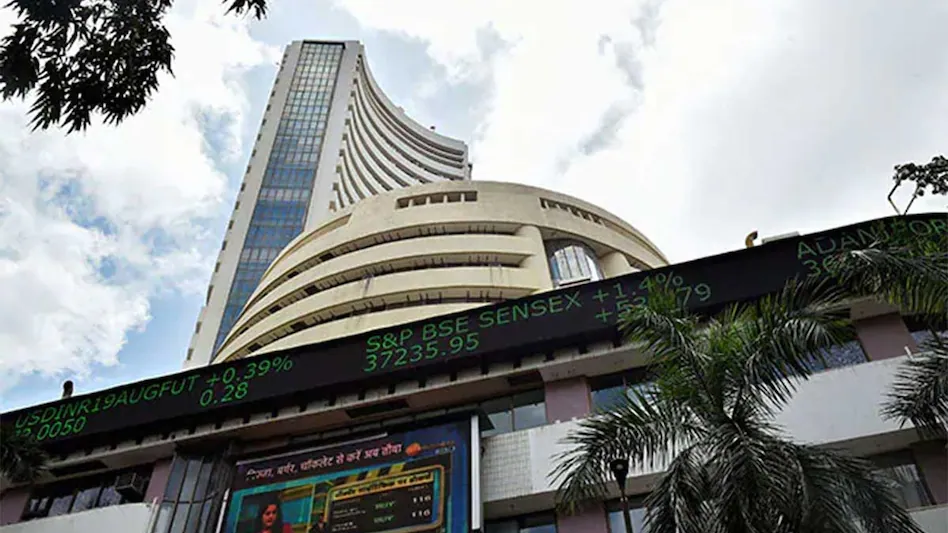
Understanding Investment in the Stock Market: A Comprehensive Guide

Introduction

Welcome to our comprehensive guide to stock market investing. We will provide you with valuable insights and expert advice on how to successfully navigate the world of stock market investing in this article. This guide will provide you with the knowledge and tools you need to make informed investment decisions, whether you are a novice looking to get started or an experienced investor looking to improve your strategies.

Understanding the Stock Market

What is the Stock Market?

The stock market is a marketplace where individuals and institutions can buy and sell publicly traded company shares. It allows investors to become partial owners of these businesses and potentially benefit from their growth and profitability.

Why Invest in the Stock Market?

Investing in the stock market has numerous benefits. For starters, it provides a potential avenue for wealth creation. Over time, the stock market has outperformed other investment vehicles in terms of long-term returns. Furthermore, it enables investors to diversify their portfolios by spreading their risk across various sectors and industries. Finally, investing in stocks allows you to earn dividends and participate in capital appreciation.

Getting Started with Stock Market Investment

Setting Financial Goals

It is critical to define your financial goals before entering the stock market. This step will assist you in determining an investment strategy that is compatible with your goals. Are you saving for retirement, buying a home, or paying for your children’s education? Clarifying your objectives will help you make better decisions.

Assessing Risk Tolerance

When investing in the stock market, it is critical to understand your risk tolerance. Stocks are inherently volatile, with prices fluctuating dramatically in the short term. Assessing your ability to withstand market fluctuations and potential losses will help you choose the best investment strategy.

Conducting Fundamental Analysis

The process of evaluating a company’s financial health, management team, competitive positioning, and growth prospects is known as fundamental analysis. By analyzing these factors, you can identify stocks with strong fundamentals that are likely to generate long-term returns.

Technical Analysis and Market Trends

Technical analysis is the study of past price patterns and market trends in order to forecast future stock price movements. Based on patterns, support and resistance levels, and other indicators, it assists investors in making informed decisions.

Building an Investment Portfolio

Diversification

Diversification is an important aspect of successful investing. You can reduce the impact of individual stock volatility and minimize risk by diversifying your investments across asset classes, sectors, and geographic regions. A well-diversified portfolio can provide a good mix of stability and growth.

Asset Allocation

The distribution of your investments across various asset classes, such as stocks, bonds, and cash, is referred to as asset allocation. It is determined by your risk tolerance, time horizon, and financial objectives. Proper asset allocation ensures that your portfolio is well-positioned to withstand market volatility.

Long-Term Investing

Investing in stocks requires a long-term commitment. Short-term trading or attempting to time the market can be dangerous and unpredictable. You can benefit from the power of compounding and ride out market fluctuations by taking a long-term investment approach.

Risk Management and Investor Protection

Setting Stop-Loss Orders

Stop-loss orders are critical tools for risk management in the stock market. They enable you to set a fixed price at which you will sell a stock in order to limit potential losses. This strategy protects your investment from significant market downturns.

Stay Informed and Monitor Investments

It is critical to stay informed about the companies in which you invest as well as the overall market conditions. Review your portfolio on a regular basis, analyze financial statements, and stay current on relevant news and market trends. This proactive approach will allow you to make necessary adjustments to your investment strategy in a timely manner.

Investor Protection and Regulations

It is critical to understand investor protection measures and regulations in order to protect your investments. Familiarize yourself with governing bodies such as the Securities and Exchange Commission (SEC), as well as fraud prevention and reporting mechanisms.

Advantage and Disadvantage

Advantage:-

  • Potential for High Returns: Historically, the stock market has provided higher returns than other investment options such as bonds or savings accounts. Investing in high-performing stocks has the potential to provide significant capital appreciation over time.
  • Diversification: The stock market provides a diverse range of investment opportunities in a variety of sectors and industries. You can spread your risk by diversifying your portfolio with stocks from various companies and industries. Diversification reduces the impact of a single company’s or industry’s poor performance on your overall investment.
  • Dividend Income: Many businesses pay out a portion of their profits to shareholders in the form of dividends. You can earn a regular income stream in addition to potential capital gains by investing in dividend-paying stocks. Dividends can be especially beneficial for investors looking for a consistent source of income.
  • Liquidity: The stock market is a liquid market, which means that you can buy and sell stocks relatively easily. This liquidity gives you flexibility, allowing you to make investment decisions and access your funds when necessary. Stocks provide greater liquidity than other investments with longer lock-in periods.
  • Ownership and Voting Rights: When you buy stocks, you become a part-owner in the company. This ownership confers certain rights, including the ability to vote in some cases. As a shareholder, you have the right to vote on corporate decisions and potentially influence the company’s direction.

Disadvantage:-

  • Volatility and Risk:  Stock prices can be highly volatile, and the value of your investments can fluctuate significantly in the short term. Market downturns can cause significant losses. Investing in the stock market entails some risk, and it’s critical to be prepared for potential fluctuations in portfolio value.
  • Market Uncertainty: A variety of factors influence the stock market, including economic conditions, political events, and investor sentiment. These factors can create uncertainty and make it difficult to accurately predict market movements. Market volatility can have an impact on the performance of your investments.
  • Time and Effort: Successful stock market investing necessitates time and effort spent conducting research, analyzing companies, and staying current on market trends. Continuously monitoring your portfolio and making informed investment decisions can be time-consuming. Stock investing may not be suitable for those who prefer a more passive or hands-off approach to investing.
  • No Guaranteed Returns: Stocks, unlike certain fixed-income investments, do not guarantee a specific rate of return. Stock prices can fall, resulting in losses. Investing in the stock market necessitates a long-term mindset as well as the ability to weather short-term market fluctuations.
  • Emotional Factors: Emotions such as fear and greed can have an impact on stock market investing. Emotional decision-making can lead to rash buying or selling that is inconsistent with a sound investment strategy. It is critical to control one’s emotions and make rational investment decisions based on thorough analysis rather than short-term market fluctuations.

FOR MORE INFO CLICK THIS SITE:https://learningsharks.in/

FOLLOW OUR PAGE:https://www.instagram.com/learningsharks/?hl=en

Titan posts 20% YoY revenue growth in June quarter;

Brand Titan and foreign brands experienced great purchase momentum, with double-digit increases. “Consumer preferences for premium brands resulted in a significant increase in the average selling price for watches,” according to the Tata Group company.

A level below 30 is defined as oversold while a value above 70 is considered overbought.
The one-year beta of the stock is 0.84, indicating modest volatility. Meanwhile, Indian equity benchmarks reached new highs today.

Titan Company Ltd reported a 20% year-on-year (YoY) revenue increase in the June quarter of fiscal year 2023-24 (Q1 FY24). The company announced in a post-market hours announcement on Thursday.

  • Despite significant volatility in gold prices throughout the quarter, Akshaya Tritiya sales in April and wedding purchases in June were robust,” said a spokesperson for the Jewellery business.
  • The primary categories of gold and studded rose well, while the overall product mix remained stable. “New store openings, golden harvest, and exchange programmes performed well during the quarter,” Titan said.
  • The 13% YoY growth in the Watches & Wearables division was comprised of 8% growth in the analogue watches segment and 84% YoY growth in wearables.Brand Titan and foreign brands experienced great purchase momentum, with double-digit increases.
  • Sales in the EyeCare Division increased by 10% year on year. Titan also stated that the commerce and distribution channels expanded quicker than Titan Eye+.
  • Titan reported that fragrances and fashion accessories grew 11% year on year, driven by 9% growth in fragrances and 13% growth in fashion accessories. Taneira’s first-quarter revenue increased by 81% year over year.

The 14-day relative strength index (RSI) for the stock was 79.96. A value less than 30 is considered oversold, while a value more than 70 is considered overbought.

CONCLUSION

FOR MORE INDO CLICK THIS

SITE: https://learningsharks.in/

FOLLOW OUR

PAGE: https://www.instagram.com/learningsharks/#

CEAT, JK Tyre shares hit 52-week highs, zoom up to 19%?

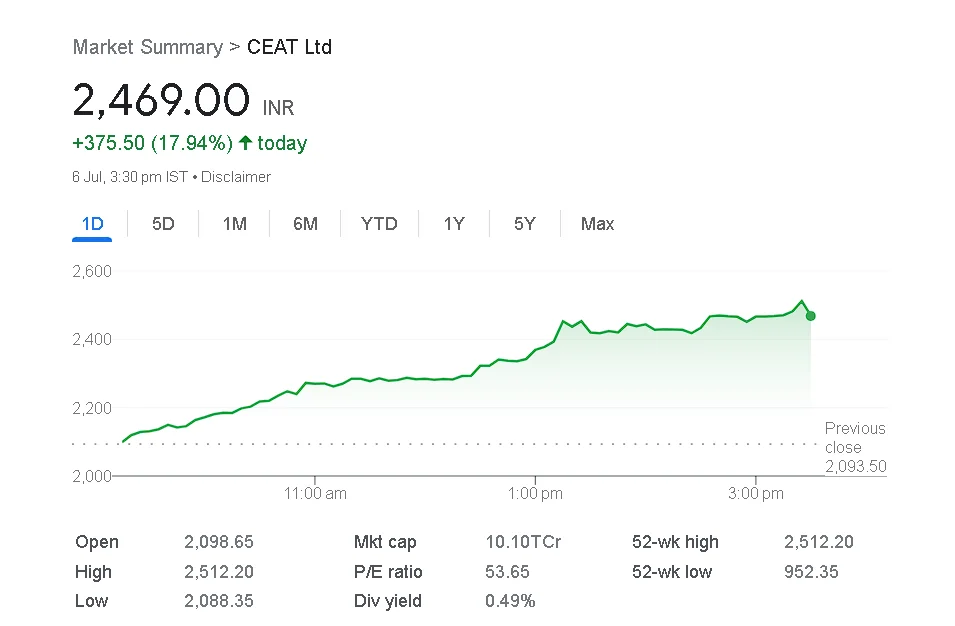
CEAT share price: The company gained 19.40 per cent to achieve a 52-week high of Rs 2,498.10 over its previous close of Rs 2,092.30. The counter’s turnover was Rs 31.15 crore, with a market capitalisation (m-cap) of Rs 9,882.77 crore. The stock has gained 28.48 percent in the last month and 49.45 percent year to date (YTD).

Shares of CEAT rose sharply to touch their one-year high levels in Thursday's trade. The stock jumped 19.40 per cent to hit a 52-week high of Rs 2,498.10 over its previous close of Rs 2,092.30.
CEAT stock price: CEAT appeared to be mostly ‘bullish’ on the technical front.

INTRODUCTION

CEAT shares surged to a one-year high in Thursday’s trading. The stock increased 19.40% from its previous close of Rs 2,092.30 to a 52-week high of Rs 2,498.10.

  • The counter’s turnover was Rs 31.15 crore, with a market capitalisation (m-cap) of Rs 9,882.77 crore. The stock has risen 28.48 percent in the last month and 49.45 percent.
  • The current increase can be attributed to new luxury vehicle introductions, according to a person familiar with the situation. CEAT received the most attention when the stock reached a 52-week high.
  • The increase is more likely a beneficial spillover impact on tyre stocks, according to an industry source who requested anonymity.

“CEAT is planning to increase exports in FY24-25,” stated Ravi Singh, Vice-President and Head of Research at Share India.

It is bullish and trading above the 50 and 200-day moving averages, with an RSI of 70. In the short run, the stock might reach Rs 2,600.”

  • “CEAT is bullish but overbought on the daily charts,” said AR Ramachandran of Tips2trades, Investors should take profits now or hold till the daily support of Rs 2,168 is broken on a closing basis.”
  • The 14-day relative strength index (RSI) for the stock was 87.29. A value less than 30 is considered oversold, while a value more than 70 is considered overbought.

The stock of the corporation has a price-to-earnings (P/E) ratio of 32.28. It has a price-to-book ratio (P/B) of 2.05.

CONCLUSION

FOR MORE INDO CLICK THIS

SITE: https://learningsharks.in/

FOLLOW OUR

PAGE: https://www.instagram.com/learningsharks/#

Understanding Economic Indicators: Key Stats for Informed Investing

Introduction

It is critical to have access to reliable and relevant information when making informed investment decisions. Economic indicators are critical in providing key statistics and insights into the overall health and performance of the economy’s various sectors. In this comprehensive guide, we will delve into the world of economic indicators, discussing their significance, types, and how they can help investors make sound decisions.

The Significance of Economic Indicators

Economic indicators act as barometers, providing valuable information about the current state of the economy. Investors can assess the health of specific sectors, identify trends, and forecast future economic conditions by analyzing these indicators. They provide vital data points that assist investors in identifying opportunities and making strategic investment decisions.

Types of Economic Indicators

1. Leading Indicators

Leading indicators are statistics that tend to change before the overall economy. They are frequently used to forecast future trends and can provide important early warning signs of economic shifts. Stock market performance, consumer confidence indexes, and building permits are examples of leading indicators.

2. Lagging Indicators

As the name implies, lagging indicators lag behind changes in the overall economy. They provide confirmation of previously observed economic trends. Lagging indicators are frequently used to validate or confirm leading indicator predictions. Unemployment rates, inflation rates, and interest rates are examples of lagging indicators.

3. Coincident Indicators

Coincident indicators move in lockstep with the broader economy. They reflect the current state of the economy and can assist investors in determining its short-term health. Industrial production, retail sales, and personal income levels are examples of coincident indicators.

Key Economic Indicators

To gain a better understanding of economic indicators, let’s look at some of the most commonly used by investors:

1. Gross Domestic Product (GDP)

GDP is a widely accepted indicator of a country’s economic performance. It denotes the total value of all goods and services produced within a given time period. Investors can assess an economy’s overall health and growth potential by tracking GDP growth rates.

2. Consumer Price Index (CPI)

The CPI is an inflation measure that tracks the changes in the prices of a basket of goods and services over time. It informs investors about changes in purchasing power and assists them in determining the impact of inflation on investments.

3. Unemployment Rate

The unemployment rate is the percentage of the labor force that is unemployed and actively looking for work. This metric reflects the state of the labor market and can predict changes in consumer spending and economic growth.

4. Housing Starts

Housing starts are the number of new residential construction projects that begin during a specific time period. Investors pay close attention to this indicator because it provides insight into the strength of the real estate market, which has a significant impact on the overall economy.

5. Stock Market Indices

Indexes of the stock market, such as the S&P 500 and the Dow Jones Industrial Average, reflect the performance of a specific group of stocks. These indices are regarded as leading indicators, and investors closely monitor them to gain insights into market trends and investor sentiment.

The Role of Economic Indicators in Investing

Economic indicators are valuable tools for investors, assisting them in making informed investment decisions based on current economic conditions. By keeping a close eye on these indicators, investors can:

  1. Identify Investment Opportunities: Economic indicators provide insights into sectors that are poised for growth, enabling investors to identify investment opportunities early on.
  2. Manage Risks: Investors can assess potential risks and adjust their investment strategies by analyzing economic data. Rising unemployment rates, for example, may indicate a slowdown in consumer spending, prompting investors to reduce their exposure to consumer discretionary stocks.
  3. Make Informed Decisions: Economic indicators provide a foundation of knowledge on which investors can base their decisions. Investors can assess the potential impact of various events and trends on their investments by understanding the overall economic landscape.
  4. Forecast Market Trends: Economic indicators, particularly leading indicators, can assist investors in forecasting market trends and anticipating economic changes. This foresight enables investors to strategically position themselves and capitalize on emerging opportunities.
  5. Diversify Portfolios: Investors can effectively diversify their portfolios by considering economic indicators from various sectors and regions. This diversification helps to reduce risks while increasing potential returns.

Conclusion

Finally, economic indicators are critical tools for investors looking to make sound investment decisions. Investors can assess the health of the economy, identify trends, and forecast future market conditions by analyzing key statistics. Understanding economic indicators enables investors to confidently and precisely navigate the complex world of investing.

Remember that staying current on economic data and trends is critical for successful investing. You can make informed decisions that have the potential to outperform the market and achieve your investment objectives by leveraging the power of economic indicators.

FOR MORE INFO CLICK THIS SITE:https://learningsharks.in/

FOLLOW OUR PAGE:https://www.instagram.com/learningsharks/?hl=en

Sensex, Nifty slip in early trade; Suzlon Energy?

The 30-share BSE Sensex slid 60 points, or 0.09 percent, to 65,386, while the wider NSE Nifty fell 14 points, or 0.07 percent, to 19,385.

Indian equity benchmarks traded lower in early deals on Thursday amid weak global cues.
The National Stock Exchange said that eight of the 15 sector indices were trading in the red.

INTRODUCTION

Indian equities indexes fell in early trade on Thursday due to negative global cues. Domestic indices were driven down by equities in technology, finance, metals, and consumer goods.

  • The 30-share BSE Sensex slid 60 points, or 0.09 percent, to 65,386, while the wider NSE Nifty fell 14 points, or 0.07 percent, to 19,385.
  • Wall Street equities slumped overnight as minutes from the June US Federal Reserve meeting revealed that the decision to pause rate hikes was unanimous and that most members expected future policy tightening.
  • According to preliminary NSE statistics, foreign institutional investors (FIIs) bought Rs 1,603 crore of Indian equities on a net basis on Wednesday, while domestic investors sold Rs 439 crore.

Continue to invest in high-quality large-cap stocks. “For direction, wait for the Q1 results,” said VK Vijayakumar, Chief Investment Strategist at Geojit Financial Services.

Nifty outlook

“Several downside attempts occurred on expected lines, but none of them gained the momentum required to reach our target of 19,125.” The subsequent pullback provides a neutral bias to begin with, but we are tempted to chase the downside chances indicated by the spinning top the day before.

“As stated yesterday, if the 19,320-19,250 region holds in the event of a slippage or if 19,479 is breached during upside attempts, this view will be invalidated,” said Anand James, Chief Market Strategist at Geojit Financial Services.

Derivative

“The Nifty weekly contract has the most open interest at 19,500 for ‘Calls’ and 19,300 for ‘Puts,’ while the monthly contract has the most open interest at 19,500 for ‘Calls’ and 19,000 for ‘Puts.”

“FIIs increased their future index long position holdings by 3.51 percent, future index short position holdings by 0.98 percent, and index options by 0.21 percent in Call longs, -3.02 percent in Call shorts, 17.53 percent in Put longs, and 2.59 percent in Put shorts,” James said.

CONCLUSION

FOR MORE INDO CLICK THIS

SITE: https://learningsharks.in/

FOLLOW OUR

PAGE: https://www.instagram.com/learningsharks/#

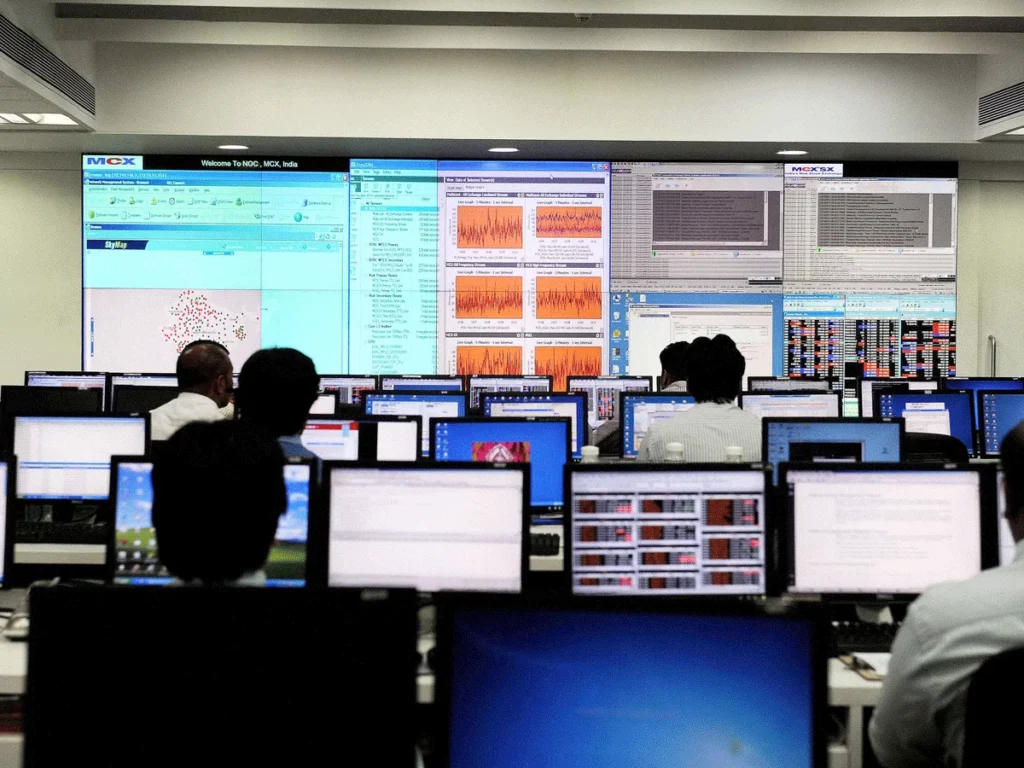
MCX shares dive 12% after exchange extends software support?

MCX share price: MCX has regularly failed to meet deadlines for switching to a new trading platform. The stock fell 12.48 percent today to a day low of Rs 1,437 from its previous close of Rs 1,641.85.

Shares of Multi Commodity Exchange of India Ltd (MCX) fell sharply in Friday's trade after the commodity exchange again extended its software support contract with 63 Moons Technologies Ltd, the former promoter of the bourse.
MCX share price: MCX has approached 63 Moons for the third time to extend the software support service arrangement.

“We recognise the importance of providing our users with a dependable and robust platform, and we are committed to continuously improving our services.” “We will inform all of our stakeholders about the migration plan to the new Commodity Derivatives platform,” MCX added.

63 Moons, formerly known as Financial Technologies India Ltd, on the other side, stated that it has "once again agreed to the eleventh-hour request by MCX, which according to MCX is for the 'last time' for one more time."

63 Moons, formerly known as Financial Technologies India Ltd, on the other side, stated that it has “once again agreed to the eleventh-hour request by MCX, which according to MCX is for the ‘last time’ for one more time.”

“We sincerely hope that this ‘last time’ happens someday, so that we can deploy our excellent team of exchange technology engineering group in a mega promising opportunity in the new digital world,” the company noted.

After the long-term agreement with MCX expired on September 30, 2022, and MCX selected a new technology service provider in February 2021, MCX approached 63 Moons for the third time to prolong the software support service arrangement.

Meanwhile, Indian market indexes rose in early trade on Friday to reach all-time highs, thanks to better sentiment following strong economic statistics from the United States, which alleviated concerns of a downturn.

CONCLUSION

FOR MORE INDO CLICK THIS

SITE: https://learningsharks.in/

FOLLOW OUR

PAGE: https://www.instagram.com/learningsharks/#

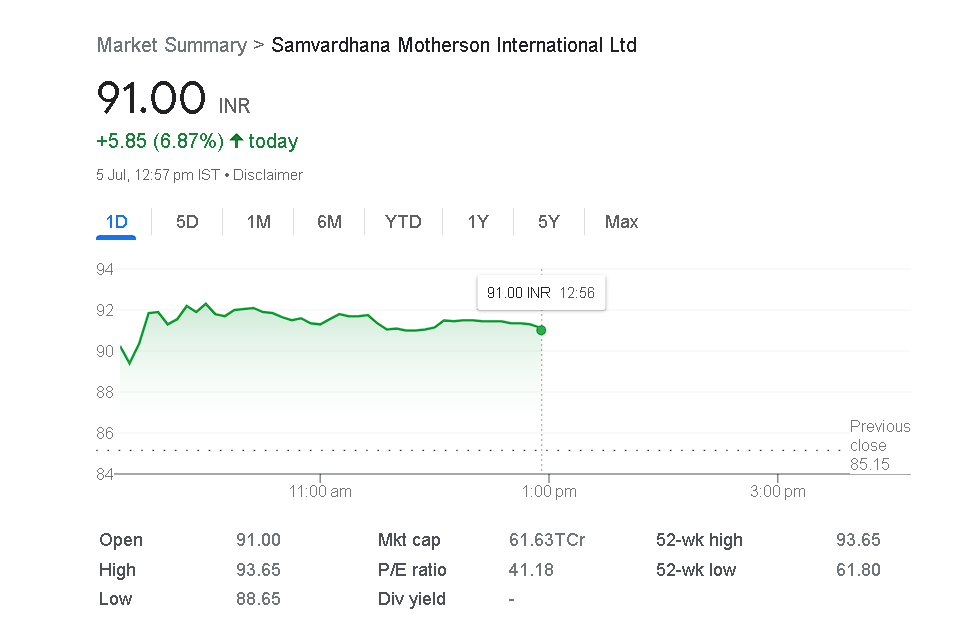
Samvardhana Motherson share price target at Rs 120?

SAMIL stock price: Motilal Oswal also stated that two intriguing items are in the works: a plastic tailgate and a type-IV hydrogen fuel tank, both of which have the potential to futureproof the company.

The acceleration in M&A activity may expand customer, product and geography base, which would augur well for Samvardhana Motherson International, they said while suggesting shares price targets up to Rs 120 level.
Samvardhana Motherson International share price: Y4W has a 9% global market share in Sunroof Systems and has been a long-term key supplier to Honda Motor.
  • Following that, Samvardhana Motherson International would purchase 81% of the remaining Yachiyo 4W business, forming an 81:19 joint venture with Honda Motor.
  • To be sure, Y4W has a 9% global market share in Sunroof Systems and has been a long-term strategic supplier to Honda Motor.

“We see this deal as a strategic positive for SAMIL’s long-term growth, as we believe it helps the company: penetrate deeper with Honda (cross-selling opportunities) and help foray into the global Sunroof and Fuel Tank market,” stated JM Financial.

ROCE is predicted to rise in the future as the supply chain improves, global vehicle sales rebound, operating leverage increases, and profitability improves.

According to the domestic brokerage, the Prysm acquisition is tied to a milestone that, if met, will open up a substantial market in non-auto applications for Samvardhana Motherson International.

“SAMIL’s second large acquisition of a Japanese firm at an attractive valuation impresses.” Given the delisting procedure, completing the transaction by 1QFY25 appears ambitious,” said InCred Equities.

CONCLUSION

FOR MORE INDO CLICK THIS

SITE: https://learningsharks.in/

FOLLOW OUR

PAGE: https://www.instagram.com/learningsharks/#

Genus Power shares rally 20% on GIC JV; stock up 46% in 4 days

The share price of Genus Power increased by 20% to a 52-week high of Rs 168.90. The stock has up 46.37 percent in four sessions at current pricing. So far, it has nearly doubled this year.

The two partners have agreed to a $2 billion initial pipeline investment. Genus would be the platform's sole supplier of smart metres and related services.
GIC will own 74% of the platform, with Genus Power owning the remaining 26%, according to a BSE filing.

Introduction

  • Shares of Genus Power Infrastructures Ltd (Genus Power) rose 20% in Wednesday trading, extending the company’s winning streak to four straight sessions,
  • after the company signed definitive agreements with Gem View Investment, an affiliate of Singapore’s GIC, to establish a platform for undertaking advanced metering infrastructure service provider concessions.
  • According to the company’s BSE filing, GIC will own 74% of the platform, while Genus will own 26%. The two partners have agreed to a $2 billion initial pipeline investment.
Investment, an affiliate of Singapore's GIC for setting up of a platform for undertaking advanced metering infrastructure service provider concessions.

The stock has risen after the company was awarded a letter of award (LOA) worth Rs 2,207.53 crore for the appointment of Advanced Metering Infrastructure Service Provider (AMISP), which includes the design of an AMI system.

with the provision, installation, and commissioning of 27.69 lakh smart prepaid metres, feeder metres, DT metre level energy accounting, and FMS for these 27.69 lakh smart metres.

In the instance of GIC JV, an affiliate of GIC Chiswick Investment Pte will invest up to Rs 590 crore through a preferential allotment of warrants, representing 15% of Genus’ issued and paid-up share capital on a fully diluted/as converted basis.

The transactions are subject to Genus shareholder approval and the execution of normal closing conditions to the satisfaction of the GIC affiliates, according to Genus.

CONCLUSION

FOR MORE INDO CLICK THIS

SITE: https://learningsharks.in/

FOLLOW OUR

PAGE: https://www.instagram.com/learningsharks/#

Understanding Floating Exchange Rates: A Comprehensive Guide

What Are Floating Exchange Rates?

A currency valuation system with floating exchange rates is one in which the exchange rate is determined by market forces, primarily supply and demand. Floating exchange rates, as opposed to fixed exchange rates set by central banks, are flexible and fluctuate based on a variety of economic factors. These rates can fluctuate daily, making them highly dynamic and responsive to global market conditions.

Advantages of Floating Exchange Rates

  1. Market Efficiency: Floating exchange rates improve market efficiency by allowing currencies to reflect their true supply and demand values. This adaptability enables automatic responses to economic shocks and prevents the accumulation of trade imbalances.
  2. Monetary Autonomy: Countries with floating exchange rates have greater monetary policy control. Without being constrained by fixed exchange rate regimes, central banks can use interest rates and other monetary tools to influence domestic economic conditions such as inflation and unemployment.
  3. Trade Balance Adjustments: Floating exchange rates make it easier to adjust a country’s trade balance. When a country’s currency falls in value, its exports become more competitive, potentially boosting economic growth and lowering trade deficits.

Factors Affecting Floating Exchange Rates

The fluctuation of floating exchange rates is caused by a number of factors. Understanding these factors is critical for international trade investors and businesses. Let us look at the most important factors influencing floating exchange rates:

1. Economic Performance

A country’s economic performance is critical in determining the strength of its currency. GDP growth, inflation rates, interest rates, and employment levels are all factors that contribute to the overall economic health. Positive economic performance usually results in a stronger currency, whereas negative economic indicators can cause a currency to depreciate.

2. Interest Rates

Interest rates have a large impact on currency values. Higher interest rates tend to entice foreign investors looking for higher returns on their investments. As a result, increased demand for a currency can cause it to appreciate in value. Lower interest rates, on the other hand, may discourage foreign investors, resulting in a decline in currency value.

3. Inflation Rates

Another important factor influencing floating exchange rates is inflation. High inflation erodes a currency’s purchasing power, causing it to depreciate. Low inflation rates, on the other hand, can boost the value of a currency.

4. Political Stability

Floating exchange rates can be greatly influenced by political stability and geopolitical events. Uncertainty or instability can erode investor confidence, causing the currency to depreciate. Stable political environments, on the other hand, can attract foreign investment, thereby strengthening the currency.

5. Balance of Trade

The balance of trade of a country, which compares exports to imports, has an impact on floating exchange rates. When a country consistently exports more than it imports (a trade surplus), demand for its currency rises, causing its value to rise. A trade deficit, on the other hand, can cause the currency to depreciate.

How Floating Exchange Rates Work in Practice

To illustrate the mechanics of floating exchange rates, let’s consider a hypothetical scenario involving two countries, Alpha and Beta, and their respective currencies, the Alpha Dollar (AD) and the Beta Euro (BE).

Assuming the exchange rate is initially 1 AD = 2 BE:

  1. The demand for the AD will rise if Alpha experiences strong economic growth and increased demand for its goods and services. As a result, the exchange rate may fluctuate between 1 AD and 2.5 BE.
  2. On the other hand, if Beta faces economic difficulties, such as high inflation or political unrest, demand for the BE may fall. This could cause the BE to depreciate against the AD, resulting in an exchange rate of 1 AD = 2.2 BE.

In a floating exchange rate system, the ever-changing exchange rates are determined by the continuous interaction of market forces, economic indicators, and investor sentiments.

Managing Risks in Floating Exchange Rates

While floating exchange rates provide benefits, they also pose risks to businesses and investors involved in international trade. Here are some strategies for effectively managing these risks:

1. Hedging

Hedging is the use of financial instruments such as futures contracts or options to protect against adverse currency movements. Businesses can mitigate potential losses from currency fluctuations by locking in a specific exchange rate.

2. Diversification

Diversifying business operations across multiple countries can help reduce exposure to fluctuations in a single currency. Businesses can mitigate the impact of adverse exchange rate movements by spreading operations and investments across multiple economies.

3. Monitoring Economic Indicators

Key economic indicators such as GDP growth, inflation rates, and interest rates can provide insight into potential exchange rate movements. Monitoring these indicators on a regular basis enables businesses and investors to make informed decisions based on anticipated market conditions.

Conclusion

We have examined the complexities of floating exchange rates in this comprehensive guide. We talked about their benefits, such as market efficiency, monetary autonomy, and trade balance adjustments. Furthermore, we emphasized the factors that influence floating exchange rates, such as economic performance, interest rates, inflation rates, political stability, and trade balance.

Understanding floating exchange rates is critical for businesses and investors doing business on a global scale. You can navigate the complexities of floating exchange rates with confidence by staying informed about economic indicators, managing risks through hedging and diversification, and adapting to changing market conditions.

FOR MORE INFO CLICK THIS SITE:https://learningsharks.in/

FOLLOW OUR PAGE:https://www.instagram.com/learningsharks/?hl=en
Tata Power shares gain after company wins Rs 1,744-crore project

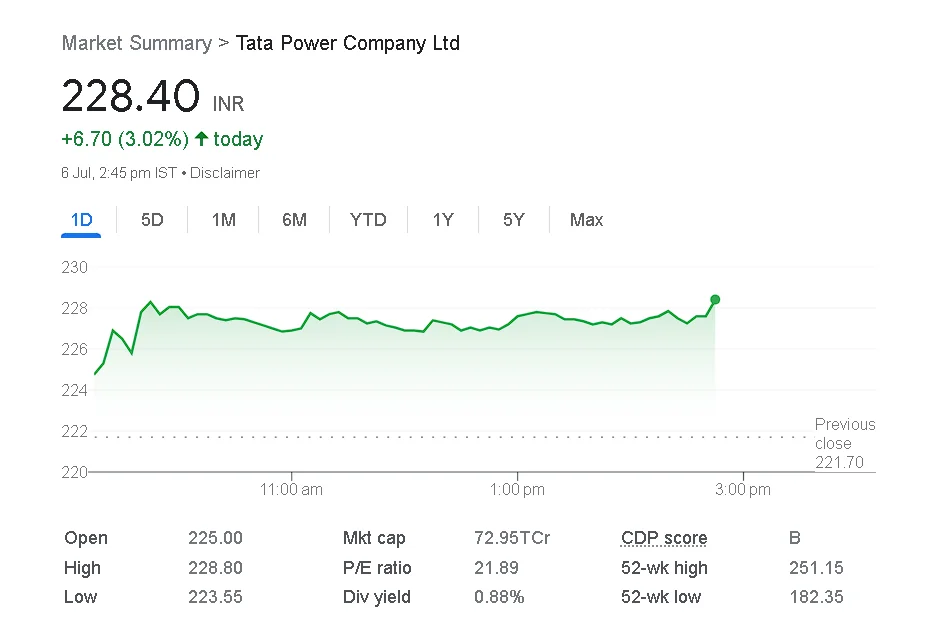
On the BSE, Tata Power shares increased 3.15% to Rs 228.65. The Tata Group stock began higher at Rs 225, up from the previous finish on the BSE of Rs 221.65.

Shares of Tata Power Ltd gained over 3% today after the Tata Group firm said it won a smart metering project worth Rs 1,744 crore in Chhattisgarh.

INTRODUCTION

Chhattisgarh State Power Distribution Company Limited (CSPDCL) has won the contract. On the BSE, Tata Power increased 3.15% to Rs 228.65. The Tata Group stock began higher at Rs 225, up from the previous finish on the BSE of Rs 221.65.

  • The contract was awarded to Chhattisgarh State Power Distribution Company Limited (CSPDCL).
  • Tata Power rose 3.15% to Rs 228.65 on the BSE. The Tata Group stock opened higher at Rs 225, up from its previous BSE close of Rs 221.65.

In terms of technicals, the stock’s relative strength index (RSI) is 57.9, indicating that it is neither oversold nor overbought.

  • “The LOA was issued in response to CSPDCL’s tender for three packages for different areas under the Chhattisgarh discom,” the business said.
  • The project will comprise the design, delivery, installation, and commissioning of smart metres at the consumer and distribution transformer levels, as well as the operation and maintenance of the smart metres.
  • The project, which will be carried out under the Revamped Distribution Sector Scheme (RDSS), is projected to reduce AT&C losses in the allocated area while increasing revenue collection for CSPDCL.
  • Tata Power announced a 48% increase in fourth-quarter earnings for fiscal year. In the most recent quarter, net profit increased to Rs 939 crore, up from Rs 632 crore in the same period last year.

The company stated that this would be the 14th consecutive quarter of profit after tax (PAT) increase, and that the Q4 results would be bolstered by excellent performance across all operations.

CONCLUSION

FOR MORE INDO CLICK THIS

SITE: https://learningsharks.in/

FOLLOW OUR

PAGE: https://www.instagram.com/learningsharks/#