Investors are pleased that our country’s hero has reached the 19,000 mark for the first time and are interested in what comes next. Today, people often inquire as to what has been going through their heads. Nifty: Will it reach 20,000? So, read on to learn more.
Let me start by thanking all of the investors for their perseverance. As everyone is aware, the Nifty 50 is an INDEX that represents the usual retail, FII, or DII attitude. Demand is high and the economy is performing well while it is heading upward. If it’s down, on the other hand, the economy isn’t doing very well.
Will it now cease even though it has reached its new benchmark? Simple response: No.
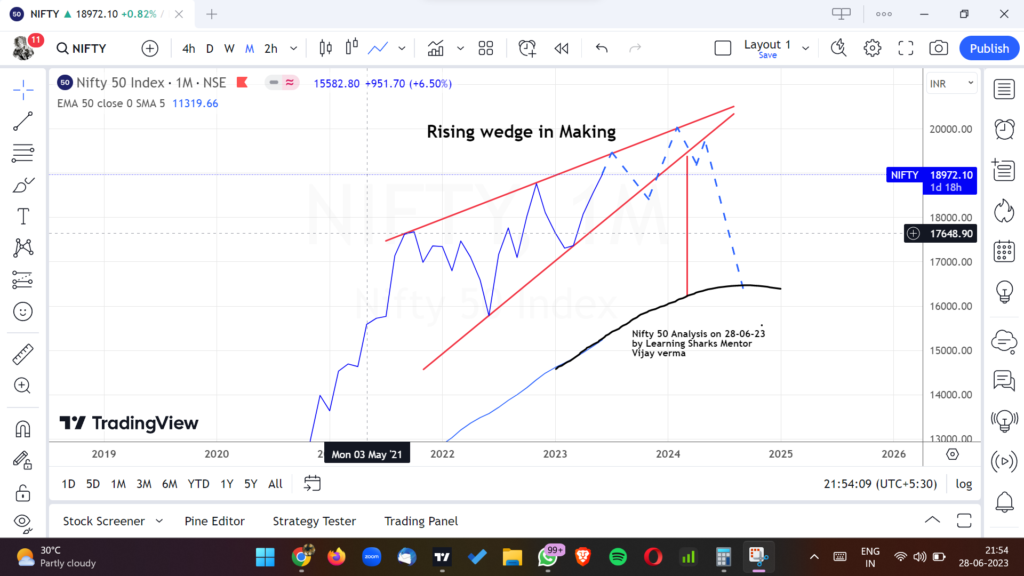
Corrections are nevertheless beneficial and essential; however, we’ll get to that in a moment. Both the Sensex and NIFTY 50 have reached record highs. We have, surprisingly, noticed a pattern in it. A rising wedge pattern is what it is known as.
The Rising Wedge Pattern: What is it?
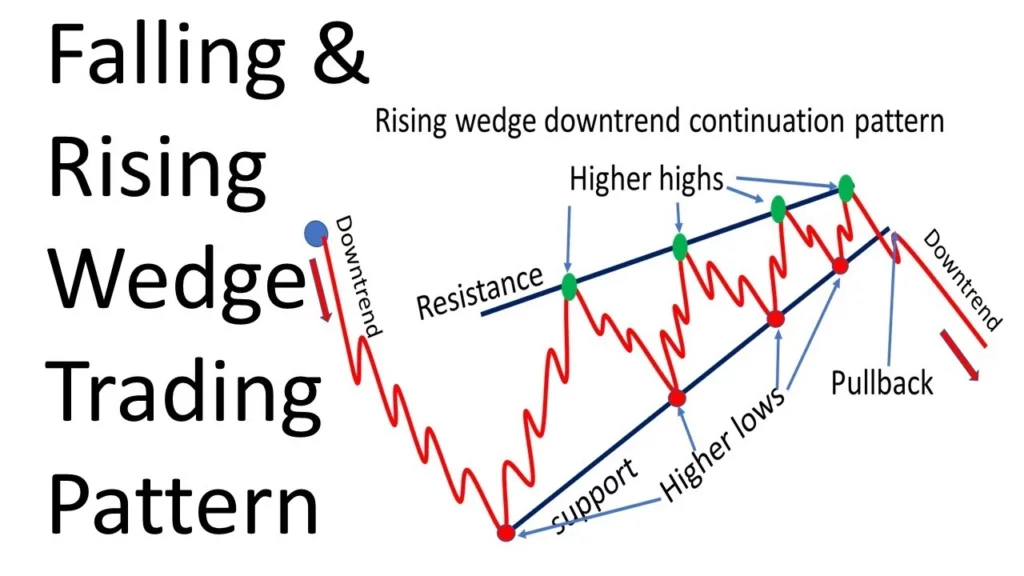
Technical chart patterns called rising wedges typically show up when the stock market is trending upward. It is created by drawing two trendlines that converge towards one another, with the lower trendline being steeper than the upper trendline. The price has a tendency to make higher highs and higher lows within the wedge formation.
Let’s just use the Nifty 50 chart as an example. This is how it seems.
It clearly appears to be approaching the next threshold of 20,000. Before delivering the fall that all PE or put holders have been waiting for. Our recommendation is to play cautiously and avoid falling prey to this euphoria.
Disclaimer: This is not a call or financial advice. The analysis performed above is only meant to be educational. Please follow the advice of your own financial advisor when making an investment. To understand the pattern better click here, Follow us on insta
Hello and welcome to our comprehensive guide to day trading tactics. This article will explore the world of day trading and provide you with the skills and knowledge you’ll need to be successful in this fascinating industry. A high-volume trading approach known as day trading allows traders to enter and exit positions on the same trading day. If you wish to profit from sudden price changes and maybe make money, day trading might be a good alternative.
Understanding Day Trading
Day trading is an art that requires careful planning, quick judgement calls, and methodical execution. To take advantage of intraday price movements, it comprises buying and selling financial products like stocks, options, futures, and currencies. Unlike long-term investors, day traders aim to profit from short-term market swings by not holding holdings overnight.
Developing a Solid Trading Plan
To succeed in day trading, you must have a clearly defined trading strategy. A trading plan is a road map that outlines your strategies, methods for managing risk, and exact entry and exit points. When creating your trading strategy, keep the following points in mind:
Setting Clearly Defined Goals:Whether your trading goals are money aims, learning objectives, or performance milestones, they should be clearly stated. You’ll be more motivated and able to stay focused during day trading if you have well defined goals.
Technical analysis: To find prospective trading opportunities, use technical analysis tools and indicators. Some of the often employed instruments that can help traders make well-informed trading decisions are chart patterns, support and resistance levels, moving averages, and oscillators.
Risk management:Use efficient risk management techniques to safeguard your funds and reduce losses. Determine your level of risk tolerance, place suitable stop-loss orders, and refrain from putting more than a specific portion of your trading capital at risk in a single trade.
Practise and Education: Investing in ongoing education and practise can help you become a better day trader. Follow market news, learn effective trading techniques, and use paper trading or trial accounts to acquire expertise without risking real money.
Popular Day Trading Strategies
Day traders use a range of tactics to get around the fast-paced intraday trading environment. This section will examine some well-liked day trading tactics that are employed by seasoned traders.
Using the trading approach known as “scalping,” traders look to profit on numerous tiny gains made throughout the course of the day. Holding positions for a few seconds to minutes is the norm for traders who want to profit from swift price movements.
Breakout Trading: Breakout trading entails identifying important levels of support or resistance and placing trades when the price breaches these levels. To validate possible breakouts and profit from the ensuing price momentum, traders look for more volume and volatility.
Momentum Trading: The goal of momentum trading is to seize substantial price moves brought on by intense buying or selling pressure. A trader will enter a stock when the price starts to move quickly in a certain direction after identifying one with significant trading volume.
Contrarian investing includes taking positions that are completely at odds with the mood of the market. By keeping an eye out for overbought or oversold levels, traders can predict reversals. This tactic demands thorough research and the capacity to recognise probable market turning events.
Management of Risk and Psychology
Day trading involves some risk, and it’s important to successfully manage these risks. The psychological side of trading is also very important to a trader’s success. Think on the following essentials:
Risk to Reward Ratio:The capacity to maintain a favourable risk-reward ratio is essential for long-term profitability. A favourable risk-reward ratio ensures that your potential gains surpass your possible losses even if not all trades are profitable.
Emotional Control:To make logical trading decisions, one must learn to regulate emotions like fear, greed, and impatience. Emotional trading can cause you to make snap judgements and deviate from your trading plan.
perpetual self-evaluation:To determine the strengths and limitations of your trading approach, conduct routine self-evaluations. Examine your transactions, take note of your errors, and change as necessary to raise your performance.
Conclusion
Individuals can actively participate in the financial markets through day trading and possibly make money. Understanding the nuances of day trading, creating a strong trading plan, and implementing successful tactics will increase your chances of success. On your daily trading journey, keep in mind to prioritise risk management, educate yourself frequently, and practise discipline. Wishing you luck and pleasant trading!
Real-time market updates, split-second news, and fast-moving markets are essential nowadays. Financial twitter feeds are useful for keeping up with the latest news when trading and investing in the stock market.
Technical analysis cannot be your main tool for trading in the market because failing to understand the underlying fundamentals can result in poor and potentially dangerous trading decisions. But when will you truly pay attention to the news while you’re trading, planning your positions, making money management choices, and setting stop loss orders? It is true that news might affect your trading judgements and actions. The solution to this issue is television, but how can we choose which news to pay attention to and which to ignore?
Social media in the modern era can be useful in this situation. These days, tweets and conversations on Twitter regarding finances are getting more and more informative. Twitter used to be replete with market rumours, nonsensical analysis, and meaningless market banter even a few years ago. Twitter has, nevertheless, been a highly helpful tool for news-hungry market participants as a result of the recent creation of Twitter accounts for well-known research organisations, active traders, and market professionals.
If you want to stay current on the financial market, you should subscribe to the major Twitter feeds listed below. The names of a few financial news outlets and educational portals are included in this list of feeds. The feeds are ranked according to the amount of followers they have overall and how significant they are to the Indian financial markets. This list of feeds is by no means comprehensive, and some important names might be absent. If you have any, kindly share them with us in the comments area below.
It offers up-to-the-minute news and insights of Indian and international business, the economy, and politics from the Mint newspaper. It has more than 241K tweets and 1.74M followers.
The most recent news from India and across the world is provided by Reuters India. It has more than 460K total followers and has posted more than 106K tweets.
The No. 1 Business Daily in India, it offers the most comprehensive coverage of politics, the economy, markets, and technology. They have more than 314K tweets and 2.92 million followers.
NDTV Profit provides up-to-date information on Indian equities, the Sensex, the Nifty, and business news. The tweets offer NDTV Profit in real time. It has more than 98.5K tweets and over 644K followers.
In collaboration with Forbes, this Twitter handle offers the greatest discussions on Indian and global business. With just over 34.2K tweets and more over 1.08M followers, it is run by its journalists.
the twitter feeds of Moneycontrol, India’s top financial portal that monitors the markets, businesses, and economy closely. With 146K tweets and over 589K followers, they are definitely worth following.
This is a crucial Twitter account to watch the stock market, including the Sensex, Nifty, NSE, BSE, and others, with more than 326K followers and 151K tweets sent thus far.
Online resource Investopedia offers prospective investors free learning materials and educational tools. There are approximately 12.9K tweets and more than 104K followers.
A leading provider of business news, Bloomberg TV is a component of the largest financial news network in the world. Since joining in 2009, there have been about 107k tweets and about 462k followers.
Business Today, the top business publication in India, tweets about business news and magazine features. It has more than 72.8K tweets and 836K followers.
Online business news, finance news, stock market news, economic news, and financial news are all available from Financial Express, a comprehensive and up-to-date source. It currently has about 215K followers out of a total following of more than 426K.
The National Stock Exchange of India’s (NSE) official twitter account provides crucial updates on rates and other developments. It has about 7268 tweets and more than 77.4K followers.
This twitter handle is maintained by India Infoline News, which also offers a central location for the most recent news in all markets that have an impact on the Indian economy. There are approximately 72.9K tweets and 37.2K followers.
It is essential to have a view of the international markets in addition to the Indian markets when trading. For such news, the Wall Street Journal’s official Twitter account is necessary. It has 231k tweets and 15.4 million followers.
With over 1 million downloads and a rating of 4.7 out of 5, India’s Stock Market app empowers retail users with accurate knowledge and unbiased analytics. There have been 3,433 tweets and 23.7K followers.
Last but not least, Elearnmarkets is a top platform for learning about the financial markets and offers accredited courses in finance and financial markets. It has approximately 20,000 followers and 3,433 tweets.
In the June quarter, Ashish Kacholia had 2,31,683 shares or 2.02 percent of Raghav Productivity Enhancers. This comes as another investor, Rekha Jhunjhunwala, reduced her holdings in this multibagger stock.
And, in this ‘togetherness’ year, more over a third of its staff have left, a huge increase from FY2022.
Introduction
In terms of the third component of the new tagline, “Winning,” Axis has undoubtedly won the prize for consumer complaints in banks (as mentioned in my piece), and perhaps it has also won the award for staff attrition.
Similar lofty statements about customer satisfaction stated in the bank’s FY2022 annual report eventually proven false, as Axis Bank emerged as the private sector market leader in customer complaints.
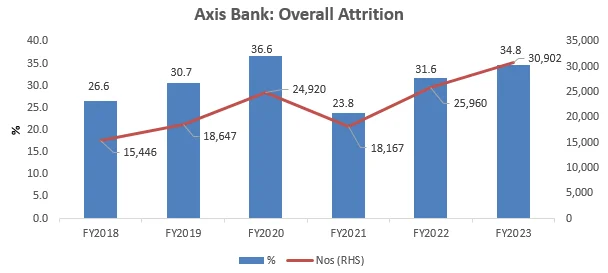
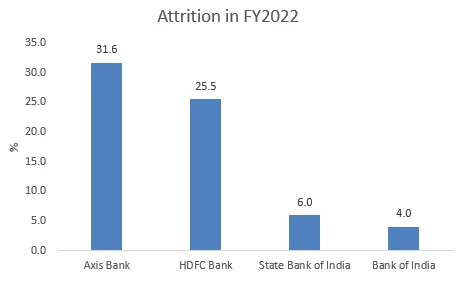
Similarly, records from the bank’s FY2023 annual report show that, far from demonstrating loyalty, Axis employees continued to quit in droves throughout the year. Staff churn rose to 34.8% in FY2023, up from 31.6% in FY2022.
In FY2023, the bank’s attrition rate is the second highest since FY2018. With record client complaints in FY2022 and such significant staff churn, primarily at the entry and mid-management levels, the bank’s entire retail strategy could be jeopardised.
Attrition in percentage is computed using the average headcount. Axis Bank provided the information.
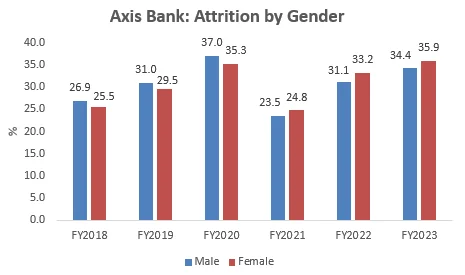
What is less notable is that female worker attrition has been higher than male attrition over the last three years. Apparently, female employees at Axis Bank are dissatisfied for several reasons. Female attrition is at its highest since fiscal year 2018.
From FY2018 to FY2022, Axis Bank was an industry leader in voluntarily disclosing data on employees and attrition. Stakeholders could calculate attrition in various categories such as age bucket, management cadre, gender, and even new hires.
Attrition in percentage is computed using the average headcount. Axis Bank provided the information.
The Securities and Exchange Board of India (SEBI) had mandated attrition disclosure in annual reports beginning in FY2023, and this analyst had believed that Axis Bank would continue to provide such thorough information.
As a result, stakeholders are unaware of the alarming 41% and 58% attrition rates in frontline sales and among the youngest age groups (those under 30), which were recorded in FY2022.
Attrition
Employees at Year End
< 30 yrs
14,584
35,580
30-50 yrs
11,322
49,435
> 50 yrs
54
800
Total
25,960
85,815
Top Management
0
9
Senior Management
21
218
Middle Management
1,002
8,909
Junior Management
8,742
37,766
Sales Channels
16,195
38,913
Total
25,960
85,815
Axis Bank has a persistent issue as seen by its historically high attrition rates in the less than 30 years and sales/frontline categories.
Freshmen typically take the bank 9 months to break even, but when turnover is this high, the fees become an expense.
The continually high turnover in these categories is a result of the bank’s recruitment team’s subpar selection procedures, insufficient training, and a toxic work environment.
Additionally, stakeholders are made aware that one of the seven observations and actions the board of the bank’s performance evaluation for FY2022 was “oversight on actionables relating to attrition and customer complaints.”
In FY2022, a few banks voluntarily acknowledged attrition.
The causes should be made public because increasing turnover causes inconvenience, unhappy customers, and greater employee hiring and training costs. Shareholders must request an explanation from the board of directors at the bank’s annual general meeting, which is set for July 28, 2023.
Confidence in the bank and its board of directors is damaged when a bank makes bold statements in its annual report that are refuted by facts in its own disclosures.
The effect of macroeconomic variables and events on stock price performance and behaviour as well as general market circumstances is referred to as the “economic impact” on the stock market. Both short-term and long-term economic issues can have an impact on the stock market, affecting investor sentiment, corporate earnings, and market patterns.
The stock market is impacted by the following important economic factors:
Interest Rates: Variations in the central bank-set interest rates can have a big impact on stock values. When interest rates are low, borrowing costs decrease, promoting corporate profit growth and stock price increases. Borrowing becomes more expensive when interest rates climb, potentially impeding economic development and hurting stock values.
The rate at which prices for goods and services increase is known as inflation, and it can have an effect on the stock market. Because it signals a strong economy, moderate inflation is often seen favourably. On the other hand, high inflation can weaken consumers’ purchasing power and lower company profits, which lowers stock prices. In response to inflation, central banks routinely change interest rates, which can also have an effect on stock market performance.
Gross Domestic Product (GDP) is the total value of all products and services generated inside a nation. A thriving economy, better consumer spending, and higher corporate earnings are often linked to positive GDP growth, all of which can boost stock prices. On the other hand, markets may decrease if GDP growth is negative or less than predicted because investors may expect a slowdown in economic activity.
Fiscal Policy and Government expenditure: The stock market may be impacted by government policies such as tax rates, expenditure, and fiscal stimulus programmes. Changes in tax laws may have an effect on business earnings and investor sentiment. Fiscal stimulus and increased government expenditure can spur economic development, which will help the stock market. less spending by the government.
Geopolitical Events: The stock market may be significantly impacted by political unrest, trade disagreements, international conflicts, and other geopolitical events. Such events can create uncertainty, which can lead to volatility and drive investors to reevaluate their investing strategies. Positive geopolitical outcomes or developments can bolster the stock market and regain investor confidence.
Monetary Policy: Through monetary policy, central banks have a significant impact on how the economy and stock market are run. Stock prices can be significantly impacted by changes in monetary policy, such as raising interest rates or implementing quantitative easing. Due to the potential impact on borrowing costs, financial system liquidity, and general market conditions, investors pay close attention to central bank operations.
Consumer Confidence: Consumer confidence shows how optimistic consumers are feeling about their financial situation and the state of the economy as a whole. Spending increases are frequently a result of consumer confidence, which can help firms and bolster stock values. On the other side, low consumer confidence may result in less spending, which may have an effect on business profits and stock market performance.
Corporate Earnings: The financial performance of a firm, as shown in earnings reports, is a major factor affecting stock prices. Corporate profits may be impacted by a variety of economic variables, including GDP growth, interest rates, and consumer spending. Higher business profits are typically supported by favourable economic conditions, and this may raise stock prices. On the other side, economic downturns or unfavourable circumstances can have an impact on business earnings and lead to falls in the stock market.
Performance of Industries and Sectors: Different industries and sectors can be impacted by economic conditions in various ways. Sectors like banking and real estate may be impacted by changes in interest rates, while the energy industry may be affected by changes in energy costs. Investors can identify investing possibilities and risks on the stock market by understanding the link between economic conditions and particular industries or sectors.
Global Economic Interdependence: In a world that is more interconnected, economic variables in one nation can have an impact on the international stock market. Global trade, exchange rate swings, and geopolitical developments can all result in economic interdependence and have an international effect on stock market performance. Investors must take both domestic and global economic issues into account when estimating the probable influence on stock prices.
Importance of Impact of Economic Factors on Stock Market
Investment Choices: Economic variables have a big influence on investment choices. By examining economic data and trends, investors gauge the state of the economy as a whole as well as any prospective effects it may have on specific businesses and sectors. By examining economic aspects, investors can make well-informed choices on the purchase, sale, or holding of stocks.
Risk management: Investors can manage the risks involved with stock market investing with the use of economic considerations. Investors can foresee probable market downturns, identify susceptible industries, and modify their portfolios accordingly by understanding the state of the economy, interest rates, inflation, and other economic indicators.
Economic variables are important in deciding how much a stock is worth. The current and future cash flows of businesses are influenced by factors including earnings growth, interest rates, and inflation predictions, which in turn affect stock values. By taking economic considerations into consideration, investors are better able to determine whether stocks are overvalued or undervalued.
Market timing: Investors can use economic indicators to help them choose when to enter or leave a market. Economic indicators and events offer insights into market cycles, helping investors decide when it is best to invest when economic conditions are favourable or when it is best to sell when there are indications of an impending economic slump.
Analysis of Sectors and Industries: Different sectors and industries are affected differently by economic forces. While certain industries, like technology or healthcare, may be less prone to economic ups and downs, others, like construction or retail, are more directly impacted by them. Investors can identify which sectors and industries are most likely to outperform or underperform based on current economic trends by analysing economic factors.
Portfolio Diversification: Economic considerations have an impact on portfolio diversification techniques. Risk can be decreased by diversified across sectors, industries, and asset classes. Understanding how different sectors are impacted by the economy can help investors manage their portfolios in a way that balances exposure to economic swings and possible profits.
Market Psychology and Investor Sentiment: Market psychology and investor sentiment are both influenced by economic considerations. Investor confidence is typically bolstered by good economic news, which leads to higher spending and rising stock prices. On the other side, unfavourable economic developments or indications can raise anxiety and uncertainty, which can lead to selling pressure and declining stock prices. Investors can assess market sentiment and make wise judgements depending on the present situation by keeping an eye on economic fundamentals.
Option contracts are used in investing techniques referred to as options to achieve specific financial goals. Financial derivatives known as options give the holder the right, but not the duty, to buy or sell the underlying asset at a specified price within a preset window of time.
Here are some popular option trading tactics:
Insured Call: By employing this method, you can sell a call option on a stock that you already own the underlying. It provides some downside protection as well as the ability to profit from the premium received for selling the option.
Buy a Put Option: In order to protect against potential downside risk, purchase a put option on an underlying asset. In the case that the asset’s price declines, it acts as an insurance policy to protect losses.
Long Call: By buying a call option, you have the right to buy the underlying asset at a predetermined price (the strike price) within a predetermined time frame. You use this strategy when you think the asset’s value will increase.
Long Put: Using this strategy, you buy a put option with the right to sell the underlying asset at a predetermined price within a predetermined window of time. You utilise it if you think the asset’s value will drop.
Straddle: When you straddle, you purchase a call option and a put option with the same strike price and expiration date. This strategy is used when you anticipate high price volatility but are unsure about the price movement’s direction.
Strangle: Similar to a straddle, a strangle involves buying both calls and put options, but with different strike prices. It is used when there will be significant volatility but with a preference for either a rise in price or a fall in price of the underlying asset.
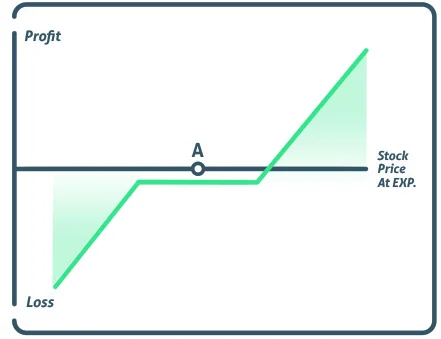
A limited-risk, limited-reward trading strategy known as the butterfly spread combines long and short call (or put) options at different strike prices. You use it when you believe that the price of the underlying asset will remain within a specific range.
These are only a few instances of the many more advanced choosing procedures that are accessible. Each strategy has a distinct risk-reward profile and is appropriate for different market conditions. Prior to implementing any options strategy, it’s crucial to understand the risks associated with options trading and to consider consulting a financial advisor or other specialist.
Why trading methods for options fail
Understanding the potential risks and challenges associated with trading options is essential since there are many different reasons why options strategies can fail. Some typical reasons for option failures include the following:
Inaccurate Market Prediction: The effectiveness of option strategies typically hinges on how well the price of the underlying asset is predicted to change. If the market behaves contrary to predictions, the strategy may incur losses or have a little chance of success.
Options contracts are subject to time decay, which is the loss of all value after a certain period of time. Options lose value over time due to time decay, also known as theta decay. The strategy may face losses owing to time decay if the price of the underlying asset does not move in the anticipated direction within the specified time frame.
Options strategies usually rely on predicting the future direction of underlying assets or the market as a whole. Inaccurate market projections. If the projections turn out to be wrong, the method might not be able to generate the expected profits.
Ineffective risk management: Risk management is crucial while trading options. Strategies that ineffectively manage risk might cause significant losses. This involves investing an excessive amount of capital to a single deal, failing to diversify the portfolio, or failing to put appropriate stop-loss orders.
Conclusion
Option strategies can be effective tools for managing risk, generating income, and seizing market opportunities. They do, however, carry their own risks, and their financial success cannot be assured under all market circumstances.
It is crucial to have a solid understanding of options, risk management theories, and market dynamics prior to using any option strategy.
There is no one-size-fits-all “most working” option strategy because its effectiveness depends on factors like market conditions, underlying assets, risk tolerance, and personal investing goals. Different strategies have various objectives, and different investors may find them more or less appropriate.
Other pages to consider reading
“Option Volatility and Pricing: Advanced Trading Strategies and Techniques” by Sheldon Natenberg. Click here to find the version on Amazon.
Options as a Strategic Investment” by Lawrence G. McMillan. Find it here
The stock market is a marketplace where buyers and sellers can exchange shares of publicly traded companies. It is a dynamic and ever-changing environment influenced by a number of factors including supply and demand, economic conditions, and investor sentiment. Before you begin investing, you must first understand the fundamental concepts of the stock market.
What is a Stocks?
A stock represents a company’s ownership. When you purchase a stock, you become a shareholder with a claim to the company’s assets and earnings. Stocks are divided into two types: common stocks and preferred stocks, each with its own set of characteristics.
How Does the Stock Market Work?
The stock market is run by exchanges like the New York Stock Exchange (NYSE) and the NASDAQ. Buyers and sellers place orders with brokers, who then execute trades on their behalf. Prices are determined by supply and demand, with buyers bidding and sellers offering their shares.
Getting Started with Stock Market Investing
Now that we’ve covered the fundamentals, let’s look at the steps you need to take to get started with stock market investing.
1. Set Clear Financial Goals
It is critical to define your financial goals before you begin investing. Are you saving for retirement, purchasing a home, or paying for your child’s education? Setting specific goals assists you in determining your investment strategy and risk tolerance.
2. Build an Emergency Fund
It is critical to have an emergency fund before investing in the stock market. This fund should ideally be able to cover three to six months of living expenses. It acts as a safety net in the event of unforeseen circumstances, preventing you from liquidating your investments prematurely.
3. Educate Yourself
Investing in the stock market necessitates research and knowledge. Take the time to learn about various investment vehicles, financial ratios, and market trends. Keep up with financial news and consider reading books or attending investing seminars.
4. Determine Your Risk Tolerance
Understanding your risk tolerance is critical for developing an investment strategy. Are you willing to take on more risk in exchange for potentially higher returns, or do you prefer a more conservative approach? Assessing your risk tolerance allows you to make more informed investment decisions.
5. Choose the Right Brokerage Account
Choosing the right brokerage account is critical for efficiently executing trades. When selecting a brokerage, consider fees, account types, research tools, and customer service. A good brokerage should be in line with your investment objectives and offer a user-friendly platform.
Investing Strategies for Beginners
Now that you’ve laid the groundwork, let’s look at some popular investment strategies for beginners.
Average Dollar Cost Dollar-cost averaging is the practice of investing a set amount of money at regular intervals, regardless of the stock’s price. This strategy allows you to buy more shares when the market is low and fewer shares when the market is high, potentially reducing the impact of market volatility.
Investing in Index Funds Index funds are mutual funds or exchange-traded funds (ETFs) that attempt to replicate the performance of a particular market index, such as the S&P 500. These funds provide broad market exposure and can be an excellent choice for first-time investors looking for diversified investments with low fees.
Investing for the Long Term Long-term investing entails holding investments for a long period of time, typically five years or more. This strategy takes advantage of compounding returns while mitigating the impact of short-term market fluctuations. It is a popular method for gradually increasing wealth.
Investing in Value Value investing entails locating undervalued stocks with strong fundamentals. This strategy requires investors to purchase stocks at a discount to their intrinsic value. Value investing necessitates extensive research and analysis of financial statements as well as market conditions.
Conclusion
Congratulations! You’ve reached the end of our comprehensive guide to stock market investing for beginners. We’ve gone over basic stock market concepts, how to get started, and popular investment strategies. Remember that investing is a journey that necessitates patience, ongoing learning, and sound decision-making. You’ll be well on your way to becoming a successful stock market investor if you follow the guidelines outlined in this guide.
Welcome to our in-depth look at bear markets. In this article, we will delve into the complexities of bear markets, providing you with a thorough understanding of their characteristics, causes, and strategies for successfully navigating them. Whether you’re a seasoned investor or new to the world of finance, this guide will help you navigate the turbulent waters of bear markets.
What is a Bear Market?
A bear market is a term used in the financial industry to describe a prolonged period of declining stock prices, which is usually accompanied by pessimistic investor sentiment. During this stage, the overall market experiences a downward trend, resulting in a 20% drop in stock prices over a sustained period, which can last months or even years.
KEY TAKEAWAYS
Bear markets occur when market prices fall by more than 20%, which is frequently accompanied by negative investor sentiment and declining economic prospects.
“Bear Market.” Securities and Exchange Commission.
Bear markets can be cyclical or long-term in nature. The former lasts several weeks or months, whereas the latter can last several years or even decades.
Short selling, put options, and inverse ETFs are some of the ways that investors can profit as prices fall during a bear market.
Characteristics of Bear Markets
Declining Prices: The primary symptom of a bear market is a consistent drop in stock prices across various sectors and indices. This downward trend is being driven by a number of factors, which we will discuss in more detail in the following sections.
Negative Investor Sentiment: Bear markets are fueled by widespread investor fear, uncertainty, and pessimism. This sentiment can lead to panic selling, exacerbating the price decline.
Volatility and Risk: Bear markets are notorious for increased market volatility, which results in wider price swings. Because of the increased risk, investors must exercise caution and adjust their strategies accordingly.
Causes of Bear Markets
Bear markets can be caused by a variety of internal and external financial market factors. Understanding the root causes can assist investors in navigating and mitigating the effects of these downturns. Among the most common causes are:
Economic Downturn: Economic recessions or contractions frequently precede or coincide with bear markets. Factors such as declining GDP, rising unemployment rates, and reduced consumer spending can all contribute to an economic downturn, affecting the stock market.
Interest Rate Increases: Central banks raising interest rates to combat inflation can harm the stock market. Higher interest rates raise borrowing costs for businesses and consumers, potentially resulting in lower corporate profits and stock price declines.
Geopolitical events: Geopolitical events, such as political insecurity, trade wars, or geopolitical tensions, can cause bear markets by causing uncertainty and disrupting global markets. Such occurrences have the potential to erode investor confidence and lead to a sell-off.
Strategies for Navigating Bear Markets
While bear markets can be difficult to navigate, employing effective strategies can help mitigate losses and even present investment opportunities. During a bear market, consider the following strategies:
Diversification: Keeping a diverse portfolio is critical during volatile market conditions. Diversifying investments across asset classes, industries, and geographies can help reduce risk and potentially mitigate losses.
Value Investing: Identifying fundamentally strong companies that are undervalued during a bear market can present appealing investment opportunities. Thorough research and analysis can aid in the discovery of hidden gems in the market.
Defensive Stocks and Sectors: During bear markets, defensive stocks, such as those in healthcare, utilities, or consumer staples, tend to perform relatively better. Investing in industries that are less vulnerable to economic downturns can help to stabilize your portfolio.
Capital Preservation: During bear markets, capital preservation is critical. Risk management techniques like stop-loss orders can help limit losses and protect your investment capital.
Pros and Cons
Pros:-
Buying Opportunities: Bear markets frequently present long-term investors with appealing buying opportunities. Stock prices may be significantly lower, allowing investors to purchase high-quality assets at a discount.
Value Discovery: During a bear market, there is a greater chance of discovering undervalued stocks. Investors can identify fundamentally strong companies that have been overlooked or undervalued by the market by conducting extensive analysis and research.
Portfolio Rebalancing: Bear markets allow investors to rebalance their investment portfolios. Investors can ensure that their portfolio aligns with their long-term goals and risk tolerance by reassessing asset allocations and adjusting positions.
Investor Education: Bear markets teach investors important lessons, particularly about risk management and market cycles. Experiencing and navigating a bear market can help you become a more resilient and informed investor.
Cons:-
Potential Losses: Bear markets can cause significant losses for investors who are heavily invested in stocks or have exposure to severely impacted industries. Stock price declines can reduce the value of investment portfolios.
Volatility Increased: Bear markets are characterized by increased market volatility, which can be unsettling for investors. Price swings and uncertainty can lead to emotional decisions, which can exacerbate losses.
Prolonged Recovery Periods: Bear markets are frequently followed by slow recovery periods. Stock prices may take months or even years to recover to pre-bear market levels, delaying the realization of returns for investors.
Negative Investor Sentiment: Bear markets are often accompanied by negative investor sentiment, which can lead to a pessimistic outlook and contribute to further market declines. This sentiment can be difficult to navigate and may lead to additional market volatility.
Overview:The Ferraris of stock investment are growth stocks. They guarantee both quick growth and substantial investment returns. Technology companies are typically the subject of growth stocks, but this is not a must.Since they often reinvest all of their profits, they don’t often distribute dividends, at least not before their growth begins to decline.
For whom are they useful? If you’re going to invest in individual growth stocks, you should do extensive, time-consuming research on the business.
You’ll need to have a high risk tolerance or make the commitment to own the stocks for at least three to five years because growth stocks are erratic.
Risks: Because investors usually pay a high price for the stock relative to the company’s earnings, growth stocks can be dangerous.
As a result, these stocks may lose a significant amount of value very fast when a bad market or recession occurs. It seems as though their unexpected fame disappeared in an instant. On the other hand, growth stocks have typically been among the top performers.
Rewards: If you can locate the appropriate company, the benefits could be endless because the two biggest corporations in the world, Alphabet and Amazon, have been high-growth businesses.
2. Stock funds
Overview: A stock fund is an assortment of equities that are frequently related or categorised together, such as major or American stocks. The fund company charges a fee for this product, however it can be very small.
For whom are they useful? A stock fund, such as an ETF or a mutual fund, can be a good substitute if you don’t want to put in the time and effort to analyse individual stocks.
For an investor who wants to be more active with stocks but doesn’t have the time or motivation to make trading their full-time hobby, a stock fund is a fantastic choice.
Risks: Investing in a stock fund is easier and less labor-intensive than buying individual stocks.
The market can still fluctuate significantly in any given year, potentially losing up to 30% or even gaining 30% in some of its more extreme years.
You should be aware that your fund will be less diversified than one based on a broad index, such as the S&P 500, if you purchase a fund that is not broadly diversified, such as one focused on a specific industry. Therefore, if you invested in a fund focused on the chemicals sector, it may be highly vulnerable to changes in oil prices. Many of the stocks in the portfolio are anticipated to suffer if oil prices increase.
Rewards: A stock fund requires less effort to purchase and maintain than individual stocks, but because you own more businesses and you can’t expect every one of them to do well every year, your returns should be more stable. You will also have a lot of potential growth with a stock fund. Some of the top index funds include the ones listed below.
You can obtain a combination of high-growth equities and other securities if you purchase a broadly diversified portfolio, such as an S&P 500 index fund or a Nasdaq-100 index fund. However, compared to if you only owned a few particular stocks, your portfolio will be more diversified and secure.
3. Bond funds
Overview:A bond fund is a collection of bonds from different issuers, whether it be a mutual fund or an exchange-traded fund (ETF). The type of bond in the fund, as well as the tenure, riskiness, issuer (corporate, municipal, or federal government), and other variables, are often used to categorise bond funds.
When a business or the government issues a bond, it commits to annually paying the bond’s owner a predetermined sum of interest. When the issuer pays back the bond’s principal at the end of its term, the bond is redeemed.
Investors who desire a diverse portfolio of bonds but don’t want to research and buy individual bonds can benefit from bond funds.
Risks:Bonds can alter in value, but a bond fund will be more stable, even though it may move in response to interest rate changes.
Although bonds are seen as being more secure than equities, not all issuers are created equal.
The riskiness of business issuers can range from slightly less to much higher, while government issuers, especially the federal government, are thought to be quite safe.
One of the safer investments is a bond, and when included in a fund, their safety is increased. A fund diversifies its holdings by potentially owning hundreds of various bond types from numerous different issuers, which reduces the impact of any one bond defaulting on the portfolio.
A bond or bond fund’s return is often substantially lower than a stock fund’s return; for example, a government bond’s return might be 4 to 5 percent annually, but a corporate bond’s return might be lower. And it’s much less harmful.
There are various options to choose from if you’re looking for a bond fund to suit your needs.
4. Roth IRA
Overview: The finest retirement account on the market might be a Roth IRA. You can do this to save after-tax money that will grow tax-free for years before you can withdraw it. It’s more desirable than a regular IRA because you can leave that money to your heirs tax-free.
Who will gain from them? Anyone with a source of income should use a Roth IRA to build up tax-free assets for retirement.
Risks: A Roth IRA is a wrapper for your account that offers particular tax and legal benefits; it is not an investment in and of itself. Therefore, you can invest in nearly anything that suits your needs if you have a Roth IRA account with one of the finest brokerages.
Benefits: If you want to step it up, you can invest in stocks and stock funds and possibly get considerably bigger profits while avoiding taxes.
You will undoubtedly have to accept the higher risks associated with investing in stocks and stock funds.
5. Robo-advisor portfolio
Overview: When using a robo-advisor, you just deposit money into the robo account, and it automatically invests it in accordance with your objectives, time horizon, and risk tolerance. You must first complete certain surveys so the robo-advisor can determine what you require from the service. After that, it will oversee the entire procedure. The robo-advisor will select investments for you, typically low-cost ETFs.
What is the cost of the service to you? The cost of any funds in the account, in addition to the management fee charged by the robo-advisor, which is often around 0.25 percent annually. According to the amount invested, investment funds incur a fee, although funds in robo accounts normally charge between 0.06 percent and 0.15 percent, or $6 to $15 per $10,000 invested.
Risks: A robo-advisor’s risks are strongly influenced by your investments. Because you have a higher risk tolerance, you should anticipate greater volatility while investing in stock funds as opposed to bonds or cash in a savings account. Therefore, the risk is in the possessions you have.
Rewards: Depending on the investments you make, the potential return on a robo-advisor account can range from very high if you invest primarily in stock funds to very low if you maintain safer assets like cash in a high-yield savings account.
6.Small-cap stocks
Risks: High-growth stocks and small-cap stocks both carry more risk. Because they have fewer financial resources, less access to capital markets, and less market influence, small enterprises are generally riskier.
Reward: If you’re able to purchase a truly hidden gem like Amazon before anybody can understand how successful it can eventually become, you could easily find 20 percent annual returns or more for decades. The incentives for finding a successful small-cap stock are immense.
7.Real estate
Overview: In many ways, real estate is the ideal long-term investment. Starting off requires money, fees are pricey, and returns are frequently attained by owning an asset for several decades as opposed to a few years.
Real estate investing may be a method that appeals to you because you may borrow money from the bank and repay it over time.
For whom are they useful? Owning property allows one to be their own employer, and there are various tax rules that favour property owners in particular.
Risks: Borrowing a lot of money increases the pressure on an investment to perform successfully. Even if you purchase real estate in whole cash, you’ll still need to large sums of money invested in a single item, which might lead to issues if the asset were to be damaged.
8. Target-date funds
Overview: Target-date funds are an excellent choice if you don’t want to manage your own portfolio. These funds become more conservative as you age, protecting your portfolio as you get closer to retirement, when you’ll need the money. These funds progressively switch your investments from riskier stocks to safer bonds as your target date draws closer.
where to look for them Many workplace 401(k) plans provide target-date funds as a popular alternative; however, these investments can also be made outside of these plans. You decide when to retire, and the fund handles the rest.
Risks: Since target-date funds essentially combine bond and equity funds, they will share many of the same risks as both. Your fund will initially be more volatile since it will possess a bigger proportion of stocks if your target date is decades away. The fund will move more towards bonds as your target date draws near, leading it to fluctuate less but earn less.
9. Value stocks
Overview: Many stocks’ valuations get inflated when the market rises substantially. When this happens, many investors turn to value stocks in order to be more protective and possibly generate profitable returns.
Value stocks have lower price-earnings ratios, which indicate how much investors are willing to pay for every dollar of earnings.
Growth stocks, which often expand quicker and have greater values, are compared with value stocks.
Who are they good for: Given that they perform well when interest rates rise, value stocks may be a desirable choice. Additionally, the Federal Reserve has recently been swiftly boosting interest rates.
Rewards: Value stocks’ valuations may increase more quickly than those of other non-value equities if the market starts to favour them once more. Value stocks are desirable because they can generate above-average returns while carrying lower risk.
10. Dividend stocks
Overview: Dividend stocks can produce strong returns but not as quickly as growth equities, which makes them more like sedans in the stock market’s sports car analogy.
A stock that regularly distributes dividends, or regular cash payouts, is known as a dividend stock. Dividends are paid by many equities, but they are more typical in more established, older businesses that don’t need as much money.
The greatest companies’ dividends grow over time, allowing you to earn more than you would with a bond’s fixed payout, which is why dividend stocks are popular among older investors. One such category of dividend stock is REITs.
For whom are dividend stocks beneficial? For long-term buy-and-hold investors, dividend stocks are a smart option, especially if you prefer or need a cash distribution and desire less volatility than the norm.
Risks: Although dividend stocks are less erratic than growth stocks, don’t anticipate them to fluctuate sharply, particularly if the stock market has a downturn.
Reward: A dividend stock’s payout, which can range from 3 to 4 percent yearly and even more in some cases, is what most investors are drawn to. However, more importantly, they can increase payouts by 8 or 10% annually for extended periods of time, meaning you will receive an increase each year.
Welcome to our detailed guide to the advantages of Exchange-Traded Funds (ETFs). In this article, we will look at the numerous benefits that ETFs provide to investors, ranging from tax savings to diversification. Understanding the benefits of ETFs can be critical in making informed financial decisions, whether you are a seasoned investor or just starting out. Let’s get started!
Tax Efficiency
One of the primary benefits of investing in ETFs is tax efficiency. ETFs are designed in such a way that investors can minimize their tax liabilities. Unlike mutual funds, which frequently generate capital gains taxes by buying and selling securities, ETFs have a distinct creation and redemption process that minimizes taxable events. Because of this structure, investors can defer capital gains until they sell their shares, making ETFs a good choice for long-term investors.
Diversification
ETFs offer investors a simple and efficient means of diversifying their investment portfolios. Individuals can gain exposure to a basket of securities by investing in an ETF, which can include stocks, bonds, commodities, or even entire market indices. Diversification reduces risk by distributing investments across different asset classes. Furthermore, ETFs provide investors with access to a diverse range of markets, both domestic and international, allowing them to capitalize on global opportunities.
Liquidity and Trading Flexibility
ETFs are traded on major stock exchanges, giving investors high liquidity and trading flexibility. Unlike traditional mutual funds, which are only priced and traded at the end of each trading day, ETFs can be bought and sold at market prices throughout the day. This function enables investors to respond quickly to market movements and capitalize on intraday trading opportunities. Furthermore, the ability to trade ETFs on exchanges all over the world gives investors global market exposure and more trading options.
Transparency
Transparency is an important aspect of ETFs. An ETF’s underlying holdings are disclosed daily, allowing investors to know exactly what assets they own. This level of transparency allows investors to make informed decisions based on the ETF’s composition and alignment with their investment objectives. Furthermore, ETFs frequently have low expense ratios, making them a less expensive investment option when compared to other investment vehicles.
Flexibility in Investment Strategies
ETFs provide investors with a variety of investment strategies to suit their specific preferences and goals. If you want to gain exposure to a specific sector, asset class, or investment theme, there is almost certainly an ETF available that matches your investment strategy. Broad market ETFs, sector-specific ETFs, bond ETFs, and even thematic ETFs that focus on specific industries such as renewable energy or technology are available to investors. This adaptability allows investors to tailor their portfolios to their risk tolerance and investment goals.
Cost-Effectiveness
ETFs have a clear cost-effectiveness advantage over many other investment options. ETF expense ratios are typically lower than those of mutual funds, allowing investors to keep a greater portion of their returns. Furthermore, because ETFs are traded on exchanges, investors can avoid some of the costs associated with traditional mutual funds, such as sales loads and redemption fees. Because of these cost savings, ETFs are appealing to both individual and institutional investors.
Conclusion
ETFs (Exchange-Traded Funds) offer a variety of advantages to investors, making them a valuable addition to any investment portfolio. ETFs provide a variety of benefits that can improve investment outcomes, ranging from tax efficiency and diversification to liquidity and transparency. ETFs’ flexibility and low cost-effectiveness contribute to their popularity. Whether you are a novice investor or a seasoned professional, incorporating ETFs into your investment strategy can help you achieve your financial objectives. To determine the best approach for your specific circumstances, conduct extensive research and consult with a financial advisor. Begin your journey into the world of ETFs to unlock the potential for greater investment success.



![It carries out repeated surveys; it has enabled an Artificial Intelligence (AI) bot to have “HR [Human resources] conversations”](https://learningsharks.in/wp-content/uploads/2023/07/axis-bank.webp)