
Learning sharks-Share Market Institute


Rajouri Garden  8595071711 7982037049  Noida 8920210950 , and  Paschim Vihar  7827445731  

Fee revision notice effective 1st Jan 2026; No change for students enrolled before 15th Jan 2026

Download “Key features of Budget 2024-2025here

What is Positional Trading in Stock Market?

They aim to capitalize on larger market trends and movements rather than short-term price fluctuations.
positional trading

In the stock market, positional trading refers to a trading strategy in which traders hold positions in stocks or other financial instruments for a lengthy period of time, ranging from days to weeks or even months. Unlike day trading, when positions are often opened and closed on the same trading day, it is not the same as day trading.

Trading positions involves identifying stocks with potential for long-term development or value by analysing a variety of criteria, including fundamental analysis, technical analysis, market movements, and other pertinent information. Instead of focusing on short-term price changes, they seek to profit from larger market trends and movements.

Positional traders often have a longer time horizon for their investments and are prepared to endure brief market changes in order to realise big profits. To control their risk and safeguard their wealth, they frequently define precise profit objectives and stop-loss limits. Trading positions needs the capacity to hold positions despite market volatility as well as persistence, discipline, and patience.

Chart patterns, trend analysis, moving averages, and indicators are just a few of the tools and techniques traders might employ to support their positional trading decisions. To make wise investment selections, they may also take macroeconomic variables, business financials, market trends, and current events into account.

Positional trading carries risks, thus before implementing this technique, traders should carefully consider their investment objectives, risk tolerance, and market circumstances. Before engaging in any trading or investment activity, it is always advised to get the advice of a financial professional or perform extensive research.

How Does It Work?

  • Finding stocks or other financial instruments with the potential for long-term growth or value appreciation is how positional trading operates. To decide which positions to take, traders utilise a variety of analysis approaches, including as fundamental analysis and technical analysis.
  • Evaluation of a company’s financial situation and future prospects is a component of fundamental analysis. To ascertain whether a company is inexpensive or has the potential for future growth, traders look at elements including earnings, revenue growth, profitability, market share, the competitive environment, and management quality.
  • On the other hand, technical analysis entails examining price patterns, trends, and indicators on price charts. Indicators are used by traders to validate or confirm their analysis as they search for patterns that can point to potential future price movements.
  • Traders take a position by purchasing the securities after finding a stock or financial instrument that fits their criteria. The trader holds the position for a considerable amount of time in order to potentially profit from long-term market trends.
  • Traders keep a careful eye on the position during the holding period and follow market movements that could impact the performance of the stock. Based on shifting market conditions, they could modify their stop-loss levels or profit objectives.
  • Instead of seeking to profit from short-term price changes, positional trading aims to capture big market moves over a longer time frame. By remaining involved during profitable market movements, traders hope to maximise their earnings and minimise their losses through the use of risk management strategies.
  • Because market circumstances and company fundamentals can vary over time, successful positional trading necessitates constant monitoring and analysis. Traders must maintain knowledge and adjust their tactics as necessary.
  • Positional trading also necessitates a lengthier time commitment and a higher tolerance for potential volatility, making it unsuitable for all investors. Before engaging in positional trading, it’s crucial to carefully assess one’s risk tolerance, investment objectives, and available resources.

Advantages and Disadvantages of Positional Trading

Advantages of Positional Trading

  1. Higher Profit Potential: Positional trading enables investors to take advantage of major market swings over a longer time frame. In contrast to short-term trading tactics, traders might potentially make more money by remaining invested during favourable market movements.
  2. Reduced Transaction Costs: Compared to regular traders, positional traders often have reduced transaction costs. Traders can avoid frequent buying and selling since positions are kept for a longer period of time, which lowers brokerage fees and other transaction costs.
  3. Less Time-Intensive: Compared to day trading or short-term trading tactics, positional trading needs less time and concentration. Traders can concentrate on in-depth analysis and research instead of having to watch the market constantly throughout the trading day.
  4. Less Emotionally Stressful: Because position traders are not continuously making snap judgements, position trading helps them to adopt a more relaxed attitude. This can lower the likelihood of making impulsive trading decisions and emotional stress.

Disadvantages of Positional Trading

  1. Exposure to Long-Term Risks: Keeping positions open for a long time exposes traders to potential risks such unfavourable market circumstances, problems with the company, or unforeseen occurrences that could affect the investment’s value. Traders must cautiously evaluate and control these risks.
  2. Capital Requirement: Compared to short-term trading tactics, positional trading frequently needs a bigger capital basis. The market may move against a trader’s predictions, thus traders must have enough money to hold positions for a long time.
  3. Opportunity Cost: While maintaining positions for a longer period of time may result in greater returns, doing so ties up capital. This may make it more difficult for the trader to take advantage of further investing possibilities that might present themselves during the holding period.
  4. Positional trading can be less emotionally taxing than short-term trading, but it still calls for patience and self-control. Traders must resist the urge to act rashly in response to momentary market changes or breaking news.
  5. Market volatility: Keeping positions open for a long time exposes investors to market risk. Traders must be ready for potential short-term losses or drawdowns before realising anticipated profits during this period of extreme price volatility.

Conclusion

In conclusion, positional trading is a style of trading in the stock market where investors take long-term positions in securities such as stocks or other financial instruments in an effort to profit from major price changes over longer-term market trends. It has a number of benefits, including the possibility for greater revenues, lower transaction costs, and a less time-consuming method. The exposure to long-term dangers, cash requirements, opportunity cost, and emotional difficulties are some drawbacks to take into account. Before using a positional trading strategy, traders should carefully assess these elements, as well as their own risk appetite and investment objectives. It’s crucial to remember that investing on the stock market carries dangers, therefore getting expert counsel or doing extensive study is advised before making any financial decisions.

FOLLOW OUR WEBSTIE: https://learningsharks.in/

FOLLOW OUR PAGE: https://www.instagram.com/learningsharks/

Stock Market jobs 2023 l Technical analyst, Research analyst, Option strategist, and More

Stock Market jobs 2023 l Technical analyst, Research analyst, Option strategist, equity dealer, senior relation ship manager

Use this link to apply if you’re seeking for stock market employment and want to start trading as a career.

What is a Technical Analyst Job?

For the company they work for, a technical analyst, also known as a market technician, is responsible for analysing the stock market and investment opportunities. They are in charge of analysing the stock market, forecasting investment return rates, and looking into potential investment opportunities. Go here to apply for a job as a technical analyst here.

What Does a Technical Analyst Do?

Companies that rely on the stock market and other investment choices as a source of capital expansion frequently employ technical analysts. Technical analysts apply their expertise by assisting business executives in choosing the best assets for the company’s money in order to optimise growth or protection. The majority of a technical analyst’s work is frequently spent evaluating market data to aid in the creation of reports and presentations for their company.

What is Market Research Analyst ?

Market research analysts are typically in charge of gathering and compiling competitor and customer data for businesses. Analysts evaluate this data to deliver valuable insights to their employers or clients. To assist a buyer in choosing what to purchase on the stock market, a research analyst may look at the performance history of a company or stock.

Additionally, they could conduct research to aid businesses in undertaking initiatives like expansion and IPOs.Equity and stock performance are influenced by supply and demand factors and frequently resemble goods or commodities. To successfully navigate a market at any given time, market research analysts use their awareness of these market dynamics to develop carefully curated investment portfolios and financial strategies.

To apply for a position as a market research analyst, click here.

What is an Equity Dealer?

Dealers’ main responsibilities include buying, holding, and trading in stocks on stock exchanges. In an effort to turn a profit, they try to buy stock before demand rises and sell it to prospective purchasers at higher prices. A dealer enters into transactions for their own financial gain and benefit. However, a broker just arranges these deals in order to get paid a commission. Dealers do business and typically operate on a larger scale, which distinguishes them from traders.

For instance, a trader might buy 100 shares of a stock, sell them all for a minor profit, and then decide whether to withdraw or reinvest the gains. A dealer, on the other hand, purchases a considerably greater quantity of the stock (say 10,000 shares) and engages in transactions with numerous other dealers and buyers in order to make a far higher profit. These profits might be used mostly for stock purchases and new investments.

Use this site to apply for a job as an equity dealer.

What is a Trader?

Primary responsibilities: Stock market traders are those who regularly buy and sell stocks and other securities to gain money. To maximise profits, they strategize, pinpoint entry and departure points for share values, and execute the required trades. They operate differently from investors since they aim to make money off of momentary fluctuations in the market. To maximise their profits, investors frequently create long-term financial strategies and start with more money than traders. Trading is extremely dangerous but has a great earning potential.

What is an Investment Consultant?

Investment consultants’ primary responsibility is to give clients wise advise on investments based on their understanding of market and equity movements. Depending on their investing strategy, investors may anticipate either short-term or long-term financial rewards. Investment advisors are familiar with their clients’ particular financial objectives and can provide useful information on stock prices, stock performance, corporate reputation, and performance history. They aid investors in comprehending their financial situation and the effects of their choices. To evaluate their clients’ investment objectives, they could work alone or in partnership with banks or other financial organisations.

Use this site to apply for an investment consultant position.

What is Financial Analyst?

Financial data must be gathered, organised, and analysed by financial analysts in order to produce projections, monitor indicators, and build simulations or financial models. Analysts are usually needed by businesses when making important financial choices. Before making significant investments, analysts give their clients insights and inferences to help them completely understand the market environment. Professionals in this field may work for an organisation full-time or on their own.

Visit this website to apply for a job as a financial analyst.

What is a Fundamental Analyst?

Professionals known as fundamental analysts investigate a business, a stock, or a market in-depth to identify any inherent value or potential risks related to financial decisions and transactions. To gain these insights, they may investigate a variety of variables and indicators, including monetary stability, growth potential, total capital, return on equity, and profit margins.

Use this page to apply for a fundamental analyst position.

What is Risk Analyst?

Risk analysts’ main responsibilities include assisting clients and companies in determining the financial and practical effects of important business decisions. They research market trends and client financial records on behalf of businesses to ascertain the risks associated with doing business with them. Companies and investors generally require their grasp of the stock market when they want to drastically alter their holdings or portfolios. Before providing recommendations, risk analysts carefully consider the advantages and disadvantages of a company’s status to give an objective picture.

job as a risk analyst, Utilise this link

What is an Investment Banker?

Primary responsibilities: Investment banking is a branch of banking activity that aids in raising capital and resources for operations for businesses or individual investors. In order to assist clients in achieving their financial objectives, financial and economic specialists that work in this field develop blueprints and plans of action. They may serve as a consultant and offer guidance, or they could serve as a middleman to help transactions proceed in a sensible, well-thought-out manner.

Use this site to apply for a job as an investment banker.

FOLLOW OUR WEBSTIE: https://learningsharks.in/

FOLLOW OUR PAGE: https://www.instagram.com/learningsharks/
What is Return of Investment (ROI)?

Return on Investment (ROI) is a popular profitability metric used to evaluate how well an investment has performed.
Return on Investment (ROI)

Return on investment (ROI) is a performance metric used to assess an investment’s efficiency or profitability or to compare the efficiency of several investments. ROI attempts to directly measure the amount of return on a specific investment in relation to its cost.

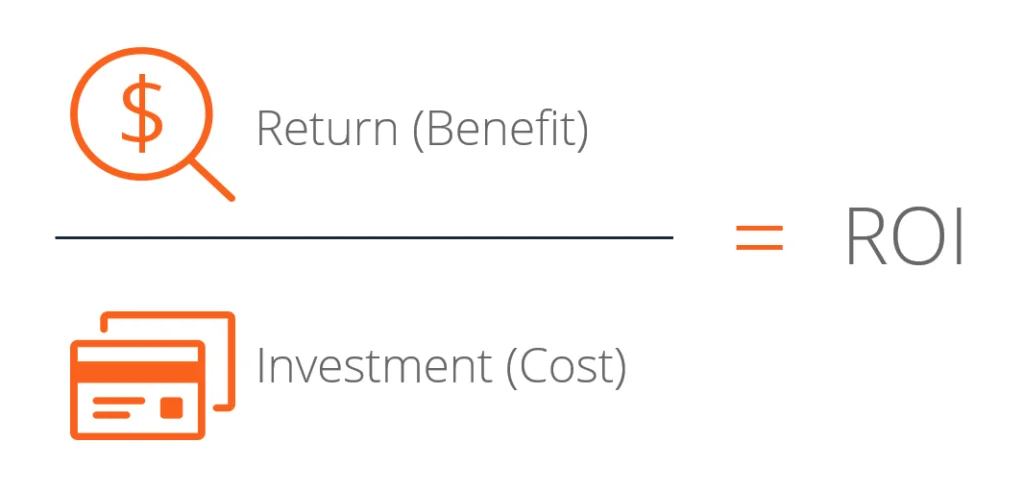
To calculate ROI, divide the benefit (or return) of an investment by the cost of the investment. The result is expressed as a percentage or a ratio.

KEY TAKEAWAYS

  • Return on Investment (ROI) is a popular profit metric that is used to assess how well an investment has performed.
  • ROI is expressed as a percentage and is calculated by dividing the net profit (or loss) of an investment by the initial cost or outlay.
  • ROI can be used to compare apples to apples and rank investments in various projects or assets.
  • ROI does not account for the holding period or passage of time, so it may overlook the opportunity costs of investing elsewhere.
  • If something provides a good ROI, it should be compared to other available opportunities.

The ROI Fundamentals


Before we get into the strategies, let’s first define ROI. Return on Investment (ROI) is a financial metric used to assess the profitability of an investment in relation to its cost. It is a ratio that compares the gain or loss on an investment to its initial outlay.

ROI = (Net Profit / Cost of Investment) * 100

The higher the ROI percentage, the more profitable the investment. Let us now look at the key factors that contribute to maximizing ROI.

Accurate Financial Analysis and Planning


Thorough financial analysis and planning are required to maximize ROI. A thorough analysis enables you to identify potential investment opportunities, assess risks, and allocate resources effectively. By utilizing comprehensive financial data, you can make informed decisions and reduce the likelihood of financial setbacks.

Diversification: A Key to Success

Diversifying your investment portfolio is essential for risk management and maximizing returns. Rather than putting all of your eggs in one basket, diversify your investments across asset classes such as stocks, bonds, real estate, and commodities. This strategy safeguards your capital against market fluctuations and ensures that any losses in one area are offset by gains in another.

Stay Ahead of Market Trends


For maximizing ROI, staying current with market and industry developments is essential. By keeping an eye on market conditions, consumer trends, and emerging technologies, you can spot new investment opportunities and seize profitable ones before your rivals. In the constantly shifting business environment, being proactive and adaptable will give you a significant competitive advantage.

Embrace Technological Advancements

In the current digital era, utilizing technology effectively is essential for maximizing ROI. Accept innovative hardware and software programs that increase productivity and offer insightful data. Artificial intelligence, automation, and data analytics can completely change the way you manage your investments and find untapped opportunities.

Risk Management and Contingency Planning


To protect your investments, prudent risk management and emergency planning are needed. Develop risk-mitigation strategies, identify potential threats, and conduct a thorough risk assessment. This proactive approach ensures the continuation of your investment endeavors and lessens the impact of unforeseen events.

Expert Advisory and Collaboration


Your investment strategy and return on investment can be significantly enhanced by consulting with seasoned industry experts. Work with professionals who have a wealth of knowledge about your industry and a track record of success. Their expertise can help you make wise decisions, stay clear of common pitfalls, and get the most out of your investment.

Continuous Monitoring and Evaluation


To maximize return on investment, it is essential to regularly monitor and assess the performance of your investments. Create key performance indicators (KPIs) and carefully monitor them. Analyze the information, pinpoint areas that require improvement, and adjust your strategies as necessary. You can continuously improve your ROI and make data-driven decisions using this iterative methodology.

FOR MORE INFO CLICK THIS SITE:https://learningsharks.in/

FOLLOW OUR PAGE:https://www.instagram.com/learningsharks/?hl=en

Stock Market Courses Online Free?

There are numerous websites that provide free stock market courses:

  • Massive Open Online Course (MOOC) platform Coursera collaborates with renowned institutions of higher learning to provide courses online. They provide a number of free courses about investing, money, and the stock market.
  • Udemy: Another online learning environment, Udemy provides classes on a variety of topics, including the stock market. Some classes don’t cost anything, while others do.
  • The non-profit educational organisation Khan Academy provides free online classes on a range of topics, including investing and finance.
  • Investopedia Academy: The well-known investing and finance website Investopedia provides online classes on a range of topics, including the stock market. Some of their courses can be taken for no cost, while others cost money.
  • YouTube: A lot of independent investors and financial professionals have produced free films on the stock market, investing, and finance on YouTube.
    Learning Sharks: One of the top institutions for stock market education, noted for its high-quality instruction and fierce competition. On this website, the core modules are fee-based. Though this page contains free stock market knowldge online.

If you’re interested in learning more about the stock market or investing, these courses can be an excellent place to start, but they might not provide you a thorough understanding of the subject. It is crucial to approach free online courses cautiously and to add more research and diligence to your learning.

Should I Enrol in a Free or Paid Course?

The quantity of information and support you require, along with your goals, will determine whether you should enrol in a free or paid stock market course. Here are some things to think about:

  1. Learning Objectives: A free course can be sufficient if you’re just getting started and want to grasp the stock market on a fundamental level. A paid course would be a better choice, though, if you want to study advanced tactics and have a more thorough understanding of stock market investment.
  2. Content Quality: Paid courses typically offer a more in-depth and thorough learning experience, with high-quality resources. On the other hand, free courses might not cover every area of the subject or have a little amount of content.
  3. Support and Interaction: Paid courses frequently include greater interaction and support, including feedback on your development, individualised attention, and chances to ask questions.
  4. Credibility: Paid courses offered by prominent universities and organisations frequently have a higher level of credibility and include an official certificate of completion.

The choice between a free or paid stock market course depends on your objectives, the calibre of the course material, and the degree of help you require. A free course may be a suitable choice if you are just starting out and want to gain a fundamental grasp of the stock market. A paid course would be a wiser investment, though, if you’re serious about investing and want a more thorough grasp.

The following websites provide free online stock market education:

  1. Coursera: https://www.coursera.org/courses?query=stock%20market
  2. Udemy: https://www.udemy.com/topic/stock-market/
  3. Khan Academy: https://www.khanacademy.org/economics-finance-domain/core-finance
  4. Investopedia Academy: https://www.investopedia.com/academy/
  5. YouTube: https://www.youtube.com/results?search_query=stock+market+course

Note: In addition to offering free courses, some websites might also offer premium courses. To make sure that the courses you select are of excellent quality and in line with your learning objectives, it is crucial to thoroughly examine the course content and instructors.

FOR MORE INFO CLICK THIS SITE: https://learningsharks.in/

FOLLOW OUR PAGE: https://www.instagram.com/learningsharks/?hl=en

Stock Market Timings India

Indian Stock Market Timings

In India, trading in the stock market is restricted to a certain window of time. These transactions must be carried out by retail customers through a brokerage firm on weekdays from 9.15 am to 3.30 pm. The majority of investors buy and sell securities listed on Bombay Stock Exchange (BSE) and National Stock Exchange (NSE), two of India’s major stock exchanges. Both of these significant stock exchanges’ Indian stock market timings are the same.

Indian stock market timings for trade is divided into three segments:

  • Pre-opening Timing

The duration of this session is from 9:00 am to 9:15 am. During this time, any securities may be bought or sold by order. It can be divided into three sessions further:

  • 9.00 a.m. – 9.08 a.m. 

Orders for any transaction may be placed during this time of day when the Indian stock market opens. When actual trading starts, the order entry is given preference because these orders are cleared off first. Investors benefit from the ability to modify or cancel any orders placed during this time period because orders cannot be placed after this 8-minute window during the pre-opening session.

  • 9.08 a.m. – 9.12 a.m.

The price of a security is determined by this section of the Indian stock market timing. In order to ensure accurate transactions between investors looking to buy or sell a security, demand and supply prices are matched in order. The multilateral order matching system is used to determine the final prices at which trading will start during the regular trading hours of the Indian stock market.

During a typical session of the Indian stock market timing, price matching orders are crucial in determining the price at which the security is traded.

Benefits of changing an existing order, however, are not accessible at this time.

  • 9.12 a.m. – 9.15 a.m. 

Preopening and regular Indian share market hours are transitioned during this time. During this time, no more transaction orders may be made. Additionally, bets already placed between 9.08 and 9.12 a.m. cannot be cancelled.

  • Normal Session 

The main trading hours for the Indian stock market are from 9.15 am to 3.30 pm. Bilateral order matching governs all transactions during this time, and supply and demand forces are used to determine prices.

Due to the volatility of the bilateral order matching system, there are numerous market fluctuations that ultimately affect security prices. The multi-order system was developed for the pre-opening session and implemented in Indian stock market timings to reduce this volatility.

  • Post-closing Session 

In India, the stock market closes at 3.30 p.m. After this time, no more transactions are made. But during this time, the closing price is decided, and this has a big impact on the opening security price the next day.

Stock market closing time in India can be divided into two sessions –

  • 3.30 p.m. – 3.40 p.m.

The closing price is determined by taking the weighted average of prices for securities traded on a stock exchange between 3 and 3.30 p.m. Weighted average prices of listed securities are taken into consideration when calculating the closing prices of benchmark and sector indices like Nifty, Sensex, S&P Auto, etc.

  • 3.40 p.m. – 4 p.m. 

Bids for the next day’s trade can be placed during this time after the stock market closes. If sufficient buyers and sellers are present in the market during this time, bids submitted during this period are confirmed. Regardless of changes in the opening market price, these transactions are completed at the agreed-upon price.

Therefore, if an investor who has already placed bids sees their opening price exceed the closing price, they can realize capital gains. During the brief window from 9.00 a.m. to 9.08 a.m., bids may be canceled if the closing price is higher than the opening share price.

S. No. NameTime 
1.Pre-opening session9.00 a.m. – 9.15 a.m.
2.Normal session9.15 a.m. – 3.30 p.m.
3.Closing session3.30 p.m. – 4.00 p.m.

Aftermarket Orders

After this window of time. There can be no transactions. Investors can place orders for selected companies’ securities in the aftermarket, which will be filled at the following day’s opening market price.

‘Muhurat’ Trading 

Given that Diwali is a national religious holiday, the Indian stock market is typically closed for all transactions on that day. However, the market only opens for an hour on Diwali every year. This year, a one-hour trading session will be held on October 24, 2022, from 6.15 pm to 7.15 pm because it is regarded as lucky.

FOR MORE INFO CLICK THIS SITE:https://learningsharks.in/

FOLLOW OUR PAGE:https://www.instagram.com/learningsharks/?hl=en

What is Cryptocurrencies and Digital Assets in Stock Market?

Cryptocurrencies and digital assets have gained significant attention in the financial world, but it's important to note that they are distinct from traditional stocks.
Cryptocurrencies and digital assets

Although they have received a lot of attention in the financial world, traditional equities are not the same as cryptocurrencies and other digital assets. Cryptocurrencies and digital assets are typically decentralised digital currencies or tokens that run on blockchain technology, unlike stocks, which reflect ownership in a corporation.

Bitcoin, Ethereum, and other cryptocurrencies have grown in popularity as investment vehicles for both retail and institutional investors. They may provide benefits including decentralisation, security, and the opportunity for substantial rewards. It’s important to realise, though, that investing in cryptocurrencies can carry risks as well, including as market volatility, regulatory uncertainty, and possible security flaws.

Despite the fact that cryptocurrencies themselves are not traded on conventional stock markets, there are a few methods to invest in them indirectly through certain investment vehicles. For instance:

  • Exchange-Traded Funds (ETFs) for cryptocurrencies: A few ETFs have been introduced that offer exposure to cryptocurrencies. These funds often contain a variety of cryptocurrencies and give investors exposure without requiring them to acquire any actual ownership.
  • Over-the-Counter (OTC) Markets: Some systems enable cryptocurrency trading over-the-counter, enabling investors to transact with digital assets directly. The regulation of these marketplaces is lower than that of traditional stock exchanges.
  • Corporations with Blockchain Exposure: Some publicly traded corporations have exposure to blockchain technology or cryptocurrencies. For instance, some businesses make cryptocurrency investments, create blockchain apps, or offer services using digital assets. The bitcoin market can be indirectly accessed by investing in such businesses.

Prior to investing in cryptocurrencies or any other digital asset, it is crucial to carry out careful study and due diligence. Before making any investment decisions, it is essential to speak with a financial expert and think about your risk tolerance because the cryptocurrency market may be extremely volatile and subject to significant price swings.

How Does It Work In Stock Market?

Investors purchase and sell shares of publicly traded corporations on the stock market. These shares can be traded between buyers and sellers on the stock market. Here is a basic explanation of how the stock market operates:

  • Organisations that provide a market for the purchase and sale of equities are known as stock exchanges. The New York Stock Exchange (NYSE) and the Nasdaq are two examples of significant stock exchanges. Companies must fulfil specific listing standards in order to have their shares listed on an exchange.
  • Listing and Initial Public Offering (IPO): An initial public offering (IPO) is the process a company goes through when deciding to become public. In this procedure, shares are first issued to the general public. Investors can purchase and sell the shares through the exchange after they are listed on it.
  • Trading: Through the use of a brokerage account, investors can purchase shares of publicly traded corporations and trade them in the stock market. They have the option to submit buy orders that detail the amount of shares they desire as well as the price they are willing to pay. The transaction takes place when a sell order at the desired price matches up with a buy order.
  • Stock Price: Supply and demand have a role in determining a stock’s price. A stock’s price will typically increase if more individuals want to purchase it. In contrast, the price may drop if there are more sellers than customers. Stock prices can be impacted by elements like firm performance, market trends, the state of the economy, and investor sentiment.
  • Stock Indices: To track the performance of a collection of stocks, stock indices like the S&P 500 or Dow Jones Industrial Average are utilised. These indices offer a glimpse of the market as a whole or of certain industries. Investors use indices to benchmark their portfolio performance and analyse broad market trends.
  • Trading and Market Participants: Stock trading can take place on the secondary market, where existing shares are traded between investors, or the primary market, where new shares are issued through IPOs. Individual investors, institutional investors (such as mutual funds and pension funds), and professional traders are all market players.
  • Market regulation: Fairness, transparency, and investor protection are all achieved by regulation of the stock market. To preserve market integrity and stop fraudulent acts, regulatory authorities like the U.S. Securities and Exchange Commission (SEC) enforce laws and rules.

Advantages and Disadvantages of Cryptocurrencies and Digital Assets in Stock Market?

Advantages of Cryptocurrencies and Digital Assets in Stock Market

  • Potential for Capital Appreciation: Stock market investments offer the chance for long-term capital growth. Historically, compared to alternative investing options like bonds or savings accounts, the stock market has demonstrated a propensity to produce larger returns.
  • Ownership and Profit-Sharing: By purchasing stocks, you can acquire a stake in the business. If the stock price rises, you might be able to benefit from the company’s profits as a shareholder by receiving dividends and capital gains.
  • Portfolio diversification: There are many investment alternatives available on the stock market, spanning a variety of sectors and industries. Buying a variety of stocks will help you diversify your portfolio, spread out the risk, and possibly lessen the effect that the success of one firm will have on your whole investment.
  • Stocks can be bought and traded quite quickly on major stock exchanges, making them a liquid investment in general. The flexibility and ability to turn investments into cash when necessary are provided by this liquidity.

Disadvantages of Cryptocurrencies and Digital Assets in Stock Market

  • Risk & Volatility: Stock prices can be very erratic, and the value of investments can change drastically over very short time frames. Losses may arise from market downturns, and specific businesses may experience financial difficulties that have an impact on their stock prices. Positive returns are not guaranteed, and stock investing has inherent dangers.
  • Emotional Decision-Making: The ups and downs of the stock market can influence our emotional behaviour, such as panic selling during market downturns or following fads. Emotional responses might interfere with reasonable investment techniques and produce less than ideal results.
  • Time and Effort: To analyse firms, comprehend market trends, and make wise investment selections, successful stock market investing involves time, effort, and research. It might not be appropriate for those who lack the time or desire to actively manage their money.
  • Regulatory Changes, Economic Conditions, Geopolitical Events, and Other External Factors: These external factors might affect stock prices on the stock market. Risks can be introduced and market volatility might be produced by uncertainty over governmental policies, interest rates, or international events.
  • Capital Loss: Investing in individual stocks entails the possibility of losing all or a portion of your capital. Investors may lose money if a company experiences financial problems, bankruptcy, or a drop in stock value.

Conclusion

In conclusion, there are several benefits to investing in stocks, such as the chance for capital growth, company ownership, portfolio diversity, and liquidity. It can be a tool for building long-term wealth and a way to take part in business expansion.

There are drawbacks to think about though. The stock market can be unpredictable, prone to hazards, and call for close observation and emotional control. To make well-informed investment decisions, you need to devote time, energy, and research. Due to the possibility of stock prices falling, businesses experiencing difficulties, and investments being impacted by other variables outside the control of the investor, there is also the possibility of financial loss.

FOR MORE INFO CLICK THIS SITE: https://learningsharks.in/

FOLLOW OUR PAGE: https://www.instagram.com/learningsharks/?hl=en

Enhancing Foreign Trade Strategies for Optimal Success

Introduction

For businesses looking to increase their reach and maximize profitability in today’s fiercely competitive global market, effective foreign trade strategies are crucial. This in-depth guide explores the crucial elements that lead to prosperous international trade, offering insightful analysis and helpful advice to give your company a competitive edge. You can improve your international business operations and outrank your rivals on search engine results pages (SERPs) by putting the tactics described in this article into practice.

Understanding the Importance of Foreign Trade

Global business expansion and development are greatly influenced by foreign trade. It gives businesses the ability to access new markets, reach a larger customer base, and take advantage of cost savings. Businesses can access resources, technologies, and expertise that might not be easily accessible in their domestic markets by engaging in international trade. In addition, international trade promotes economic expansion, opens up job opportunities, and solidifies diplomatic ties between nations.

Identifying Lucrative Market Opportunities

Finding lucrative market opportunities that complement your company’s objectives and strengths is essential if you want to outperform your rivals in international trade. To gain insights into consumer demands, market trends, and potential competitors, thorough market research is imperative. You can find gaps, niches, or underserved markets that offer lucrative opportunities for your company by studying market dynamics.

Developing an Effective Market Entry Strategy

To enter new markets and gain a firm foothold, a well-defined market entry strategy is essential. Consider factors like market size, competitive environment, regulatory environment, and cultural nuances when developing your strategy. Depending on your resources and goals, select the best market entry strategy, such as licensing, joint ventures, exporting, or establishing subsidiaries.

Building Strong International Relationships

Success in international trade is largely dependent on building and maintaining strong bonds with partners, suppliers, and distributors abroad. Work with reputable partners who are familiar with the market, have established distribution channels, and have a good track record. Establishing trust and keeping lines of communication open can improve collaboration, reduce risks, and facilitate more seamless trade transactions.

Implementing Effective Marketing Strategies

Effective marketing strategies are essential in the digital age for outranking rivals and grabbing the attention of your target audience. Utilize different digital marketing channels, including SEO, social media marketing, content marketing, and email marketing, to raise brand awareness, increase website traffic, and produce high-quality leads. Create engaging and educational content that appeals to your audience while incorporating pertinent keywords to raise your position in search results.

Ensuring Regulatory Compliance

To avoid fines, snags, and reputational harm, compliance with international trade laws and legal frameworks is essential. Keep abreast of import/export laws, customs processes, and trade agreements that are pertinent to your target markets. Hire legal consultants or experts to make sure your company operates within the law and makes use of any trade incentives or benefits offered.

Continuous Evaluation and Adaptation

Foreign trade is a dynamic and constantly changing environment, necessitating constant strategy adaptation on the part of businesses. Continually evaluate your performance, keep an eye on market trends, and collect client and partner feedback. To maximize your foreign trade operations, seize new opportunities, and maintain an edge over the competition, make data-driven decisions.

Conclusion

The exciting endeavor of growing your company through international trade calls for careful planning, competent execution, and ongoing adaptation. By employing the techniques described in this article, you can improve your foreign trade abilities, outperform your rivals, and find lasting success in the international market. To maximize the potential of international trade and promote sustainable growth, embrace innovation, build solid relationships, and adopt an agile mindset.

FOR MORE INFO CLICK THIS SITE:https://learningsharks.in/

FOLLOW OUR PAGE:https://www.instagram.com/learningsharks/?hl=en

Penny Stocks

Penny Stocks

With the exception of a few larger companies that fall into the category of penny stocks due to severe underperformance, there is very little information available on the market for the majority of penny stocks. They could eventually become multi-baggers because they are currently so inexpensive.

Learn all you need to know about penny stocks right here.

What are Penny Stocks?

Penny stocks are companies with very low market capitalizations and very low share prices, typically under Rs 20 per share. The market capitalization of a company is the sum of its trading market-available shares.

Features of Penny Stocks 

The features of penny stocks are listed below – 

  • Illiquid

Penny stocks have a low level of liquidity. This indicates that they are traded in much smaller volumes than other market stocks. When we say that a stock is illiquid, we mean that it might be challenging to locate buyers and sellers for it in the market.

  • Return

This one is difficult. The common belief that penny stocks offer extremely high returns is unfounded.

While it’s true that because the stocks are so cheaply priced, there is a good chance that they will increase to several thousand dollars and provide you with higher and faster returns than businesses that have already attained that point, it’s also true that you would then be navigating murky waters. The stocks’ potential to become multibaggers is not guaranteed.

  • Multibagger

Some of these Multibagger Stocks could develop into Multibagger Stocks. It refers to shares that pay out multiples of the investment. A particular security is referred to as a double-bagger if it returns twice the amount invested, and a ten-bagger if it returns ten times the amount invested.

By including them in your portfolio, you could dramatically improve your chances of seeing returns and possibly outperform large- and mid-cap funds. To determine which stocks have the potential to be multibaggers, do thorough research before selecting any penny stocks.

Example

Mr. A put 5000 rupees into penny shares of the IT startup G Ltd. Cost per unit is Rs 5.

The company made strong market bids, and at the end of the FY 18–19, the value of their penny stock was Rs 50. Mr. A then sold his 1,000 shares for Rs50,000, making a profit of Rs10,000. Ten-bagger status is accorded to this stock.

  • Unpredictable Pricing

It’s possible that penny stocks won’t fetch a fair price when they’re sold. The profit margin might be smaller or nonexistent as a result.

Similar to how these stocks might sell for significantly more than you paid for them, making a sizeable profit.

Pros and Cons of Penny Stocks

Investing in Penny Stocks comes with lot of advantages as well as risks. Have a look at th following pros and cons of penny stocks before starting your investment.

Advantages of Penny Stocks

  • Despite their high volatility, penny stocks have the potential to achieve extraordinary gains. They are a popular choice among investors because they have the potential to deliver rapid growth in a short amount of time.
  • You can achieve sizable profits by investing only a small sum of money.
  • The majority of penny stock traders begin with modest sums. One may only be able to buy three or four shares of a blue-chip company with Rs. 1000 to trade. For the same amount of money, they might purchase thousands of penny stock shares.
  • Not all penny stocks have volatile price changes. Conversely, those that do frequently result in significant price changes over days as opposed to years.

Disadvantages of Penny Stocks

  • Lack of liquidity makes it challenging for holders to withdraw their money. Low volume penny stock trading is common.
  • A type of fraud known as the “pump and dump” strategy is used in microcap stocks and involves artificially raising share prices to the point where false statements about the company’s position are made.

FOR MORE INFO CLICK THIS SITE:https://learningsharks.in/

FOLLOW OUR PAGE:https://www.instagram.com/learningsharks/?hl=en

What is Growth Stocks?

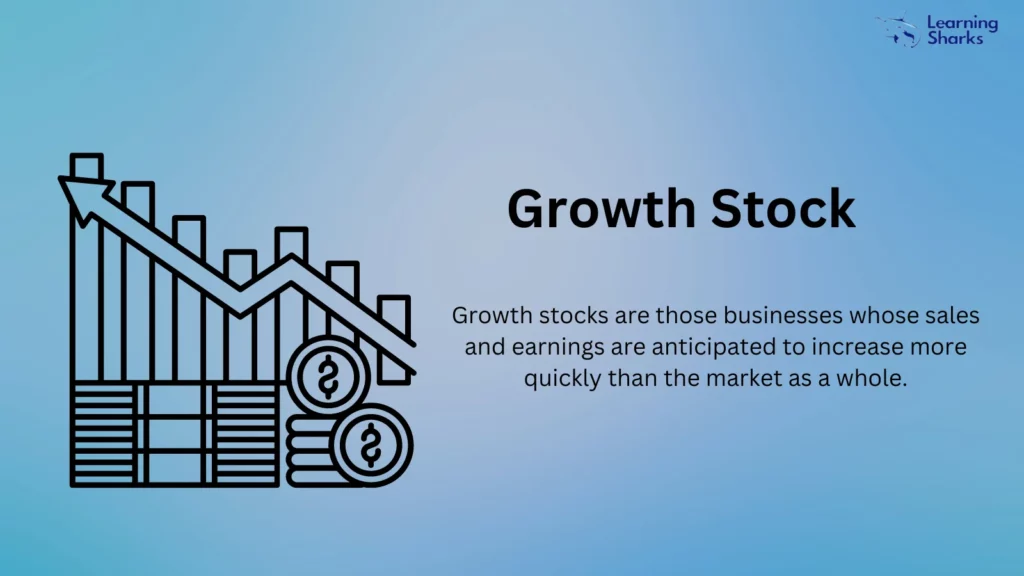
Growth stocks are those companies expected to grow sales and earnings at a faster rate than the market average.
Growth Stock

Companies that exhibit a high potential for growth issue growth stocks. Investing in such companies can result in massive wealth accumulation for investors due to capital appreciation. However, due to the developing nature of the issuing company, growth stocks in India can be a risky investment venture.

Features

Purchasing a growth stock is ideal for risk-prone individuals looking to gain massive returns on their total investment amount. Investors can easily identify the best growth stocks and their issuing companies by considering the following features:

  • Price-to-earnings ratio 

Companies with high development potential are identified in the market, and their shares have a high bid value. These companies’ growth stocks have a high price to earnings (P/E) ratio, indicating high returns on total investment.

A high price to earnings ratio indicates that people recognize a company’s total potential and expect it to grow at exponential rates in the future. The following formula can be used to calculate this ratio:

P/E ratio = Market value per share / Earnings per share 

However, in some cases, a high P/E ratio can be misleading, indicating that a company is overvalued relative to its productive capacity. The performance of such businesses is a result of an economy’s boom or persistent inflation, or the development of a financial bubble.

A prerequisite for the best growth stocks in India is that they have a ratio greater than or equal to one.

  • Price-earnings to growth ratio (PEG)

Due to the P/E ratio’s limitations, investors also consider the price-earnings-to-growth ratio when distinguishing growth shares in India from standard equity shares. The main advantage of the PEG ratio over the P/E ratio is that it considers the yearly increase in a company’s total earnings per share.

PEG Ratio = Market value of unit shares / Earnings per share growth rate

A high PEG ratio indicates that a company has demonstrated exceptional performance. It is a more accurate analysis tool than the price to earnings ratio because it does not produce misleading results.

  • Strength of issuing business 

Growth stocks can only be issued by companies with significant future growth and expansion potential. This is only possible if a company has a solid foundation, a solid business development plan, and competent management to meet specified targets.

It is demonstrated by the return on equity (RoE) value, which is published annually. Companies in India that raise capital through growth stocks typically have an annual return on total equity of 15% or higher.

Why Should You Invest in Growth Stocks?

  • Higher returns 

The goal of investing in the best growth stocks is to build wealth through large-scale capital gains. Such businesses grow at a faster rate than the underlying industry in which they operate, resulting in higher revenue.

Profits from growth stock investments can only be realized over time. Any capital gains made during this period are subject to long-term capital gains tax (LTCG), which is lower than short-term taxation policy. There is also a provision for indexation, which reduces individuals’ tax burden even further.

  • Hedge against inflation 

The returns on the best growth stocks are significantly higher than the current inflation rate in an economy, allowing investors to generate real income on total investments. Individuals’ purchasing power rises over time, effectively raising their standard of living through higher per capita income.

Risks Associated with Growth Stocks

Growth stocks are regarded as a risky form of investing. This is so that they can pursue aggressive business strategies that will give them a sizable market advantage in order to generate profits. Investors generally lose out when such companies forgo dividend payments in favor of reinvesting for growth.

Investors risk losing their entire investment if a company experiences long-term losses because no dividend payments are made during the lock-in period.

Growth stocks are typically issued by businesses that are still in the early stages of development and are therefore very prone to risk. Due to their volatility, any market changes have a significant impact on them. Even though this feature enables companies to generate enormous profits during a market upswing, a tiny price fluctuation will result in enormous losses. Depending on the state of the market, one should invest in the best growth stocks.

The ongoing economic situation in a nation may also have an impact on the growth stocks’ fundamental performance. Any company operating in that industry has a tendency to perform above and beyond their potential in the event that a financial bubble is observed. The fact that this growth is based on an economic anomaly makes it potentially misleading.

As a result, for adequate profit generation, investing in growth shares in India necessitates a thorough analysis of both the selected companies and the current socio-economic environment.

Advantage of Growth Stock

  • High growth potential: Stocks with a high expectation for earnings growth are known as growth stocks. These businesses frequently work in sectors that are experiencing rapid growth or have innovative business models, which puts them in a good position to increase their market share and make sizable profits.
  • Capital appreciation: Making the most of the potential for sizeable capital gains is the main objective of investing in growth stocks. The stock price typically rises as the company’s earnings rise and the market acknowledges its growth potential, which eventually results in higher investment returns.
  • Investment opportunities for the long term: Growth stocks are typically appropriate for long-term investors who are prepared to hold their investments for a considerable amount of time. The compounding effect of consistent growth can produce significant wealth creation over time.
  • Competitive advantage: Growth companies frequently have a competitive edge thanks to their innovative technologies, solid brand recognition, or distinctive market positions. They can maintain their growth trajectory and possibly outperform their rivals thanks to this advantage.
  • Diversification: Growth stocks can help a portfolio of investments achieve greater diversification. Spreading out the risk and lowering volatility across the entire portfolio can be accomplished by combining growth stocks with other investment categories, such as value stocks or income-producing assets.
  • Investor appeal: Investors looking for above-average growth opportunities may find growth stocks appealing due to the potential for high returns. The stock price may increase as a result of this demand, giving early investors more gains.

FOR MORE INFO CLICK THIS SITE:https://learningsharks.in/

FOLLOW OUR PAGE:https://www.instagram.com/learningsharks/?hl=en

Best Stock Market Books For Beginners – Free PDF

Share maret books pdf - in hindi, marathi and English


Here you may get the best share market books for beginners in Marathi, Hindi, and English. There are publications on technical analysis for intraday like “Trade like a Stock Market Wizard,” “You Can Be a Stock Market Genius,” and “A Beginner’s Guide to the Stock Market.”

BELOW ARE THE BEST STOCK MARKET BOOKS FOR FREE DOWNLOAD- PDF FOR BEGINNERS

1. Trade like a Stock Market Wizard

To buy this book: Click Here

To Download the PDF: Click Here

BOOK DETAILS :

Author: Mark Minervini

Title: Trade Like a Stock Market Wizard: How to Achieve Super Performance in Stocks in Any Market

The outstanding stock trader and investor Mark Minervini, author of “Trade Like a Stock Market Wizard,” has won the US Investment Championship numerous times. The book is largely used as a guide for the trading techniques and procedures he created over the course of a successful career.

The book covers a wide range of topics, such as market analysis, locating high-potential stocks, risk management, and creating a trading strategy. Along with sharing his own experiences and cultural insights with the audience, Minervini also educates them on the stock market.

2.You Can Ba a Stock Market Genius Even if you’re not to Smart

To buy this book: Click Here

To Download the PDF: Click Here

Publisher ‏ : ‎ Simon & Schuster (1 March 1997)

Language ‏ : ‎ English

Can you learn how to beat the stock market from a book? Since billion-dollar fund managers are unable to achieve it, they presume no one can. Business academics not only hold this opinion, but they also have a tonne of data to back it up. So why should you purchase this book? because Joel Greenblatt has outperformed the stock market for more than ten years (with annual returns of more than 50%). And he’s now ready to demonstrate the process to you as well.
In this lighthearted and straightforward book, you’ll discover where the stock market gains are hidden.

3. Moving Averages 101: Incredible Signals that will make you Money in the Stock Market

To buy this book: Click Here

To Download the PDF: Click Here

Publisher ‏ : ‎ Stolly Media, LLC (12 July 2015)

Language ‏ : ‎ English

Profit from our 20 years of trading experience.
Learn from someone who has been in the stock market for more than 20 years to lower your chances of trading failure. Moving averages and how to trade them will be covered by Steve.

Unsure of where to begin? Do you have any reservations about trading with the 200-day moving average? Maybe you don’t know how to use moving averages in conjunction with other indicators. After reading this book, you’ll have a greater understanding of trading.

Understand moving averages After reading this book, you’ll have a greater understanding of the importance of moving averages.

  • Providing clear explanations for difficult ideas
  • Charts for trading with several annotations
  • gaining access to a thriving trading community

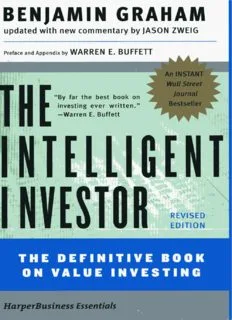
4. The Intelligent Investor- The Definitive Book on Value Investing

To buy this book: Click Here

To Download the PDF: Click Here

Publisher ‏ : ‎ Manjul Publishing House; First Edition (13 August 2021); Manjul Publishing House Pvt. Ltd., 2nd Floor, Usha Preet Complex, 42 Malviya Nagar, Bhopal – 462003 – India

Language ‏ : ‎ Hindi

बेंजामिन ग्राहम (1894-1976), वैल्यू इन्वेस्टिंग के जनक और आज के अनेक सफल व्यवसायियों की प्रेरणा हैं। वे सिक्योरिटी एनालिसिस और द इंटरप्रिटेशन ऑफ़ फ़ाइनेन्शियल स्टेटमेंट्स के लेखक भी हैं। जेसन ज़्वाइग मनी मैगज़ीन के वरिष्ठ लेखक तथा टाइम के अतिथि स्तंभकार, व म्यूज़ियम ऑफ़ अमेरिकन फ़ाइनेन्शियल हिस्ट्री के ट्रस्टी हैं। वे पूर्व में फ़ोर्ब्स के वरिष्ठ संपादक रहे हैं तथा 1987 से निवेश संबंधी लेखन कर रहे हैं।

5. The Little Book of Sideways: How to Make Money in Markets That Go Nowhere

To buy this book: Click Here

To Download the PDF: Click Here

What effect does this have on your investment portfolio as the stock market hits both heartbreaking highs and lows? You are, in a sense, back where you were in the year 2000. Although Six Flags guests will benefit from this, you would rather get closer to your retirement, savings, and investments.

Author and well-known value investor Vitaliy Katsenelson shows you how to navigate a market that is neither bullish nor bearish but rather what he calls a cowardly lion—it exhibits brief bursts of confidence but ultimately succumbs to fear. His book, The Little Book of Sideways Markets, has this guidance.

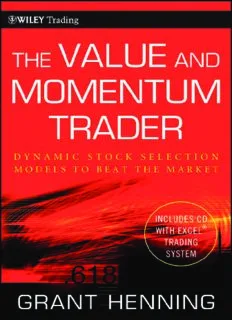
6. The Value and Momentum Trader

To buy this book: Click Here

To Download the PDF: Click Here

Grant Henning asserts that trading stocks may be both terribly harmful to your financial condition and tremendously profitable. No one should enter the stock market headfirst because it is obvious that not everyone is a suitable fit for it. In a volatile stock market, winning stock trading strategies must be regularly enhanced and adjusted to take into account changing market conditions.

The best components of each investment strategy, including momentum, value, growth, and fundamental and technical analysis, have been combined into a trading system that Henning has developed using an Excel-based research technique. This system is designed to function in volatile markets. In The Value and Momentum Trader, he describes his statistical trading strategies and demonstrates how to use them to make money off bets.

7. Profit with the Market Profile

To buy this book: Click Here

To Download the PDF: Click Here

Are you willing to change how you trade? You may now utilise the Market Profile to supplement well-known technical analysis methods like support and resistance, chart patterns, and trend lines instead of relying on lagging and ambiguous indicators placed on charts.

The Market Profile was created in the 1980s by the financial gurus of the Chicago Board of Trade, and it has since become one of the most cutting-edge analytical tools for traders, investors, and market analysts. Additionally, the power of the market profile is now yours to hold.

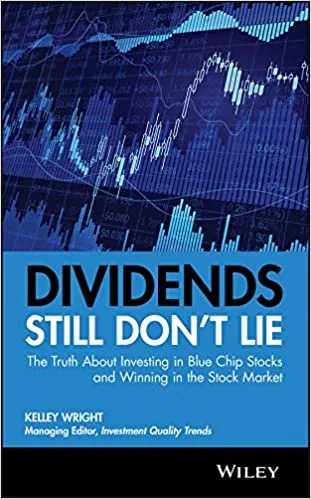
8. Dividends Still Don’t Lie: The Truth About Investing in Blue Chip Stocks And Winning in the Stock Market

To buy this book: Click Here

To Download the PDF: Click Here

In 1988, Geraldine Weiss released Dividends Don’t Lie. Weiss developed and presently serves as editor of the highly regarded newsletter Investment Quality Trends, which was characterised in that book as being based on the dividend-value hypothesis. More than 20 years later, the financial sector has undergone tremendous transformation as a result of the development of the Internet and computer technology. Massive volumes of data and information may now be instantly gathered, analysed, and reviewed.

What used to take weeks or months at a library may now be completed in a single evening with a computer. The dividend-value approach has a track record of reliably producing returns in the stock market. Investors who recognise and recognise good value continue to be rewarded by the stock market.

9. 5 Moving Averages Signals That Beat buy and hold

To buy this book: Click Here

To Download the PDF: Click Here

Learn five trading tactics that are more successful than buy-and-hold investments. Steve walks you through the results of 16 years of backtesting on some of the most well-known moving average signals to help you understand when to enter and exit trades as well as how to use backtesting to your advantage.

Conclusion:

The stock market is not merely a topic for academic research or novels. These modern and older publications, however, are excellent for learning new subjects. We nevertheless advise you to practise what you learn. a list of  courses we provide is provided below.

Click Free stock market ebooks to view all of the books’ pdf pages, which include more than 100 free books.

sharemarketbooks #pdffree #Beginners #stockmarketbooks

FOLLOW OUR WEBSITE: https://learningsharks.in/

FOLLOW OUR PAGE: https://www.instagram.com/learningsharks/