
Learning sharks-Share Market Institute


Rajouri Garden  8595071711 7982037049  Noida 8920210950 , and  Paschim Vihar  7827445731  

Fee revision notice effective 1st Jan 2026; No change for students enrolled before 15th Jan 2026

Download “Key features of Budget 2024-2025here

Understanding Share Price and Its Significance in Trading

The value of a company’s stock is greatly influenced by share prices in the quick-paced world of the financial markets. As traders, investors, and financial enthusiasts, we are aware that keeping a close eye on share prices is crucial to reaching our financial objectives and making wise decisions. We will examine the idea of share price, its importance in trading, and how it affects investment decisions in this thorough guide.

Share Price Definition and Basics

The price at which one share of a company’s stock is currently trading on the open market is referred to as the share price, also known as the stock price or equity price. It reflects how the market views a company’s overall performance, potential for growth, and prospects for the future. Based on a number of variables, such as supply and demand on the market, company earnings, prevailing economic conditions, and industry trends, the price may change frequently.

The Dynamics of Share Price Movement

Share prices fluctuate frequently, going up and down in response to market factors and investor sentiment. Numerous factors affect how share prices move, so it’s critical for traders to understand these dynamics in order to make wise choices.

1. Company Performance

The share price of a company is directly impacted by its performance and financial health. Share prices frequently rise as a result of positive earnings reports, rising sales, and successful business tactics. In contrast, disappointing financial results or unfavorable news may result in a decline in share prices.

2. Market Sentiment

Share prices are significantly influenced by investor perception and sentiment. Share prices can rise in response to good news, market optimism, and favorable economic conditions, while they can fall in response to unfavorable sentiments or general market downturns.

3. Demand and Supply

Share prices are influenced by the fundamental concepts of supply and demand, just like any other tradable asset. The share price typically increases when investors want to buy a particular stock more than they want to sell it, and vice versa.

4. Dividend Payments

The dividend yield and consistency of payouts for businesses that distribute dividends to their shareholders can impact share prices. Increased demand for the stock and higher dividend yields may draw in investors, driving up the price of the stock.

5. Industry and Market Trends

Share prices of businesses within a given sector can be impacted by both market trends as a whole and industry-specific factors. For instance, technological advancements may boost the share prices of tech companies, whereas a downturn in the energy industry may harm stocks related to the energy industry.

The Significance of Share Price in Trading

Share prices have a big impact on investors, traders, and the business itself. Making informed trading decisions requires having a solid understanding of share prices.

1. Investment Decisions

Share prices are an important factor for both individual investors and fund managers to take into account when choosing securities for their portfolios. The objective is to locate undervalued stocks with room for growth or overvalued stocks that are ready to be sold.

2. Portfolio Valuation

A portfolio of investments’ overall value is greatly influenced by share prices. Investors continuously assess gains and losses on the basis of current share prices while tracking the performance of their holdings.

3. Market Timing

In order to spot patterns and trends that may be used to forecast potential market turning points, traders frequently examine share price movements. Making profitable buy and sell decisions can result from effective market timing.

4. Investor Sentiment

Investor sentiment and confidence in a company can be impacted by share prices. A rising share price might indicate success and draw in more investors, whereas a falling share price might cause anxiety and decrease investor interest.

5. Capital Raising

When companies raise money through secondary offerings, share prices are crucial. A high share price might make it easier for the business to raise money, whereas a low share price might put off potential investors.

Using Share Price Information Wisely

We must approach share price information as traders and investors with caution and critical analysis. While share prices provide insightful information, they shouldn’t be the only thing we consider when making decisions.

The company’s foundations, financial statements, competitive positioning, and industry outlook must all be thoroughly researched. Additionally, having a broad perspective on geopolitical developments and global economic trends can help you interpret changes in share prices.

In conclusion, share prices are a fundamental component of trading and investing, influencing market participants’ choices and sculpting the financial landscape. Our ability to make wise investment decisions and successfully negotiate the complexities of the financial markets depends on our ability to comprehend the dynamics of share price movement and its significance.

FOR MORE INFO CLICK THIS SITE:https://learningsharks.in/

FOLLOW OUR PAGE:https://www.instagram.com/learningsharks/?hl=en

Stock Market Timings In India

Indian Stock Market Timings

In India, stock market trading is limited to a specific window of time. On weekdays from 9.15 am to 3.30 pm, retail users must execute these transactions through a brokerage firm. Two of India’s largest stock markets, the Bombay Stock Exchange (BSE) and National Stock Exchange (NSE), are where the bulk of investors buy and sell stocks. The Indian stock market times for both of these important stock exchanges are the same.

Indian stock market timings for trade is divided into three segments:

Pre-opening Timing

This class will last from 9:00 am until 9:15 am. Any securities may be purchased or sold at this time by order. Additional divisions into three sessions are as follows:

9.00 a.m. – 9.08 a.m. 

When the Indian stock market opens at this time of day, any transaction can be ordered. Order entry is given preference when trading really begins since these orders are wiped off first. Orders cannot be entered after this 8-minute window during the pre-opening session, therefore investors benefit from the ability to change or cancel any orders put during this time.

9.08 a.m. – 9.12 a.m.

This portion of the Indian stock market timing determines the price of a security. Demand and supply prices are matched in order to enable correct transactions between investors wishing to purchase or sell a security. During the regular trading hours of the Indian stock market, the final prices at which trading will begin are determined using the multilateral order matching method.

Price matching orders are essential in defining the price at which the securities is traded during a normal session of the Indian stock market.

However, at this time, benefits of altering an existing order are not available.

9.12 a.m. – 9.15 a.m. 

During this moment, the preopening and normal Indian stock market hours switch. No additional transaction orders are permitted during this period. Furthermore, wagers that have already been placed between 9.08 and 9.12 a.m. cannot be changed.

Normal Session 

The Indian stock market’s primary trading hours are from 9.15 am to 3.30 pm. All transactions are governed by bilateral order matching, and pricing is driven by supply and demand.

Multiple market alterations have an impact on security prices because of how unstable the bilateral order matching system is. To lessen this volatility, the multi-order system was created for the pre-opening session and adopted in Indian stock market timings.

Post-closing Session 

The stock market in India shuts at 3.30 p.m. No more transactions are made after this point. The closing price, however, is decided during this time, and this has a significant impact on the starting security price the following day.

Stock market closing time in India can be divided into two sessions –

3.30 p.m. – 3.40 p.m.

The weighted average of prices for securities traded on a stock exchange between 3 and 3.30 p.m. is used to calculate the closing price. The closing prices of benchmark and sector indexes like Nifty, Sensex, S&P Auto, etc. are determined using the weighted average prices of listed stocks.

3.40 p.m. – 4 p.m. 

After the stock market closes, bids can be submitted during this period for the following day’s trade. Bids made during this time are accepted if there are enough buyers and sellers in the market to make this possible. These transactions are finished at the agreed-upon price, regardless of changes in the opening market price.

As a result, an investor who has already placed a bid may realise capital gains if their opening price is higher than the closing price. Bids may be cancelled if the closing price is greater than the opening share price within the brief period between 9.00 a.m. to 9.08 a.m.

S. No. NameTime 
1.Pre-opening session9.00 a.m. – 9.15 a.m.
2.Normal session9.15 a.m. – 3.30 p.m.
3.Closing session3.30 p.m. – 4.00 p.m.

Aftermarket Orders

after this particular period. Transactions are not possible. Orders placed by investors in the aftermarket for certain businesses’ securities will be filled at the opening market price on the following day.

‘Muhurat’ Trading 

Diwali is a national religious holiday in India, hence the stock market is normally closed on that day for all transactions. On Diwali, though, the market is only open for an hour. As it is considered lucky, a one-hour trading session will be held this year on October 24, 2022, from 6.15 pm to 7.15 pm.

FOR MORE INFO CLICK THIS SITE:https://learningsharks.in/

FOLLOW OUR PAGE:https://www.instagram.com/learningsharks/?hl=en

IDBI Bank reports 62% rise in Q1 net profit, stock gains

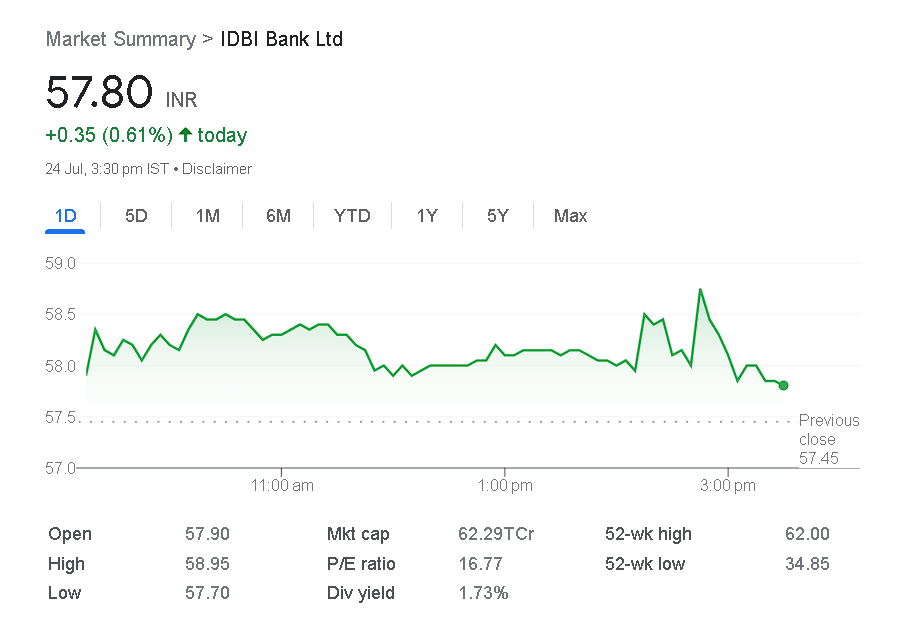
Shares of IDBI Bank increased by 2.45% to Rs 58.85 on the BSE from their previous close of Rs 57.44. The company’s market value increased to Rs 62,729 crore.

With today's rally, IDBI Bank stock has risen 6% this year. In a year, the stock has delivered returns of 59%.
The price of IDBI Bank’s stock fell to Rs 34.85 on July 27, 2022, and rose to Rs 62 on January 1, 2023.

INTRODUCTION

After the LIC-owned lender reported a 62% increase in consolidated profit for the quarter ended in June 2023, shares of IDBI Bank Ltd. increased by more than 2% today.

  • Compared to the same quarter the prior year, the net profit increased to Rs 1224 crore in the first quarter, from Rs 756 crore.
  • Comparing the June quarter to the first quarter of the previous fiscal, operating profit increased 47% to Rs 3,019 crore.
  • The IDBI Bank’s net interest income increased 61% in the most recent quarter to Rs 3,998 crore from Rs 2,488 crore in Q1 2023.

In the first quarter of the current fiscal year, net interest margins (NIM) increased 178 basis points to 5.80% from 4.02% in the first quarter of 2023, indicating that IDBI Bank’s asset quality has improved.

The bank’s gross non-performing assets (NPAs) ratio decreased to 5.05% as of June 30, 2023 from 19.90% as of June 30, 2022, and its net NPA ratio also decreased to 0.44% from 1.26% as of June 30, 2022.

  • As of June 30, 2023, net advances increased 20% YoY to Rs 165,403 crore from Rs 1,38,223 crore the previous year.
  • the Provision Coverage Ratio (including technical write-offs) increased to 98.99% from 97.78% as of June 30, 2022.
  • Following the release of the Q1 results, shares of IDBI Bank increased 2.45% to Rs. 58.85 from their previous close of Rs. 57.44 on the BSE.
  • With today’s surge, the price of IDBI Bank has increased 6% so far this year. On the BSE, a total of 5.49 lakh shares were exchanged for a turnover of Rs 3.20 crore.

On July 27, 2022, the price of IDBI Bank stock reached a 52-week low of Rs 34.85 and a 52-week high of Rs 62 on January 1, 2023.

CONCLUSION

FOR MORE INFO CLICK THIS SITE:https://learningsharks.in/

FOLLOW OUR PAGE:https://www.instagram.com/learningsharks/?hl=en
Netweb Technologies IPO share allotment expected today

After the initial public offering (IPO) bids closed on July 19, the allocation of shares of high-end computing solutions provider Netweb Technologies is scheduled to be settled today, July 24.

  • With bids for 79.95 crore equity shares received, the IPO of Delhi-based Netweb Technologies far outperformed the offer size of 88.58 lakh equity shares.
  • The official IPO registrar, Link Intime India Pvt Ltd, has a website where investors who have subscribed for shares can check the status of their applications for allocation.
Netweb Technologies offered its shares in the IPO, which was open for subscription from July 17-19, in a price range of Rs 475-500 apiece.
The IPO of Delhi-based Netweb Technologies
  • Click on the link https://linkintime.co.in/mipo/ipoallotment.html
  • Choose Netweb Technologies in the drop-down option. To check the status, you must enter your PAN information, application ID, demat account number, or DP client ID.
  • As an alternative, you can enter your application number and PAN information on the official BSE website to check the status of your allocation.
  • Visit the link bseindia.com/investors/appli_check.aspx.
  • To check the status, click the “Equity” box next to the issue type, choose the IPO name, and then input your application number and PAN number.
  • The likelihood that the majority of investors will not receive any shares under the offer is still very high because the IPO has been significantly oversubscribed. In these situations, refunds must begin to appear in the investors’ bank accounts by July 25.
  • By July 26, investors who have received shares can anticipate having them credited to their demat accounts. On July 27, the shares are anticipated to be launched on the BSE and NSE.
  • The price range for the shares offered by Netweb Technologies in the IPO, which was open for subscription from July 17–19, was between Rs. 475 and Rs. 500 per share. Market watchers claim that the stock is fetching a premium of about 360 rupees on the unlisted market, indicating significant listing returns for investors.
  • By combining a fresh issuance of 206 crore rupees and a promoter offer for sale (OFS) of 425 crore rupees at the higher end of the price band, the business hopes to raise Rs 631 crore through its public offering.

FOR MORE INFO CLICK THIS SITE:https://learningsharks.in/

FOLLOW OUR PAGE:https://www.instagram.com/learningsharks/?hl=en

21 Do’s and Don’ts of Stock Market Investing for Beginners.

Table of Contents

  • Do’s of Stock Market Investing
    • 1. Get an Education
    • 2. Start Small
    • 3. Get Started Early
    • 4. Research Before Investing
    • 5. Only Invest What is Surplus:
    • 6. Have an Investment Goal
    • 7. Build a Stock Portfolio
    • 8. Average Out
    • 9. Diversify
    • 10. Invest for the Long-Term
    • 11. Hold the Winners, Cut the Losers
    • 12. Invest Consistently
    • 13. Have Patience
  • Don’ts of Stock Market Investing:
    • 14. Don’t Take Investing as Gambling
    • 15. Don’t Invest Blindly on Free Tips/Recommendations
    • 16. Don’t Have Unrealistic Expectations
    • 17. Don’t Over Trade
    • 18. Don’t Follow the Herd
    • 19. Avoid Psychological Biases/Traps
    • 20. Don’t Take Unnecessary Risks
    • 21. Don’t Make Emotional Decisions

Do’s of Stock Market Investing

Here are a few of the do’s of stock market investing that every investor should follow:

1. Get an Education

This is most likely the most important stock market investing do. Start learning about the market if you’re serious about becoming a successful stock investor. It does not imply that you must pursue a college education. The best way to learn is through self-education.

On the internet, there is a ton of free information that you can access to learn about the market. Additionally, you can sign up for a few reputable online stock market investing courses to get a head start. Start learning now.

2. Start Small

You wouldn’t dive into 8 feet of water if you were just learning to swim, right? Similar to this, start small when investing in the stock market. Start with the smallest investment you can and gradually increase it as your knowledge and confidence grow.

3. Get Started Early

I cannot stress enough how crucial it is to begin managing your finances as soon as possible. When you start investing early, the odds are in your favor. Additionally, even if you suffer some losses in the beginning stages of your investment journey, you have enough time to recover here.

4. Research Before Investing

One of the key reasons why people do not make money from stocks is that they do not put in the initial efforts before investing in the share. Every investor needs to research the company before investing. Here you need to learn the company’s fundamentals, financial statements, ratios, management, and more. Using a web scraping tool for investors will help you extract all necessary companies’ details at scale. If you do not want to regret it later, research the company first before investing. Our Motley Fool vs Zacks can help you make a better choice if you are new to the stock market. Its stock picks are easy to understand and help you decide which stocks to buy.

5. Only Invest What is Surplus:

The stock market offers a huge opportunity to invest in and profit from your preferred businesses. Although no returns are guaranteed, there are always some risks associated with the market. Furthermore, a poor (or bear market) can frequently last for years. Therefore, even if you can’t get the money out, only invest the extra cash that won’t change your way of life.

6. Have an Investment Goal

If you have an investment goal or plan, it will be simpler to plan your investments (and to track your progress). Your objective might be to create a retirement fund or a corpus of Rs. 10 crore in the following ten years. You’ll remain motivated and on track if you have a goal.

7. Build a Stock Portfolio

Just having two or three stocks is insufficient for consistently making good money in the stock market. You must create a successful stock portfolio of 8–12 stocks that can provide you with steady returns.

Although it’s extremely unlikely that you’ll find all the top stocks at once. However, you can continue adding and removing stocks year after year to create a potent portfolio that can assist you in achieving your objectives.

8. Average Out

It’s difficult to time the market, and it’s nearly impossible to buy stocks at exactly the bottom and sell them at the top. You may be fortunate if you’ve done it. A better strategy in this case is to buy/sell in “steps” (unless you come across an incredible opportunity, which the market can occasionally offer).

9. Diversify

“Do not put all your eggs in one basket!” When compared to a portfolio of ten stocks, investing in a single stock carries a significantly higher level of risk. In the latter case, even if one or two of your stocks begin to perform poorly, it might not have a significant impact on the portfolio as a whole. It’s important to have a sufficiently diversified stock portfolio.

10. Invest for the Long-Term

It is a well-known fact that all stock market veterans who have made enormous fortunes from stocks are long-term investors. But why does long-term investing contribute to financial success? The eighth wonder of the world is possible because of the power of compounding. Invest for the long term if you want to significantly increase your wealth through the market.

11. Hold the Winners, Cut the Losers

If your losing stocks consistently underperform, sell them; hold onto your winners for longer so they can continue to provide you with higher returns. This is the golden rule of investing, which you must adhere to. Building your ideal portfolio will also be aided by keeping your winners and cutting your losers.

12. Invest Consistently

When the market is doing well and the indexes are reaching new highs, the majority of people become enthusiastic and invest in stocks. You won’t find amazing opportunities to choose inexpensive stocks, though, if you only invest during bull markets and withdraw your money when the market is down, that is, when stocks are selling for a discount.

Don’t make market investments for a single year. Consistently invest and progressively raise your investment amounts if you want to profit from stocks.

13. Have Patience

Most stocks take at least one to two years to provide investors with good returns. Additionally, performances improve with more time. When investing in the stock market, be patient and avoid selling your stocks too soon in order to experience immediate gratification.

Don’ts of Stock Market Investing:

14. Don’t Take Investing as Gambling

This needs to be said again: “INVESTING IS NOT GAMBLING!” Don’t purchase any stock at random and expect a two-fold return within a month.

15. Don’t Invest Blindly on Free Tips/Recommendations

You’ll begin receiving free messages on your phone with BUY/SELL calls as soon as your trading account is opened. But keep in mind that there are no free meals in this world. Why would someone send a stranger free stock recommendations for multi-baggers? No matter how appealing they may sound, never heed a free tip or recommendation out of the blue.

16. Don’t Have Unrealistic Expectations

Yes, many fortunate individuals in the market have seen returns on their initial investments of 400–500%. The reality is that this type of news gets quickly spread (and exaggerated).

When investing in stocks, keep your expectations in check. In the market, a return of between 12 and 18% in a year is regarded as favorable. Additionally, if you compound this return over a number of years, your returns will be much higher than the 3.5% interest on your savings account.

Also, don’t assume that you will make the same profits as others who may have a long history of stock investing and who may possess exceptional skill. Similar results are also possible for you, but only with sufficient training and experience.

17. Don’t Over Trade

When you trade frequently, the brokerage and other fees must be paid repeatedly. Avoid trading stocks too frequently. Make decisions with confidence and only engage in transactions as necessary.

18. Don’t Follow the Herd

Within a year after purchasing a stock, your coworker realized returns of 67%. Now that he is bragging about it, many of your coworkers are purchasing that stock. How would you proceed? Must you purchase the stock? Wrong!

No investor can achieve significant market success by going with the flow. Instead of going with the flow, conduct your own research.

19. Avoid Psychological Biases/Traps

There are numerous physiological biases that can have a negative impact on your ability to make wise decisions and your ability to make investments when you are investing. Confirmation bias, anchoring bias, buyer’s remorse, the superiority trap, etc. are a few examples.

Since most of these biases are ingrained in human nature, it may be challenging for individuals to recognize them. In any case, being aware of these biases can help you prevent them from doing serious harm. A further benefit of these biases is that, like any habit, they can be overcome or changed with practice.

20. Don’t Take Unnecessary Risks

It is never a good idea to put all of your money into a hot stock or sector in order to earn a marginally higher return. Gaining high returns is not more important than protecting your money. When investing in stocks, you should never take unwarranted risks and your “risk-reward” should always be balanced.

21. Don’t Make Emotional Decisions

The human mind is incredibly complex, and both internal and external factors can have an impact on the decisions we make. Do not let emotion influence your stock market investment decisions. No matter how much you may like a company, investing in it may not be a wise move if it is not profitable and does not have a promising future. Avoid getting carried away when making investment decisions.

FOR MORE INFO CLICK THIS SITE:https://learningsharks.in/

FOLLOW OUR PAGE:https://www.instagram.com/learningsharks/?hl=en
Stock Market WhatsApp Group Links of July [2023]

WhatsApp group links for Stock Market for 2023
WhatsApp Group Links for Stock Market

What do you mean by WhatsApp?

1. WhatsApp is a free cross-platform messaging app that can be used to make voice and video conversations, send texts, and more with just a Wi-Fi connection.
2.Friends and family who want to stay in touch but are separated are particularly fond of WhatsApp, which has more than 2 billion active users.
3.WhatsApp’s extensive use is partly due to its cross-platform friendliness, accessibility, and simple, straightforward operation.

4.Even while WhatsApp may not be widely used in the US, it is an essential part of daily life in many other nations.
5.The Facebook-owned programme is without a question one of the most popular messaging services in the entire planet.
6.It will be easier to grasp if you keep in mind that WhatsApp was one of the first smartphone applications to offer free internet-based messaging.

How Does WhatsApp Work?

1. Voice and video calls: WhatsApp offers both voice talks and video calls, the latter of which includes a feature that allows up to eight people in a group to make calls simultaneously.
2.You can make audio messages and transmit them to private or public chat rooms.
3.WhatsApp uses end-to-end encryption, a secure communication technique, to ensure that only those who have been included in a conversation may see a message.
4.Unlike sending SMS messages across a range of mobile devices and cellular networks, sharing images and videos eliminates the danger of them being pixelated or not being downloaded.
5.Exchanging files WhatsApp makes it possible to send several types of documents, including PDFs, spreadsheets, and slideshows, without the hassle of email or other document-sharing software.

6.WhatsApp is compatible with both PC and Mac desktops.
7.WhatsApp Business: WhatsApp developed a special business account to give entrepreneurs a simple and approachable platform for interacting with customers and showcasing their goods.

Friends, if you’re seeking for WhatsApp group links for the stock market, you’ve arrived to the perfect spot. Here are some WhatsApp group links for the stock market that we’re giving you today. The best place to invest your money is in the stock market, but not everyone knows what it is or how to do it.

On WhatsApp, there are certain groups based on the stock market. These organisations can educate you, and you’ll discover where to invest your money right now. So stop wasting time now. Let’s look at each link to the stock market-related WhatsApp groups.

Rules for Stock Market WhatsApp Group

  • The WhatsApp group does not allow racists to join.
  • Jokes on politics and religion ought to be avoided since they could get very messy.
  • The names and photos of groups cannot be changed.
  • The WhatsApp group is open to joining and leaving at any time.
  • Respect must be reciprocated.
  • Contact the admin if you need assistance in any kind.

Active Stock Market WhatsApp Group Links

  • Intraday Bank nifty Expert – Join
  • Intraday Bank nifty.Nifty.Equity Option ||GROWW CAPITAL|| – Join
  • Daily Nifty Banknifty sureshot Levels – Join
  • Nifty Banknifty Sureshot Levels – Join
  • Scalpers trading co. 2 – Join
  • Forex Trading WhatsApp Group
  • Share Market Channel – Join
  • Growmore – Join
  • make profit strategy – Join
  • Credit Card & loan Service – Join
  • Au Bank Credit Offer – Join
  • Welthier India G5 – Join
  • T-Town Trading – Join
  • Td24- Earn in Stocks3 – Join
  • Trader of double your money – Join
  • The future Trader 🚀✅ – Join
  • Vip Binance Signal – Join
  • Forex Vip Signal – Join
  • stock market – Join
  • Daily FO Trading 🤑 – Join
  • ICICI demat account – Join
  • TATA MATUAL FUNDS TRUST – Join
  • PAISA DOUBLE TRUSTED GROUP – Join
  • Stock market investment – Join
  • Stock market world  – Join
  • Mining Expert Support – Join
  • stock market – Join
  • Olymp Trade Signals – Click Here 
  • STOCK MARKET – Join
  • Stock market – Join
  • Anmol Stocks 2 – Join
  • STOCK DISCUSSION ADDA – Join
  • Kucoin trader and signals – Join
  • Big Bull Traders 2 – Join
  • Master Trader – Join
  • ARNING WITH TRADER –  IND – Join
  • OLYMP TRADE Signals – Join
  • Future Trader  – Join
  • Big Bull Traders 1 – Join
  • Free Share market Classe – Join
  • Raaza the forex – Join 
  • Stock market – Join 
  • PROFIT DYNAMIC – Join 
  • stockmarket trading –Join 
  • Stock Market – Join 
  • Security deposits  – Join 
  • Secret Trading – Join 
  • Nc trading/options – Join 
  • India FVP Trade  – Join 
  • stock market – Join 
  • IFO Invest founds – Join 
  • DTC Stock Market – Join 
  • education on stock research – Join 
  • Banknifty nifty  – Join 
  • Banknifty option future – Join 
  • Intraday Kings – Join 
  • Trading academy  – Join 
  • Share make money – Join 
  • BANKNIFTYCL – Join 
  • Share market – Join 
  • PEASTO OFFICIAL – Join 
  • trading – Join 
  • Choice broking – Join 
  • future bulls – Join 
  • Trading sharemarket – Join 
  • Sharemarket free calls – Join 
  • Surplua stock lot – Join 
  • Only investors group – Join 
  • BANKNIFTY  POINT MINIMUM – Join 
  • Bright life investment – Join 
  • Share market  – Join 
  • Stock Future Positional Call – Join 
  • Stock Market earn – Join 
  • Share market group – Join 
  • free stock market  – Join 
  • Gromo – Join 
  • Adsexchang – join 
  • Banknifty perineum – Join 
  • Stocks Trader – Join 
  • Stock Market School – Join 
  • Stock Market School – Join 
  • BNB FUTURE – Join 
  • STOCK MARKET SCHOOL – Join 
  • Learn Financial Market – Join 
  • BANKNIFTY TRASES – Join 
  • Stock market analysis – Join 
  • Djkhan forex MASTER – Join 
  • STOCK MARKET KE NAWAB – Join
  • NYSE STOCK MARKET – Join 
  • SSE SZSE STOCK MARKET  – Join 
  • NGR INVESTMENT  – Join 
  • BANKNIFTY and Nifty traders – Join 
  • Loss recover  – Join 
  • DEMAT ACCOUNT FREE EARNING – Join 
  • Option trading night – Join  
  • Option king – Join 
  • Om sai share trading Academy – Join 
  • Sensex_Banknifty – Join
  • Business – Join 
  • F&O traders – Join 
  • Share market – Join
  • The index points – Join
  • Bank Nifty Masters – Join
  • INVEST FINVEST – Join
  • Bank nifty option group – Join
  • Traders Terminal – Join
  • Traders Terminal 2 – Join
  • Traders Terminal 3 – Join
  • BANKNIFTY SHARE MARKET – Join
  • Upstock – Join
  • Share Market Training – Join
  • STOCK WAY – Join
  • BANKNIFTY – Join
  • Latur WhatsApp Group
  • BANKNIFTY 02 – Join
  • DEMO TRADERS – Join
  • BANK NIFTY &NIFTY OPTION – Join
  • Option trending nifty 50 – Join
  • Bank nifty and nifty – Join
  • DEMO BNK NFTY 3DAYS – Join
  • Bank Nifty Masters Original – Join
  • Nifty and Banknifty F&O – Join
  • Share market – Join
  • FOREX_TRADERS – Join
  • Frustum Fashion Apparels – Join
  • NIFTY ST₹EET bets ₹ – Join
  • StockPro2 – Join
  • Banknifty nifty tips – Join
  • Share Market Hub – Join
  • Cryptocurrency WhatsApp Group
  • Share Market 2021 – Join
  • Traders Venue – Join
  • Share Market Hub – Join
  • Stock news – Join
  • Fortune flows investment – Join
  • Stock market Information – Join
  • Stock market Information – Join
  • The Stock Bull – Join
  • Pi Network – Join
  • The Stock Bull 2 – Join
  • stock market information – Join
  • stock market Tips – Join
  • Stock Market Tips – Join
  • RAJ FINANCIALS – Join
  • Earn $1000 BTC invest – Join
  • My Stocks – Join
  • Nifty Index Trading – Join
  • STOCK MARKET 2021 – Join
  • Stock Market – Join
  • Stock Market Groups – Join
  • Nifty Options – Join
  • Group11 Stock Market – JOIN
  • Free Forex Signals – JOIN
  • CRUDE Expert – JOIN
  • Trading WhatsApp Group
  • Investment Guru – JOIN
  • Trade warriors – JOIN
  • Investment option – Join
  • Share Market Hub – Join
  • Stock market tips – Join
  • DEMO BANK NIFTY 3DAYS – Join
  • Share market Hub – Join
  • Happy World Trade – JOIN
  • Zerodha Accounts – JOIN
  • Stonks Daily – JOIN
  • Movies WhatsApp Group
  • Stock Trading – JOIN
  • EQUITY & FUTURES EXPERT – JOIN
  • Stock market analysis – Join 
  • Djkhan forex MASTER – Join 
  • Forex Trading WhatsApp Group
  • STOCK MARKET KE NAWAB – Join
  • NYSE STOCK MARKET – Join 
  • SSE SZSE STOCK MARKET  – Join 
  • NGR INVESTMENT  – Join 
  • BANKNIFTY and Nifty traders – Join 
  • Loss recover  – Join 
  • DEMAT ACCOUNT FREE EARNING – Join 
  • Option trading night – Join  
  • Option king – Join 
  • Om sai share trading Academy – Join 
  • Sensex_Banknifty – Join
  • Business – Join 
  • F&O traders – Join 
  • Share market – Join
  • The index points – Join
  • Bank Nifty Masters – Join
  • INVEST FINVEST – Join
  • Bank nifty option group – Join
  • Traders Terminal – Join
  • Traders Terminal 2 – Join
  • Traders Terminal 3 – Join
  • BANKNIFTY SHARE MARKET – Join
  • Upstock – Join
  • Share Market Training – Join
  • STOCK WAY – Join
  • BANKNIFTY – Join
  • Latur WhatsApp Group
  • BANKNIFTY 02 – Join
  • DEMO TRADERS – Join
  • BANK NIFTY &NIFTY OPTION – Join
  • Option trending nifty 50 – Join
  • Bank nifty and nifty – Join
  • DEMO BNK NFTY 3DAYS – Join
  • Bank Nifty Masters Original – Join
  • Nifty and Banknifty F&O – Join
  • Share market – Join
  • FOREX_TRADERS – Join
  • Frustum Fashion Apparels – Join
  • NIFTY ST₹EET bets ₹ – Join
  • StockPro2 – Join
  • Banknifty nifty tips – Join
  • Share Market Hub – Join
  • Cryptocurrency WhatsApp Group
  • Share Market 2021 – Join
  • Traders Venue – Join
  • Share Market Hub – Join
  • Stock news – Join
  • Fortune flows investment – Join
  • Stock market Information – Join
  • Stock market Information – Join
  • The Stock Bull – Join
  • Pi Network – Join
  • The Stock Bull 2 – Join
  • stock market information – Join
  • stock market Tips – Join
  • Stock Market Tips – Join
  • RAJ FINANCIALS – Join
  • Earn $1000 BTC invest – Join
  • My Stocks – Join
  • Nifty Index Trading – Join
  • STOCK MARKET 2021 – Join
  • Stock Market – Join
  • Stock Market Groups – Join
  • Nifty Options – Join
  • Group11 Stock Market – JOIN
  • Free Forex Signals – JOIN
  • CRUDE Expert – JOIN
  • Trading WhatsApp Group
  • Investment Guru – JOIN
  • Trade warriors – JOIN
  • Investment option – Join
  • Share Market Hub – Join
  • Stock market tips – Join
  • DEMO BANK NIFTY 3DAYS – Join
  • Share market Hub – Join
  • Happy World Trade – JOIN
  • Zerodha Accounts – JOIN
  • Stonks Daily – JOIN
  • Movies WhatsApp Group
  • Stock Trading – JOIN
  • EQUITY & FUTURES EXPERT – JOIN

FOLLOW OUR WEBSITE:https://learningsharks.in/

FOLLOW OUR PAGE: https://www.instagram.com/learningsharks/

What are the Stock Market Courses?

1. Stock Market Crash Course

Become a Savvy Investor with the Stock Market Institute's Expert Guidance

Stock Market Trading and Investment Crash Course

This condensed course covers all the strategies required to be successful in the stock market. This will assist in researching a variety of stocks and assisting traders in making the finest trades. Do you want to learn how to trade or make investments on the stock market? Then let’s be honest! Not every piece of knowledge can be found on YouTube. The finest thing you can do for yourself is to find a mentor that you can learn from. Spend money on yourself right away!

Your extremely knowledgeable instructors will be the best traders and mentors in the business.

This stock market trading course is for you if you want to start trading stocks online to make some additional money or if you want to make trading your secondary source of income.

Lanuage: Hindi & English

Difficulty: Beginner

(FEES MAY VARY FROM LOCATION TO LOCATION)

In This Stock Market Crash Course

You’ll learn about stock trading. The course is useful for both newcomers and beginners.

Risk management and money management are the two key components of trading.

Anyone may learn how to invest wisely in the stock market, and those who truly understand the guiding principles and advised methods will be able to achieve even their most difficult financial goals and live the life of their dreams.

Unfortunately, many clients do not have access to the essential learning resources and best practises that could be the difference between successful and unsuccessful stock trading.

YOU WILL LEARN TO BE A SUCCESSFUL STOCK TRADER AND INVESTOR FROM THE COMPLETE COURSE

Available Online & offline Batches

Morning Batch 10-12 PM ( Offline & Online)

Afternoon Batch 12-2 PM ( Offline & Online)

Evening Batch – 6-8 PM ( Offline & Online)

Late Evening Batch 8-10 PM ( Online )

Saturday and Sunday Batch ( ( Offline & Online)

Fee Structure

One-Time Fees: 17,000

In Installments: 18,000

(FEES MAY VARY FROM LOCATION TO LOCATION)

2. About Financial Derivatives (Options & Future Course)

Empowering Investors to Navigate the Stock Market with Confidence.

Derivative Analysis (Options & Futures) Information

Derivatives are therefore second-tier securities, whose value is completely based on the price of the underlying, or underlying security, to which they are linked. Typically, derivatives are viewed as professional investments.

Basic training in financial derivatives analysis

The first thing you will learn in this introductory course is the fundamentals of derivative analysis. You’ll also be able to distinguish them from one another. It is obvious that there are forward, futures, options, and swaps contracts. Excel is also used to calculate gains and losses for different contract types.

You’ll also have a foundational understanding of derivative contracts by the end of this course. Again, you’ll need to move on to more difficult subjects like pricing derivatives. Trading on the futures market is also explored.

Available Online & offline Batches

Morning Batch 10-12 PM ( Offline & Online)

Afternoon Batch 12-2 PM ( Offline & Online)

Evening Batch – 6-8 PM ( Offline & Online)

Late Evening Batch 8-10 PM ( Online )

Saturday and Sunday Batch ( ( Offline & Online)

Language: English & Hindi

Time Duration: 1.5 Months

Fee Structure: 17,000

(FEES MAY VARY FROM LOCATION TO LOCATION)

3.Technical Analysis Course

Accelerate Your Investment Journey with the Stock Market Institute.

ABOUT TECHNICAL ANALYSIS COURSE

Technical analysis is one of the most significant components of stock trading. It makes reference to the notion of predicting future price changes using historical trends. Although. Technical analysis is frequently referred to be the “backbone” of stock market trading. People who are just beginning to learn about charts and technical analysis make up its target audience.

Trading without any prior knowledge is what technical analysts do. Numerous websites have information that should be used, but it’s crucial that we maintain organisation to avoid becoming overloaded and to enable us to concentrate and apply our knowledge to what’s most important.

Furthermore, compared to fundamental analysis, technical analysis places a greater emphasis on the investigation of price and volume.

Available Online & offline Batches

Morning Batch 10-12 PM ( Offline & Online)

Afternoon Batch 12-2 PM ( Offline & Online)

Evening Batch – 6-8 PM ( Offline & Online)

Late Evening Batch 8-10 PM ( Online )

Saturday and Sunday Batch ( ( Offline & Online)

Language: English & Hindi

Time Duration: 2 weeks

Fee Structure: 19,000

(FEES MAY VARY FROM LOCATION TO LOCATION)

4. Fundamental Analysis Course

ABOUT FUNDAMENTAL ANALYSIS COURSE

Fundamental analysis is a technique for figuring out a security’s fundamental value. Analysing numerous macroeconomic and microeconomic accounting and financial elements is also essential. However, the primary goal of fundamental analysis is to ascertain a security’s intrinsic value. On the other hand, to help with investing decisions, the intrinsic value of the security can then be contrasted with its current market price.

This basic analysis course will produce a number that may be used to gauge how much a security is now worth. to establish whether it is consequently overvalued or undervalued.

By examining past market data, technical analysis predicts prices. This method of stock analysis is considered as conflicting with price and volume.

Available Online & offline Batches

Morning Batch 10-12 PM ( Offline & Online)

Afternoon Batch 12-2 PM ( Offline & Online)

Evening Batch – 6-8 PM ( Offline & Online)

Late Evening Batch 8-10 PM ( Online )

Saturday and Sunday Batch ( ( Offline & Online)

Language: English & Hindi

Time Duration: 1.5 Month

Fee Structure: 17,000

(FEES MAY VARY FROM LOCATION TO LOCATION)

5. Shark Trade Course

"Transform Your Financial Future with the Stock Market Institute's Education and Support

SHARK TRADER- STOCK MARKET COURSE

Market for stocks: The Shark Trader is a course that is broken up into 5 sections. technical analysis, fundamental analysis, derivative analysis, and stock market psychology. Only 10% of this training is theoretical, with 90% being practical.

Encouragement For Novices

The course’s in-depth, advanced content will help you trade successfully and confidently. You will learn how to test and refine your own trading technique in addition to gaining a deep understanding of what constitutes an efficient trading strategy.

Available Online & offline Batches

Morning Batch 10-12 PM ( Offline & Online)

Afternoon Batch 12-2 PM ( Offline & Online)

Evening Batch – 6-8 PM ( Offline & Online)

Late Evening Batch 8-10 PM ( Online )

Saturday and Sunday Batch ( ( Offline & Online)

Language: English & Hindi

Time Duration: 3 Months

Fee Structure

One -time : 37,000

Installments: 42,000

Difficulty: Beginners

(FEES MAY VARY FROM LOCATION TO LOCATION)

6. Shark Trader Pro

Experience the Difference: Stock Market Institute's Proven Strategies for Success.

Most Valuable Stock Market Trading Course – Shark Trader PRO

SHARK TRADER PRO- TRADING AND INVESTING

There are a total of 5 modules in this course. Stock market basics, fundamental analysis, derivative analysis, stock market psychology, and technical analysis. Only 20% of this programme is theoretical and 80% is practical.

The Shark Trader PRO course’s comprehensive, cutting-edge information may help you trade profitably and with confidence. You will learn how to test and refine your own trading technique in addition to gaining a deep understanding of what constitutes an efficient trading strategy.
Both intermediate and advanced ideas are covered in this course. You’ll leave with a novel, less entirely theoretical approach to analysing data.

Available Online & offline Batches

Morning Batch 10-12 PM ( Offline & Online)

Afternoon Batch 12-2 PM ( Offline & Online)

Evening Batch – 6-8 PM ( Offline & Online)

Late Evening Batch 8-10 PM ( Online )

Saturday and Sunday Batch ( ( Offline & Online)

Language: English & Hindi

Time Duration: 6 Months

Fee Structure

One -time : 49,900

Installments: 55,500

(FEES MAY VARY FROM LOCATION TO LOCATION)

FOR MORE INFO CLICK THIS SITE:https://learningsharks.in/

FOLLOW OUR PAGE: https://www.instagram.com/learningsharks/

Best Stock Market Books For Beginners – Free PDF

Here you can find the top Marathi, Hindi, and English share market books for beginners. Technical analysis books for intraday trading include “Trade like a Stock Market Wizard,” “You Can Be a Stock Market Genius,” and “A Beginner’s Guide to the Stock Market.”

Share maret books pdf - in hindi, marathi and English

BELOW ARE THE BEST STOCK MARKET BOOKS FOR FREE DOWNLOAD- PDF FOR BEGINNERS

1. Trade like a Stock Market Wizard

To buy this book: Click Here

To Download the PDF: Click Here

Author: Mark Minervini

Title: Trade Like a Stock Market Wizard: How to Achieve Super Performance in Stocks in Any Market

BOOK DETAILS :

The renowned stock trader and investor Mark Minervini, the author of “Trade Like a Stock Market Wizard,” has repeatedly taken first place in the US Investment Championship. The book serves primarily as a manual for the trading methods and techniques he developed over the course of a prosperous career.

A wide range of topics, including market analysis, finding high-potential stocks, risk management, and developing a trading strategy, are covered in the book. Minervini teaches the audience about the stock market in addition to his personal experiences and cultural insights.

2.You Can Ba a Stock Market Genius Even if you’re not to Smart

To buy this book: Click Here

To Download the PDF: Click Here

Publisher ‏ : ‎ Simon & Schuster (1 March 1997)

Language ‏ : ‎ English

Can a book teach you how to beat the stock market? They assume no one can because billion-dollar fund managers are incapable of doing it. In addition to having this opinion, business academics have a ton of data to support it. Why then should you buy this book? because Joel Greenblatt has produced annual returns of more than 50% while outperforming the stock market for more than ten years. He’s now prepared to walk you through the procedure as well.


You’ll learn where the stock market gains are hidden in this amusing and simple book.

3. Moving Averages 101: Incredible Signals that will make you Money in the Stock Market

To buy this book: Click Here

To Download the PDF: Click Here

Publisher ‏ : ‎ Stolly Media, LLC (12 July 2015)

Language ‏ : ‎ English

Profit from our 20 years of trading experience.
Learn from someone who has been in the stock market for more than 20 years to lower your chances of trading failure. Moving averages and how to trade them will be covered by Steve.

Unsure of where to begin? Do you have any reservations about trading with the 200-day moving average? Maybe you don’t know how to use moving averages in conjunction with other indicators. After reading this book, you’ll have a greater understanding of trading.

Understand moving averages After reading this book, you’ll have a greater understanding of the importance of moving averages.

  • Providing clear explanations for difficult ideas
  • Charts for trading with several annotations
  • gaining access to a thriving trading community

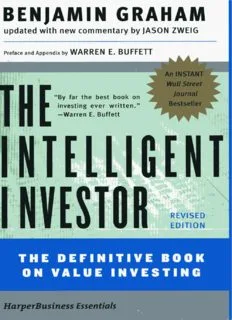
4. The Intelligent Investor- The Definitive Book on Value Investing

To buy this book: Click Here

To Download the PDF: Click Here

Publisher ‏ : ‎ Manjul Publishing House; First Edition (13 August 2021); Manjul Publishing House Pvt. Ltd., 2nd Floor, Usha Preet Complex, 42 Malviya Nagar, Bhopal – 462003 – India

Language ‏ : ‎ Hindi

बेंजामिन ग्राहम (1894-1976), वैल्यू इन्वेस्टिंग के जनक और आज के अनेक सफल व्यवसायियों की प्रेरणा हैं। वे सिक्योरिटी एनालिसिस और द इंटरप्रिटेशन ऑफ़ फ़ाइनेन्शियल स्टेटमेंट्स के लेखक भी हैं। जेसन ज़्वाइग मनी मैगज़ीन के वरिष्ठ लेखक तथा टाइम के अतिथि स्तंभकार, व म्यूज़ियम ऑफ़ अमेरिकन फ़ाइनेन्शियल हिस्ट्री के ट्रस्टी हैं। वे पूर्व में फ़ोर्ब्स के वरिष्ठ संपादक रहे हैं तथा 1987 से निवेश संबंधी लेखन कर रहे हैं।

5. The Little Book of Sideways: How to Make Money in Markets That Go Nowhere

To buy this book: Click Here

To Download the PDF: Click Here

What effect does this have on your investment portfolio as the stock market hits both heartbreaking highs and lows? You are, in a sense, back where you were in the year 2000. Although Six Flags guests will benefit from this, you would rather get closer to your retirement, savings, and investments.

Author and well-known value investor Vitaliy Katsenelson shows you how to navigate a market that is neither bullish nor bearish but rather what he calls a cowardly lion—it exhibits brief bursts of confidence but ultimately succumbs to fear. His book, The Little Book of Sideways Markets, has this guidance.

6. The Value and Momentum Trader

To buy this book: Click Here

To Download the PDF: Click Here

Grant Henning asserts that trading stocks may be both terribly harmful to your financial condition and tremendously profitable. No one should enter the stock market headfirst because it is obvious that not everyone is a suitable fit for it. In a volatile stock market, winning stock trading strategies must be regularly enhanced and adjusted to take into account changing market conditions.

The best components of each investment strategy, including momentum, value, growth, and fundamental and technical analysis, have been combined into a trading system that Henning has developed using an Excel-based research technique. This system is designed to function in volatile markets. In The Value and Momentum Trader, he describes his statistical trading strategies and demonstrates how to use them to make money off bets.

7. Profit with the Market Profile

To buy this book: Click Here

To Download the PDF: Click Here

Are you willing to change how you trade? You may now utilise the Market Profile to supplement well-known technical analysis methods like support and resistance, chart patterns, and trend lines instead of relying on lagging and ambiguous indicators placed on charts.

The Market Profile was created in the 1980s by the financial gurus of the Chicago Board of Trade, and it has since become one of the most cutting-edge analytical tools for traders, investors, and market analysts. Additionally, the power of the market profile is now yours to hold.

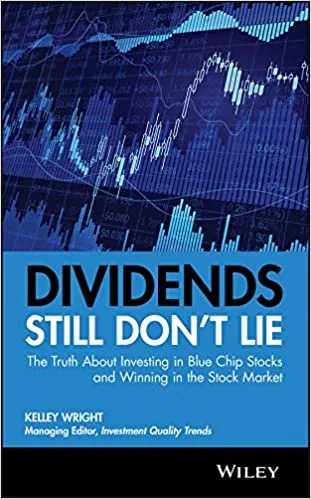
8. Dividends Still Don’t Lie: The Truth About Investing in Blue Chip Stocks And Winning in the Stock Market

To buy this book: Click Here

To Download the PDF: Click Here

In 1988, Geraldine Weiss released Dividends Don’t Lie. Weiss developed and presently serves as editor of the highly regarded newsletter Investment Quality Trends, which was characterised in that book as being based on the dividend-value hypothesis. More than 20 years later, the financial sector has undergone tremendous transformation as a result of the development of the Internet and computer technology. Massive volumes of data and information may now be instantly gathered, analysed, and reviewed.

What used to take weeks or months at a library may now be completed in a single evening with a computer. The dividend-value approach has a track record of reliably producing returns in the stock market. Investors who recognise and recognise good value continue to be rewarded by the stock market.

9. 5 Moving Averages Signals That Beat buy and hold

To buy this book: Click Here

To Download the PDF: Click Here

Learn five trading tactics that are more successful than buy-and-hold investments. Steve walks you through the results of 16 years of backtesting on some of the most well-known moving average signals to help you understand when to enter and exit trades as well as how to use backtesting to your advantage.

Conclusion

The stock market is not merely a topic for academic research or novels. These modern and older publications, however, are excellent for learning new subjects. We nevertheless advise you to practise what you learn. a list of  courses we provide is provided below.

FOR MORE INFO CLICK THIS SITE:https://learningsharks.in/

FOLLOW OUR PAGE:https://www.instagram.com/learningsharks/?hl=en

The Benefits of Exchange-Traded Funds (ETFs)

ETFs are bought and sold like stocks, providing investors with greater flexibility and transparency in their investment decisions.
Exchange Traded funds

Introduction

Welcome to our thorough explanation to exchange-traded funds’ (ETFs’) benefits. In this post, we’ll examine the many advantages that ETFs offer to investors, from tax reduction to diversification. Whether you are an experienced investor or a novice, knowing the advantages of ETFs can be essential to making wise financial decisions. Let’s get going!

Tax Effectiveness

Tax efficiency is one of the main advantages of investing in ETFs. ETFs are created so that investors can reduce their tax obligations. ETFs have a unique formation and redemption process that minimises taxable events, in contrast to mutual funds, which commonly generate capital gains taxes by buying and selling shares. ETFs are a suitable option for long-term investors because of their structure, which allows investors to delay financial gains until they sell their shares.

Diversification

Investors can easily and effectively diversify their investment portfolios with the help of ETFs. By purchasing an ETF, investors can obtain exposure to a variety of products, such as stocks, bonds, commodities, or even entire market indices. By dividing assets over a variety of asset classes, diversification lowers risk. Additionally, ETFs give investors access to a variety of domestic and foreign markets, enabling them to take advantage of international opportunities.

Flexibility in trading and liquidity

ETFs offer investors tremendous liquidity and trading flexibility because they are traded on significant stock exchanges. ETFs can be purchased and sold at market prices all day long, as opposed to conventional mutual funds, which are only priced and transacted at the close of each trading day. With the help of this feature, investors can take advantage of intraday trading possibilities and react rapidly to market changes. Additionally, the ability to trade ETFs on international exchanges exposes investors to a wider range of markets and increases their trading alternatives.

Transparency

ETFs’ transparency is a key component. Investors can accurately identify the assets they possess because the underlying holdings of an ETF are revealed each day. Investors can base their judgements on the composition of the ETF and its compatibility with their investment goals thanks to this level of openness. Additionally, compared to other investment vehicles, ETFs generally have low expense ratios, making them a less expensive investing option.

Flexible Investment Techniques

ETFs provide investors a selection of investment methods to match their unique preferences and objectives. There is almost certainly an ETF available that matches your investing plan if you want to increase your exposure to a certain industry, asset class, or investment theme. Investors have access to a variety of ETFs, including broad market ETFs, sector-specific ETFs, bond ETFs, and even thematic ETFs that concentrate on particular industries like renewable energy or technology. Investors can adjust their portfolios in accordance with their risk appetite and financial objectives thanks to this flexibility.

Cost-Effectiveness

ETFs clearly outperform many other investment options in terms of cost-effectiveness. Since ETF fee ratios are often lower than mutual fund expense ratios, investors can keep more of their profits. Investors can also avoid some of the expenses related to conventional mutual funds, such as sales loads and redemption fees, because ETFs are exchanged on exchanges. ETFs are appealing to both individual and institutional investors because of these cost benefits.

Conclusion

ETFs (Exchange-Traded Funds) are a beneficial addition to any investing portfolio since they provide a number of benefits to investors. ETFs offer a range of benefits, from tax efficiency and diversification to liquidity and transparency, that can enhance investing performance. The adaptability and affordability of ETFs contribute to their acceptance. ETFs can be included into your investment strategy to help you reach your financial goals, regardless of your level of experience. Conduct in-depth research and speak with a financial expert to decide the best course of action for your particular situation. In order to unlock the potential for better investment success, start your exploration of the world of ETFs.

FOR MORE INFO CLICK THIS SITE:https://learningsharks.in/

FOLLOW OUR PAGE:https://www.instagram.com/learningsharks/?hl=en

Top 10 Rules for Successful Trading?

Anyone looking to start trading stocks profitably only needs to spend a short amount of time online to get suggestions like “plan your trade; trade your plan” and “keep your losses to a minimum.” To novice traders, these snippets seem more like a diversion than useful guidance.

The tips provided below work together to increase your chances of making money in trading.

KEY LESSONS

  • Trade professionally, not as a hobby or a job.
  • Think about your possibilities and continue to learn.
  • Set attainable objectives for your business.

Rule 1: Always implement a trading strategy

The conditions for each purchase’s entry, exit, and money management are laid down in a series of rules called a trading strategy.

Before risking real money, test a trading idea with the technology of today. You can use previous data to perform a backtest, which allows you to determine whether your trade concept is viable. Once a strategy is created and backtesting shows promising results, it can be used in live trading.

Rule 2: Conduct business-like trading.

If you want to be successful, you must approach trading as a full- or part-time business, not as a hobby or a job.

Learning isn’t actually prioritised if it’s considered as a pastime. Lack of a steady wage when working might be annoying.

Due to the fact that trading is a business, it involves expenses, losses, taxes, uncertainty, stress, and risk. To maximise the potential of your firm as a trader, you must do research and create a plan.

Rule 3: Take Full Advantage of Technology

Trading is a competitive field. It’s acceptable to presume that the party on the other side of a deal is making the best use of all currently available technologies.

Thanks to charting software, traders may monitor and examine markets in a wide variety of ways. Backtesting a notion using previous data helps to steer clear of costly errors. Thanks to smartphone market updates, we are able to track trades from anywhere. A quick internet connection, for example, is a piece of everyday technology that might enhance trading success.

Using technology to your advantage and keeping up of new products can be fun and profitable in trading.

Rule 4: Safeguard your trading funds

To amass enough money to establish a trading account, it requires time and work. It can be more difficult if you have to repeat the process.

It’s important to realise that protecting your trading cash doesn’t mean you’ll never lose a trade. Every trader has experienced a loss. Capital protection must include both avoiding unnecessary risks and doing everything you can to maintain your trading operation profitable.

Rule 5: Learn about the markets.

To amass enough money to establish a trading account, it requires time and work. It can be more difficult if you have to repeat the process.

It’s important to realise that protecting your trading cash doesn’t mean you’ll never lose a trade. Every trader has experienced a loss. Capital protection must include both avoiding unnecessary risks and doing everything you can to maintain your trading operation profitable.

Rule 6: Don’t take risks until you can afford to lose them.

Before using real money, make sure the funds in that trading account are refundable. If it isn’t, the trader should keep saving until it is.

Money from a trading account shouldn’t be used to cover the mortgage or tuition expenses. Never should traders allow themselves to think that these other substantial liabilities are only a source of credit.

Even financial failure can be unpleasant. Even more so if the money in question was cash that never should have been at danger in the first place.

Establish a Methodology Based on Facts, Rule 7

Spending the time to develop a reliable trading system is worthwhile. The “so easy it’s like printing money” argument may entice you to fall for one of the trading scams that are extensively disseminated online. But rather of relying on emotion or hope, a trading strategy should be developed utilising facts.

The wealth of knowledge available online is often easier to navigate for traders who are less keen to learn. Before you were qualified to apply for jobs in the new profession, you had to finish at least one or two years of college or university study if you wanted to start a new career.

Rule 8: Constantly employ stop losses

The utmost risk a trader is prepared to assume on each transaction is expressed as a stop loss. The stop loss, which can be stated as a percentage or a monetary sum, restricts the trader’s exposure during a transaction. Using a stop loss helps lessen some of the tension related to trading because we know we can only lose X amount on any one trade.

Even if the transaction is lucrative, failing to use a stop loss is bad practise. As long as it follows the guidelines of the trading plan, using a stop loss to exit a lost trade is still good trading.

Rule 9: Recognise When to End Trading

Two reasons to abandon trading are an ineffective trading strategy and an ineffective trader.

A trading technique that is ineffective causes greater losses than anticipated in historical testing. That happens. It’s possible that the markets have altered or that the volatility has diminished. For whatever reason, the trading technique is simply not performing as anticipated.

Maintain your composure and lack of emotion. The trading strategy needs to be reviewed, and either a new one should be started or some alterations made.

An issue that needs to be resolved is a subpar trading technique. As a result, the trading sector need not disappear.

Rule 10: Maintain Perspective When Trading

Always consider the big picture when trading. A losing deal shouldn’t surprise us; it happens in trading. Only the first step can lead to a successful business. A successful commerce. What counts most are the long-term gains.

Once a trader accepts wins and losses as a natural part of the trading process, emotions have less of an effect on their performance. The reality is that a lost trade is always just around the corner. This is not to argue that we can’t get fired up when a deal is especially profitable.

Setting reasonable goals is necessary to keep trading in perspective. In a fair amount of time, your business ought to produce a respectable return.

FOR MORE INFO CLICK THIS SITE:https://learningsharks.in/

FOLLOW OUR PAGE:https://www.instagram.com/learningsharks/?hl=en