
Learning sharks-Share Market Institute


Rajouri Garden  8595071711 7982037049  Noida 8920210950 , and  Paschim Vihar  7827445731  

Fee revision notice effective 1st Jan 2026; No change for students enrolled before 15th Jan 2026

Download “Key features of Budget 2024-2025here

8 important financial ratios to know when analyzing a stock

Individual stocks can be a profitable choice for investors who want to diversify their investments beyond diversified mutual funds or ETFs. However, you must learn how to evaluate the underlying businesses of individual stocks before you begin buying them.

The Securities and Exchange Commission filings of a company are a good place to start. A lot of information, including financial statements for the most recent year, will be available from these filings. Financial ratios can then be calculated to help you better understand the company and potential future direction of the stock price.

Here are some key ratios to know when looking at a stock.

1. Earnings per share (EPS)

One of the most popular ratios in use in the financial industry is earnings per share, or EPS. This figure reveals the profit generated by a company for each share of stock that is currently outstanding. A company’s net income is divided by the total number of outstanding shares to arrive at its earnings per share (EPS).

For stock investors, understanding this ratio’s limits is just as important as knowing it. The various accounting procedures that can affect net income and earnings per share are largely under the control of executives. Don’t just accept EPS at face value; ensure that you are aware of the methodology used to determine earnings.

2. Price/earnings ratio (P/E)

One of the most popular ratios in use in the financial industry is earnings per share, or EPS. This figure reveals the profit generated by a company for each share of stock that is currently outstanding. A company’s net income is divided by the total number of outstanding shares to arrive at its earnings per share (EPS).

For stock investors, understanding this ratio’s limits is just as important as knowing it. The various accounting procedures that can affect net income and earnings per share are largely under the control of executives. Don’t just accept EPS at face value; ensure that you are aware of the methodology used to determine earnings.

Both trailing earnings, or earnings that have already been earned, and forward earnings, which are estimates of potential future earnings for the company, can be used to calculate P/E ratios. Comparing the forward P/E ratio to historical earnings, which can lead to an elevated ratio for fast-growing companies, may be more helpful. However, keep in mind that projections are not always accurate, and many stocks of businesses that were once regarded as fast-growers suffered when that growth did not occur.

To determine an earnings yield, the P/E ratio can also be reversed. Investors can easily compare the yield to other investment opportunities by dividing earnings per share by the stock price.

3. Return on equity (ROE)

The return a company makes on the capital of its shareholders, or return on equity, is one of the most crucial ratios to comprehend. It serves as a gauge of a company’s efficiency in generating profit for its shareholders. If two businesses were to earn $1 million this year, but one would have needed to invest $10 million while the other only needed $5 million, it would be obvious that the second business had a better year.

Dividend on equity is calculated by dividing net income by shareholder equity in its most basic form. In general, a company’s underlying business is better if its return on equity is higher. However, these high returns often draw other businesses that also want to earn high returns, which could result in more competition. Almost always, more competition is bad for a company and can cause once-high returns on equity to drop to more typical levels.

4. Debt-to-capital ratio

You should monitor a company’s profitability in addition to learning how it is financed and whether it can support the levels of debt it is carrying. The debt-to-capital ratio, which adds short- and long-term debt and divides it by the company’s total capital, is one way to look at this. The higher the ratio, the more indebted a company is. Debt-to-capital ratios above 40% typically call for a closer examination to ensure the company can manage the debt load.

The kind of financing a company chooses will depend on the specifics of that business. Less debt financing should be used by companies with more cyclical business models to reduce the risk of defaults during economic downturns, when sales and profits are typically lower. On the other hand, companies that consistently perform well can frequently support higher levels of debt due to their more predictable nature.

5. Interest coverage ratio (ICR)

Another useful metric for determining whether a business can support its level of debt is the interest coverage ratio. Earnings before interest and taxes, or EBIT, can be divided by interest expense to determine interest coverage. This figure indicates how much of the interest payments due to bondholders are covered by earnings. The company has more coverage for its debt payments the higher the ratio.

But keep in mind that income fluctuates over time. Due to its high earnings, a cyclical company operating close to its peak might exhibit strong interest coverage, but this can disappear when earnings decline. Make sure a business can fulfill its obligations in a range of economic climates.

6. Enterprise value to EBIT

The enterprise value to EBIT ratio can be thought of as an improved P/E ratio. Both ratios allow investors to gauge how much value they are receiving in relation to the price they are paying. However, by using enterprise value rather than share price, we are able to account for any debt financing that the company may have used. This is how it goes.

The total value of all a company’s outstanding shares, known as its market capitalization, is added to its interest-bearing debt, net of cash, to determine its enterprise value. EBIT also makes it simpler to compare a company’s actual operating earnings to those of other businesses, which may have different tax rates or debt loads.

7. Operating margin

The profitability of a company’s core operations can be determined by looking at its operating margin. The amount of income produced by each dollar of sales is calculated by dividing operating profit by total revenues.

Revenue is divided by sales costs and all other operating expenses, including labor and marketing costs, to arrive at operating income. You can compare your company to others’ without having to account for variations in tax rates or debt financing by computing your operating margin.

8. Quick ratio

The quick ratio, also referred to as the “acid test,” evaluates a company’s ability to pay short-term obligations with assets that can be quickly converted into cash. The ratio is helpful for analyzing businesses in tough financial situations or in recessionary periods when profits might be scarce.

The ratio multiplies a company’s current liabilities by the sum of its cash, marketable securities, and accounts receivable. The most recent balance sheet for the company contains all of these numbers. Inventory is crucially left off the list of assets because it cannot be trusted to convert quickly to cash.

FOR MORE INFO CLICK THIS SITE:https://learningsharks.in/

FOLLOW OUR PAGE:https://www.instagram.com/learningsharks/?hl=en

Wonderla Holidays shares hit all-time high as board;

Compared to its previous BSE closing price of Rs 593.15, Wonderla Holidays shares soared 6.81% to Rs 633.55. Today’s stock price entry was higher at Rs 604.

Shares of Wonderla Holidays Ltd rose to their all-time high today after the board of the amusement park firm declared final dividend of Rs 2.50/- (25%) per equity share having nominal value of Rs 10/- each for the financial year ended 2023.
Today’s opening price for Wonderla Holidays shares was Rs 604. The stock has increased 166.13% in a year and 78.27% since the start of current year.

INTRODUCTION

After the board of the amusement park company declared a final dividend of Rs 2.50/- (25%) per equity share with a nominal value of Rs 10/- each for the financial year ending 2023, shares of Wonderla Holidays Ltd.

  • Compared to its previous BSE closing price of Rs 593.15, Wonderla Holidays shares soared 6.81% to Rs 633.55. Today’s opening price for the stock was Rs 604.
  • The stock has increased 166.13% in a year and 78.27% since the start of current year. Later, the stock’s BSE closing price was 5.2% higher at Rs 624.
  • Technically speaking, Wonderla Holidays’ relative strength index (RSI) is 67.4, indicating that the stock is neither overbought nor oversold at this time.
  • The share price of Wonderla Holidays is above the 5-day, 20-day, 50-day, 100-day, and 200-day moving averages.

A total of 0.34 lakh shares of the company were traded, resulting in a turnover on the BSE of Rs 2.10 crore. Wonderla Holidays’ market value increased to Rs. 3534.70 billion. On July 27, 2022, the stock decreased to a 52-week low of Rs 226.20.

The company Wonderla Holidays operates resorts and amusement parks. Amusement park, resort, and other business segments make up the corporation. Sales of goods, prepared food, packaged foods, and other items are all included in the category for others.

Under the Wonderla brand, the corporation runs roughly three amusement parks in Kochi, Bangalore, and Hyderabad. Over 61 exhilarating rides at Wonderla Bangalore, which occupies an area of almost 80 acres, provide amusement and excitement for people of all ages.

CONCLUSION

FOR MORE INFO CLICK THIS SITE:https://learningsharks.in/

FOLLOW OUR PAGE:https://www.instagram.com/learningsharks/?hl=en

Marico shares gain on Satiya Nutraceuticals’ acquisition;

Compared to its previous finish of Rs. 532.50 on the BSE, Marico shares increased 2.46% to Rs. 545.60.

Compared to the 5-day, 20-day, 50-day, 100-day, and 200-day moving averages, Marico shares are currently trading higher.

Shares of Marico Ltd rose more than 2% today after the FMCG giant announced it has signed agreements to buy up to 58% of Satiya Nutraceuticals Private Limited’s paid-up share capital on a fully diluted basis.

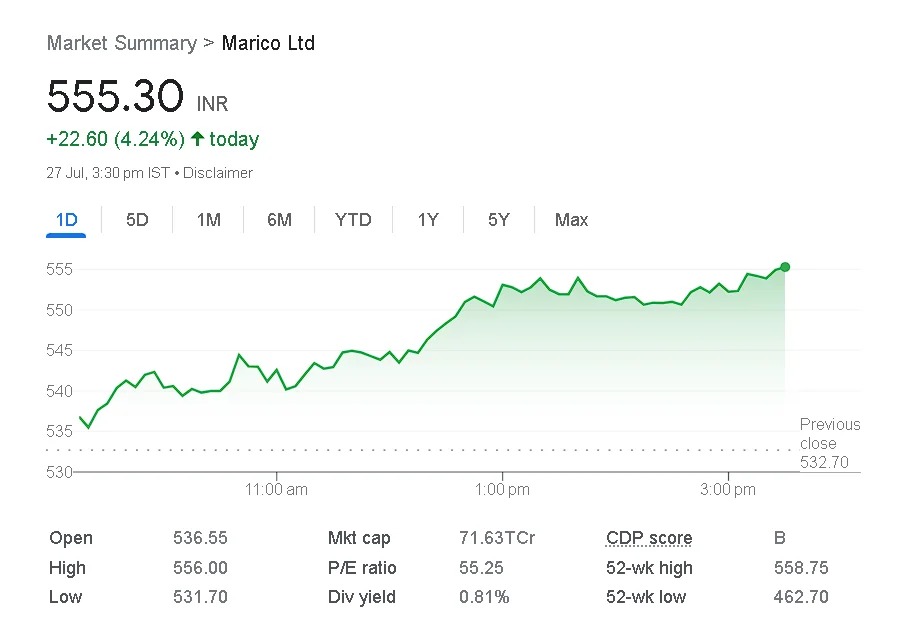
  • Compared to its previous finish of Rs. 532.50 on the BSE, Marico shares increased 2.46% to Rs. 545.60. The large cap stock has increased 7.52% since the start of this year and 5.71% over the past year.
  • The company’s market value increased to Rs 70,432 crore on the BSE. On April 20, 2023, the stock hit a 52-week low of Rs. 462.95 and on June 1, 2023, it reached a 52-week high of Rs. 559.
  • A total of 0.24 lakh shares were traded, totaling Rs. 1.27 crore in turnover. The price of Marico shares is currently above the 5-day, 20-day, 50-day, 100-day, and 200-day moving averages.

Satiya Nutraceuticals, with its headquarters in Mumbai, is the owner of “The Plant Fix- Plix,” a well-known plant-based nutrition brand with a significant market share in the quickly expanding health & wellness sector, according to a regulatory filing by Marico.

For Rs 369 crore, Marico will purchase the company’s majority interest. In addition, Marico intends to purchase a further 22.5 percent of Satiya Nutraceuticals, which will be done in a single or several installments by May 2025.

The brokerage claimed that Marico will meet its FY24 sales target of Rs 400 crore with the aid of the Plix brand.

“The acquisition will help Marico expand into value-added wellness and nutrition portfolio and has a target of scaling up its foods, digital-first, and personal care portfolios,” stated Morgan Stanley.

CONCLUSION

FOR MORE INFO CLICK THIS SITE:https://learningsharks.in/

FOLLOW OUR PAGE:https://www.instagram.com/learningsharks/?hl=en

Understanding the Retail Investor: A Comprehensive Guide

Introduction

We will delve into the world of retail investors and examine their function in the financial markets in this extensive guide. We want to give you the most thorough and pertinent information possible to help you outrank rival websites and rank highly on Google. We are a leading authority in SEO and high-end copywriting.

What is a Retail Investor?

An individual who trades securities for their own account rather than on behalf of a company or institution is referred to as a retail investor, also known as an individual investor or small investor. These investors use their own money to trade on the financial markets, and their investment choices are influenced by their own financial objectives, risk tolerance, and market outlook.

KEY TAKEAWAYS

  • Non-professional market participants known as retail investors typically make smaller investments than larger, institutional investors.
  • Although some online brokers offer no-fee trading, retail investors may pay higher fees and commissions due to their smaller trade sizes.
  • The retail investment market is huge because it encompasses robo-advisors, brokerage houses, online trading, and retirement accounts.

Characteristics of Retail Investors

Retail investors have distinct characteristics that set them apart from institutional investors:

  1. Limited Capital: Retail investors typically have less capital to invest in the financial markets than large institutions. This restriction may have an impact on their risk tolerance and investment strategies.
  2. Emotional Decision-Making: Retail investors are more likely to react emotionally to market fluctuations, which can result in impulsive actions.
  3. Long-Term Focus: Many retail investors aim to steadily increase their wealth over time and have a long-term investment horizon..
  4. Diverse Investment Choices: A wide variety of investment options are available to retail investors, including stocks, bonds, mutual funds, exchange-traded funds (ETFs), and more.
  5. Financial Education: In order to make wise decisions, retail investors frequently try to educate themselves about investing.

How Retail Investors Get Started

Retail investors typically follow a systematic approach to get started with investing:

  1. Setting Financial Goals: They specify their financial objectives, such as saving for retirement, making a large purchase, or paying for their children’s education.
  2. Risk Assessment: By taking into account variables like age, income, and investment experience, they evaluate their risk tolerance.
  3. Diversification: Retail investors are aware of the value of diversification in distributing risk among various asset classes.
  4. Choosing Investments: They choose appropriate investments from a variety of financial instruments available depending on their objectives and risk tolerance.

Retail Investor Strategies

Retail investors adopt various strategies to achieve their financial objectives:

  1. Buy and Hold: In order for investments to potentially increase in value over time, this strategy calls for purchasing them and holding onto them for a considerable amount of time.
  2. Value Investing: Retail investors might look for undervalued assets in the hopes that the market will eventually recognize their true value.
  3. Dividend Investing: In an effort to create a consistent income stream, some retail investors concentrate on stocks that pay dividends.
  4. Growth Investing: Even if a company’s current valuation appears to be high, this strategy entails investing in businesses with strong growth potential.
  5. Index Fund Investing: Low-cost index funds that offer diversification and simplicity by following the performance of a particular market index are preferred by many retail investors.

Risks and Challenges Faced by Retail Investors

While retail investing can be rewarding, it also comes with certain risks and challenges:

  1. Market Volatility: Significant market fluctuations may affect the value of retail investors’ investments.
  2. Lack of Professional Guidance: Retail investors frequently do not have access to expert financial advice, in contrast to institutional investors.
  3. Overtrading: Making decisions out of emotion can result in overtrading, which can result in high transaction costs and possible losses.
  4. Market Manipulation: Market manipulation and false information may affect retail investors.

The Role of Technology in Retail Investing

Advancements in technology have revolutionized retail investing:

  1. Online Trading Platforms: Through user-friendly online platforms, retail investors can now easily trade and manage their investments.
  2. Robo-Advisors: Robotic advisors, also known as automated investment platforms, provide algorithm-driven investment recommendations based on a person’s financial objectives and risk tolerance.
  3. Educational Resources: Retail investors have access to a wealth of educational resources on the internet to advance their financial literacy.

Conclusion

In conclusion, retail investors are essential to the functioning of the financial markets, and successful SEO and premium copywriting depend on an understanding of their traits, tactics, and difficulties. We want to assist you in outranking rival websites on Google by providing a thorough guide to retail investing. This will give readers insightful information and establish your authority in the finance industry.

FOR MORE INFO CLICK THIS SITE:https://learningsharks.in/

FOLLOW OUR PAGE:https://www.instagram.com/learningsharks/?hl=en
Comprehensive Guide to Mastering Stock Trading

Introduction

Welcome to our thorough guide to mastering stock trading, where you will find all the information and tactics you need to succeed in the world of financial markets. Although it requires a thorough understanding of market dynamics, analysis, and risk management, stock trading can be both exciting and rewarding. Everything from the fundamentals of stock trading to sophisticated strategies that will enable you to reach your financial objectives will be covered in this manual.

Chapter 1: Understanding the Stock Market

It’s imperative to understand the basics of the stock market before venturing into the world of stock trading. We’ll describe stocks and how they work in this chapter. We’ll delve into the idea of market capitalization and examine the various stock types, such as common and preferred shares. Being a successful trader begins with understanding the workings of the stock market.

Chapter 2: Building a Strong Foundation – Stock Trading Principles

You need a strong foundation of guiding principles if you want to succeed in stock trading. In this chapter, we’ll go over important stock trading concepts like “Buy Low, Sell High,” “Diversification,” and “Emotional Discipline.” For long-term market success, it is essential to learn how to control your emotions and adhere to a clearly defined strategy.

Chapter 3: Conducting In-Depth Stock Research

Profitable stock research is the foundation of successful trading. We’ll give you the tools you need in this chapter to conduct in-depth research on potential stocks. We’ll talk about various fundamental and technical analysis tools as well as financial statement interpretation. We’ll also talk about how important market and industry trends are for making wise investment decisions.

Chapter 4: Different Trading Strategies

There are numerous stock trading strategies available, each of which caters to various levels of risk tolerance and investment objectives. We’ll look at well-liked tactics like day trading, swing trading, and long-term investing in this chapter. We’ll go over the advantages and disadvantages of each strategy so you can choose the one that best fits your financial goals.

Chapter 5: Risk Management and Mitigation

Risks are inherent in all investments, and stock trading is no different. To protect your capital, it is essential to recognize and manage risks. This chapter will instruct you on how to manage risk, including how to calculate position sizes, set stop-loss orders, and use risk-reward ratios. You can safeguard your investments and continue to trade sustainably by using effective risk mitigation.

Chapter 6: The Role of Psychology in Stock Trading

Decision-making and overall success in trading are significantly influenced by the psychological aspect of trading. We’ll look at typical behavioral biases that affect traders in this chapter, along with solutions. Successful stock traders must have a strong grasp of emotional restraint and practice discipline.

Chapter 7: Best Tools and Platforms for Trading

Different tools and platforms are available to traders of all experience levels in the digital age. You will learn about some of the top trading platforms, charting programs, and analysis tools in this chapter. The right technology at your disposal can increase your trading productivity and give you a competitive advantage.

Chapter 8: Legal and Tax Implications of Stock Trading

Understanding the legal and tax ramifications of stock trading is essential for being a responsible trader. We’ll talk about tax laws governing capital gains, dividends, and other investment income in this chapter. Additionally, we’ll highlight crucial legal points to make sure your business practices comply with the law.

FOR MORE INFO CLICK THIS SITE:https://learningsharks.in/

FOLLOW OUR PAGE:https://www.instagram.com/learningsharks/?hl=en

Understanding Stock Quotes: A Comprehensive Guide

Introduction

Welcome to our comprehensive guide on stock quotes. In this article, we will delve into the world of stock quotes, providing you with an in-depth understanding of what they are, how they work, and their significance in the financial markets. Whether you are a seasoned investor or a newcomer to the stock market, this guide will equip you with the knowledge needed to make informed decisions and navigate the complexities of stock quotes effectively.

What are Stock Quotes?

The current prices of individual stocks traded on different stock exchanges are referred to as stock quotes, also known as stock prices or share prices. They show the price at which a specific stock can be purchased or sold at a particular moment in time. Throughout the trading day, stock quotes are dynamic and change frequently, reflecting the supply and demand for the stock in the market.

KEY TAKEAWAYS

  • The price of a stock as it is expressed in decimals on an exchange is known as a stock quote.
  • A stock quote typically includes additional information, such as the high and low prices for a particular security over the course of a day or the change in value.
  • A stock quote’s price reflects the buying and selling activity that affects the value of a particular security.

The Anatomy of a Stock Quote

A typical stock quote includes a number of essential elements that give important details about the stock. Let’s examine each component of a stock quote in more detail:

  1. Ticker Symbol: A short string of letters designating the stock of a particular company. As an illustration, “AAPL” stands for Apple Inc.
  2. Company Name: The name of the business, like “Apple Inc.”, whose stock is being quoted.
  3. Stock Exchange: The market where the stock is traded, such as the NASDAQ or the New York Stock Exchange (NYSE).
  4. Current Stock Price: The stock’s most recent trading price, which changes throughout the trading day.
  5. Change: The difference between a stock’s current price and closing price on a previous day.
  6. Percentage Change: The ratio of the current stock price to its closing price on the previous day.
  7. Day’s Range: The price range that the stock has been trading in during the current trading day.
  8. 52-Week Range: The stock’s highest and lowest price points over the previous 52 weeks of trading.
  9. Market Cap: The total market value of all outstanding shares of company stock, which reveals the size of the business overall.

How are Stock Quotes Calculated?

The interaction of buyers and sellers in the market affects stock quotes. A transaction takes place and the stock quote is updated when a buyer is willing to buy a stock at a specific price and a seller is willing to sell at that price. The stock price fluctuates in real-time due to the ongoing buying and selling activity in the market.

Importance of Stock Quotes

Stock quotes play a pivotal role in the financial markets for several reasons:

1. Investment Decisions

Stock quotes are used by investors to make well-informed investment choices. Investors can determine whether a stock fits with their investment objectives and risk tolerance by examining the stock’s current price and historical trends.

2. Portfolio Monitoring

Stock quotes assist current investors in keeping track of the performance of their investment portfolio. Stock price fluctuations offer information about the overall health of the investments.

3. Market Analysis

Stock quotes are a key resource for financial analysts and researchers who study market trends, company performance, and broader economic indicators.

4. Indicator of Economic Health

Stock price fluctuations can act as a gauge for the state of the economy as a whole. While declining prices might indicate economic difficulties, rising stock prices might indicate economic expansion.

Interpreting Stock Quotes: Tips and Strategies

For novices, understanding stock quotes can be intimidating. The following advice will help you effectively interpret stock quotes:

1. Stay Informed

Keep up with market and financial news to make informed decisions based on current information.

2. Consider the Big Picture

To avoid making rash decisions, consider stock quotes in the context of larger market trends and the company’s performance.

3. Historical Performance

Examine the stock’s past performance to find patterns and trends that could affect its future course.

4. Diversification

To reduce the risks brought on by sporadic changes in the price of individual stocks, diversify your investment portfolio.

5. Consult a Financial Advisor

If you need help interpreting stock quotes, consult a licensed financial advisor who can offer you specialized guidance.

Conclusion

In conclusion, stock quotes are essential resources for both investors and financial experts. Investors can make wise decisions thanks to their real-time insights into the volatile stock market. You can navigate the stock market with confidence and work toward achieving your financial goals by comprehending the elements of stock quotes and using wise investment strategies.

FOR MORE INFO CLICK THIS SITE:https://learningsharks.in/

FOLLOW OUR PAGE:https://www.instagram.com/learningsharks/?hl=en

MSTC shares up 62% in 4 months; experts see further;

According to its FY22 annual report, it stands to gain from the government’s policy on vehicle scrapping.

“The ongoing trend will remain intact as long as MSTC manages to stay above Rs 385.
Shares of small-cap PSU MSTC jump 62% in 4 months, and experts see more room for growth

INTRODUCTION

A rapid increase in the local equities market has created a buzz on Dalal Street for the small-cap public sector undertaking (PSU), MSTC Ltd.

  • The company is positioned to gain from the vehicle scrapping program, according to a review of the annual report for FY22.
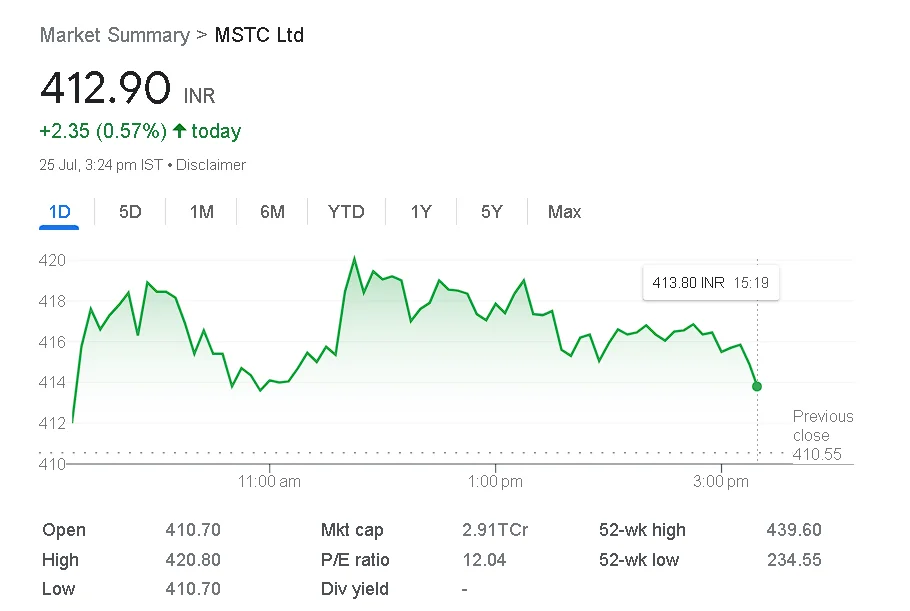
  • The company reported a roughly 22% increase in consolidated net profit for the fiscal year that ended in March 2023, coming in at Rs 241.96 crore.
  • On the other side, MSTC’s combined total sales fell by around 18% YoY to Rs 720.97 crore.

“MSTC is making a rounding formation on the long-term chart with a major breakout above the Rs 380 levels,” said Nirav Chheda, Senior Technical Analyst at Nirmal Bang Securities.

The operating performance of the business has been increasing, according to Kranthi Bathini, Equity Strategist at WealthMills Securities.

Through its joint venture, Mahindra MSTC Recycling Private Limited (MMRPL) with Mahindra Intertrade Ltd, it has also established India’s first authorized collection and dismantling center at Greater Noida for the scientific recycling of end-of-life vehicles (ELV) and white goods.

CONCLUSION

FOR MORE INFO CLICK THIS SITE:https://learningsharks.in/

FOLLOW OUR PAGE:https://www.instagram.com/learningsharks/?hl=en

Online Trading in India

India’s online trading is about to undergo a revolution. Online stock trading is about to undergo a transformation powered by cutting-edge technology. You can now invest in any asset class with a click, whether you’ve been investing for a while or are just a casual trader.

What is Online Trading?

Online trading is the practice of purchasing and reselling financial instruments or instruments over a networked computer. It enables individual traders and investors to engage in financial market activity without being present in person at a conventional brick-and-mortar trading location.

How to Start Online Trading in India?

Listed below are the simple 4 steps to start online trading and begin with your investment journey in stock market –

  • A) Selecting a stock broker – A stock broker is a participant in a depository who mediates transactions between investors and stock exchanges. In order to use online trading platforms and store the purchased shares, a stock broker offers the ability to open a Demat and Trading Account. In India, there are two different kinds of brokers: full-service brokers and discount brokers (described below). “Brokerage charges” are the fees that brokers always impose as fees. A discount broker charges a flat fee regardless of the number of trades, while full service brokers charge fees based on the volume of trades. You must consider all applicable fees and brokerage costs when choosing a broker.
  • B) Open a Demat & Trading Account – After choosing a broker, you must open a trading account and a demat account. Each broker has a different process for opening an account. Thanks to technology, opening an online demat account is now simple and hassle-free. Once all of your information has been verified, you can activate your account in just a few hours after filling out your personal information, providing documents, and adding bank information.
  • C) Understanding Online Trading Platforms – Understanding their trading platforms comes after selecting the best broker and setting up your demat account. These days, many brokers offer a variety of trading platforms for the stock market, including downloadable software, desktop and browser-based software, mobile trading apps, etc. Go through them all and choose the one you believe is simple to use wherever you are. With features to trade in stocks, mutual funds, commodities, and currencies, 5paisa offers a fantastic mobile trading app that can be used at any time, anywhere.
  • D) Start Trading Online – You are now all set to begin trading and gain experience in online trading. You can conduct your research using these potent trading platforms and learning the fundamentals of the stock market. Examine the stocks that are trending, add them to your watchlist, and keep up with news about them. Your buy/sell orders can be placed after you’ve decided on a share.

Is it Safe to Trade Online?

Here are some safety measures to keep you safe and worry-free so that you can focus on investing in the right places:


1. Know Your Stock Broker
Make sure your online trading platform has been thoroughly researched. Do thorough research and be sure to pay attention to any warning signs before disclosing any of your personal information. The list of DEMAT account providers is available on the NSDL and CDSL websites.


2. Enter the Web Address Manually
Enter the website address of your online trading platform manually into the address bar to avoid visiting a fake or similar website made by con artists.

3. Go through the privacy policy document
The lengthy and tedious policy terms are frequently skipped by many investors. However, you can save yourself a lot of unanticipated trouble when it comes to online trading by carefully reading the privacy policy’s clauses.


4. Check for SSL Protection
The online stock trading platform is secured by a Secure Socket Layer or SSL Certification if the address bar displays a small padlock icon.

FOR MORE INFO CLICK THIS SITE:https://learningsharks.in/

FOLLOW OUR PAGE:https://www.instagram.com/learningsharks/?hl=en
Difference between Debt and Equity Market 

In the general investment environment, there are two major categories of investments: debt market and equity market. They are located at the extreme ends of a very long curve. Debts are a company’s borrowed capital, whereas equity markets are made up of a company’s owned capital. Every characteristic, including risk, returns, fundamental structure, and motivation, is different between the two. There isn’t a single investment product that fits everyone. Let’s examine each concept in more detail to see why, despite their obvious differences, they are sometimes interconnected and equally significant.

How do equity markets work?

  • Meaning of equity: Shares or stocks of companies that are listed on stock exchanges are traded in equity markets. A share of ownership in a company is represented by its stock. You share ownership of the company as shareholders. The company is owned by the shareholder who holds 50% or more of the voting stock.
  • Risk and return: Debt markets are less risky than equity markets. Shares that are listed are traded every day during market hours. Their profits are not assured. You can book profits by receiving dividends or by reselling your investment at a higher markup on the market. They are very erratic, and the numbers are determined by things like
  • demand and supply
  • company’s financial health
  • sectoral performance
  • quarterly results and more.

Returns there are also correspondingly unstable. Equities can provide returns of more than 10–12% over a period of 7–10 years if held for a longer time.

  • Research requirement: The amount of research necessary in the debt and equity markets varies slightly. An investor must be well-read and conduct extensive research before making a stock market investment. You must carefully examine the company’s financial statements, balance sheets, management, and overall financial situation.

Who can invest in equity markets? 

Here are some quick tips to help you comprehend the qualities required to invest in stock markets:

  • Higher risk profile
  • More funding to cushion against volatility
  • Perseverance to withstand market volatility and to stay invested
  • Time to research and study the companies
  • Patience for returns to rise and become stable as returns can go very high but are also volatile

How do debt markets work?

  • Meaning of debt: Debt is a type of borrowed capital, whereas equity is a type of capital that is owned. By issuing bonds or government securities, the federal or state governments raise money from the market. In actuality, the government is borrowing funds from you and will periodically reimburse you with interest. At maturity, the principal is returned. Similar to this, a business can raise capital from the market by offering debt market securities like corporate bonds. Bonds issued by businesses and governments make up the debt market.
  • Risk and returns: Debt is a type of borrowed capital, whereas equity is a type of capital that is owned. By issuing bonds or government securities, the federal or state governments raise money from the market. In actuality, the government is borrowing funds from you and will periodically reimburse you with interest. At maturity, the principal is returned. Similar to this, a business can raise capital from the market by offering debt market securities like corporate bonds. Bonds issued by businesses and governments make up the debt market.
  • Research requirement: Bonds require less research than other types of securities. There are fewer factors that influence the interest rate you receive on the money you lend out, particularly if you don’t frequently buy and sell bonds like you would with stocks.

Additionally, the government guarantees the interest rate. In the case of corporate bonds, you still need to do some basic background research on the company, but generally speaking, bonds do not call for you to be particularly optimistic.

Who can invest in debt markets?

The following are some things to consider before deciding whether or not to invest in debt markets:

  • Risk-averse investors
  • Investors looking for guaranteed returns
  • If you do not want to invest a lot of time researching
  • If you want to park your money and leave it there and not worry much about it

How are the investors prioritised in the debt and equity market?

When brought together, investors from the two markets are given varying degrees of priority and are most definitely not competing on an even playing field. One significant distinction between the debt and equity markets is that in the event of a company’s default and forced liquidation, bondholders are given priority. Creditors are paid off first in all cases of default across industries, and in this case, it is the bondholders. Owners of the business, such as shareholders, are given last priority.

Difference between equity market and debt market

Sr. No.Equity MarketDebt Market
1)MeaningEquities are owned capital.Debt is a form of borrowed capital.
2)Who can issueCompanies registered with SebiCompanies, governments
3)RiskHigh riskLow-risk because government-backed however corporate bonds are risky
4)ReturnsVolatileModerate
5)Investor statusShareholders, part owners in the companyCreditors to the company/government
6)Nature of returnDividends or profit booking while trading in the stock marketinterest paid by the bond issuer
7)RegulatorSebiRBI and Sebi in case of corporate bonds

How can you invest in the two markets?

The debt market and the equity market are similar in many ways when it comes to how you can approach these two markets. Although both of them can be approached directly or through mutual funds, there are some subtle differences that might exist.

Equity markets:

Here are two ways you can access the equity market:

  • Direct investment: By purchasing the individual stocks listed on the stock exchanges, you can invest directly in equities. With this approach, you’ll need to learn more about the specific businesses you want to invest in. Determine which sector best fits your investment style, and then choose the best-performing businesses with a promising future.
  • Mutual funds: You can invest in mutual funds, which are collective investment vehicles that pool investors’ money and invest it in stocks. You won’t be directly involved in making investments in this case. A fund manager will select the stock in which to invest. Along with any additional fees that might be assessed, you will be required to pay a fee for the fund manager’s expertise.

Debt Markets: 

Here are two ways you can invest in debt markets:

  1. Direct investment: In the case of corporate bonds, you can invest in bonds through a private placement with the company directly. For the sale of government bonds, the RBI, which is in charge of overseeing them, organizes auctions. You can take part in these auctions in one of two ways:
  2. Competitive bidding: Due to the complexity of the process, larger investors, including mutual fund companies, banks, and other commercial businesses, participate through competitive bidding.
  3. Non-competitive bidding: For individual investors like high net worth individuals (HNI), retail investors, and the like, this is a simpler process. Online platforms can be used to accomplish this. Using the NSE goBid app, the National Stock Exchange (NSE) allows smaller investors to make direct government securities investments.
  4. Mutual funds: This is a deceptive approach. Regardless of whether equity or debt funds are used, the mutual fund industry operates similarly. A fund manager will select the appropriate government securities for investment. An indirect way to maintain an investment in the debt markets is through debt or hybrid mutual funds.

FOR MORE INFO CLICK THIS SITE:https://learningsharks.in/

FOLLOW OUR PAGE:https://www.instagram.com/learningsharks/?hl=en
Profitability Ratios: Unlocking Financial Insights for Business Success

Profitability ratios assess a company's ability to earn profits from its sales or operations, balance sheet assets, or shareholders' equity.
Profitability Ratios

Introduction

Making informed decisions in the fast-paced world of finance and business requires a thorough understanding of a company’s financial performance. A firm’s ability to generate profits in relation to its costs and other costs is assessed using profitability ratios. In this extensive guide, we delve into the idea of profitability ratios, examine their significance, and offer insightful advice to support the success of businesses.

What are Profitability Ratios?

In terms of its revenue, assets, equity, and other financial factors, a company’s ability to generate profits is evaluated using profitability ratios, which are financial metrics. These ratios provide important information about a company’s overall financial efficiency and health, assisting creditors, investors, and management in making educated assessments of the company’s performance.

Types of Profitability Ratios

1. Gross Profit Margin

The percentage of revenue that is still collected after deducting the cost of goods sold (COGS) is known as the gross profit margin. This ratio, when expressed as a percentage, reveals how effectively a business can produce goods or services.

Gross Profit Margin = (Revenue – Cost of Goods Sold) / Revenue * 100

2. Net Profit Margin

The net profit margin assesses the proportion of revenue that results in net income following the deduction of all costs, including operating expenses, interest, and taxes. This ratio provides information about a company’s per-dollar sales profitability.

Net Profit Margin = (Net Income / Revenue) * 100

3. Return on Assets (ROA)

Return on Assets measures how effectively a company uses its assets to produce profits. It displays the amount of profit made for every dollar invested in assets.

ROA = Net Income / Total Assets * 100

4. Return on Equity (ROE)

Return on Equity, which considers the investments of its shareholders, quantifies a company’s profitability. It displays the amount of profit a company makes in relation to the equity staked by shareholders.

ROE = (Net Income / Average Shareholders’ Equity) * 100

The Significance of Profitability Ratios

Profitability ratios are very important to both businesses and investors as well as financial analysts. Here’s why they’re important:

1. Assessing Performance

Profitability ratios are tools for assessing a company’s long-term financial performance. These ratios’ continual improvement or decline offers information about the company’s expansion and sustainability.

2. Comparing Competitors

Businesses can compare their financial performance to that of rivals in the same industry by examining profitability ratios. For identifying strengths and weaknesses and creating competitive strategies, this information is essential.

3. Identifying Operational Inefficiencies

Profitability ratios show a company’s operational inefficiencies and problems with cost control. By identifying these issue areas, businesses are better equipped to make necessary improvements and increase overall profitability.

4. Attracting Investors

Profitability ratios are frequently used by investors to determine whether an investment in a company is viable. A company’s appeal to potential investors is increased by a proven track record of profitability.

Strategies for Improving Profitability Ratios

Businesses can take several steps to enhance their profitability ratios and drive financial success:

1. Streamline Operations

Profitability may be positively impacted by resource management and operational efficiency. Businesses can increase their gross profit margins by cutting wasteful expenses and boosting productivity.

2. Focus on Marketing and Sales

Strategic marketing and sales initiatives can help increase revenue, which will help net profit margins. In order to increase sales, it is essential to comprehend customer needs and preferences.

3. Cost Control and Budgeting

Profitability can be greatly impacted by implementing strict cost control measures and following a well-structured budget. Increased returns may result from analysis and the reduction of wasteful spending.

4. Debt Management

Responsible debt management is essential to keeping a healthy ROE. Reducing interest costs and increasing financial leverage are two benefits of finding a balance between equity and debt financing.

Conclusion

Profitability ratios are essential tools for evaluating the performance and health of a company’s finances. Businesses can pinpoint their strengths, weaknesses, and potential improvement areas by exploring these metrics. Implementing strategic measures to improve profitability ratios can help a business achieve long-term success and sustainable growth. The secret to gaining insightful understanding and achieving business prosperity in the fast-paced and cutthroat world of finance is to become an expert in these metrics.


FOR MORE INFO CLICK THIS SITE:
https://learningsharks.in/

FOLLOW OUR PAGE:https://www.instagram.com/learningsharks/?hl=en