Learning sharks-Share Market Institute


Rajouri Garden  8595071711 7982037049  Noida 8920210950 , and  Paschim Vihar  7827445731  

Fee revision notice effective 1st Jan 2026; No change for students enrolled before 15th Jan 2026

Download “Key features of Budget 2024-2025here

What is Broker and Sub-Broker in Stocks?

Brokers typically provide access to financial markets, execute trades, offer investment advice, and assist clients in making informed decisions about their investments.
Broker and Sub-Broker

A broker is a middleman in the financial system or a person who helps clients purchase and sell stocks, bonds, commodities, or currencies, among other financial products. Brokers often give clients access to financial markets, execute deals, provide investment advice, and help them make wise investment decisions. For their services, they are paid commissions or fees.

On the other side, a sub-broker is a person or organisation that works under the direction of a major or primary broker. Sub-brokers are granted permission by the primary broker to offer clients similar services including trade execution and investment advice.They serve as a middleman between clients and the primary broker and are compensated with a percentage of the commissions or fees from the trades they facilitate.

In essence, sub-brokers work as an extension of a primary broker’s services, operating under the supervision and approval of the broker while both brokers and sub-brokers play a part in linking investors to financial markets.

How Does It Work In Stock Market?

Brokers and sub-brokers are essential in the stock market because they help investors purchase and sell stocks (shares of ownership in corporations). Their functions are as follows:

  • Investor Account Setup: Before trading stocks, a person or organisation is required to open a trading account with a broker. Giving the required identification and financial information falls under this.
  • Order Entry: Investors use their broker to enter orders when they wish to purchase or sell stocks. This order contains information on the stock, quantity, and price at which the deal is to be executed.
  • Order transmission: After receiving an investor’s order, the broker sends it to the appropriate stock exchange, where the investor’s stock is listed. On stock exchanges, buyers and sellers can connect to trade equities.
  • Trade execution: When a buyer or seller of a stock places an order with the stock exchange, that order is matched with a comparable order from another investor or trader. The parties exchange ownership of the stock at the agreed-upon price and complete the transaction.
  • Confirmation and Settlement: The stock exchange certifies the transaction when the trade is completed. The broker adds the purchased or sold equities to the investor’s account. The settlement process is this one.
  • Sub-Brokers’ Role: Brokers occasionally have sub-Brokers reporting to them. Sub-brokers help set up accounts, place orders, and execute trades on behalf of their own clients. They function within the confines of the primary broker’s oversight and legal framework.
  • Brokers and sub-brokers receive commissions or fees in exchange for their services. It could be a set fee or a percentage of the trade value. Usually, the investor’s account is deducted in order to pay the fees.
  • Research and Advice: To assist investors in making wise decisions, brokers and sub-brokers may also offer research, market analysis, and investment advice. They might provide perceptions into stock performance, market trends, and possible investment possibilities.

The stock market functions inside a regulated framework to guarantee fairness, transparency, and investor protection, which is a crucial point to remember. By providing investors with opportunities to efficiently buy and sell stocks, brokers and sub-brokers play a crucial part in preserving the market’s functionality.

Advantages and DisAdvantages of Broker and Sub-Broker?

Advantages of Broker

  1. Brokers frequently have a wealth of knowledge and experience in the financial markets. They can help consumers make informed decisions and offer helpful investing advice.
  2. Market Access: Brokers give their clients access to many different financial markets and products, such as stocks, bonds, commodities, and more.
  3. Research and Analysis: To help clients make wise investing decisions, several brokers provide research reports, market analysis, and insights.
  4. Diversification: By distributing risk among various assets, brokers can assist customers in creating diverse investment portfolios.
  5. Efficiency: Brokers take care of account administration, transaction execution, and administrative responsibilities, saving clients’ time and energy.
  6. Regulatory Compliance: Reputable brokers follow regulations, giving clients’ investments a measure of security and accountability.

DisAdvantages of Broker

  1. Costs: Commissions, fees, and spreads are assessed by brokers on trades, which can reduce an investor’s profits.
  2. Conflicts of Interest: Brokers who promote certain goods and receive larger commissions may have conflicts of interest.
  3. Lack of Control: When investors give brokers decision-making authority, they may lose control of their money.
  4. Brokers may prioritise high-volume trading in order to earn higher fees, which could result in excessive trading.
  5. Depending on a broker’s timing for the market could lead to lost opportunities or poor market entry/exit points.

Advantages of Sub-Broker

  1. Local Presence: Clients looking for localised insights might benefit from sub-brokers’ frequent strong local presence and awareness of regional markets.
  2. Personalised Attention: Sub-brokers can provide more individualised care and cater their services to specific client requirements.
  3. Accessibility: For smaller investors who might not be able to meet the requirements of larger brokers, sub-brokers may be more approachable and accessible.
  4. Lower Costs: In comparison to main brokers, sub-brokers may provide competitive fees or lower minimum investment requirements.

DisAdvantages of Sub-Broker

  1. Limited Resources: In comparison to established brokers, sub-brokers may have fewer resources and research capabilities.
  2. Regulatory Concerns: If a sub-broker disregards appropriate norms, there may be potential regulatory and compliance issues.
  3. danger of Misconduct: If a sub-broker engages in unethical behaviour or lacks the necessary competence, clients may be at danger.
  4. Dependence: An investor’s exposure to a wider range of market insights may be limited if they simply rely on a sub-broker’s advise.

In both situations, it’s essential for investors to exercise due diligence, evaluate their own investment objectives, and select a trustworthy broker or sub-broker who suits their requirements and preferences.

Conclusion

As mediators between investors and the opportunities given by various assets, brokers and sub-brokers are crucial participants in the world of financial markets. Both have advantages and disadvantages, but they serve various purposes that meet the interests and tastes of different types of investors.

Brokers are a good option for investors looking for in-depth advice and a variety of investment possibilities because they provide a wealth of knowledge, access to numerous marketplaces, and thorough research. However, it is important to carefully assess the potential downsides, including costs and potential conflicts of interest.

Contrarily, sub-brokers offer a more specialised and customised approach, frequently serving smaller clients that seek individualised care and may have lower investment thresholds. They might be a good choice for those who want to develop a stronger bond with their financial intermediary. Investors must be cautious about regulatory compliance as well as possible resource and knowledge gaps that sub-brokers may have.

The decision between a broker and a sub-broker ultimately comes down to personal preferences, financial objectives, and desired level of involvement. Regardless of the path taken, it is essential for investors to do extensive research, evaluate the standing and regulatory compliance of the intermediary they have selected, and continue to play a proactive role in their investment decisions in order to succeed in the dynamic market.

FOR MORE INFO CLICK THIS SITE:https://learningsharks.in/

FOLLOW OUR PAGE:https://www.instagram.com/learningsharks/?hl=en

The Power of Diversification in Investment Strategies

Introduction

Investors are always looking for strategies to optimize profits while lowering risk in today’s volatile financial environment. Diversification is one of the most successful and tried-and-true methods for attaining these objectives. We shall examine the idea of diversity, its advantages, and how it may outperform conventional investment strategies in this post.

Understanding Diversification

When discussing investing, the term “diversification” refers to dispersing your money over a variety of assets, sectors, or geographical areas. Not placing all of your eggs in one basket is the fundamental idea of diversification, which helps limit exposure to market volatility and risks associated with certain assets.

The Importance of Diversification

1. Risk Reduction

Diversification protects against possible losses. The performance of other assets buffers the effects of an underperforming item on the portfolio as a whole. This risk-reduction function is especially important when the markets are slumping or when the economy is unclear.

2. Enhancing Returns

Diversification can potentially increase profits while reducing risk. Investors have the chance to profit from high-growth industries by allocating funds to various assets with diverse risk profiles while preserving stability through more cautious investments.

3. Capital Preservation

In addition to offering prospects for growth, diversification also guarantees the preservation of capital. Investors may keep their original investment and continue to profit from long-term market trends when their portfolio is well-diversified since it is less sensitive to sharp drops.

Diversification Strategies

1. Asset Allocation

Asset allocation is a key strategy for diversification. To do this, you must allocate your investing funds among several asset types, including stocks, bonds, real estate, and commodities. Based on your risk tolerance, investing objectives, and market circumstances, you may adjust the percentage of each asset type in your portfolio.

2. Sector Diversification

Sector diversity is crucial for a portfolio’s equity component. You may lessen the effect of a downturn in any one area on your whole portfolio by investing across a variety of industrial sectors, such as technology, healthcare, finance, and energy.

3. Geographical Diversification

Geopolitical issues and diverse economic situations can cause global markets to react in various ways. By investing in businesses and assets in several nations and areas, geographic diversification lowers exposure to risks unique to each one.

The Diversification Paradox

Despite the many advantages of diversity, there is also a possible drawback known as the “diversification paradox.” This happens when an overly diversified portfolio mirrors the performance of the whole market, which limits its capacity to exceed benchmarks.

Investors must establish a balance between diversification and concentration in order to avoid the diversification paradox. Under-diversification exposes the portfolio to unneeded risk, while over-diversification dilutes the potential for big profits.

A Real-World Example

Consider a fictitious portfolio with equal investments in equities, bonds, real estate investment trusts (REITs), and precious metals. In a recession, stocks and REITs may fall, but bonds and precious metals may outperform, making up for the losses. The losses would have been worse if the portfolio had been invested solely in a single asset class, though.

Conclusion

A strong investment strategy that offers risk mitigation, improved returns, and capital preservation is diversification. Investors might possibly beat the market while protecting their investments by putting into practice carefully thought-out diversification methods including asset allocation, industry diversification, and geographical diversity.

FOR MORE INFO CLICK THIS SITE:https://learningsharks.in/

FOLLOW OUR PAGE:https://www.instagram.com/learningsharks/?hl=en

How to Invest in Stocks: A Beginner’s Guide

As you endeavor to generate more money, investing is a tried-and-true approach to make your money work for you. Warren Buffett, a renowned investor, characterized investing as “forgoing consumption now in order to have the ability to consume more at a later date.”

You can be able to raise your money several times over with time if you constantly invest your money. Because of this, it’s crucial to start investing as soon as you have any money set up for the purpose. Furthermore, a fantastic place to start is the stock market.

KEY TAKEAWAYS

  • Investing is the act of putting money or capital into a project with the hope of earning more money or making a profit.
  • Investing, as opposed to consuming, puts money to work so it can increase over time.
  • Losses are a possibility with investing, though.
  • No of their level of knowledge, investors frequently use the stock market to make long-term investments.
  • Beginner investors have several options, including hiring professional advisers, using robo-advisors to handle their portfolios, and doing it yourself.

Steps to Get Started

1. Define Your Tolerance for Risk

What is your risk tolerance, or how willing are you to take the potential of losing money if you invest? Stocks may be divided into a number of categories, including value stocks, aggressive growth stocks, high capitalization stocks, and small cap stocks. There are varying degrees of risk with each. You may focus your investment efforts on the stocks that compliment your risk tolerance after you’ve established it.

2. Decide on Your Investment Goals

Determine your investing objectives as well. An online broker like Charles Schwab or Fidelity will question you about your investing goals and the previously mentioned degree of risk that you’re willing to take when you create a brokerage account.

  • An investing objective can be to raise the amount of money in your account if you’re just starting out in your profession. If you’re older, you might desire to make money in addition to building and safeguarding your wealth.
  • Your investing objectives can be to save for college, buy a house, or support your retirement. Objectives might evolve throughout time. Just be careful to identify them and revisit them from time to time so you can stay focused on accomplishing them.

3. Determine Your Investing Style

While some investors like to set it and forget it, others desire to actively manage their money. Though your choice could vary, choose a strategy to begin going.

  • You might handle your investments and portfolio on your own if you are confident in your knowledge and abilities in the field. You are able to invest in stocks, bonds, exchange-traded funds (ETFs), index funds, and mutual funds using traditional internet brokers like the two described above.
  • You can get assistance from a seasoned broker or financial adviser with your investment choices, portfolio management, and portfolio adjustments. This is a wonderful choice for novices who see the value of investing yet may desire the assistance of a professional.
  • An automated, hands-off alternative to dealing with a broker or financial advisor, robo-advisors are frequently less expensive. Your goals, degree of risk tolerance, and other information are collected by a robo-advisor program, which then automatically invests for you.

4. Choose Your Investment Account

If your workplace has a retirement plan, such as a 401(k), you may invest via it in a variety of stock and bond mutual funds as well as target-date funds. It could also provide the chance to purchase employer stock.

After enrolling in a plan, automatic contributions are made at the level you specify. On your behalf, employers could make matching donations. Your account balance grows tax-deferred, and your donations are tax-deductible. This is an excellent approach to increase your investment returns with minimal work. Additionally, it can teach investors the discipline of consistent investment.

An IRA or taxable account at a brokerage: In addition to having a workplace plan, you may start investing in stocks by creating an individual retirement account. Alternately, you might choose a standard, taxable brokerage account. You typically have a wide range of stock investment possibilities. Individual stocks, stock mutual funds, exchange traded funds (ETFs), and stock options may be among them.

A robo-advisor account:As previously mentioned, an account of this kind builds a stock portfolio for you based on your investing objectives.

5. Learn to Diversify and Reduce Risk

Understanding diversification in investments is crucial. Simply said, investing in a variety of assets, or diversification, lowers the danger that the performance of one investment would materially impede the return on your whole investment portfolio. It might be interpreted as slang for avoiding placing all of your money eggs in one basket.

When investing in individual equities, diversification might be challenging if your budget is tight. For instance, you might only be able to invest in one or two businesses with just $1,000. There is a higher danger as a result.

Mutual funds and ETFs can be useful in this situation. The majority of stocks and other investments are often held by both types of funds. As a result, they offer greater diversification than a single stock.

FOR MORE INFO CLICK THIS SITE:https://learningsharks.in/

FOLLOW OUR PAGE:https://www.instagram.com/learningsharks/?hl=en

Day Trading for Beginners

Introduction

A short-term trading method known as day trading involves buying and selling financial products on the same day in order to profit from minute price changes. Day trading is a strategy that is typically used on highly liquid assets like stocks, currencies, options, or futures. It includes examining price charts and spotting trade opportunities using technical indicators. Since traders must respond quickly to market movements, this quick-paced strategy demands continual attention, risk management expertise, and emotional restraint. Day trading is high-risk, and novice traders who are ill-prepared may incur substantial losses, despite the possibility of rapid returns. People who are interested in day trading must educate themselves fully, approach the activity with prudence, and have a well-thought-out plan in place.

Day Trading Basics – Definition

Buying or selling stocks on the same day is referred to as day trading or intraday trading. Day traders may choose to sell first and purchase later or buy first and sell later. When the market is bullish, they purchase, and when it is bearish, they sell. In the stock, foreign currency, and F&O (Futures and Options) markets, day trading is typically highly well-liked. The stock market is where day traders find liquid, very volatile momentum stocks and decide whether to enter or depart.

Most day traders use a lot of leverage. Leverage can significantly boost their profit margin, but it can also result in a significant financial burden if the deal doesn’t go as planned. Day traders must have keen eyesight since they must constantly analyze charts and news.

In the stock market, there are three different categories of traders: fundamental, technical, and news-based. Fundamental day traders look for opportunities using fundamental analysis, such as price-earnings, beta, book value, balance sheet, etc. Technical day traders use tools like the MACD, Bollinger Band, RSI, and others to analyze the momentum of a stock and execute precise bets. Additionally, news-based day traders read or listen to the day’s most important news and trade the stocks that are most likely to be covered by it. The macroeconomic statistics, company profits, sectoral news, interest rates, and overall market mood are all things that news-based traders keep an eye on.

The stock market fluctuates as a result of the feelings of traders and investors as a whole. For instance, some traders could spot a chance and invest heavily, while others would smell danger and withdraw their capital. Due to the volatile volatility of stock values, day traders attempt to turn a profit.

Top Strategies Employed by Day Trading Beginners

Both novice and seasoned traders use a variety of day trading tactics to turn a profit. Here are the main techniques used by day traders to trade stocks profitably:

  • Momentum Trading -Finding the market trend and riding the waves are both aspects of momentum trading. Either a bullish, bearish, or sideways market trend is possible.
  • Scalping -Scalping is the practice of entering several, extremely brief transactions and collecting the profits.
  • Range Trading – Range trading is the process of locating support and resistance levels to determine when to enter and quit a trade. Drawing support and resistance lines often involves using the Fibonacci Retracement level indicator.
  • High-Frequency Trading (HFT) -HFT tracks price changes and executes trades automatically using an automated computer-based trading system.

Benefits of Day Trading

  1. Quick Profits: Using day trading, traders may profit from swift price changes and perhaps turn a profit during a single trading day.
  2. No Overnight Risk: Day traders minimize exposure to overnight market risks, such as earnings releases or geopolitical developments, because they close their holdings by the end of the day.
  3. Increased Liquidity: Day traders concentrate on highly liquid assets so they can readily enter and exit positions without experiencing too much price slippage.
  4. Flexibility: Day trading offers freedom for traders to manage their time and obligations because it may be done as a full-time or part-time endeavor.
  5. Lower Margin Requirements: Day traders can hold larger positions with less cash thanks to some brokers’ reduced margin requirements.
  6. Frequent Trading Opportunities: Day traders may discover a variety of trading opportunities throughout the day in active markets, boosting their likelihood of finding winning setups.
  7. Immediate Feedback: Day traders receive instant feedback on their trades, allowing them to analyze and improve their strategies quickly.
  8. Emotional Control: Day trading demands discipline and emotional control, which can lead to personal development and improved decision-making skills.
  9. Reduced Exposure to Market Events: By closing positions before the market closes, day traders are shielded from the risk of significant price gaps that may occur between trading days.

FOR MORE INFO CLICK THIS SITE:https://learningsharks.in/

FOLLOW OUR PAGE:https://www.instagram.com/learningsharks/?hl=en

Stock Investing for the Individual Investor

Introduction

In today’s fast-paced world, investing in the stock market has become an essential aspect of financial planning for individual investors. The stock market offers a plethora of opportunities to grow wealth, achieve financial goals, and secure a prosperous future. In this comprehensive guide, we will explore the benefits of stock investing for individual investors, provide valuable insights into the stock market’s dynamics, and offer expert tips to help you make informed decisions.

Benefits of Investing in the Stock Market

Wealth Accumulation and Growth Potential

The stock market may provide tremendous opportunity for wealth generation and expansion. The stock market, in contrast to typical savings accounts, which sometimes offer meager interest rates, enables your money to grow through the escalation of stock values and dividends. This compounding impact can result in significant wealth growth over time, ensuring your family’s financial stability.

Diversification and Risk Management

In order to distribute risk over a variety of assets, diversification is a crucial approach in stock investing. You may lessen the impact of negative market fluctuations on your total assets by investing in a diverse portfolio of companies from various businesses and sectors. With the right diversification, you can weather market volatility and lower your chance of suffering substantial losses.

Ownership in Profitable Companies

The firms whose stocks you own become a portion of your ownership when you invest in the stock market. With this ownership, you become eligible to vote on specific corporate decisions and get dividends representing a share of the company’s income. Your ownership interest increases in value when the company’s profits rise, which boosts your overall investment returns.

Understanding Stock Market Dynamics

Market Indices and Benchmarks

Market indices, such the Dow Jones Industrial Average (DJIA) and the S&P 500, are essential for comprehending the performance of the stock market. These indexes monitor a selected collection of stocks’ performance and offer perceptions into the state and trend of the market as a whole. Market indices are frequently used by investors as benchmarks to evaluate the effectiveness of their own portfolios.

Fundamental Analysis

Investors utilize fundamental analysis as a key tool to assess a company’s financial stability and intrinsic worth. Investors can assess a company’s development prospects and the stock’s investment appeal by looking at variables such as sales, profits, debt levels, and management caliber.

Technical Analysis

To find patterns and trends that may be used to forecast future price movements, technical analysts examine past stock price and volume data. Moving averages and the relative strength index (RSI), among other technical indicators and charting tools, help investors comprehend market sentiment and make timely buy or sell choices.

Tips for Successful Stock Investing

Define Your Investment Goals

Determine your financial objectives and risk tolerance before you begin investing. Having specific goals will direct your investing plan, whether you’re aiming for short-term gains or long-term wealth creation.

Educate Yourself

A solid comprehension of financial concepts and investing principles is necessary to invest in the stock market. To improve your understanding of investments, take the time to educate yourself through books, online classes, and reliable financial websites.

Create a Diversified Portfolio

Successful stock investment is built on diversification. To lower risk and boost possible rewards, spread your investments among several sectors, geographies, and asset classes.

Regularly Review and Rebalance

Market environment and corporate performance variations occur over time. To keep your portfolio’s ideal asset allocation, it is crucial to frequently analyze it and rebalance it as needed.

Stay Disciplined and Avoid Emotional Decisions

The stock market may be unpredictable, and feelings might affect how much money you decide to invest. Maintain discipline, stick to your investing strategy, and refrain from making snap decisions based on momentary market swings.

Conclusion

Individual investors have a wide range of chances for financial stability and prosperity when they participate in the stock market. You may make well-informed judgments that result in positive outcomes by comprehending the advantages of stock investing, being aware of market trends, and paying attention to professional advice. Don’t forget to set clear goals for your investments, educate yourself, diversify your holdings, and maintain discipline throughout the process. You may surpass your financial objectives and dreams by working hard and using a planned strategy.

FOR MORE INFO CLICK THIS SITE:https://learningsharks.in/

FOLLOW OUR PAGE:https://www.instagram.com/learningsharks/?hl=en

Paytm shares jumped 5% today. Here’s why

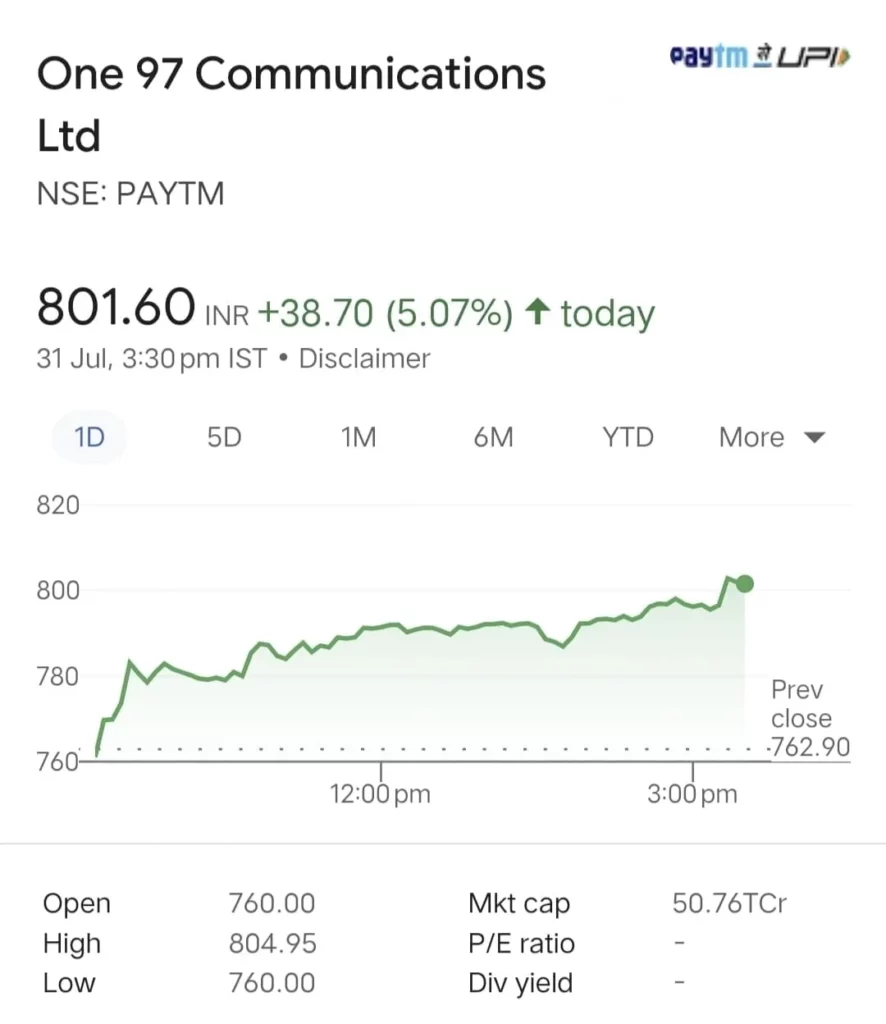
On the BSE, Paytm shares increased 4.92 percent to settle at Rs 800.25. The business claimed that Paytm Pocket Soundbox, which is as small as a debit card and fits in a pocket, gives merchants who are constantly on the go more leverage.

With these new devices, we continue to lead technology for small shops of India,” Paytm said.
According to Paytm, their Music Soundbox app lets business owners manage their payment transactions while listening to music on their Bluetooth-enabled smartphones.

INTRODUCTION

One 97 Communications Ltd. (Paytm) saw a 5% increase in its stock price on Monday after introducing two new products, the Paytm Pocket Soundbox and Paytm Music Soundbox, which are expected to increase the company’s user base.

  • 79 lakh businesses currently pay subscription fees for Paytm’s payment systems, including Soundbox and Paytm Card Machines.
  • Paytm Pocket Soundbox, according to the business, is as small as a debit card and can fit in a pocket.
  • On the BSE, the stock increased 4.92 percent to close at Rs 800.25. The Paytm Music Soundbox also functions as a speaker.
  • Notifies users of payments and can be paired with a phone to play music through bluetooth, according to Paytm.

The revolutionary Paytm Pocket Soundbox is a portable device with all the potent capabilities of the well-known Paytm Soundbox.

  • Additionally, a special speech overlay feature lets the merchant hear payment alerts over the music playing, according to Paytm.
  • Paytm Music Soundbox and Paytm Pocket Soundbox, according to founder and CEO Vijay Shekhar Sharma, are made to make life easier for retailers.

Payment warnings and lifestyle problems are both solved. With these new gadgets, we maintain our technological leadership for India’s small businesses, according to Paytm.

CONCLUSION

FOR MORE INFO CLICK THIS SITE:https://learningsharks.in/

FOLLOW OUR PAGE:https://www.instagram.com/learningsharks/?hl=en
Maruti Suzuki India’s Q1 profit soars 145% to Rs 2,485 crore;

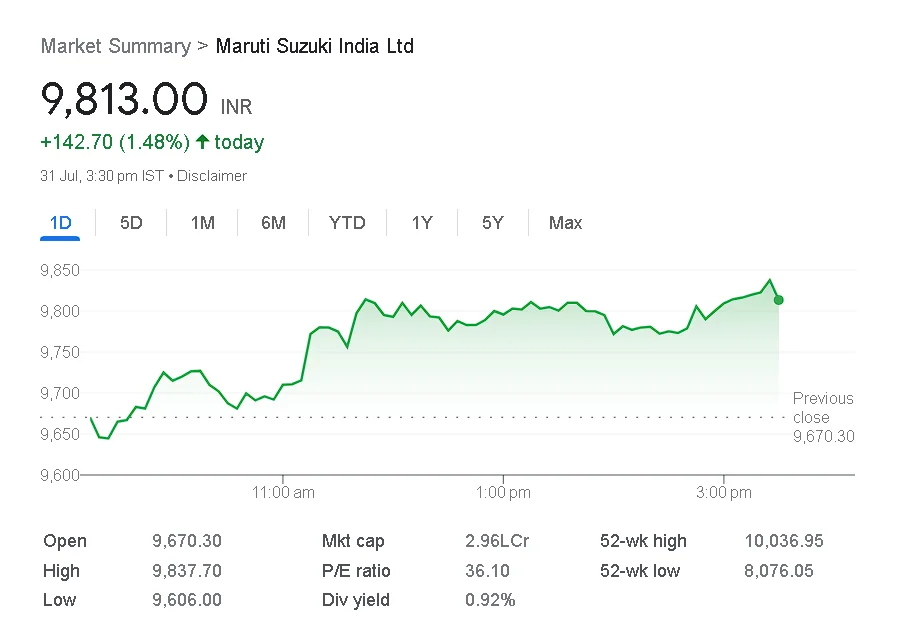
Results for Maruti’s first quarter: Compared to the same period last year, the business reported a net profit of Rs 2,485 crore for the quarter that ended on June 30. In Q1 FY24, operating revenue increased by 21.99% to Rs 32,327 crore from Rs 26,500 crore in the same quarter last year, according to Maruti’s exchange filing.

Shares of the carmaker settled 1.42 per cent higher at Rs 9,806.25 today. The results were announced after market hours today.
Maruti Q1 results: The company’s shares ended the day 1.42 percent higher at Rs 9,806.25.

INTRODUCTION

The first quarter earnings for the fiscal year 2023–2024 (Q1 FY24) increased by 145.31 percent, according to the largest automaker in India, Maruti Suzuki India Ltd.

  • In comparison to the same quarter last year, the company reported a net profit of Rs 2,485 crore for the quarter that ended on June 30.
  • In Q1 FY24, operating revenue increased by 21.99% to Rs 32,327 crore from Rs 26,500 crore in the same quarter last year, according to Maruti’s exchange filing.

At the end of the quarter, there were around 3,55,000 pending client orders, and the company is working hard to fulfill these orders quickly, according to Maruti.

  • The company’s net sales for the quarter were the highest ever, coming in at Rs 30,845.2 crore, up from Rs 25,286.3 crore in Q1 FY23.
  • The manufacturer said in a separate filing today that its board has authorized ending the contract manufacturing arrangement and exercising the option to buy Suzuki Motor Gujarat Pvt Ltd (SMG) shares from Suzuki Motor Corporation (SMC).
  • The automobiles that were previously supplied by SMG as a contract manufacturer will now continue to be supplied as before, thus there won’t be any changes in terms of actual production, logistics, sales, or the cost thereof, according to Maruti.

And as of August 1, 2023, for a three-year term, Yukihiro Yamashita has been appointed as director and full-time director designated as joint managing director (engineering and quality assurance).

CONCLUSION

FOR MORE INFO CLICK THIS SITE:https://learningsharks.in/

FOLLOW OUR PAGE:https://www.instagram.com/learningsharks/?hl=en

Castrol India shares end lower post Q2 earnings; check dividend

For the fiscal year that ends on December 31, 2023, Castrol India’s board of directors declared an interim dividend of Rs 3 per equity share of Rs 5 each.

Its motorcycle oil and fluids include motorcycle engine oils, brake fluids, chain lubricants, fork oil, greases, bike point and gear oils.
Shares of Castrol India are trading above their respective moving averages of five, ten, twenty, fifty, one hundred, and two hundred days.

INTRODUCTION

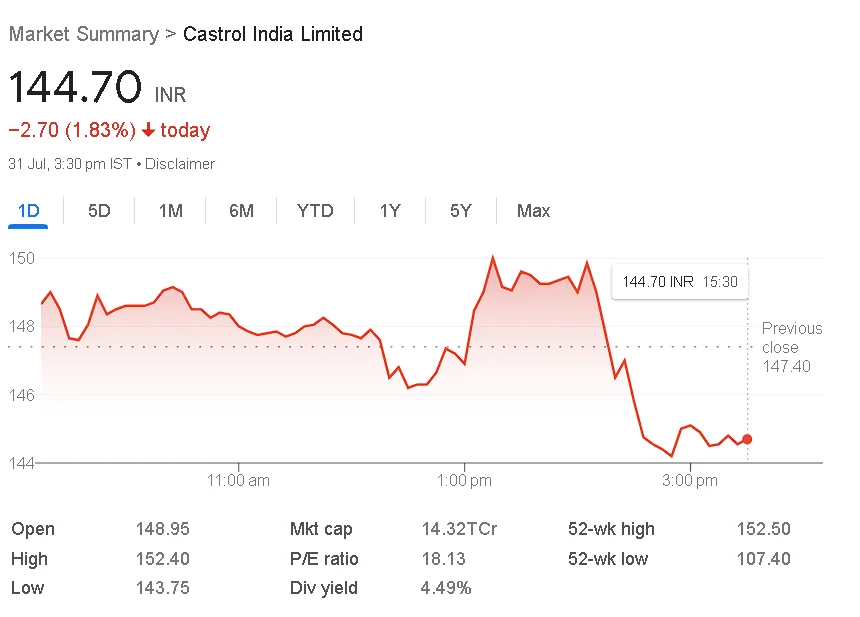
Following the release of Castrol India Ltd.’s earnings for the June 2023 quarter and half-year, the company’s shares closed the day lower. For financial reporting, the company uses the calendar year (January to December).

  • In comparison to the same quarter a year prior, Castrol India’s consolidated earnings increased by 9.22% to Rs 225 crore from Rs 280 crore.
  • In comparison to the previous BSE close of Rs 147.50, Castrol India shares ended the day 1.80% lower at Rs 144.85.

The stock has returned 27.51% over the past year and is up 16% this year. On the BSE, a total of 4.52 lakh shares were exchanged, totaling a transaction of 6.66 crore rupees.

  • The 52-week low for Castrol India stock was Rs. 107.70 on March 27, 2023, and the 52-week high was Rs. 152.25 on July 28, 2023.
  • Manufacturing and marketing lubricants for use in industrial and automotive applications, as well as providing related services, are the company’s main business activities.
  • It offers a variety of automotive fluids and engine oils, such as greases, braking fluids, axle lubricants, and transmission fluids.

Motorcycle engine oils, brake fluids, chain lubricants, fork oils, greases, bike point and gear oils are among the motorcycle oils and fluids offered by this company.

CONCLUSION

FOR MORE INFO CLICK THIS SITE:https://learningsharks.in/

FOLLOW OUR PAGE:https://www.instagram.com/learningsharks/?hl=en
PNB Housing Finance shares jump 7% to hit one-year high;

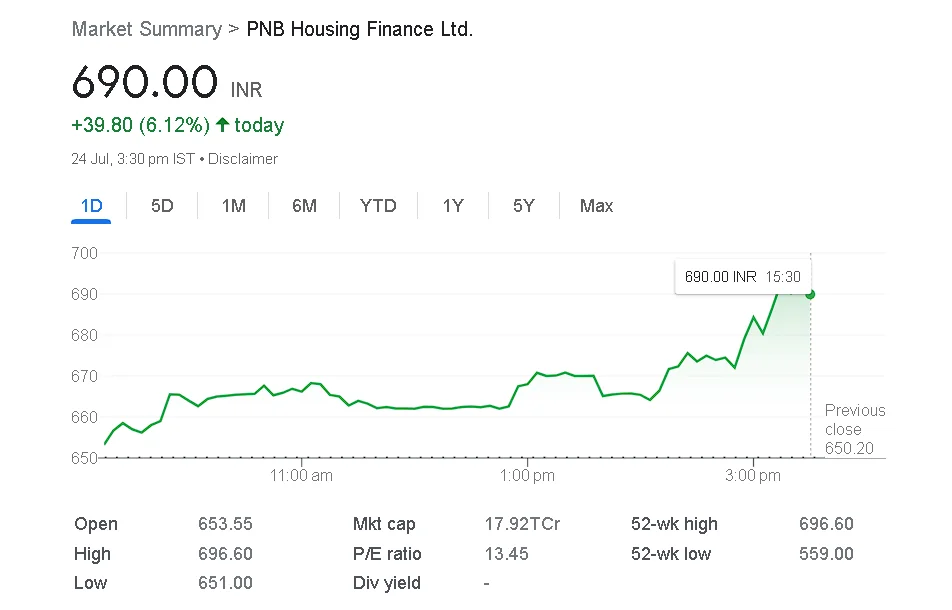
The stock today increased 7.11% over yesterday’s close of Rs. 649.80 to reach a 52-week high of Rs. 696.

Shares of PNB Housing Finance Ltd rose sharply in Monday's trade to hit their one-year high level after the company posted strong results for the June 2023 quarter (Q1 FY24).
On the strength of the Q1 FY24 results, PNB Housing Finance shares rise 7% to a one-year high; see details.

INTRODUCTION

Following the release of the company’s solid June 2023 quarter (Q1 FY24) results, shares of PNB Housing Finance Ltd. rapidly increased on Monday to reach their one-year high level.

  • Profit after tax for the company climbed to Rs 347 crore, up 48% year over year and 24% quarter over quarter.
  • “The disbursements in the first quarter of FY24 increased by 7% YoY to Rs 3,686 crore. 99 percent of the payments were made in the retail sector, which saw an 8% YoY increase to Rs 3,667 crore.
  • Retail loans increased to Rs 56,978 crore by 11% YoY and 3% QoQ. As of June 30, 2023, corporate loans were at Rs 3,416 crore, a reduction of 45%, according to PNB Housing’s exchange filing.

Asset quality-wise, gross bad loans, or NPAs, were at 3.76 percent as of June 30, 2023, down from 6.35 percent year-over-year and 3.83 percent quarter-over-quarter.

  • As of June 30, 2023, the company’s CRAR (Capital to Risk Asset Ratio) increased to 29.93% from 23.91% YoY.
  • Additionally, we have seen an improvement in asset quality, which has led to greater profitability. The company’s annualized ROA for this quarter is the highest in a decade, at 2.07%.
  • The stock was last observed trading above the 5-day, 20-day, 50-day, 100-day, and 200-day moving averages, according to the technical setup. The 14-day relative strength index (RSI) for the counter was 78.14.

Oversold is defined as a level below 30, while overbought is defined as a level beyond 70. Price-to-book (P/B) is 1.54 and the shares of the company has a price-to-earnings (P/E) ratio of 15.97.

CONCLUSION

FOR MORE INFO CLICK THIS SITE:https://learningsharks.in/

FOLLOW OUR PAGE:https://www.instagram.com/learningsharks/?hl=en

Indiabulls Housing shares surge 9% on dividend, improved outlook.

According to Indiabulls Housing, it has recently gone through a phase of consolidation. The board has started paying dividends to shareholders again as the NBFC returns to its development trajectory, it claimed.

It is the company’s goal to deliver good returns to shareholders both on return on equity and on dividends," it said.
As of the end of the March quarter, Indiabulls Housing has capital adequacy levels of over 23% on a standalone basis and 31% on a consolidated basis.

INTRODUCTION

After the NBFC announced that its board has approved raising funds through the sale of NCDs and/or bonds, not in the character of equity shares, up to Rs 35,000 crore.

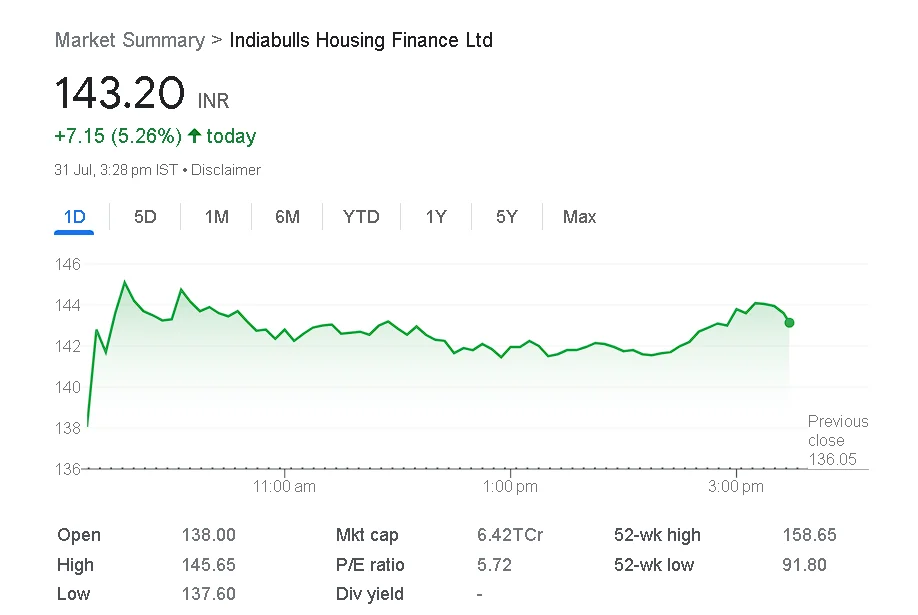
in one or more tranches, on a private placement basis, shares of Indiabulls Housing Finance Ltd (IBHFL) increased by 9% in Friday’s trading.

Indiabulls Housing announced that it would raise the funds after receiving the necessary authorization from shareholders at the upcoming annual general meeting (AGM) in a year.

The Indiabulls Housing board’s recommendation for a final dividend of Rs 1.25 per equity share for FY23 helped the stock rise as well.

  • Following the news, the stock increased 9.09% to a high of Rs 139.15 on the BSE. Despite this, the stock has lost 11% of its value so far this year.
  • The board has begun paying dividends to shareholders as the NBFC returns to its path of growth, it said, adding that Indiabulls Housing is At the conclusion of the March quarter.
  • the company was well-capitalized, with capital adequacy levels exceeding 23% on a standalone basis and 31% on a combined basis.
  • The corporation plans to restart regular dividend payments as soon as business has stabilized and, within regulatory bounds, the company resumes its course of expansion.

The corporation wants to give shareholders strong returns on their investments through dividends and return on equity, according to its statement.

CONCLUSION

FOR MORE INFO CLICK THIS SITE:https://learningsharks.in/

FOLLOW OUR PAGE:https://www.instagram.com/learningsharks/?hl=en