Learning sharks-Share Market Institute


Rajouri Garden  8595071711 7982037049  Noida 8920210950 , and  Paschim Vihar  7827445731  

Fee revision notice effective 1st Jan 2026; No change for students enrolled before 15th Jan 2026

Download “Key features of Budget 2024-2025here

Comprehensive Guide to Understanding Stock Market Crashes

Introduction

Thank you for visiting our thorough guide about stock market collapses. We will go deeply into the world of stock market collapses in this post, examining their causes, effects, and how to survive these trying times. As a knowledgeable group of financial professionals, our goal is to give you useful information that will enable you to not only understand the intricacies of stock market crashes but also to minimize their influence on your investments.

What is a Stock Market Crash?

A stock market crash is an abrupt and considerable decrease in the market’s value as a whole, which causes a sharp decline in the prices of the majority of the equities traded on the exchange. Extreme investor pessimism and widespread panic during such occurrences cause a quick sell-off of securities.

KEY TAKEAWAYS

  • A stock market crash is a sharp decline in stock prices that may start a protracted bear market or indicate impending economic turmoil.
  • Fear in the market and the frenzied selling of investors can exacerbate market crashes.
  • Circuit breakers and trading limitations to mitigate the impact of a rapid drop are only two of the precautions put in place to prevent stock market crashes.

Understanding the Triggers

To protect your money, it is essential to be aware of the various reasons that can cause a stock market meltdown. The following are some of the main causes:

1. Speculative Bubbles

Speculative bubbles develop when stock prices grow uncontrollably as a result of a detachment between asset prices and their intrinsic values. The bubble continues to grow as more investors rush to purchase these inflated equities until it eventually explodes, resulting in a significant decrease in prices.

2. Economic Indicators

Investor sentiment can be significantly impacted by economic metrics like GDP growth, unemployment rates, and inflation. Investors may get anxious and uncertain as a result of poor economic indications, which could lead to a sell-off in the entire market.

3. Geopolitical Events

Uncertainty in the market can result from political unrest, trade disputes, or global conflicts, which could make investors lose faith and sell their holdings.

4. Black Swan Events

Black Swan events are sporadic, unforeseen incidents that have the potential to significantly affect the financial markets. These occurrences, like natural disasters or pandemics, are typically severe and unanticipated.

Historical Stock Market Crashes

There have been a number of big stock market crashes throughout history that have had significant repercussions. Here are a few of the most well-known:

1. The Great Depression (1929)

One of the worst financial crises in history was the stock market crash of 1929. It started when the speculative bubble burst, which resulted in a protracted economic depression and high unemployment.

2. Black Monday (1987)

The Dow Jones Industrial Average saw its greatest one-day percentage loss in stock market history on October 19, 1987, when it fell by 22.6% in a single day. Investor panic and computerized trading were the two main factors that led to the catastrophe.

3. Dot-com Bubble (2000)

Internet-related stocks had an exceptional surge in the late 1990s, which ultimately resulted in the dot-com bubble. Numerous tech firms went under in 2000 when the bubble burst, wiping off billions of dollars in investor capital.

How to Protect Your Investments During a Stock Market Crash

1. Diversification

Your risk during a stock market crisis might be decreased by diversifying your investing portfolio across other asset classes. The market volatility can be mitigated by allocating money to stocks, bonds, real estate, and other investment vehicles.

2. Risk Management

Losses during volatile market conditions can be reduced by putting risk management measures into practice, such as placing stop-loss orders and buying defensive equities.

3. Long-Term Perspective

You can weather short-term market volatility by keeping a long-term investment outlook. Markets have historically bounced back from crashes and produced gains over the long term.

Conclusion

In conclusion, stock market crashes are difficult times that need for thoughtful judgment and a calm hand. You can put yourself in a position to effectively weather these storms by being aware of the factors that lead to market crashes, taking lessons from the past, and implementing smart investment methods. Always keep in mind that knowledge, discipline, and a long-term perspective are the keys to successful investing.

FOR MORE INFO CLICK THIS SITE:https://learningsharks.in/

FOLLOW OUR PAGE:https://www.instagram.com/learningsharks/?hl=en

21 Do’s and Don’ts of Stock Market Investing for Beginners.

Table of Contents

  • Do’s of Stock Market Investing
    • 1. Get an Education
    • 2. Start Small
    • 3. Get Started Early
    • 4. Research Before Investing
    • 5. Only Invest What is Surplus:
    • 6. Have an Investment Goal
    • 7. Build a Stock Portfolio
    • 8. Average Out
    • 9. Diversify
    • 10. Invest for the Long-Term
    • 11. Hold the Winners, Cut the Losers
    • 12. Invest Consistently
    • 13. Have Patience
  • Don’ts of Stock Market Investing:
    • 14. Don’t Take Investing as Gambling
    • 15. Don’t Invest Blindly on Free Tips/Recommendations
    • 16. Don’t Have Unrealistic Expectations
    • 17. Don’t Over Trade
    • 18. Don’t Follow the Herd
    • 19. Avoid Psychological Biases/Traps
    • 20. Don’t Take Unnecessary Risks
    • 21. Don’t Make Emotional Decisions

Do’s of Stock Market Investing

1. Get an Education

The most significant stock market investment action is probably this. If you’re serious about being a successful stock investor, you need start learning about the market. It doesn’t imply that you have to go to college. Self-education is the best approach to learn.

To learn more about the market, you may obtain a tonne of free material online. To gain a head start, you can also enrol in a few respected online stock market investing classes. Get educated right away.

2. Start Small

If you were just starting to swim, you wouldn’t dive into 8 feet of water, right? Similar to this, when investing in the stock market, start small. Start small and gradually increase your investment as your knowledge and confidence advance.

3. Get Started Early

The importance of starting to manage your funds as soon as possible cannot be emphasised enough. The chances are in your favour if you start investing early. Additionally, you have ample time to recoup here even if you experience some losses in the early phases of your investment adventure.

4. Research Before Investing

People who do not make the initial effort before investing in the share are one of the main reasons why they do not profit from stocks. Before investing, every investor should do their homework on the company. You must understand about the organization’s foundations, financial statements, ratios, management, and more here. You may get all the necessary company information at scale by using a web scraping tool for investors. Before making an investment, do your homework on the company if you don’t want to regret it later. If you are new to the stock market, our Motley Fool vs Zacks comparison might assist you in making a wiser decision. You can choose which stocks to buy using its stock picks, which are simple to grasp.

5. Only Invest What is Surplus:

The possibility to invest in and make money from your chosen firms on the stock market is enormous. There are always some dangers involved with the market, despite the fact that no profits are guaranteed. A bear market, often known as a weak market, frequently lasts for years. Therefore, even if you are unable to withdraw the funds, just invest the additional funds that will not alter your way of life.

6. Have an Investment Goal

It will be easier to plan your investments (and to monitor your success) if you have an investment objective or plan. Your goal can be to accumulate a 10 crore rupee corpus or retirement money over the next ten years. If you have a goal, you’ll stay motivated and on course.

7. Build a Stock Portfolio

It is insufficient to continuously earn good money in the stock market with just two or three stocks. You need to put together an effective stock portfolio of 8–12 stocks that can give you consistent profits.

Although finding all the top stocks at once is incredibly unlikely. But you can keep adding and deleting equities year after year to build a strong portfolio that will help you reach your goals.

8. Average Out

Market timing is challenging, and buying stocks at precisely the bottom and selling them at the peak are essentially impossible. If you’ve done it, you might be fortunate. Buying and selling in “steps” would be a wiser course of action in this situation (without a truly exceptional opportunity, which the market can occasionally present).

9. Diversify

“Do not put all of your eggs in one basket!” Investing in a single stock entails substantially more risk than holding a portfolio of ten stocks. In the second scenario, it’s possible that even if one or two of your equities start to underperform, it won’t have a substantial effect on the portfolio as a whole. It’s crucial to have a portfolio of stocks that is appropriately diversified.

10. Invest for the Long-Term

It is a well-known truth that long-term investors make up the majority of stock market veterans who have amassed significant fortunes through equities. But why does long-term investing help people succeed financially? The power of compounding makes the eighth wonder of the world conceivable. If you want to considerably enhance your money through the market, invest for the long term.

11. Hold the Winners, Cut the Losers

Sell underperforming stocks that continually underperform; keep holding onto winners so they can keep giving you bigger returns. The golden rule of investing is to follow this advice. Keeping your winners and selling your failures will help you build your perfect portfolio.

12. Invest Consistently

Most individuals get excited and buy in stocks when the market is performing well and the indices are rising to new highs. However, if you just invest during bull markets and remove your funds when the market is down, that is, when companies are trading at a discount, you won’t find wonderful opportunities to select cheap stocks.

For a single year, refrain from investing in the market. If you want to make money from stocks, consistently invest and gradually increase your investment amounts.

13. Have Patience

The majority of equities require between one and two years to give investors a fair return. Additionally, as time passes, performances get better. Be patient when making stock market investments and refrain from selling your stocks too quickly in order to gain immediate satisfaction.

Don’ts of Stock Market Investing:

14. Don’t Take Investing as Gambling

It must be emphasised once more: “INVESTING IS NOT GAMBLING!” Don’t buy any stock at random and hope to double your money in a month.

15. Don’t Invest Blindly on Free Tips/Recommendations

As soon as your trading account is opened, free texts with BUY/SELL calls will start to arrive on your phone. The fact that there are no free lunches in this world should be remembered. Why would someone provide free stock suggestions for multi-baggers to a complete stranger? Never follow a free tip or recommendation you receive out of the blue, regardless of how good it may sound.

16. Don’t Have Unrealistic Expectations

Yes, many fortunate investors have experienced 400–500% returns on their initial investments. The truth is that this kind of news spreads swiftly and is often exaggerated.

Be realistic with your expectations when investing in stocks. An annual return of between 12 and 18% is thought to be favourable in the market. Additionally, your returns will be substantially higher than the 3.5% interest on your savings account if you compound this return over a number of years.

Additionally, don’t presume that your stock investing efforts will provide the same results as those of others who may have a wealth of experience and outstanding expertise. You may get comparable outcomes as well, but only with the right education and work experience.

17. Don’t Over Trade

The brokerage and other expenses must be routinely paid when you trade frequently. Aim to limit your stock trading frequency. Make decisions with assurance and only conduct transactions that are required.

18. Don’t Follow the Herd

Your coworker had gains of 67% a year after buying a stock. Many of your employees are buying that stock now that he is boasting about it. What would you do next? Do you have to buy the stock? Wrong!

Going with the flow won’t help any investor succeed on the market in any meaningful way. You should do your own research rather than just following the crowd.

19. Avoid Psychological Biases/Traps

There are a variety of physiological biases that can impair your capacity to make shrewd choices and make investments when you are investing. Examples include confirmation bias, anchoring bias, buyer’s remorse, the superiority trap, etc.

Given that many of these prejudices are established in human nature, it could be difficult for people to identify them. In any case, being conscious of these prejudices can assist you in preventing them from really hurting you. These biases also have the advantage of being able to be changed or overcome through practise, just like any habit.

20. Don’t Take Unnecessary Risks

To get a slightly greater return, it is never a smart idea to invest all of your funds in a hot stock or industry. Protecting your money is more crucial than generating high profits. You should never take undue risks when investing in stocks, and your “risk-reward” should always be balanced.

21. Don’t Make Emotional Decisions

Because of how complicated the human mind is, both internal and external forces can affect the choices we make. Avoid letting feelings drive your stock market investment choices. Investing in a company that is not profitable or does not appear to have a bright future, no matter how much you may admire it, may not be a sensible decision. When selecting an investment, be careful not to overextend yourself.

FOR MORE INFO CLICK THIS SITE:https://learningsharks.in/

FOLLOW OUR PAGE:https://www.instagram.com/learningsharks/?hl=en

Muslims Can’t Invest in Mutual Funds or Banks.Explain?

Interest is considered haram in Islam, which means it is forbidden and should be avoided at all costs.

In Islam, interest is regarded as haram, meaning it is prohibited and should be avoided at all costs. While it is quite simple to avoid charging interest (just don’t ask for it), Muslims today are finding it more and more challenging to forgo making interest payments. This is due to the fact that many items, even necessities like loans and credit cards, automatically carry interest charges.

Additionally, it is getting harder to avoid earning interest because many western banks automatically apply interest payments to money held in accounts, causing many Muslims to do so unintentionally.

In this situation, Muslims are left with interest money that they are not allowed to spend on themselves, which raises the question of how they might get rid of it and purify their riches in a halal manner.

Types of Interest

Interest money, often known as riba, is available in two ways:

  • Riba al-Nasiyah is the interest that builds up on late payments, as in the case of a loan of £100 from Person A to Person B that is due in 10 months. Person A asks that Person B pay back the initial £100 as well as £10 in interest for the delayed payments as retribution for the payment being stretched out over ten months.
  • Riba al-Fadl is interest that is paid in the form of things, materials, or goods, such as when Person A borrows Person B their car with only half a tank of fuel with the understanding that Person B will fill the tank back up to the original level before returning the car.

Why Interest is Haram

You who believe, come! If you are sincere believers, fear Allah and give up anything that is still owed to you that may be of interest. (Qur’an 2:278)

Interest money is seen as haram for a number of reasons, the main one being that it is exploitative. When someone borrows anything from another person, it’s usually because they need it. As a result, if they can’t afford to borrow something in the first place, they (theoretically) can’t afford to pay back even more than they’ve already borrowed. When someone in a position of privilege charges interest, they frequently make money off of someone who is less fortunate, and this is wrong.

Islam has a strong emphasis on generosity, therefore charging interest would be ungrateful.

Is Interest Ever Halal?

As was already established, there are some situations where interest money cannot be avoided; yet, interest money is still not halal. In light of this, your attitude towards interest-bearing debt will vary depending on the philosophical school you subscribe to.

For instance, some Muslims interpret the word “haram” literally and will not own a home because mortgages are frequently repaid with interest. They also won’t use credit cards or take out loans because of the interest fees associated with missed payments.

While many Muslims use credit cards and take out loans as a backup plan in case of an emergency, other Muslims will strive to acquire a home.

Banking with an Islamic bank, such as the Al Rayan and United Banks, is one option to get an interest-free mortgage and avoid paying interest on money in a bank account in the UK.

What Can Interest Money be Spent on?

If you unintentionally accrue interest, there is just one thing you can do with the money. The answer to the question of whether it is permissible to donate interest money to charities in Islam is yes, but only as a general donation. Although Zakat is a form of charity, using interest-bearing funds for Zakat is not permitted. This is due to the fact that a person is rewarded for their charity when they donate Zakat, but there are no benefits to be expected when interest money is used because it is haram by nature and should only be used to purify one’s riches.

In conclusion, if you have money from accumulated interest, you might donate it to a universal cause. You can use it to purchase necessities such as food, water, first aid kits, or clothing for a person in need if you don’t wish to make a general gift.

A mosque cannot be built or a Qur’an purchased with interest-bearing funds.

Can You Receive Interest Money?

In the same way that asking for interest is prohibited, so is receiving it unless it is done so through charitable giving. For instance, since the money has been cleansed, a person in need who receives assistance in the form of interest money won’t face punishment for it.

Donate Your Interest Money

If you have interest-bearing funds and wish to use them for  make a donation .Please think about giving it to Orphans in Need to help someone in need. Your gift will be gratefully accepted and go towards helping someone in need.

FOR MORE INFO CLICK THIS SITE:https://learningsharks.in/

What is Forex Trading in Stock Market?

Forex trading, also known as foreign exchange trading or FX trading, involves the buying and selling of currencies on the foreign exchange market with the aim of making a profit.
Forex Trading

Buying and selling currencies on the foreign exchange market with the intention of profiting is known as Forex trading, sometimes referred to as foreign exchange trading or FX trading. Forex trading concentrates on the exchange rates between various currencies, as opposed to typical stock trading, which involves buying and selling company shares. The steps involved in forex trading are listed below:

  • Pairs of currencies are traded while trading foreign exchange. A currency pair is made up of two different currencies, the first of which is referred to as the “base currency” and the second as the “quote currency.” The amount of the quote currency required to buy one unit of the base currency is represented by the value of a currency pair.
  • Forex trading utilises bid and ask pricing, just like other financial markets. The price at which traders can sell base currency is the bid price, and the price at which they can acquire base currency is the ask price. The “spread” is the distinction between the ask and bid prices.
  • Participants in the Forex market include banks, financial institutions, governments, businesses, and retail dealers, among others. These individuals take part in transactions to satisfy a range of needs, including speculative, investment, and global trade needs.
  • Leverage: Trading forex frequently enables traders to employ leverage, allowing them to manage a greater position size with comparatively little capital. Although leverage has the ability to improve earnings, it also raises the risk of greater losses, so traders should use prudence.
  • Due to the global nature of currency trading, the Forex market is open twenty-four hours a day, seven days a week. trade possibilities are offered by this ongoing trade cycle at various periods across the world.
  • Exchange rates are affected by a number of variables, including interest rates, geopolitical events, market mood, economic indices (such as GDP, inflation, and unemployment), and unemployment rates.
  • Trading Techniques: Day traders, swing traders, and position traders are just a few of the trading techniques used by forex market participants. These tactics entail differing amounts of risk and various holding periods for positions.
  • Risk management: In Forex trading, risk management is essential. To reduce possible losses on trades, traders frequently employ strategies like placing stop-loss orders.
  • Profit and Loss: In forex trading, a trader makes money when they sell a currency pair for more money than they paid for it. If the selling price is less than the purchasing price, however, a loss results.
  • Online trading platforms are offered by forex brokers and are used to perform currency trading. These platforms provide order execution capabilities, technical indicators, charting tools, and real-time price quotes.

It’s critical to remember that Forex trading is extremely risky and not recommended for all investors. Because currency markets are so unpredictable, it’s easy to sustain substantial losses. Before engaging in actual Forex trading, traders should educate themselves, practise on demo accounts, and carefully examine their risk tolerance.

How Important Forex Trading in Stocks?

Stock trading and Forex trading are two separate types of financial trading that concentrate on various asset classes. Despite the fact that both are significant elements of the global financial market, they have diverse functions and distinctive qualities. The significance of Forex trading and stock trading are contrasted as follows:

1.Target Market:

Exchange of currencies is a component of forex trading. International commerce, investment flows, geopolitical developments, and economic indicators are its main drivers. With a daily trading volume that significantly outpaces that of the stock market, the FX market is the biggest and most liquid financial market on the planet.

Stock Trading: Stock trading entails the purchasing and selling of ownership shares in corporations. It gives people and organisations the chance to invest in and make money off of the success of particular businesses.

2.Purpose:

Forex Trading: Forex trading is crucial for promoting global investment and trade. It enables cross-border currency conversion for both corporations and private persons.

Trading in stocks: Trading in stocks gives businesses a way to raise money for development and growth. Additionally, it gives investors the chance to benefit from capital growth and dividends, which contribute to a company’s success.

3.The world economy

currency Trading: The interactions between various nations and the larger global economy are reflected in the currency market. Trade balances, interest rates, and overall economic stability are all impacted by exchange rates.

Trading in stocks: Economic factors, industry trends, and the performance of specific companies all have an impact on stock markets. They provide information on the state of particular industries and sectors.

4.Liquidity:

Forex Trading: The massive liquidity of the forex market is a result of both its huge trading volume and the involvement of numerous market participants, such as central banks, financial institutions, businesses, and individual traders.

Trading in stocks: While stock markets are typically liquid, liquidity can change according on a company’s size, the number of outstanding shares, and market conditions.

5.Risk and Gain

Forex Trading: Due to currency volatility, Forex trading entails a significant level of risk. Both rising and falling markets can be profitable for traders, but there is also a major risk of losing money.

Trading stocks: Trading stocks entails risk as well because individual stocks are based on a variety of variables, including corporate performance, market mood, and industry and sector trends. Risk can be managed by diversification and diligent research.

6.Financial Profile:

Forex Trading: Short-term traders, speculators, and people looking to profit from changes in currency prices frequently prefer forex trading.


Stock Trading: A variety of investors, including long-term, day, value, and income-focused investors, are drawn to the stock market.

In conclusion, stock trading and forex trading both have significant impacts on the world’s financial system. While stock trading offers chances for people and institutions to invest in businesses and take part in their growth, forex trading is essential for international trade and the exchange of currencies. The decision between the two is influenced by a person’s financial objectives, level of risk tolerance, and investing strategy.

How do I Start Trading Forex?

Starting a forex trading account requires numerous procedures. To get you started, consider the following general advice:

  • Educate Yourself: It’s important to comprehend the forex market, how it operates, and the fundamental terms before you start trading. You may build a strong foundation with the many internet tools, articles, videos, and courses available.
  • Select a Reputable Broker: Choosing a trustworthy forex broker is essential. Find a broker that is overseen by a reputable financial regulator in your nation. Make sure they have an easy-to-use trading platform, aggressive spreads, and helpful customer service.
  • Establish a Trading Plan: Write out your goals, risk tolerance, preferred trading approaches, and the amount of capital you’re willing to risk in a detailed trading plan. A well-thought-out plan can assist you in maintaining discipline and successfully managing hazards.
  • Utilise a Demo Account to Practise Trading: Most brokers provide demo accounts that let you practise trading with fictitious funds. This is an excellent method to become familiar with the platform, test your ideas, and build confidence without using actual money.
  • Create a Trading Strategy: Create a trading strategy based on your knowledge of the market and your understanding of it. Entry and exit points, guidelines for risk management, and a strategy for examining market movements should all be part of this.
  • When you’re prepared to trade with actual money, start with a small account. By doing this, your risk is reduced as you acquire experience.
  • Risk management: Use effective risk management strategies to safeguard your financial resources. This includes placing stop-loss orders to reduce possible trade losses.
  • Keep up with market developments, geopolitical developments, and economic news that may affect currency exchange rates. Keep up with factors affecting the FX market.
  • Start Trading: Put your trading plan into action by placing trades. Be patient and refrain from acting on impulse.
  • Learn from Experience: As you accumulate knowledge, keep a record of your transactions and their results. If you want to keep becoming better at trading, analyse both your wins and losses.
  • Maintain Your Discipline: Trading foreign exchange requires emotional control. Keep your trading plan in mind and try not to let emotions influence your decisions.
  • It’s never too late to learn more about the dynamic FX market. Keep an open mind to learning more and modifying your tactics as necessary.

Advantages and DisAdvantages of Forex Trading

Of course, the following are both benefits and drawbacks of Forex trading:

Advantages of Forex Trading

  1. Liquidity: With a huge trading volume, the forex market is the biggest and most liquid financial market on the planet. Due to this liquidity, traders can enter and leave positions without experiencing major price changes.
  2. Due to the nature of currency trading, which is conducted globally, the forex market is open twenty-four hours a day, seven days a week. This gives traders the freedom to take part in the market at various times.
  3. Leverage: Forex brokers frequently provide leverage, enabling traders to manage larger positions with a smaller investment. This may boost prospective earnings, but it also raises the possibility of bigger losses.
  4. Diverse Trading options: The forex market offers a wide variety of currency pairs to trade, giving traders with different methods and preferences plenty of options.
  5. modest Costs: The bid-ask spread makes up the majority of the transaction costs in forex trading, which are comparatively modest. Trading typically carries no commissions or other costs.
  6. Accessibility: Individual retail traders can join in forex trading with a comparatively minimal initial commitment thanks to internet trading platforms.
  7. Trading in the currency market offers the opportunity to earn from both rising and declining markets. The capacity to go long (buy) or short (sell) a currency pair is the reason behind this.
  8. Forex trading gives traders knowledge of the state of the world economy, enabling them to profit from global events and economic trends.

DisAdvantages of Forex Trading

  1. Extreme Risk: The forex market’s extreme volatility exposes traders to large losses as well as significant profits. These hazards may be amplified by leverage.
  2. Complexity: Economic data, geopolitical developments, and interest rate choices are just a few of the complicated aspects that go into forex trading. A thorough understanding of these factors is essential for successful trading.
  3. Emotional factors: The fast-paced nature of forex trading and the possibility of generating large wins or losses quickly might cause traders to make emotional decisions that may have a detrimental effect on their trading results.
  4. Lack of Regulation: The forex market is less regulated than traditional exchanges because of its decentralised structure. Traders may be exposed to shady schemes and dubious brokers as a result.
  5. Overtrading: The forex market’s accessibility and 24-hour nature can encourage overtrading, in which traders place impulsive and frequent trades that could reduce profits.
  6. Learning Curve: Learning about the market, trading methods, and risk management takes a substantial amount of time and work if you want to succeed consistently in forex trading.
  7. Unpredictable Events: Market moves can be abrupt and unpredictable as a result of geopolitical events, unexpected economic pronouncements, and other unanticipated reasons.
  8. False Promises: Some internet platforms or educators may make exaggerated claims of simple, guaranteed returns, which can cause individuals to make poor choices and incur losses.

Conclusion for forex trading

In conclusion, for those looking to participate in the dynamic world of international currency exchange, Forex trading presents both chances and problems. The high liquidity, accessibility around-the-clock, opportunity for leverage, and variety of trading chances are all benefits of Forex trading. Both rising and declining markets can be profitable for traders, and the market offers useful information about the state of the world economy.

But it’s crucial to approach Forex trading cautiously and with a thorough grasp of its drawbacks. Due to market volatility and leverage, there is a significant level of risk that must be carefully managed. Market sentiment, geopolitical events, and the intricacy of economic data all need that traders devote time to education and ongoing learning.

In Forex trading, emotional restraint is essential because rash decisions can have detrimental effects. The absence of regulation in the decentralised Forex market also emphasises the importance of conducting careful research and choosing reliable brokers.

Success in Forex trading needs a combination of knowledge, strategy, and dedication. It is not a quick route to earnings that are guaranteed. Aspiring traders should enter the Forex market with reasonable expectations, a clear trading strategy, and a dedication to continuous development. The possibility of substantial losses must be weighed against the possibility of financial gain. Anyone considering entering the world of Forex trading must use ethical trading methods, practise risk management, and never stop learning.

FOR MORE INFO CLICK THIS SITE:https://learningsharks.in/

FOLLOW OUR PAGE:https://www.instagram.com/learningsharks/?hl=en

Yudiz Solutions IPO to open on August 4; check price band;

Yudiz Solutions, an enterprise solutions technology firm with a focus on blockchain, artificial intelligence, and gaming, was founded in 2012. The company offers IT solutions and consulting services.

Narnolia Financial Services is the book-running lead manager to the issue, while PLS Capital and Longview Research & Advisory are advisors to the issue.
Yudiz Solutions will become the first business to officially enlist in the combined fields of blockchain, AI, and gaming thanks to the IPO.

INTRODUCTION

On Friday, August 4, 2023, subscriptions for Yudiz Solutions’ initial public offering (IPO) will start to be accepted. The company is offering its shares for between Rs. 162 and Rs. 165 a share, and subscriptions for the issue are open through Tuesday, August 4, 2023.

  • Through the incorporation of cutting-edge technologies, Yudiz Solutions Limited also offers a range of solutions in the areas of mobile, web, augmented reality and virtual reality, UI/UX, and the Internet of Things.
  • The Ahmedabad-based business serves clients for web development in North America, Europe, and Asia. Among the well-known clients are Akasa Air, MPL, Zydus, RR Kabel, IRM Energy, and SportsBuzz.

Mobile app prototype development, Android/iOS app development, PC/mobile game development, blockchain, AR/VR, web development, website design and development, website maintenance and support, e-commerce web apps and portal development, and more are among the services offered by the company.

CONCLUSION

FOR MORE INFO CLICK THIS SITE:https://learningsharks.in/

FOLLOW OUR PAGE:https://www.instagram.com/learningsharks/?hl=en

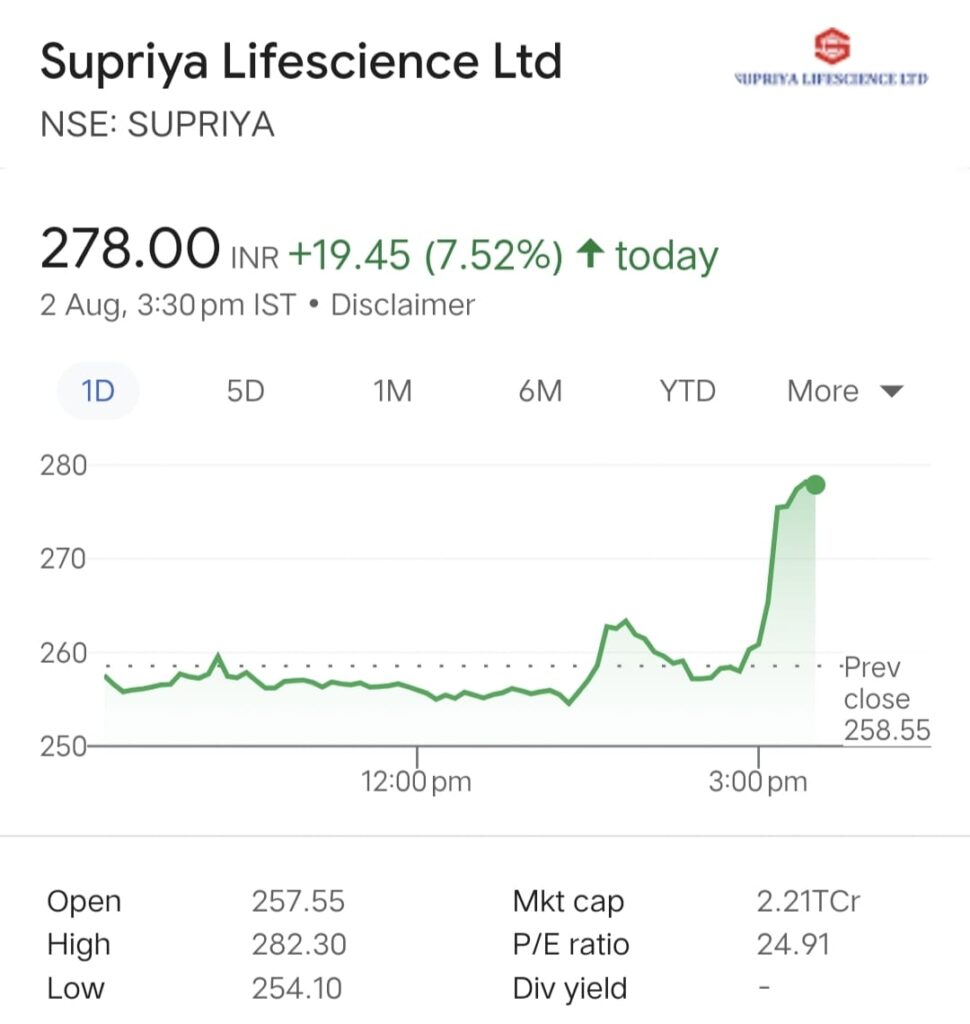
Supriya Lifescience ties up with US-based Plasma Nutrition,

Shares of Supriya Lifescience increased by more than 7% as a result of the news. The share price was up 7.52 percent at Rs 278.00 at 3:45 PM.

We believe this partnership will create a new standard for protein supplementation in India," Flynn-Rozanski said.
Shares of Supriya Lifescience were trading at Rs 278.00 at 3:45 PM, up 7.52%.

INTRODUCTION

In order to produce Ingredient Optimized Protein (ioProtein), Supriya Lifescience, based in Mumbai, has signed a memorandum of understanding with Plasma Nutrition, a company based in the US that specializes in cutting-edge consumer goods.

The strategic alliance includes a technology licensing contract that grants Supriya Lifescience the sole authority to produce and market ioProtein in India.

According to Plasma Nutrition, ioProtein naturally improves your body’s capacity to utilize protein, enabling your body to maximize the benefits of the daily nutritional supplements you take.

  • Shares of Supriya Lifescience increased by more than 7% after the announcement. The shares were trading at Rs 278.00 at 3:45 PM, up 7.52%.
  • The ioProtein method is protected by a patent (US application pending). The protein powder has a key benefit in that it is highly bioavailable and is made for protein supplements.
  • We have a fantastic chance to deliver this highly bioavailable protein powder, which has been well-received in other markets, to India’s fast expanding need for protein supplements.

According to Flynn-Rozanski, “We think that this alliance will establish a new benchmark for protein dietary supplements in India.

CONCLUSION

FOR MORE INFO CLICK THIS SITE:https://learningsharks.in/

FOLLOW OUR PAGE:https://www.instagram.com/learningsharks/?hl=en

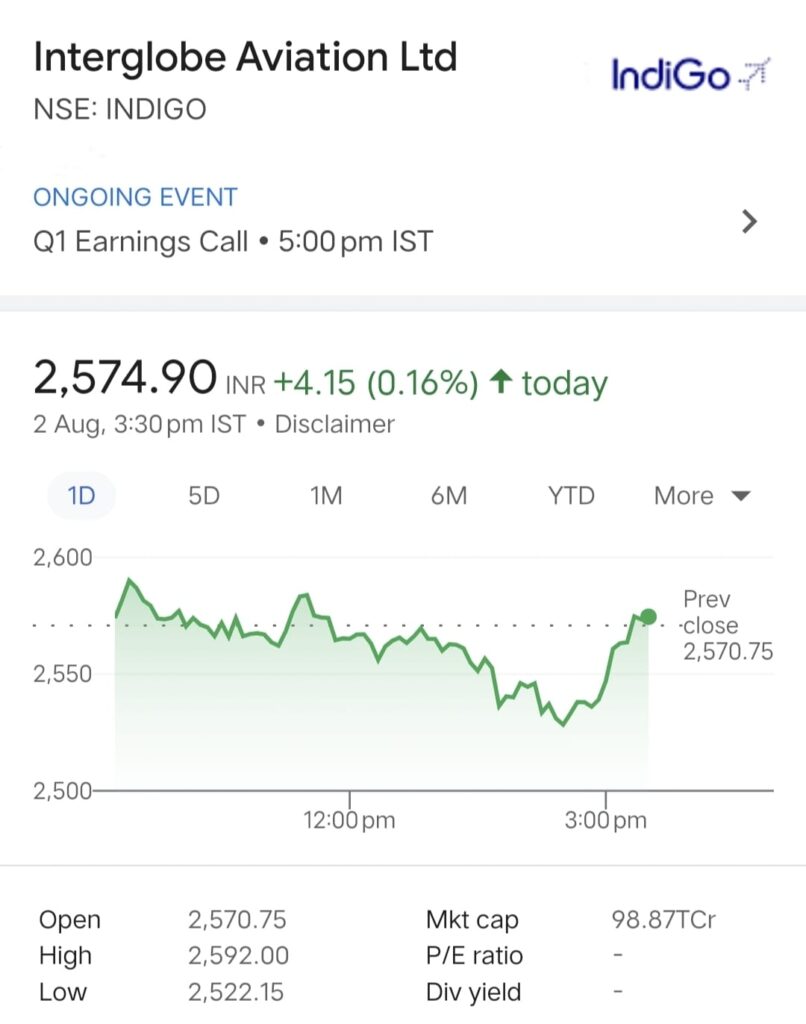
InterGlobe Aviation Q1 results:Profit at Rs 3,091 crore;

According to InterGlobe Aviation, the quarter’s sales totaled Rs 17,160.90 crore, which was a record-high. According to IndiGo, its results show solid operational performance, strategy execution, and good market conditions.

IndiGo said it had a total cash balance of Rs 27,400 crore comprising Rs 15,691 crore of free cash and Rs 11,7,09 crore of restricted cash
InterGlobe Aviation reported a 30.8 percent growth in passenger ticket sales to Rs 14,995.60 crore.

INTRODUCTION

InterGlobe Aviation (IndiGo) reported on Wednesday that its quarterly profit after tax in the June quarter reached a new high of Rs 3,090.60 crore, up from a loss of Rs 1,064.30 crore in the same quarter last year.

The airline claimed in a BSE filing that the quarter’s total revenue, which was the highest ever, came in at Rs 17,160.90 crore. It added that the results reflect outstanding operational performance, successful plan execution, and favorable market circumstances.

InterGlobe Aviation reported a 30.8 percent growth in passenger ticket sales to Rs 14,995.60 crore.

  • Pieter Elbers, CEO of the company, stated that it was glad to record a strong start to the year, building on the encouraging trend from the previous two quarters.
  • This quarter, we placed a fresh order for 500 aircraft, bringing our total order book to around 1,000 aircraft and enhancing our prospects for future expansion, Elbers stated.
  • According to IndiGo, its total cash on hand was Rs 27,400 crore, of which Rs 15,691 crore was free cash and Rs 11,7,09 crore was restricted cash.

CONCLUSION

FOR MORE INFO CLICK THIS SITE:https://learningsharks.in/

FOLLOW OUR PAGE:https://www.instagram.com/learningsharks/?hl=en

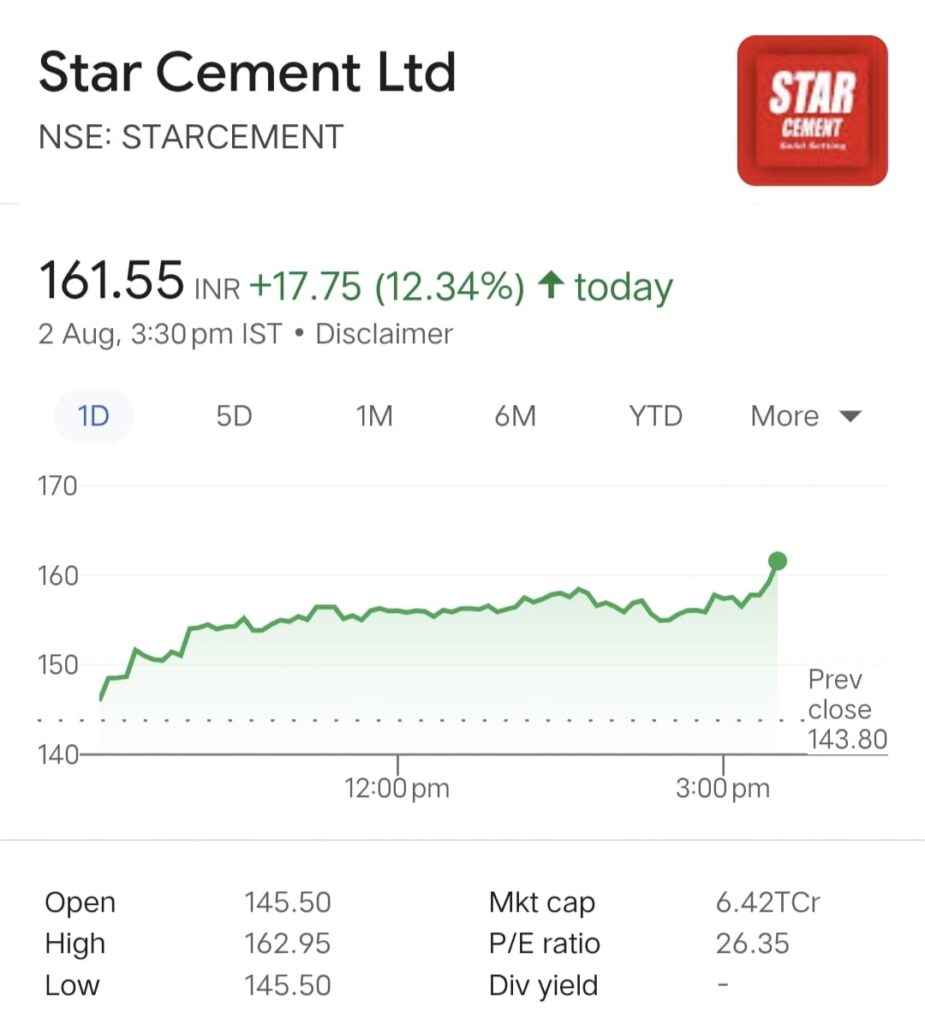
Star Cement shares jump 11% to hit one-year high;

Star Cement stock price: According to ICICI Direct, Star has a reliable cash flow profile, recording cumulative CFO (operating cashflows) of almost Rs 2,800 crore between FY18 and FY23, with an average CFO/EBITDA ratio of 105 percent.

The scrip has an average target price of Rs 133, Trendlyne data showed, suggesting a potential downside of 16 per cent. It has a one-year beta of 0.83, indicating low volatility on the counter.
The share price of Star Cement increased by 10.78% today to reach a 52-week high of Rs. 159.35.

INTRODUCTION

Star Cement Ltd. shares increased significantly in price on Wednesday despite a decline in the benchmarks for domestic equities. Today, the stock increased 10.78% to a 52-week high of Rs 159.35. At Rs 158.70, it ultimately finished 10.32% higher.

5.17 lakh shares were exchanged on the BSE, far exceeding the two-week average volume of 15,000 shares. The counter had a turnover of Rs. 8.02 crore and a market capitalization of Rs. 6,353.72 crore.

The company is building two 2 MT each grinding facilities in Assam (capex: Rs 800 crore, completion: Guwahati in Dec 23 and Silchar in Aug 24) as well as a 3 MT clinker unit with 12 MW WHRS in Meghalaya (capex: Rs 1300 crore, completion: Jan-24).

  • According to ICICI Direct, Star has a reliable cash flow profile, recording cumulative CFO (operating cashflows) of almost Rs 2,800 crore between FY18 and FY23, with an average CFO/EBITDA ratio of 105%.
  • Its balance sheet is cash-rich, with investments totaling Rs 485 crore. In the future, we anticipate that the company would produce total OCF of Rs.
  • Oversold is defined as a value below 30, and overbought as a value beyond 70. The price-to-equity (P/E) ratio of the company’s stock is 35.45, while the price-to-book (P/B) ratio is 3.97.

COMCLUSION

FOR MORE INFO CLICK THIS SITE:https://learningsharks.in/

FOLLOW OUR PAGE:https://www.instagram.com/learningsharks/?hl=en
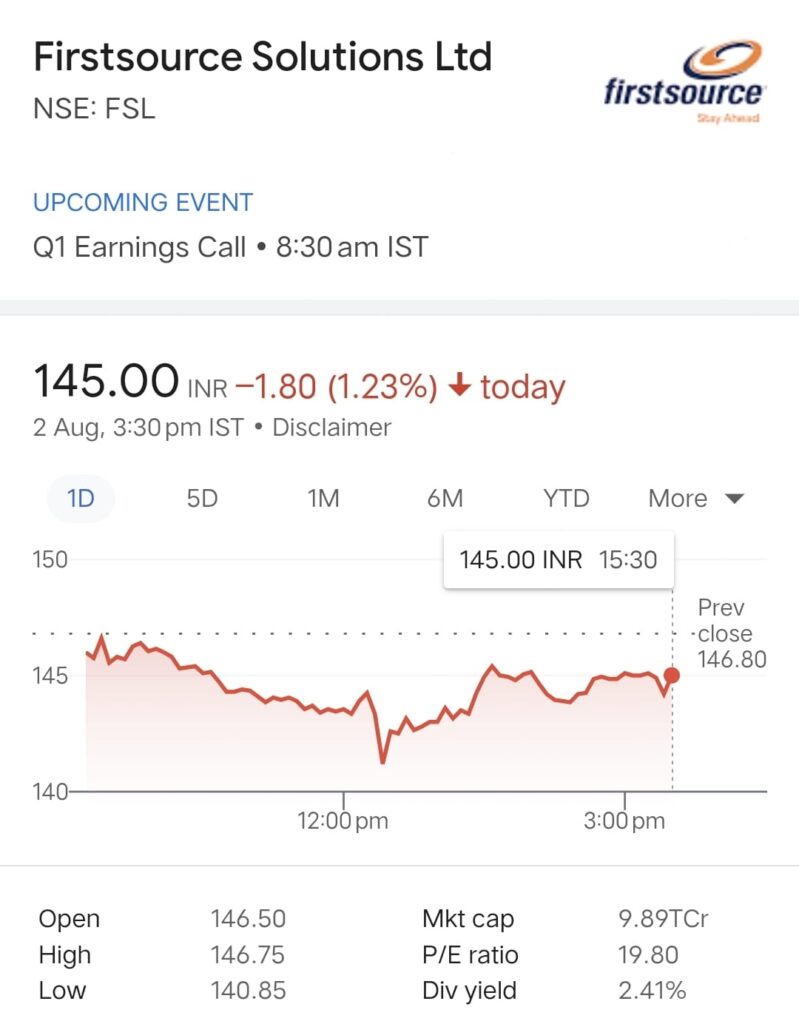
Firstsource Solutions shares slip over 4% on Q1 earnings;

In comparison to the March quarter of the prior fiscal year, the net profit for the first quarter was 125.9 crore rupees, or Rs.

Shares of BPO sector firm Firstsource Solutions Ltd fell over 4% after the firm reported a 11% fall in net profit for the June 2023 quarter. Net profit for Q1 came at Rs 125.9 crore against Rs 141.3 crore in the March quarter of previous fiscal.
On December 26, 2022, the price of Firstsource Solutions shares reached a 52-week low of Rs 95.80, and on August 1, 2023, it reached a 52-week high of Rs 147.45.

INTRODUCTION

Firstsource Solutions Ltd.’s stock dropped more than 4% after the company announced an 11% decline in net profit for the three months ending in June 2023. In comparison to the March quarter of the prior fiscal year, the net profit for the first quarter was 125.9 crore rupees, or Rs.

  • The stock has returned 35.38% over the past year, and it has increased 38.79% this year. On the BSE, a total of 3.44 lakh shares were exchanged for a turnover of Rs. 4.95 crore.
  • On December 26, 2022, the price of Firstsource Solutions shares reached a 52-week low of Rs 95.80, and on August 1, 2023, it reached a 52-week high of Rs 147.45.

Technically speaking, Firstsource Solutions’ relative strength index (RSI) is 75.3, indicating that it is neither overbought nor oversold at this time.

  • A one-year beta of 1 for the Firstsource Solutions stock indicates average volatility during the time frame.
  • Revenue decreased from Rs 1556.6 crore in the quarter ending in March 2023 to Rs 1526.69 crore in the first quarter ending June 30, 2023.
  • In the June 2023 quarter, profit before tax fell 9.61% to Rs 155.29 crore from Rs 171.87 crore the previous quarter.

“The first quarter FY24 results for Firstsource reflect the success of our strong, domain-led offerings underpinned by our sharp client focus to help enterprises navigate rapid economic, technological, and consumer evolution,” stated Sanjiv Goenka, Chairman of RPSG Group and Firstsource Solutions.

CONCLUSION

FOR MORE INFO CLICK THIS SITE:https://learningsharks.in/

FOLLOW OUR PAGE:https://www.instagram.com/learningsharks/?hl=en
What is Demat Account?

An online portfolio called a demat account, often referred to as a dematerialized account, is a sort of storage space for a customer’s shares and other securities. Actual share certificates no longer need to be kept or traded. Demat trading was initially made available for NSE transactions in India in 1996. Beginning on March 31, 2019, all shares and debentures of listed firms must be dematerialized in compliance with SEBI requirements in order to execute trades in any stock market.

In a demat account, shares and other securities are kept in dematerialized (electronic) format. These accounts allow for the inclusion of bonds, ETFs, mutual funds, and other stock market assets that are equivalent in a portfolio.

Features of Demat Account

The benefits of setting up a Demat account include:

1.Simple Access

You may easily and quickly access all of your investments and statements using net banking.

2.Easy Securities Dematerialization

The Depository Participant (DP) converts all of your physical certificates into electronic certificates and the reverse.

3.Getting Dividends & Benefits from Stocks

It uses speedy and straightforward methods to collect dividends, interest, or refunds. The account is automatically credited with everything. Additionally, the electronic clearing service (ECS) updates investor accounts with regard to stock splits, bonus issues, rights, public issues, etc.

4.Transferring Shares Easily

Transferring shares has become considerably easier and quicker thanks to the use of a demat account.

5.Equity Liquidity

Demat accounts have made it simpler, quicker, and more realistic to profit from the selling of shares.

6.a loan secured by securities

After opening a demat account, one can get a loan against the securities they have in their account.

7.Demat Account Freeze

It is possible to decide to temporarily freeze all or a portion of the securities in a demat account. Eventually, this will make it impossible for funds from any debit or credit card to be deposited into your account.

How Does A Demat Account Work?

  • Trading using a Demat account resembles trading in person, although a Demat account is electronic as opposed to physical. To start trading, you place your initial order in your online trading account. The trading and demat accounts must be connected as a result. An order is processed by the exchange after it is placed.
  • Prior to the order’s final processing, the availability of the shares, their market value, and the details of the Demat account are all verified. The shares then appear on your statement of holdings once the transaction is complete.
  • When a shareholder desires to sell shares, the shareholder shall deliver a written delivery instruction letter specifying the stock. The trading account is then updated with the cash value, and the shares are deducted from the account.
  • If you reside in India, you will primarily be working with equities trading and investing, and you can open one of three types of Demat accounts. These three accounts are therefore accessible.

Documents Required for Opening a Demat Account

  • PAN card
  • Aadhar card
  • Address Proof
  • Passport size photos
  • ID proof

Types of Demat Account

An investor can opt to open demat account of any of the following types-

1.Account Demat Regular

An ordinary Demat account can be opened by any resident Indian citizen.

2.Returnable Depository Account

Non-resident Indian people are permitted to open repatriable Demat accounts. As long as they are linked to NRE bank accounts, these accounts permit the movement of money from abroad.

Demat Account that cannot be returned


3.Non-repatriable accounts

It is an another option open to NRIs, although no foreign currency can be deposited into them. An NRO bank account must be linked in order to possess and operate this type of Demat account.

Benefits of Demat Accounts

  • Thanks to demat accounts, physical shares cannot be mishandled, falsified, misplaced, or stolen.
  • The computerised approach can be completed in a matter of hours and is also more simpler. The elimination of multiple time-consuming activities has simplified the entire process and saved time.
  • As long as customers have registered their net banking accounts with the appropriate financial institution, demat accounts offer advantages for remote access.
  • Investors can combine bank accounts and dematerialized accounts to facilitate electronic financial transfers.
  • Customers can benefit from a nomination function if they open a Demat account online.
  • Owners of accounts who possess a specific unit of securities in their portfolio may elect to have their accounts frozen for a predetermined period of time.

Demat Account Number and DP ID

Investors may also receive a DP ID, or Depository Participant ID, through their favourite broking firm or other financial institutions. The DP ID, a part of the account number, symbolises the first eight digits of a person’s account number.

Both the depository and depository participants use this information when an investor converts physical shares to demat, moves shares from one demat account to another, or transfers money from a demat account to a bank account.

Demat Account Charges

Although opening a Demat account is free for investors, there are fees associated with that account to ensure it runs smoothly. Every brokerage firm, including banks, has a different set of brokerage fees. These are a few of them:

1.Yearly maintenance fees

Almost all companies charge a fee for the annual maintenance of the Demat account. The appropriate charge is determined by depositories for each investor in accordance with a set of regulations.

2019 will see the implementation of a new tariff for Basic Services Demat Accounts, or BSDA, by SEBI. According to the updated guidelines, debt securities up to Rs. 1 lakh would not be subject to an annual maintenance cost, while holdings between Rs. 1 lakh and Rs. 2 lakh may be charged a maximum price of Rs. 100.

2.Custodial Charges

Depository Partners charge a custodian fee either annually or once. The sum is paid immediately by the corporation to the depository (NDSL or CDSL).

3.Charges for Demat and Remat

These fees are calculated as a proportion of the total value of the shares purchased or sold and are intended to cover all expenses related to the physical printing or digitization of securities.

In addition to the fees listed above, an investor is also liable for paying credit charges, appropriate taxes, CESS, rejected instruction charges, etc.

Demat accounts are necessary for stock market investments because they are one of the most widely used methods of investing. But recently, a variety of online platforms provide the advantage of online trading.

FOR MORE INFO CLICK THIS SITE:https://learningsharks.in/

FOLLOW OUR PAGE:https://www.instagram.com/learningsharks/?hl=en