Learning sharks-Share Market Institute


Rajouri Garden  8595071711 7982037049  Noida 8920210950 , and  Paschim Vihar  7827445731  

Fee revision notice effective 1st Jan 2026; No change for students enrolled before 15th Jan 2026

Download “Key features of Budget 2024-2025here

Understanding the Inner Workings of the Stock Market

Introduction

Welcome to our comprehensive guide to stock market operating. In this post, we will delve into the intricate aspects of the stock market to provide you with valuable information and a thorough understanding of how it functions. Whether you are a seasoned investor or a novice eager to learn more about stocks, this guide will equip you with the knowledge you need to navigate the complex stock market environment.

The Basic of the Stock Market?

What is Stock Market?

Stocks, which represent ownership shares in publicly listed organizations, can be bought and sold on the stock market, sometimes referred to as the equity market. It can be used by investors as a market place for the purchase and sale of stocks, bonds, and other securities.

Stock Exchange

Stock exchanges are physical or digital marketplaces where equities are traded. Among the most well-known stock exchanges are the New York Stock Exchange (NYSE), Nasdaq, London Stock Exchange (LSE), and Tokyo Stock Exchange (TSE). These marketplaces provide a regulated environment where buyers and sellers can conduct business.

How Stock Trading Work?

Participants in the Stock Market

1. Investors

Anyone who buys and sells stocks is considered an investor. They can be categorized into a variety of groups, including professional traders, institutional investors, and individual investors. Every type of investor has unique investment goals and strategies.

2. Stock Broker

In the stock market, stockbrokers act as a middleman between buyers and sellers. They carry out deals on behalf of investors and offer helpful direction and counsel. Traditional brokerage firms or online brokerages can act as stockbrokers.

Stock order

1.Market order

An instruction to purchase or sell stock at the going rate is known as a market order. The rate of execution prevails over the trade’s closing price when a market order is submitted.

2.Limit Order

A limit order is a directive to purchase or sell stock at a given price or above. This gives investors the option to set their own buy/sell prices for stocks. Limit orders may not be immediately executed if the target price is not met, despite the fact that they allow you more control over the execution price.

Understand Stock Price Movements

1.Supply and Demand

The price of a stock is determined by supply and demand. When there is a large demand for a stock and a limited supply, price tends to increase. On the other hand, the price may decrease if there is an excess of a good and low demand.

2.Fundamental Analysis

Fundamental analysis comprises evaluating a company’s financial situation, performance, and prospects in order to determine its intrinsic worth. Variables including sales, earnings, debt, market trends, and managerial strength are all taken into account in this research.

3.Technical Analysis

Technical analysis concentrates on examining historical stock price patterns and market trends in order to predict future price movements. It involves examining graphs, indicators, and other statistical tools to discover probable purchasing or selling opportunities.

Risks and Rewards of Stock Market Investing

Risk Factor

1.Market  Volatility

The status of the economy, geopolitical developments, and investor attitude are just a few of the many factors that can cause stock values to change significantly. Investors may encounter possibilities and risks as a result of stock market volatility.

2. Company-specific Risks

Investors who purchase individual equities run the risk of company-specific problems like poor financial performance, troubled management, or legal problems. Investors should diversify their holdings and do extensive research to lower these risks.


Rewards of Stock Market Investing

1. Capital Appreciation

When investing in stocks, there is a chance of capital appreciation, where the value of the investment increases with time. This might have a significant impact on returns, especially for long-term investors.

2. Dividends

A portion of some businesses’ profits are distributed as dividends to shareholders. Dividend payments may be made to investors on a periodic basis.

Conclusion

The stock market, in summary, is a sophisticated ecology where buyers and sellers of securities communicate. If you are knowledgeable about the participants, stock market fundamentals, and factors influencing stock prices, you can make intelligent investment decisions. Even though stock market investment contains dangers, it can also present attractive prospects for wealth building with careful thought, analysis, and a long-term view.

FOR MORE INFO CLICK THIS SITE:https://learningsharks.in/

FOLLOW OUR PAGE:https://www.instagram.com/learningsharks/?hl=en

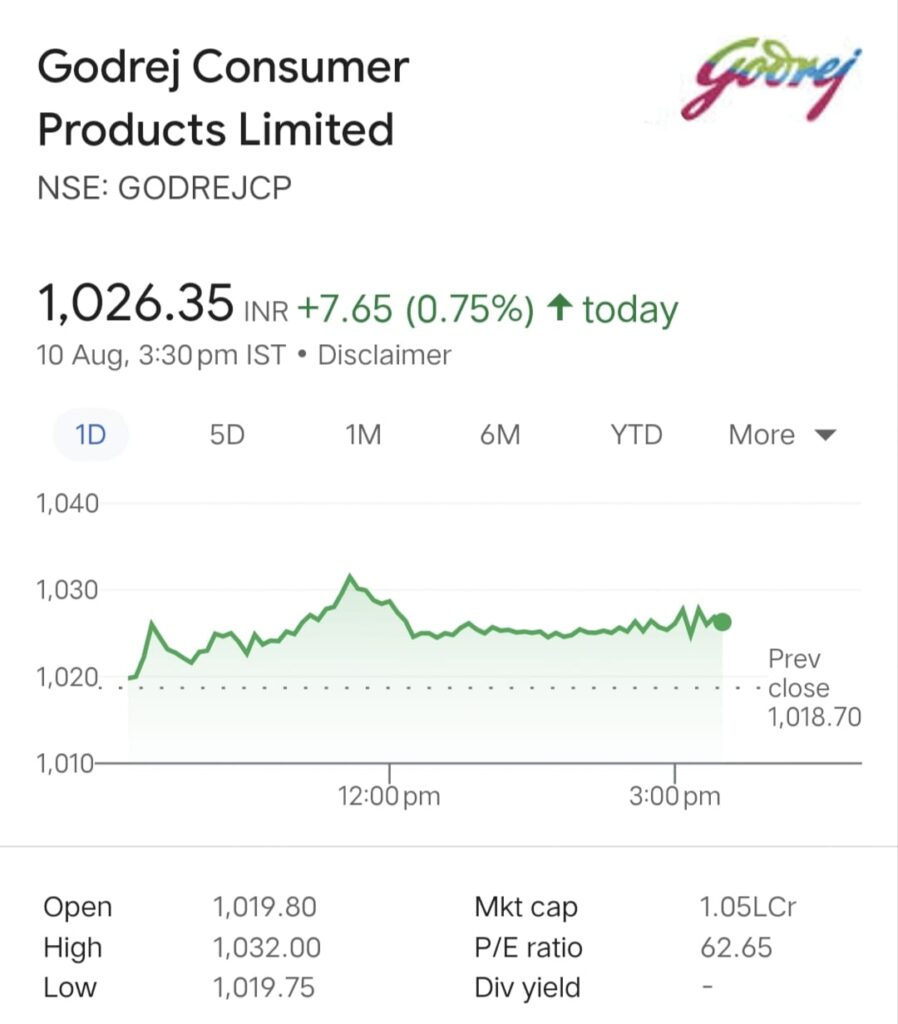
Godrej Consumer Products to invest Rs 515 cr to set up;

The manufacturing facility is expected to be built in Tamil Nadu’s Chengalpattu District’s Thiruporur Taluk.

Earnings before interest, tax, depreciation and amortization (EBIDTA) were at Rs 642.8 crore, growing by 23.4 per cent and the EBIDTA margin was at 18.6 percent, up 240 basis points from the year-ago quarter.
At 3 PM, Godrej Consumer Products shares were trading at Rs 1,025.45, up 0.62 percent.

INTRODUCTION

Godrej Consumer Products Limited (GCPL), a leader in the FMCG industry, announced on Thursday that it has inked an MoU with the Tamil Nadu government to build a cutting-edge manufacturing facility over the next five years for an investment of Rs 515 crore.

  • The projects will be funded through a combination of internal accruals and loans, and the manufacturing locations are anticipated to go online in between 18 and 36 months.
  • “We are excited to announce our strategic cooperation with Godrej Consumer Products in support of the construction of their new plant in our state, which will cost them Rs 515 crore.
  • In order to increase our market presence, it will act as a manufacturing hub for a variety of our well-known brands and products, including Cinthol, Godrej Expert Rich Crème, Godrej Selfie Shampoo Hair Color, and Goodknight.

Furthermore, we are committed to encouraging sustainable growth in Tamil Nadu and making a beneficial influence on the community, according to Sudhir Sitapati, MD & CEO of Godrej Consumer.

CONCLUSION

FOR MORE INFO CLICK THIS SITE:https://learningsharks.in/

FOLLOW OUR PAGE:https://www.instagram.com/learningsharks/?hl=en
Pidilite Industries Q1 FY24 results: Profit rises 32% to Rs 474 crore;

B2B, exports, and global trade all nonetheless experienced weak demand circumstances. Our gross margins significantly increased as a result of operational improvements and moderating input prices.

Turnover on the counter was last seen at Rs 16.53 crore, commanding a market capitalisation (m-cap) of Rs 1,28,786.64 crore.
Shares of Pidilite Industries are currently trading at 53.3 times the company’s FY25 EPS, according to Prabhudas Lilladher.

On Thursday, Pidilite Industries Ltd. announced that its consolidated year-over-year (YoY) net profit for the first quarter of the fiscal year 2023–24 (Q1 FY24) increased by 32% to Rs. 474 crore. An increase of 6% over the same quarter previous year, net revenues came in at Rs 3,264 crore.

  • The high underlying volume growth of 8% that drove the current quarter’s standalone revenue growth (UVG: refers to volume growth taking into account the effects of changes in product mix) was the driving force behind it.
  • This growth was on top of previous year’s growth of 62%, demonstrating a strong two-year CAGR of 31%. Underlying volumes in the domestic consumer and bazaar segment increased by 12% in both urban and rural markets.

Margins for EBITDA also increased. Sales of international subsidiaries, with the exception of Pidilite USA Inc., were in line with the prior year, mostly as a result of unstable economic conditions, difficulties with currency devaluation in some countries, and local inflation pressures.

CONCLUSION

FOR MORE INFO CLICK THIS SITE:https://learningsharks.in/

FOLLOW OUR PAGE:https://www.instagram.com/learningsharks/?hl=en

What is High-Frequency Trading (HFT) in Stock Market?

HFT relies on advanced algorithms, powerful computers, and high-speed data connections to analyze market conditions and execute trades within fractions of a second.
High-Frequency Trading (HFT)

High-Frequency Trading (HFT) is an advanced trading technique used in the financial markets that entails carrying out a significant number of deals at incredibly fast rates. HFT uses sophisticated algorithms, strong computing power, and fast data links to analyse market circumstances and carry out deals in a matter of milliseconds. HFT’s objective is to profit on minute price differences, market inefficiencies, and transitory possibilities that materialise in an instant.

High-Frequency Trading’s salient characteristics include:

  • Speed and automation: HFT depends on the speed advantage offered by swift trading platforms and high-speed data streams. To conduct trades in milliseconds or microseconds, it includes automating trading choices.
  • HFT techniques are built on sophisticated algorithms that analyse market data, spot trends, and take quick trade choices without the need for human interaction.
  • Market Liquidity: By offering a sizable volume of orders that can be swiftly filled, HFT helps to increase market liquidity. This liquidity can improve market efficiency by lowering bid-ask spreads.
  • Arbitrage Opportunities: HFT traders frequently take advantage of minute pricing variations across several markets, including exchanges or trading platforms. They virtually instantly buy at a reduced price and sell at a higher price.
  • Market Making: A few HFT companies take on the role of market makers, regularly putting up offers to purchase and sell stocks. They gain from the wide bid-ask spread and the huge volume of transactions.
  • Statistical arbitrage: To forecast short-term price fluctuations, HFT methods may entail spotting statistical correlations and patterns between several securities.
  • Co-location: To reduce data transmission delays and gain a speed advantage, HFT businesses frequently position their servers close to exchange servers.
  • Risk management: HFT techniques frequently use stringent risk management procedures to reduce possible losses that may result from quick market changes or technical difficulties.

How They Work in Stock Market?

High-Frequency Trading (HFT) uses cutting-edge technology and algorithms to conduct a large volume of trades at extremely fast speeds in the stock market. Here is how HFT functions in relation to the stock market:

  • Data gathering: HFT starts by gathering a sizable amount of market data from multiple sources. This contains current price quotes, data from the order book (showing buy and sell orders as they are placed right now), and other pertinent market data.
  • HFT companies create sophisticated algorithms that examine incoming data to find patterns, trends, and potential trading opportunities. These algorithms quickly process data and decide based on predetermined criteria.
  • Market Opportunities: The HFT algorithms are meant to spot and take advantage of minute price differences, arbitrage chances, and market inefficiencies. These chances frequently come about as a result of transient supply and demand imbalances.
  • Execution: When an advantageous trading opportunity is found, the algorithm automatically creates buy or sell orders and transmits them to the exchange or trading platform. The orders are frequently carried out in milliseconds, nearly instantly.
  • Risk management: To keep an eye on their trading operations, HFT businesses use sophisticated risk management methods. These methods are designed to reduce possible losses that may be brought on by quick market changes or technical errors.
  • Market Making: Some HFT companies take on the role of market makers by consistently putting out buy and sell orders for particular stocks. The difference between the greatest price a buyer is ready to pay (the bid) and the lowest price a seller is willing to accept (the ask), is known as the bid-ask spread, and it is this spread that they capitalise on.
  • Co-location: HFT companies frequently place their trading servers next to the servers used by the exchange. As a result, the trader’s system and the exchange receive data more quickly, giving them a speed edge.
  • Regulatory Compliance: HFT operations are subject to rules established by financial institutions and exchanges. These rules seek to protect the integrity of the market, eliminate manipulation, and guarantee equitable access to trading opportunities.

Advantages and Disadvantages of High-Frequency Trading (HFT)

HFT’s benefits in the stock market:

  • Speed Advantage: The quick execution of HFT enables traders to profit on transient market opportunities that may escape the attention of human traders.
  • Provision of Liquidity: By increasing market liquidity, HFT helps other traders execute their orders more quickly and without experiencing large price swings.
  • Price Efficiency: HFT’s continuous trading and quick execution aid to reduce price disparities and minimise bid-ask spreads.

HFT’s drawbacks in the stock market:

  • Market Instability: Due to its high trading volume and quick execution, HFT has the potential to enhance market turbulence and contribute to jarring price changes like flash crashes.
  • Unfair Access: HFT’s technological advantages may raise questions about unfair access to market possibilities, which would disadvantage smaller traders and regular investors.
  • Regulatory Challenges: Due to its quick pace and technical complexities, HFT regulation is complicated and calls for strong oversight to stop market manipulation and guarantee fairness.

In conclusion, high-frequency trading entails using sophisticated algorithms, technology, and speed to execute a huge number of deals in a short amount of time. Although HFT improves price efficiency and liquidity, it also poses issues with market stability, equal access, and regulatory control.

Conclusion

In conclusion, High-Frequency Trading (HFT) is proof of how quickly technology is developing and how it affects the stock market. HFT has transformed trade dynamics by utilising strong algorithms and blazing-fast execution. It has benefits like quicker exploitation of transient market opportunities, increased market liquidity, and improved price effectiveness.

This revolutionary strategy is not without difficulties, though. The possibility of increased market volatility, worries over unequal access, and the requirement for strict regulatory control highlight how complicated HFT is. It has become necessary to carefully balance innovation and market integrity in the pursuit of speed and profit.

CHECK OUT OUT LATEST STOCK MARKET COURSES: https://learningsharks.in/share-stock-trading-courses-online/

FOLLOW OUR PAGE: https://www.instagram.com/learningsharks/

How should I start Learning about Stock Markets before Investing?

One of the best ways to increase your wealth and put your money to work for you is to invest in stocks. It is the act of investing your money in various ways in the hopes of making a profit. Investing can also enable you to outperform inflation and generate a healthy return. One of the most effective ways to increase your wealth is through stock investments.

If you’ve decided to begin investing in stocks, it’s critical that you understand the market. We will go over some of the most fundamental things about stock markets that everyone should know before investing.

What is a Stock Market?

The stock market is a marketplace where exchanges and investors can list, buy, and sell various securities such as equities, derivatives, bonds, ETFs, commodities, mutual funds, and so on. Stocks of various companies are listed on stock exchanges (such as the National Stock Exchange and the Bombay Stock Exchange), and the listing of financial instruments facilitates transactions.

The Securities and Exchange Board of India (SEBI) oversees the stock market. Previously, if someone wanted to invest in stocks, they had to go to a physical location. However, all trading is now done electronically. The stock market is an aftermarket in which people who own company stock can sell them to investors who want to buy them.

To begin your stock investment journey, all you need is a brokerage account. However, before you dive into the stock market, there are a few things you should keep in mind.

1. Analyze the Market

One of the most important tasks for any investor is to research and analyze the market. Stock market news should be kept up to date at all times.

To gain a complete understanding, one must analyze previous trends, learn how the stock market works, and research the previous performance of stocks that one is interested in. It allows you to understand the market factors and how they will influence your investment decisions in the future.

2. Open a Demat and Trading Account

The procedure for opening accounts is extremely simple. Once you’ve opened an account, experiment with learning how the platform works and how you can invest. You can gradually begin purchasing stocks and investing in other assets. This improves your trading skills as well as your understanding of the dashboard and platform.

So, one of the first steps in beginning your stock market investment journey is to open a Demat account.

3. Choose the Right Stock

Choosing the right stock is not an easy task. It necessitates extensive research as well as an understanding of the market, industry, and economic scenario. It may take some time to master this skill, but it is one of the most important. One must forecast and properly analyze the stock’s future performance.

You can do so by looking at the Earnings Per Share (EPS), Price-Earnings Ratio (P/E Ratio), and other financial ratios that show the company’s market position. To make sound investment decisions, one must also learn to read financial statements such as the Balance Sheet and Profit and Loss Account (which are published by companies on a quarterly or semi-annual basis).

Take care not to rely solely on hearsay opinions. Before you invest your money, choose your stocks wisely.

4. Learn about Diversification

Before you begin investing, you must first understand what diversification entails. A diverse portfolio ensures that you own stocks from various industries. It helps to improve net returns by lowering overall risk in the portfolio.

Beginners in the stock market must understand that diversification entails more than just investing in various stocks. It also implies that investments are spread across multiple asset classes such as ETFs, bonds, mutual funds, and so on.

5. Seek Expert Advice

Though investing in the stock market provides good returns, it is not always a simple process. Financial advisors and stock brokers can help you understand market trends, select the right stocks, teach diversification, and assist you with financial planning.

To make wise investment decisions, one must heed the advice of professional financial advisors.

6. Stay dedicated to a Long-term Investment Goal

Investing is only beneficial when done over a long period of time. While it is critical to monitor your portfolio on a regular basis, you should not book quick profits.

Get the right updates, read financial news, and don’t get overwhelmed if it’s in your favor. To reap the full benefits of a high-performing investment, stick to your long-term investment strategy.

Investors must also learn about market downturns and be willing to take risks. You can do so by assessing your risk tolerance and comparing it to your investment objectives.

All of these factors will have an impact on your investment journey. The stock market is a fantastic place to make money by investing in some of the best-performing companies. To be successful in this journey, however, patience, research, and a thorough understanding of the stock markets and taxation are required. Also, knowing your risk tolerance before embarking on this investment journey will allow you to select the asset classes that are best for you.

mastertrust is one of India’s fastest growing financial advisors. We assist you in establishing a Demat account and investing in the stock market. Our financial advisors can assist you with Stocks, Mutual Fund Investments, Equity Trading, Insurance, Research Products, Digital Gold Investment, Commodity and Currency Trading, Robo Advisory, or Personal Loans.

With mastertrust, you can enjoy a smooth trading and investing experience as well as access to various platforms for tracking your investments.

FOR MORE INFO CLICK THIS SITE:https://learningsharks.in/

FOLLOW OUR PAGE:https://www.instagram.com/learningsharks/?hl=en

Five Biggest Stock Market Myths

Due to several myths and misconceptions about the stock market, investors in India have approached it with caution and fear. These fallacies frequently deter prospective investors from the market, resulting in them missing out on excellent business opportunities.

If you’re considering stock market investing but are discouraged by these fallacies, here is how they are disproved:

1. Stock Market Investing is Like Gambling:

The stock market cannot be compared to gambling at all. While stock market investments are influenced by a number of factors, including market history, current economic conditions, and information about the firm you desire to invest in, gambling is based on chance. In contrast to gambling, these elements may be researched and forecasted to help investors make money.

2. The Stock Market is Exclusively for Experts

Anyone may engage in the stock market and benefit from wealth growth; stock market investing is not just for a select few. Understanding the market and choosing the right shares are prerequisites for investing in the stock market. This learning process, though, is ongoing and changes with time. Anyone with a serious interest in the market can access the stock market since it rewards preparation.

3. You Can Only Make Money By Investing A Lot of Money

This myth is based on the fallacy that one needs a lot of capital to cover losses along the road in order to be profitable, which is untrue. The stock market offers chances for traders with different money and risk appetites. After creating a trading account, you can purchase shares for between Rs. 10 and Rs. 50. The secret is to carry out study to find the right company shares and to create a plan to cut your losses as soon as possible.

4. High Risk Means High Returns in the Stock Market

In truth, certain stock market investors benefit from some high-risk trades. High-risk investments do not, however, always provide high returns. High-risk investments actually have an equal chance of success and failure. It takes prudence, perseverance, and investigation to choose a high-risk investment in which you can place your trust and money.

5. You Should Just Try My Hand at Stock Market Investment

People could feel pressured to make stock market investments based merely on a few tips and recommendations from friends and relatives. However, an investor must devote time to research, from comprehending the market and current economic trends to formulating plans, in order to actually earn from the stock market.

Conclusion


Stock market investments necessitate some research and planning. Once an investor has overcome these obstacles, they can take advantage of the market’s wealth creation potential. To begin investing, simply conduct some research, devise some simple strategies, and open an online trading account and a Demat account.

FOR MORE INFO CLICK THIS SITE:https://learningsharks.in/

FOLLOW OUR PAGE:https://www.instagram.com/learningsharks/?hl=en

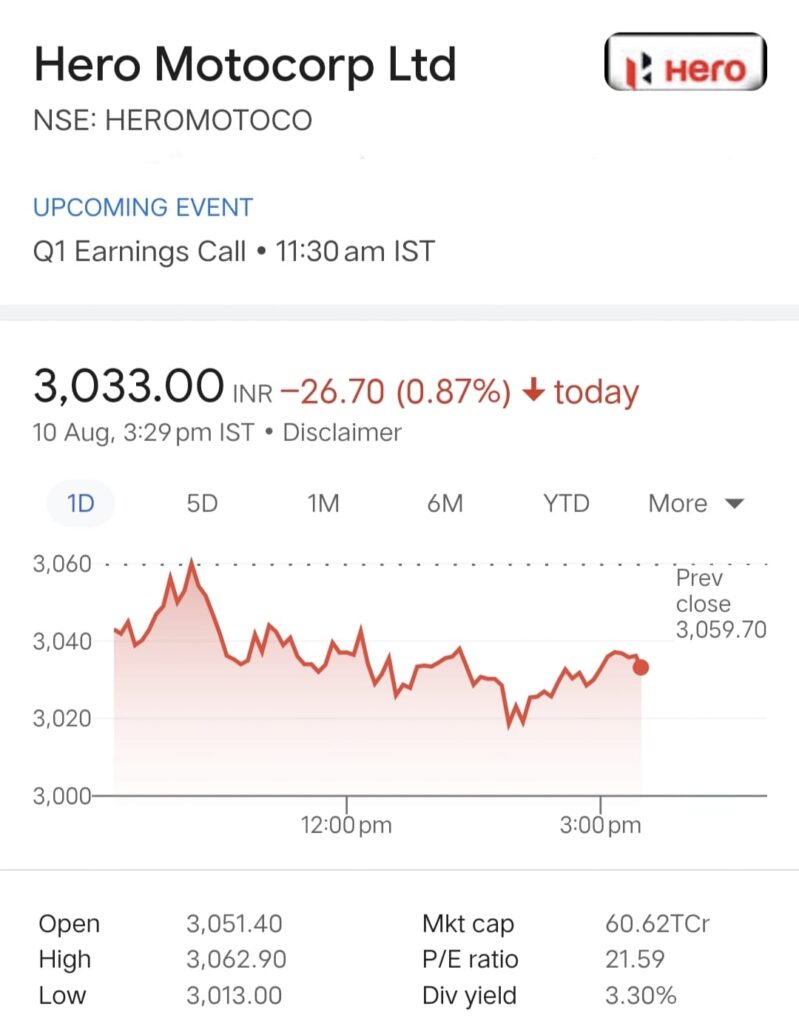
Hero MotoCorp Q1 results:30-40% surge in profit likely;

Hero MotoCorp Q1 results: Emkay Global expects Hero MotoCorp to report 39.5 per cent YoY rise in profit at Rs 871.10 crore compared with Rs 624.50 crore in the same quarter last year.

We expect Ebitda margin to expand by 40 bps QoQ and 220 bps YoY on the back of improved operating leverage and price hikes," Nirmal Bang said.
Q1 results for Hero MotoCorp: Kotak Institutional Equities anticipates revenue growth of 7% YoY, driven by a 10% YoY rise in average selling price (ASP) as a result of price hikes and a more varied product mix.

Hero MotoCorp is anticipated to record a 30-40% year-over-year (YoY) increase in net profit on the back of a 6-7% increase in revenues, mostly driven by an increase in average selling price (ASP) for the quarter due to price rises, despite a decline in volumes.

  • Emkay Global anticipates Hero MotoCorp to record a 39.5% year-over-year increase in profit at Rs. 871.10 crore as opposed to Rs. 624.50 crore in the same quarter last year.
  • From Rs 8,393 crore in the previous quarter to Rs 8,930 crore this quarter, revenue is up 6.4 percent YoY. Despite a drop in volumes (down 3% YoY), revenue may increase YoY due to stronger realisations.

“Realizations are likely to increase QoQ, driven by price increases, with Ebitda margin expected to improve due to higher volumes (up 6.5%),” Emkay noted while speculating on a margin figure of 13.5%.

Profit for this brokerage came in at Rs. 875.90 crore, up 40.3%. Kotak expects revenue to increase 7% year over year to Rs 8,976 crore.

Elara Securities forecasts a profit of Rs 819.90 crore, up 31.3%, with sales expected to increase by 6.4% year over year to Rs 8,931.90 crore.

CONCLUSION

FOR MORE INFO CLICK THIS SITE:https://learningsharks.in/

FOLLOW OUR PAGE:https://www.instagram.com/learningsharks/?hl=en

What is Stock Market Analysis?

The process of assessing and understanding numerous stock market data and aspects in order to make wise investment decisions is known as stock market analysis. To predict present and future stock and market performance, it requires evaluating and interpreting data and trends.

The scrip has an average target price of Rs 133, Trendlyne data showed, suggesting a potential downside of 16 per cent. It has a one-year beta of 0.83, indicating low volatility on the counter.

Fundamental Analysis:-

  • Fundamental analysis is the process of evaluating several components of a firm to ascertain its intrinsic value and room for expansion. This includes examining financial statements including balance sheets, income statements, and cash flow statements.
  • Fundamental analysts utilize important financial measures including the price-to-earnings (P/E) ratio, earnings per share (EPS), return on equity (ROE), and debt-to-equity ratio to assess a company’s financial stability and profitability.
  • Additionally, they look into qualitative aspects including the company’s management, advantages over rivals, market trends, the availability of products and services, and potential hazards.
  • By locating equities that are either undervalued or overvalued in comparison to their inherent worth, fundamental research looks to uncover possible long-term investment opportunities.

Technical Analysis:-

  • The goal of technical analysis is to forecast future price changes by examining price trends, trading activity, and statistical data.
  • Technical analysts use a number of tools, including charts, trend lines, moving averages, and oscillators, to spot patterns and trends in stock price movements.
  • They contend that previous price information represents market psychology and can be used to predict future price changes.
  • Technical analysis is frequently used by short-term traders to decide when to enter and quit transactions.

Market Sentiment Analysis:-

  • Analysis of market sentiment involves determining the general attitude and outlook of market players.
  • Part of the process involves keeping an eye on news, investor sentiment surveys, social media sentiment, and other informational sources to gauge general mood toward the market and particular stocks.
  • Stock prices can be affected by purchasing pressure during a bullish market and vice versa.
  • Analysts utilize market sentiment analysis to foresee changes in investor behavior, better understand market dynamics, and detect prospective trends.

Risk Management:-

  • Additionally, risk management is stressed in stock market analysis. This entails assessing and controlling any investment risks.
  • Risk management strategies include diversification, stop-loss orders, and being aware of an investment’s possible downside.
  • By weighing the risks involved, investors can make better choices and shield their portfolios from severe losses.

Tools and Resources:-

  • Stock market analysis can be done using a range of instruments and sources, including financial news websites, research publications, market data platforms, and software programs.
  • To assist them in making wise selections, these technologies give investors access to real-time stock prices, financial data, charts, and analysis tools.

Maintaining awareness of market news, geopolitical occurrences, and economic trends that may impact stock prices is another aspect of stock market analysis. It is important to keep educated on elements that may influence market sentiment, such as interest rates, inflation, governmental regulations, business trends, and world events.

In order to make wise judgments, minimize risks, and maybe benefit from the stock market, investors and traders need to use stock market analysis as a tool. Research, analysis, and an understanding of market dynamics are all necessary to manage the financial markets’ complexity.

It’s crucial to keep in mind that stock market analysis cannot totally eliminate risks or guarantee certain outcomes. It offers a framework for assessing investments, controlling risks, and making smarter choices in light of the information and analysis at hand.

Types of Fundamental Analysis:

There are several ways to undertake fundamental analysis, including:-

  • Value investing:- Value investing is a method that looks for stocks that are trading below what they are really worth. Value investors think that eventually, the market will figure out what a firm is really worth, and the stock price will rise in line with that.
  • Growth investing:- Growth investing is the practice of buying shares in businesses that are anticipated to develop faster than the industry average. They look at things like revenue growth, earnings growth, and market share expansion to find businesses with bright futures.
  • Income Investing:- Income investors look for stocks that offer dependable and alluring dividend yields. They examine the company’s capacity to maintain and increase dividends over time, as well as dividend yield and payout ratios.

Technical Analysis Tools:-

Utilizing a variety of instruments and indicators, technical analysis involves examining price patterns and trends. Examples of frequently employed technical analysis tools include:

  • Moving Averages By computing the average price over a given time period, moving averages are used to reduce price swings and spot patterns.
  • The rate and change of price movements are measured by the Relative Strength Index (RSI). It makes it easier to spot overbought and oversold stock circumstances.
  • The volatility indicator known as Bollinger Bands can be used to spot probable price breakouts and reversals.
  • For a specific time period, candlestick charts display the open, high, low, and closing prices. They make it easier to spot patterns and trends in stock price movements.

Quantitative Analysis:-

  • Using mathematical and statistical models, quantitative analysis evaluates stocks and the market. This method largely depends on data and algorithms in order to find patterns and make predictions.
  • Large datasets are analyzed by quantitative analysts utilizing sophisticated mathematical models and statistical methods. This study can take into account variables including previous stock prices, trade volume, financial ratios, and economic indicators.
  • Quantitative analysis is particularly common in algorithmic trading and hedge funds, where automated algorithms place trades based on predetermined rules and signals.

Behavioral Finance:

  • A subfield of finance called “behavioral finance” investigates the impact of investor behavior on stock prices and market patterns.
  • It accepts that emotions like fear and greed can influence investors and that they are not always rational. In order to prevent market inefficiencies, behavioral finance looks for patterns and biases in investor behavior.
  • Understanding these cognitive biases can help analysts spot market patterns and potentially profit from mispriced equities.

Macro-Economic Analysis:

  • Examining larger economic issues that can affect the stock market is part of macroeconomic studies. Included are GDP expansion, interest rates, inflation, unemployment rates, and governmental policies.
  • To better comprehend the state of the economy as a whole and make predictions about how it will effect different sectors and industries, analysts examine macroeconomic indicators.
  • Investor sentiment, stock performance, and market performance can all be impacted by changes in macroeconomic conditions.

Keep in mind that stock market research requires ongoing learning, market adaption, and staying current with new financial events. It’s a field that’s always developing, with new tactics, devices, and methods appearing.

FOR MORE INFO CLICK THIS SITE:https://learningsharks.in/

FOLLOW OUR PAGE:https://www.instagram.com/learningsharks/?hl=en

Stock Market Term

25 Stock Market Terms That You Should Know

First of all, it can be difficult to understand the stock market. Although some concepts and terminology will frustrate you, knowing what they mean will undoubtedly be helpful.

Second, learning these stock market words will broaden your knowledge of the industry and make you a more knowledgeable and effective investor.

Table of Contents  

  1. Equity
  2. Initial Public Offering
  3. Market capitalisation
  4. Portfolio
  5. Price-to-Earnings Ratio
  6. Stock split
  7. Trading session
  8. Bull market
  9. Bear market
  10. Face value
  11. Bonus shares
  12. Dividend
  13. Benchmark
  14. Stock exchange:
  15. Over-the-counter:
  16. Liquidity:
  17. Exchange-Traded Funds:
  18. Intra-day trading:
  19. Ask/Offer
  20. Bid
  21. Spread
  22. Broker
  23. Trading Account
  24. Demat account
  25. SEBI

1. Equity

Equity is a concept that is frequently used and significant in stock trading.

It is about:

  • the amount of capital invested by a shareholder in a company
  • stocks of a company

Equivalent ownership in a corporation is provided to the shareholder via equity shares. On the stock or equity markets, these are bought and sold by investors and traders.

2. Initial Public Offering

Initial public offering or IPO is:

  • a private company’s route to go public
  • a way for companies to raise capital 

The IPO process refers to the initial public offering (IPO) of a company’s shares. These can be exchanged in the secondary market after being issued in the main market.

3. Market capitalisation

The whole valuation of a corporation is referred to as market capitalization or market cap. It is determined by:

Market capitalization is calculated by multiplying the current share price by the total number of outstanding shares.

A company’s market capitalization, for instance, would be Rs. 50 crores if there were 1 crore outstanding shares and the current share price was Rs. 50.

Market capitalization is a crucial metric that aids investors in determining the risk and return associated with a share.

4. Portfolio

Portfolio is the total investment holdings of an individual or enterprise. 

It can include

  • different types of securities 
  • Securities of multiple companies of different sectors. 

When it comes to reducing market volatility and absorbing market shocks, diversification might be helpful. An investor should aim to build a portfolio of investments based on their personal risk tolerance and investing goals.

5. Price-to-Earnings Ratio

This ratio is used for valuing a company. 

Using the current share price and earnings per share of a company, the price to earnings ratio calculates the company’s value.

This ratio is also known as:

  • P/E
  • price multiple 
  • earning multiple. 

A high P/E ratio means:

  1. a company’s stock is overvalued or 
  2. investors expect a high future growth rate 

6. Stock split

Because existing shares are split, a stock split increases the total number of outstanding shares of a corporation.

7. Trading session

The period of time that a stock exchange is open for trade is known as a trading session. The majority of stock exchanges in India have trading hours from 9:15 am to 3:30 pm. Orders to buy or sell must be placed within this window of time.

8. Bull market

A stock market is said to be in a bull market when the majority of the stocks have been rising for a respectable amount of time. Investors are typically more upbeat in such market stages.

9. Bear market

A bear market is a stage of the market when stock prices regularly decline for an extended length of time. Usually, prices are anticipated to decline by at least 20% from recent highs. This is primarily related to the market’s current investor mood, which is bearish.

10. Face value

At the time of issuance, each share a firm issues has a face value. The intrinsic value of a share is another name for the face value. The corporation fixes it when issuing shares to raise money. Typically, it comes in amounts of 5, 10, 100, etc.

11. Bonus shares

Bonus shares are extra shares given to shareholders by a firm. The total number of shares in a corporation increases when bonus shares are issued.

12. Dividend

The part of earnings that a business distributes to its shareholders is known as a dividend. This might be sent as:

  1. Cash or
  2. Stocks or
  3. Any other form that the company decides 

Even though many businesses pay dividends to shareholders, it is not necessary for a business to do so after recording earnings. To achieve further expansion, many businesses decide to reinvest their profits.

13. Benchmark

Investors might compare a stock’s performance to a benchmark to determine whether it meets expectations or not. A benchmark is a standard against which the performance of a stock can be compared. To track the performance of stocks, market indexes like the BSE Sensex and NSE Nifty are frequently used as benchmarks.

14. Stock exchange 

A secure exchange for trading securities is a stock market. Here, shares are purchased and sold in accordance with the guidelines established by the stock market authority. By providing investors with access to real-time price information, stock exchanges assist businesses in raising funds. The National Stock Exchange (NSE) and the Bombay Stock Exchange (BSE) are the two main stock exchanges in India.

15. Over-the-counter 

Purchasing and selling shares over-the-counter, or OTC, takes place away from a recognized stock exchange.

Bonds, microcap stocks, derivatives, currencies, and other types of securities could be included. OTC markets enable trading between buyers and sellers by using a dealer-broker network as a middleman.

16. Liquidity 

The term “liquidity” refers to the amount of time and money needed to liquidate or convert an asset into cash.

We can therefore determine a security’s liquidity by how simple it is to sell it.

17. Exchange-Traded Funds

ETFs are mutual funds with passive management that aggregate client funds to make additional investments in securities like equities, bonds, commodities, etc. These funds follow a chosen benchmark index and may, as a result, invest in assets with the same security mix as the index. Due to their low expense ratio and reputation as safer long-term investments, ETFs draw in novice or new investors.

18. Intra-day trading

In intraday trading, positions are closed off before the trading day is over while securities are bought and sold on the same day. Since the buy and sell positions are offset against one another, there is no transfer of ownership of securities.

19. Ask/Offer

The lowest price a seller will accept for a stock is known as the ask price or the offer price. For instance, a stock buyer should estimate the price at which the seller is willing to sell the security. The ask price, or the lowest amount someone could be willing to sell a stock for, enters the picture at this point.

20. Bid

The highest price a potential buyer is willing to offer for a stock is known as the bid price. For instance, if an investor wants to sell a stock, he or she must ascertain the going rate for the stock. The bid price is that sum.

21. Spread

In the stock markets, the price that a seller requests for a security and the price that a buyer is willing to pay for it are typically different. Since the bid is frequently lower than the ask price, this is effectively the difference between the two prices. The spread, often known as the bid-ask spread, is the distinction between the bid and ask prices. The supply and demand for the particular security have the biggest impact on this.

22. Broker

An investor in the stock market can purchase securities through a middleman who connects them to the stock exchange. This middleman is referred to as a broker. In essence, a broker acts as an investor’s agent when buying or selling assets in exchange for a commission.

23. Trading Account

For trading on the stock markets, you need a trading account. It is opened with a stockbroker and functions as a link between an investor’s Demat and bank account. When an investor purchases shares, the investor must transfer the necessary funds from the bank account to the trading account. Only after the money has been credited can a buy transaction be started.

24. Demat account

Another crucial account needed for stock market investing is the Demat account. The stocks or securities are kept in this account in digital form.

25. SEBI

The Indian financial markets are governed and overseen by SEBI, or the Securities and Exchange Board of India. By using ethical procedures, it guarantees effective trading on stock exchanges all over India. By ensuring that stock market players give investors accurate information, it seeks to protect their interests.

Conclusion

Even seasoned investors may not be familiar with all of the components of the stock market because it is a big area. However, reading up on the aforementioned fundamental terminology and their definitions might assist novice investors in developing the necessary confidence to begin making stock market bets.

FOR MORE INFO CLICK THIS SITE:https://learningsharks.in/

FOLLOW OUR PAGE:https://www.instagram.com/learningsharks/?hl=en
What is Contrarian Trading in Stock Market?

Contrarian trading is an investment strategy employed in financial markets where traders and investors deliberately go against the prevailing market sentiment and trends.
Contrarian Trading

An investing method known as “contrarian trading” is used in the financial markets when traders and investors purposefully buck the trends and emotion of the market. Basically, contrarian traders think that the majority of market participants can be affected by emotions and can occasionally lead to circumstances where assets are overvalued or undervalued. When trading contrary to the consensus, traders take positions in the hope that the market will eventually correct itself, generating possible profits.

An essential component of contrarian trading is:

  • Going Against the Grain: Contrarian traders purposefully adopt positions that are in opposition to the general consensus. Contrarians, for instance, may think about selling at exceptionally upbeat times (bull markets) and buying during downbeat times (bear markets).
  • Value-Based Approach: Contrarian trading frequently places more emphasis on an asset’s intrinsic value than on short-term price fluctuations. The overreaction of the market to news or events, which results in momentary mispricings, is what traders watch for.
  • Perspective over a Longer Period of Time: Contrarian trading typically has a longer time horizon. Traders anticipate that the mispricing will eventually be corrected when the market comes to understand the asset’s true value.
  • Risk and Patience: Trading contrarian strategies necessitates a certain amount of both patience and risk tolerance. Before the projected correction happens, the market attitude may last longer than expected.
  • study and Analysis: To spot circumstances where the consensus view might be biassed, contrarian traders do in-depth study and analysis. They look at things like value indicators, business fundamentals, and overarching economic trends.
  • Moves that are countercyclical: Contrarian traders may make purchases when others are selling and sales when others are purchasing. Utilising market extremes while setting up for a potential shift in sentiment are the goals of this strategy.
  • Factors of psychology: Contrarian trading frequently necessitates a strong psychological mentality because going against the grain can be emotionally difficult, particularly during periods of general optimism or fear.
  • Diversification is crucial for contrarian traders to manage the risks involved with holding contrarian positions for extended periods of time prior to the expected downturn.

It’s critical to remember that trading against the trend has unique dangers. Markets may continue to be irrational for longer than anticipated, and contrarian strategies may not always produce the desired results right away. A thorough understanding of the underlying assets and markets is also necessary to spot actual mispricings.

In conclusion, contrarian trading entails taking positions that are purposefully at odds with current market sentiment and trends in the hopes that market overreactions will result in profitable opportunities. A thorough study, a long-term outlook, and the mental toughness to endure periods of divergence from the majority of market participants are requirements for this strategy.

How They Work in Stock Market?

In the stock market, contrarian trading entails making investment choices that are in opposition to the general consensus and the prevailing emotion. The stock market is an example of how contrarian trading operates:

  • Finding Extremes: Contrarian traders begin by spotting instances where the mood of the market seems to be excessively upbeat or downbeat. Analysing market indicators, news, earnings reports, and overall economic trends might help with this.
  • Fundamental Analysis: To determine the intrinsic value of the equities under consideration, contrarian traders perform in-depth fundamental analysis. On the basis of elements including profits, assets, obligations, and growth prospects, they search for differences between the stock’s present price and its perceived actual value.
  • Market Overreactions: Contrarian traders believe that markets occasionally overreact to news or events, driving up or driving down stock prices. They adopt stances that are opposed to the popular opinion in an effort to profit from these mispricings.
  • Waiting for Corrections: Contrarian investors frequently watch for market sentiment to gradually turn around. They think that someday the market will realise the stock’s true worth, which will cause price movement to reverse.
  • Contrarian trading adheres to value investing principles by emphasising the purchase of inexpensive stocks and the sale of overvalued ones. Being patient is a requirement for this strategy because it could take some time for the market to adjust to the right valuation.
  • Factors that affect people’s emotions and behaviours: Contrarian trading takes use of people’s emotional and behavioural biases. In times of excessive fear or greed, traders assume that the sentiment of the crowd may result in brief mispricings.
  • Diversification: To reduce risks related to specific stock selections, contrarian traders frequently diversify their portfolios. This lessens the effect on certain stocks of any errors in judgement.
  • Long-Term View: Contrarian trading frequently has a longer-term view. In order to wait for the stock’s true value to be recognised by the market, traders are prepared to maintain positions for lengthy periods of time.
  • Discipline and conviction are essential components of a successful contrarian trading strategy. Even when the market sentiment seems to be shifting the other way, traders must be persistent in their research.
  • Risk management: Contrarian trading has dangers, despite the fact that it can be rewarding. Contrarian traders require effective risk management tactics to reduce possible losses because the market may not correct as anticipated.

Advantages and Disadvantages of Contrarian Trading?

Advantages:

  1. Profit Potential: By taking advantage of market overreactions and mispricings, contrarian traders can make substantial profits. Gains can be achieved by purchasing inexpensive stocks and selling overvalued ones.
  2. Contrarian trading is in line with value investing ideas because it focuses on purchasing assets when they are momentarily out of favour, which could result in favourable long-term returns.
  3. Diversification: To distribute risk over a variety of assets, contrarian traders frequently diversify their portfolios. This strategy lessens the effect of any prospective losses from certain stock selections.
  4. Emotionally Rational: Rather than relying on emotional responses, contrarian trading uses rational thinking. Traders make decisions based on underlying value as opposed to reacting to market sentiment.
  5. Market Inefficiencies: Contrarian trading aims to take advantage of market imperfections brought about by volatile market sentiment. These inefficiencies may present business opportunities.
  6. Potential for Reversals: Contrarian traders believe that eventually market sentiment will change, which could result in stock price reversals and profit for contrarian positions.

Disadvantages:

  1. Market timing: In contrarian trading, timing is essential. Traders may invest money in positions that are underperforming expectations if the anticipated market correction takes longer to manifest.
  2. Contrarian traders frequently believe that market sentiment will eventually change, although this isn’t always the case. Unreasonable market behaviour could last longer than anticipated.
  3. Before the anticipated reversal takes place, there may be short-term volatility in contrarian holdings, which could cause emotional and financial stress.
  4. Missed Opportunities: If the market continues to move in the opposite way as contrarian traders wait for the market sentiment to change, they may miss out on opportunities for short-term gains.
  5. Potential Losses: Making bad judgements can result from contrarian trading. Stocks may be discounted for good reasons, and if contrarian traders’ reasoning is wrong, they risk losing money.
  6. Psychological Difficulties: Disagreeing with the majority can be mentally difficult. Maintaining conviction in the face of prospective losses or protracted periods of underperformance calls for a strong attitude.
  7. Limited Information: Contrarian traders may not have all the knowledge that influences changes in market sentiment, which could cause them to make errors in their analysis.
  8. Extreme contrarian holdings are susceptible to market manipulation or unexpected shocks that scupper expected corrections.

Conlcusion

In conclusion, contrarian trading offers a special method for navigating the stock market’s difficulties. Contrarian traders seek to profit from chances by going against the grain and spotting mispricings brought on by market overreactions. This approach adheres to the value investing tenets of logical analysis and a long-term outlook.

The benefits of contrarian trading include the potential for large returns, adherence to value-based standards, and capacity to take advantage of market inefficiencies. Its popularity is further aided by diversification and emotionally neutral judgement.

CHECK OUT OUT LATEST STOCK MARKET COURSES: https://learningsharks.in/share-stock-trading-courses-online/

FOLLOW OUR PAGE: https://www.instagram.com/learningsharks/