
Learning sharks-Share Market Institute


Rajouri Garden  8595071711 7982037049  Noida 8920210950 , and  Paschim Vihar  7827445731  

Fee revision notice effective 1st Jan 2026; No change for students enrolled before 15th Jan 2026

Download “Key features of Budget 2024-2025here

How does the Stock Market Operate?

The stock market serves as a marketplace for the purchase and sale of ownership interests in publicly traded businesses by both individuals and institutions. This procedure makes it easier for businesses to raise cash and gives investors the chance to support these businesses’ expansion. The stock market works as follows:

  • Initial Public Offering (IPO): When a business chooses to go public, it uses an IPO to sell shares of ownership to the general public. The company’s shares are now tradable on the stock market for the first time.
  • Secondary Market Trading: Following the IPO, stock exchanges or trading platforms list the company’s shares. Investors exchange these shares with one another on the secondary market. The price of the stock is decided by this trading process using supply and demand.
  • Exchanges for stocks: Exchanges for stocks, such as the New York Stock Exchange (NYSE) or the Nasdaq, are centralised venues for trading. For a company to be listed on these exchanges, specific listing conditions must be met. They offer a controlled setting for efficient and transparent trading.
  • Stock Symbols: A distinctive stock symbol is given to every business registered on a stock exchange. The company’s shares are denoted by this symbol and can be traded using it.
  • Purchase and Sell Orders: Using brokers or online trading platforms, investors can place purchase or sell orders. These orders detail the quantity of shares to buy or sell as well as the price at which the transaction is to be carried out.
  • Ask and Bid Prices: The “ask” price is the lowest price a seller is ready to accept while the “bid” price is the highest price an investor is willing to pay for a stock. The “spread” is the distinction between the ask and bid prices.
  • Market makers: In some markets, “market makers” promote trade by putting their offers to buy or sell shares at bid and ask prices that are publicly displayed. By ensuring there are always buyers and sellers accessible, they aid in maintaining liquidity.
  • Order matching: To match buy and sell orders, stock exchanges use electronic technology. A trade is completed and ownership of the shares is transferred when a buy order and a sell order are matched at the same price.
  • Price discovery: Buy and sell orders continuously interact to produce stock prices. The price of the stock changes in response to changes in supply and demand.
  • Market indexes: Market indexes, such as the Dow Jones Industrial Average or the S&P 500, monitor the performance of a collection of equities. These indices act as benchmarks for determining the direction of the market as a whole.
  • Market Hours: Stock markets have set trading hours that typically coincide with the opening and closing times of nearby businesses. Limited trading is possible outside of these hours thanks to after-hours trading.
  • Government organisations oversee the regulation of the stock market to ensure honest and open trade. To stop market manipulation, insider trading, and other fraudulent acts, regulatory authorities enforce restrictions.

In general, the stock market offers a way for businesses to obtain money and for investors to buy into companies and potentially profit from their expansion. A variety of elements, including the economy, business performance, investor attitude, and world events, affect the environment’s dynamic nature.

FOR MORE INFO CLICK THIS SITE:https://learningsharks.in/

FOLLOW OUR PAGE:https://www.instagram.com/learningsharks/?hl=en

Which is the best way to learn about Stocks?

The best method to learn about stocks is to combine formal education with hands-on experience and ongoing learning. Here are a few practical first steps:

Learning Resources:

Books: There are several books about investing in the stock market that address the core ideas, tactics, and real-world examples. Look for books written by recognised authors like Warren Buffett, Peter Lynch, and Benjamin Graham.

Online Courses: A variety of websites provide online courses on investing in the stock market. For novice to experienced investors, these courses can offer structured instruction and cover a wide range of topics.

Websites and Blogs: There are numerous websites and blogs devoted to teaching people about the stock market. Investopedia, The Motley Fool, and Seeking Alpha are a few websites that offer articles, tutorials, and insights.

Podcasts and YouTube Channels: Both audio and visual content can be interesting methods to learn. Look for credible podcasts and YouTube channels that emphasise stock market education.

Paper Exchange:

Consider getting some practise in with “paper trading” before you invest real money. This entails trading without utilising real money by using a virtual trading platform. It’s an excellent approach to test tactics and discover market trends without having to invest money.

Start Little:

Start investing with a small sum of money that you can afford to lose once you’re more assured. This practical experience will enable you to put everything you’ve learned to use in a practical situation.

Stay Up to Date:

Keep up with market trends and events that may have an impact on stock prices by following financial news and happenings.

Understanding Fundamental Ideas

Learn about important ideas including market orders, limit orders, dividends, earnings reports, and more. Stock types (common vs. preferred). Before delving further, it is imperative to comprehend these fundamentals.

Studying Successful Investors

Investigate the attitudes and tactics of wealthy investors like Warren Buffett, Peter Lynch, and others. Their opinions can offer insightful viewpoints on long-term investing.

Analysing Businesses:

Understand financial statements, appraise business models, evaluate competitive advantages, and take growth prospects into account when doing a company analysis.

Diversification:

Recognise how important it is to manage risk by diversifying your portfolio across several industries and asset classes.

Seek Advice:

Consider consulting a financial counsellor if you are new to investing. Based on your financial objectives and level of risk tolerance, they can offer tailored advice.

Develop your patience:

Keep in mind that success on the stock market frequently comes over time. Instead of following passing trends, concentrate on developing a sound investing plan.

Discover from Mistakes:

Making mistakes is a necessary aspect of learning. To gradually enhance your strategy, evaluate both your successful and unsuccessful investing choices.

Keep in mind that learning about stocks is a lifelong endeavour. With time and experience, your comprehension will grow as markets change and new information becomes available.

FOR MORE INFO CLICK THIS SITE:https://learningsharks.in/

FOLLOW OUR PAGE:https://www.instagram.com/learningsharks/?hl=en

What knowledge do I need to start investing in the Stock Market?

You’ll need a basic comprehension of several important topics before you can begin investing in the stock market. The following is a list of fundamental knowledge you should possess before beginning:

Financial literacy basics

Learn the meanings of phrases like net worth, income, expenses, obligations, and assets in the financial world. This will assist you in comprehending financial statements of a company and in making wise investment choices.

Investment Objectives

Set your investment objectives. Do you plan to save for your future, purchase a home, pay for your child’s education, or amass wealth? Your investment strategy will take the form of clear goals.

Risk Acceptance

Know your risk tolerance, or how much turbulence and possible loss you can take. Your choice of investment types will be influenced by this.

Asset Types:

Discover the various asset classes, such as equities, bonds, properties, and cash equivalents. Each has distinct risk-return attributes.

Stock Market Foundations

Gain a solid understanding of the basic ideas behind how the stock market works, including how stocks are traded, stock exchanges, market orders, limit orders, bid-ask spreads, and market indexes.

Various Stock Types

Recognise the differences between preferred and common stocks, as well as the rights and dangers connected with each.

Company Evaluation:

Understand how to analyse businesses by looking at their financial statements (income statement, balance sheet, and cash flow statement), as well as their business strategies, competitive advantages, and growth prospects.

Market analysis

Learn to analyse market patterns, economic data, and world events that may have an impact on stock values.

Investment Techniques:

Learn about several investment approaches, including index investing, growth investing, dividend investing, and value investing.

Diversification:

Recognise the significance of portfolio diversification to reduce risk. Find out how to distribute your investments among various sectors and asset classes.

Future Perspective

Accept the value of compounding and the concept of long-term investing. Market swings in the short term are common, but it’s important to look at the big picture.

Relation between risk and reward:

Discover the connection between risk and possible profits. larger returns typically come with larger risks.

Tax Repercussions:

Learn about the potential tax implications of your investments. Recognise ideas like taxation of capital gains, dividends, and tax-advantaged accounts like IRAs.

Business Psychology:

Learn about the psychology of the market, including how herd mentality and emotions can affect financial choices.

Deposit Accounts:

Learn about several investment account types, including brokerage accounts and retirement accounts (such as 401(k) and IRAs), and how they effect your investments and taxes.

Platforms for Brokerage:

Learn how online brokerage platforms operate because you’ll utilise them to purchase and sell stocks.

Keep in mind that learning about investing is a lifelong endeavour. Start with a firm grasp of these fundamental ideas, and as your expertise and confidence grow, you can go further into more complex concepts and techniques.

FOR MORE INFO CLICK THIS SITE:https://learningsharks.in/

FOLLOW OUR PAGE:https://www.instagram.com/learningsharks/?hl=en


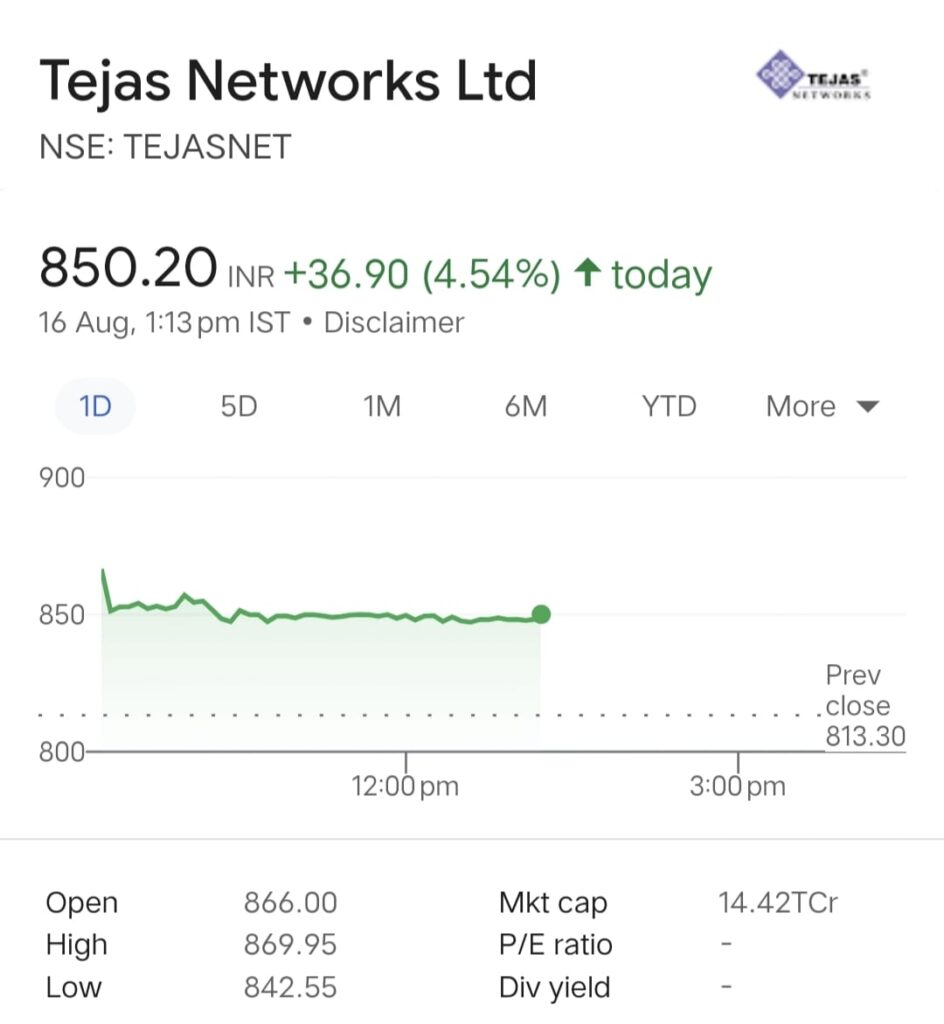
Tejas Networks shares rise 7% on winning Rs 7,492-crore;

Shares of Tejas Networks increased today by 6.61% to Rs 869. Around 0.82 lakh Tejas shares changed hands at 11:08 am, generating a transaction of Rs 7 million on the BSE.

Tejas said that it has executed a master contract for the supply, support and annual maintenance services of its Radio Access Network (RAN) equipment for BSNL’s pan-India 4G/5G network with TCS.
Shares of Tejas Networks are trading above their respective moving averages of five, twenty, fifty, one hundred, and two hundred days.

INTRODUCTION

Early trades today saw a surge of over 7% in Tejas Networks shares after the Tata Group company announced it had obtained a purchase order for equipment worth Rs 7,492 crore from Tata Consultancy Services, another Tata Group company.

  • The stock has increased by 75.82% in a year and by 40.06% in 2023. The stock’s 52-week low was Rs 468 on August 16, 2022, and it reached a record high of Rs 893 on July 20, 2023.
  • Tejas Networks’ one-year beta value is 1.1, which denotes strong volatility during the time frame. Shares of Tejas Networks are trading above their respective moving averages of five, twenty, fifty, one hundred, and two hundred days.
  • Tejas announced that it has signed a master agreement with TCS for the provision of its Radio Access Network (RAN) equipment, as well as support and yearly maintenance services, for the BSNL pan-India 4G/5G network.
  • Tejas would provide the necessary equipment for 100,000 sites as part of the TCS purchase order, which would be carried out between the years 2023 and 2024 and would cost Rs 7,492 crore (about $900 million), excluding GST.

CONCLUSION

FOR MORE INFO CLICK THIS SITE:https://learningsharks.in/

FOLLOW OUR PAGE:https://www.instagram.com/learningsharks/?hl=en
Trading and Investing: A Comprehensive Guide to Success

Introduction

Welcome to our in-depth investment and trading advice! In this post, we’ll give you helpful tips and professional tactics to aid you in navigating the intricate world of financial markets. This guide is made to give you the information and resources you need to succeed in trading, whether you’re a seasoned investor or just getting started.

Understanding Investing and Trading


The two different approaches to the financial markets—trading and investing—each have their own unique traits and objectives. Understanding the main distinctions between the two is essential for creating a thorough trading and investment strategy.

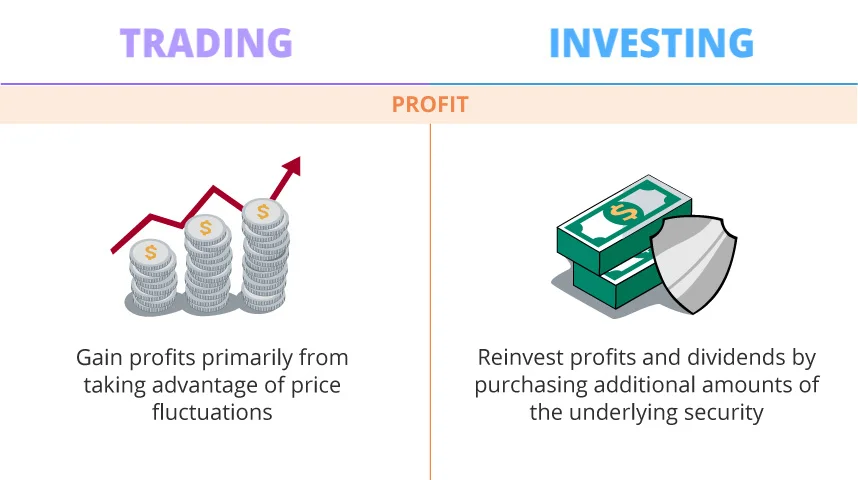
Trading

Trading is the act of purchasing and then selling financial items like stocks, bonds, commodities, or currencies with the goal of making quick money. By entering trades at the appropriate time based on technical analysis, market trends, and other indicators, traders attempt to profit from market volatility and fluctuations. Risk management, disciplined execution, and in-depth knowledge of market dynamics are essential for effective trading.

Investing


Contrarily, investing focuses on building long-term wealth through the thoughtful distribution of cash among various assets. Investors deliberately choose assets having the potential to increase in value in order to earn long-term returns, frequently over years or decades. Successful investing requires consideration of macroeconomic issues, fundamental analysis, and corporate financial analysis.

The Benefits of Trading and Investing

Both trading and investing have unique benefits that may be tailored to different financial goals and risk appetites. Let’s examine a few benefits of each strategy.

Trading Benefits Potential for quick gains: Trading enables investors to profit from quick changes in the market, enabling them to take advantage of both rising and falling markets.

  • Flexibility and liquidity: To take advantage of market opportunities and adjust to shifting circumstances, traders can quickly enter and leave positions. The high level of liquidity in many financial markets makes implementation straightforward.
  • Active involvement: For individuals who enjoy the thrill of trading, trading necessitates constant market monitoring and active decision-making, which can be intellectually exciting.

Benefits of Investing

  • Long-term wealth creation: A tried-and-true method for building long-term wealth and attaining financial goals including retirement planning, paying for education, and wealth preservation is investing.
  • Diversification: Spreading risk by investing across different asset classes, such as equities, bonds, real estate, or commodities, can increase portfolio stability.
  • Compounding: Investors can take advantage of compounding, which allows their wealth to expand exponentially over time, by reinvested dividends, interest, or capital gains.

Developing a Successful Trading and Investing Strategy

A disciplined approach and in-depth knowledge of the financial markets are essential for a profitable trading and investment plan. Following are some crucial reminders:

  • Define Your Objectives and Risk Tolerance:- You must clearly identify your goals and determine your level of risk tolerance before you start your trading and investing journey. Do you want to build long-term riches or are you searching for fast gains? How much risk are you willing to accept? Setting these factors will help you create a strategy and will direct your decision-making.
  • Educate Yourself:- Success in trading and investing is based on knowledge. Learn as much as you can about the various financial instruments, market trends, and fundamental and technical analysis methods. Keep up with financial news, research reports, and market trends to make wise investing decisions.

Develop a Trading or Investment Plan

Success in trading and investing depends on having a clear plan in place. Your investing goals, risk management plans, asset selection standards, and entry and exit points should all be included. Your plan should also contain contingency strategies to lessen potential risks and losses.

Implement Risk Management Techniques


In trading and investing, risk management is crucial. To reduce potential losses, place stop-loss orders and take risk management measures like trailing stops or hedging methods into account.

Continuously Monitor and Evaluate

The financial markets are dynamic and ever-evolving. Regularly review market movements, keep an eye on your holdings, and evaluate the success of your strategy. Be willing to modify and improve your strategy as necessary if you want to stay ahead in the cutthroat world of trading and investing.

Conclusion

Trading and investing offer fascinating chances to build your wealth and accomplish your financial goals. Understanding the subtleties of each strategy and putting it into practice can help you navigate the markets with confidence and boost your chances of success. Keep in mind that diligent risk management, focused execution, and ongoing learning are the cornerstones of any trading or investing journey.

FOR MORE INFO CLICK THIS SITE:https://learningsharks.in/

FOLLOW OUR PAGE:https://www.instagram.com/learningsharks/?hl=en
Hardwyn shares hit upper circuit after Q1 results;

On Wednesday, shares of Hardwyn India reached an all-time high of 5% to Rs 40.99, commanding a market valuation of more than Rs 1,430 crore.

The firm is known for manufacturing stainless steel products for residential and commercial infrastructure projects.
Earlier this year, Hadwyn India announced the partition of equity shares into 1:10 ratios with the issuance of bonus shares into a 3:1 ratio.

INTRODUCTION

As the firm released its financial results for the three months that ended on June 30, 2023, shares of Hardwyn India bounced back from the prior losses and reached an upper circuit of 5% during the trading session on Wednesday.

  • In the same time a year prior, the company reported a net profit of around Rs 0.87 crore. Operating income totaled Rs 1.59 crore for the period.
  • According to the company’s exchange report, net sales increased 6.85 percent during the quarter to Rs 27.3 crore from Rs 25.60 during the same period the prior financial year.
  • The stock has increased by almost 200 percent from its 52-week lows and has gained approximately 7,000 percent over the past three years.
  • In June of this year, shares of Hardwyn India began trading ex-split and ex-bonus. Hadwyn India announced the 1:10:3 subdivision of equity shares with the issuance of bonus shares.

Additionally, Hardwyn India had stated that in June 2023, the company would merge with its subsidiary, FIBA Hardwyn Locks. The planned merger will improve the businesses’ ability to concentrate, plan, and grow in order to maintain and boost their competitive power.

CONCLUSION

FOR MORE INFO CLICK THIS SITE:https://learningsharks.in/

FOLLOW OUR PAGE:https://www.instagram.com/learningsharks/?hl=en

What Are Blue-Chip Stocks?

A blue chip stock is a significant, well-known company. These are generally large, well-known, financially sound companies that have been in existence for a while, have reliable earnings, and regularly pay dividends to investors. A blue chip stock typically has a market value of billions of dollars, is frequently well-known, and is either the market leader or one of the top three businesses in its sector. Due to all of these reasons, investors frequently purchase blue chip stocks. IBM Corp., Coca-Cola Co., and Boeing Co. are examples of blue chip corporations.

Despite the lack of a formal definition, blue-chip companies are known for their value, longevity, and stability. Because they are typically household names in their respective industries and huge names in general, investors depend on them for their dependability.

Understanding a Blue Chip Stock

Even while a stock does not have to pay dividends in order to be considered a blue chip, the majority of blue chips have a long history of doing so. The saying is said to have come from poker, where blue chips are the most expensive.

The minimum size of a corporation to be deemed a blue chip is a subject of debate. Despite the fact that companies of all sizes can be market or sector leaders, a market capitalization of $5 billion is regarded as the industry standard. The T. Rowe Price Blue Chip Growth Fund does not have any specific requirements for what type of company qualifies aside from concentrating on large-cap and mid-cap firms that are well-established in their industries, even though the median market cap of the fund’s holdings has typically ranged in the vicinity of $100 billion.

The Safety of Blue Chip Stocks

Despite the fact that a blue chip company has likely weathered many challenges and market cycles, this may not always be the case. The loss of General Motors, Lehman Brothers, and numerous other significant European banks during the 2008 global recession is proof that even the most resilient companies can falter under exceptionally difficult situations.

What makes a stock a blue chip?

A blue-chip stock is an investment you might bring home to meet your parents: It has a good first impression and is backed up by strong evidence. It is dependable, responsible, and steady.

Blue-chip company stocks have a history of outperforming the market in both prosperous and difficult economic times. The stocks that fall under the category of “blue-chip stocks” frequently have the following traits.

  • Large market capitalization

An indication of a company’s size and value is its market capitalization. Blue-chip stocks are usually large-cap firms, or equities with a market value of $10 billion or more.

  • Growth history

Blue-chip businesses have a solid track record of steady growth and bright futures. They may not be as captivating as fast rising tech equities, but that is only because they have already achieved success.

  • Component of a market index

Blue-chip stocks are included as participants in important market indices including the S&P 500, S&P 100, Dow Jones Industrial Average, and/or Nasdaq 100.

  • Dividends

Even while dividends aren’t always paid on blue-chip stocks, many do. Dividends are regular payments provided to investors from a company’s profits. Companies that regularly pay dividends are often more established, therefore they might not need to reinvest as much in their growth.

Why invest in blue-chip stocks?

One type of stock shouldn’t make up the majority of your stock portfolio. Diversification is crucial in the investment process, even if you invest in companies that are widely regarded as being rock-solid.

Diversifying your portfolio across several business types is essential for diversification. This means considering companies with small, moderate, and large market capitalizations as well as businesses from various industries and geographical areas.

Blue-chip stocks are liked by investors due to their dependability, especially older or more risk-averse investors. Although they are not immune to market downturns, they have a history of enduring them and emerging victorious.

The regular dividend payments made by blue-chip companies are also valued by investors. Dividends are especially appealing if you’re investing for income, as many investors do in retirement. Blue-chip stocks frequently have steadily increasing dividends.

List of blue-chip stocks

As mentioned above, blue-chip stocks are often well-known, though this is not always the case. A list of blue-chip stocks that you might be familiar with is provided below. Please note that not all blue-chip stocks are included in this list; it is merely a sampling.

  • 3M (MMM)
  • Alphabet (GOOGL)
  • Amazon (AMZN)
  • American Express (AXP)
  • Apple (AAPL)
  • Bank of America (BAC)
  • Coca-Cola (KO)
  • Costco (COST)
  • Disney (DIS)
  • Goldman Sachs (GS)
  • Home Depot (HD)
  • IBM (IBM)
  • Johnson & Johnson (JNJ)
  • McDonald’s (MCD)
  • Microsoft (MSFT)
  • Nike (NKE)
  • Starbucks (SBUX)
  • Verizon (VZ)
  • Visa (V)
  • Walmart (WMT)

FOR MORE INFO CLICK THIS SITE:https://learningsharks.in/

FOLLOW OUR PAGE:https://www.instagram.com/learningsharks/?hl=en

Understanding Insider Trading: A Comprehensive Guide

Introduction

Welcome to our comprehensive insider trading tutorial. As a top authority in the industry, we want to give you comprehensive knowledge and insights into this intricate financial activity. The definition of insider trading, its ethical and legal implications, and its impact on the financial markets will all be covered in this article. Let’s get going.

Table of Contents

  1. What is Insider Trading?
  2. Legal and Regulatory Framework
  3. Types of Insider Trading
    • a. Legal Insider Trading
    • b. Illegal Insider Trading
  4. Impact on Financial Markets
    • a. Market Efficiency
    • b. Investor Confidence
  5. Famous Insider Trading Cases
    • a. Martha Stewart
    • b. Raj Rajaratnam
  6. Preventing Insider Trading
    • a. Compliance Programs
    • b. Reporting and Surveillance
  7. Conclusion

1. What is Insider Trading?

Insider trading is the act of someone who possesses material, non-public knowledge about a publicly traded corporation engaging in trading in its stock or other securities. Insider trading is prohibited if the material knowledge is still not made publicly available, even if the insider makes a deal and reports it to the Securities and Exchange Commission.

If you own business shares and have knowledge that could have an impact on other investors, it’s important to understand what insider trading is and how to avoid it because doing so carries serious consequences.

2. Legal and Regulatory Framework

To promote honest and open financial markets, governments all over the world have put rules and laws in place to control insider trading. Under the Securities Exchange Act of 1934, these rules are enforced in the United States by the Securities and Exchange Commission (SEC). Insider trading is prohibited unless specific conditions are met, such as when material information is made public or legal exceptions are granted.

3. Types of Insider Trading

  • Legal Insider Trading:- Insider trading is not always illegal. Corporate insiders engage in legal insider trading when they buy or sell securities of their own company while adhering to all applicable laws and regulations. These transactions are typically made public through regulatory filings and are carried out in an open and transparent manner.
  • Illegal Insider Trading:- Illegal insider trading is defined as trading on material, non-public information that provides the trader with an unfair advantage. This type of trading undermines market integrity and can have serious ramifications for those involved. Insider trading is illegal when a trader violates their fiduciary duty, misappropriates confidential information, or trades based on insider information.

4. Impact on Financial Markets

Insider trading has serious consequences for financial markets, affecting both market efficiency and investor confidence.

  • Market Efficiency: Insider trading skews the fair playing field of the financial markets. Because they make decisions about their investments based on insufficient knowledge, other investors who do not have access to the sensitive information are at a disadvantage. Market inefficiencies and distorted stock prices may result from this.
  • Investor Trust: Insider trading erodes the trust of investors in the honesty and integrity of the financial markets. If investors think insiders have an unfair advantage, they might be less likely to invest in the market, which could lead to less liquidity and potential market downturns.

5. Famous Insider Trading Cases

Several high-profile insider trading cases have made headlines throughout history. Here are two noteworthy examples:

  • A well-known businesswoman and television personality named Martha Stewart was found guilty of insider trading in 2004. She made a significant financial gain by selling her interests in a biopharmaceutical business just before bad news broke. Stewart was found responsible for delaying the course of justice and lying to federal agents.
  • Hedge fund manager Raj Rajaratnam, who is also the co-founder of the Galleon Group, was found guilty of insider trading in 2011. He traded using insider information he obtained from business insiders, which generated large profits for his fund. Rajaratnam’s case served as an example of the extensive insider trading network.

6. Preventing Insider Trading

Companies and regulatory bodies have implemented various measures to detect and prevent insider trading in order to combat it.

  • Compliance Programs:- To educate employees about insider trading laws and regulations, companies implement comprehensive compliance programs. Training sessions, written policies, and strict guidelines are typically included in these programs to ensure employees understand their obligations and responsibilities.
  • Reporting and Surveillance:- Regulatory bodies, such as the SEC, use sophisticated surveillance techniques to monitor trading activity and identify potential cases of insider trading. To maintain market integrity, they analyze market data, track trading patterns, and investigate suspicious transactions.

7. Conclusion

Insider trading is a complicated problem with potentially significant ramifications for the financial markets. Investors and market participants can safeguard market integrity by making educated decisions by being aware of its definition, legal structure, and impact. Companies, regulators, and individuals must constantly be on guard to stop illicit insider trading and maintain the integrity and fairness of the financial system.

FOR MORE INFO CLICK THIS SITE:https://learningsharks.in/

FOLLOW OUR PAGE:https://www.instagram.com/learningsharks/?hl=en

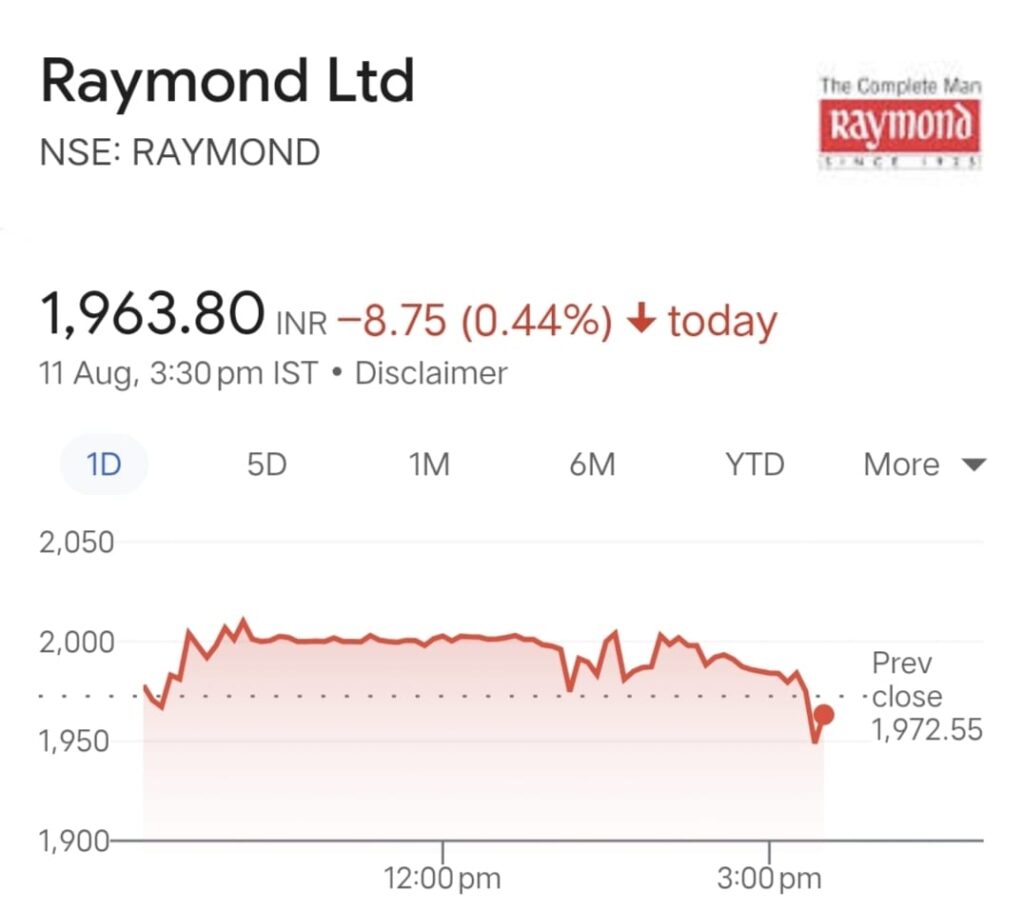
Raymond shares hit Rs 2,000 level after Q1 results.

According to Raymond, both in terms of sales and Ebitda, the first quarter’s performance was its best. Despite weak consumer demand, the company has maintained constant profitable growth, it claimed.

All trade channels and the retail network saw an increase. The segment's Ebitda margin was 6.4%, it was stated.
According to Raymond, its sustained emphasis on casualization and premiumization in the branded apparel market allowed for a 16% increase in top line revenue.

INTRODUCTION

In Friday’s trading, Raymond shares crossed the Rs 2,000 mark after the company reported that its profit more than doubled in the June quarter and that, as a result of the sale of its FMCG division, it had become net debt free.

According to Raymond, the company’s profit increased 13.14 times, from Rs 81 crore in the first quarter of last year to Rs 1,065 crore in the first quarter.

Despite weak consumer demand and difficult market conditions, the company “continues to demonstrate consistent profitable growth,” it stated.

In a typically difficult quarter, Raymond’s revenue was at its highest level ever and its Ebitda margin was robust at 13.8%.

  • According to the corporation, a top line rise of 16% was made possible by its sustained emphasis on casualization and premiumization in the branded apparel market.
  • “The real estate industry continues to see robust demand for its products, as evidenced by the July launch of a high-end residential project in Thane with an RERA carpet area of over 1 million square feet and a potential income of more than Rs 2,000 crore.
  • According to Chairman and Managing Director Gautam Hari Singhania, Raymond experienced a historic first quarter in which it became net debt free following the sale of its FMCG division.

According to Raymond, there has been an increase in consumer demand for its most recent season’s offerings, which include novel products and giving ideas for the summer wedding season.

CONCLUSION

FOR MORE INFO CLICK THIS SITE:https://learningsharks.in/

FOLLOW OUR PAGE:https://www.instagram.com/learningsharks/?hl=en

Concord Biotech IPO subscribed 25% in first three hours;

Concord Biotech, a 1984-founded biopharma company focused on R&D, is one of the world’s leading producers and developers of a limited number of fermentation-based APIs.

Kotak Mahindra Capital Company, Citigroup Global Markets India and Jefferies India are the booking running lead managers to the issue, while Link Intime India has been appointed as the registrar to the issue.
The issue consists of an offer to sell up to 2.09 crore equity shares, and Hellix Investment Holdings, the selling shareholder, is the sole offeror.

INTRODUCTION

Investor demand for Concord Biotech’s Rs 1,551-crore initial public offering (IPO) was favorable throughout the first few hours of the day one bidding procedure.

  • Investors can submit a bid for a minimum of 20 equity shares and subsequent multiples during the three-day bidding process. Concord Biotech is selling its shares for between Rs 705-741 per share.
  • Data shows that as of 1.10 pm on Friday, August 4, 2023, investors had submitted bids for 36,68,000 equity shares, or 25%, of the 1,46,50,957 equity shares available for the subscription.
  • Retail investors’ quota was filled to a booking percentage of 36%, non-institutional bidders’ quota to a booking percentage of 22%, and employees’ quota to a booking percentage of 3.38.

The company, which has operations in more than 70 nations, including India, Japan, the US, and Europe, is recognized as one of the top creators and producers of specific fermentation-based APIs for immunosuppressants and oncology.

CONCLUSION

FOR MORE INFO CLICK THIS SITE:https://learningsharks.in/

FOLLOW OUR PAGE:https://www.instagram.com/learningsharks/?hl=en