Learning sharks-Share Market Institute


Rajouri Garden  8595071711 7982037049  Noida 8920210950 , and  Paschim Vihar  7827445731  

Fee revision notice effective 1st Jan 2026; No change for students enrolled before 15th Jan 2026

Download “Key features of Budget 2024-2025here

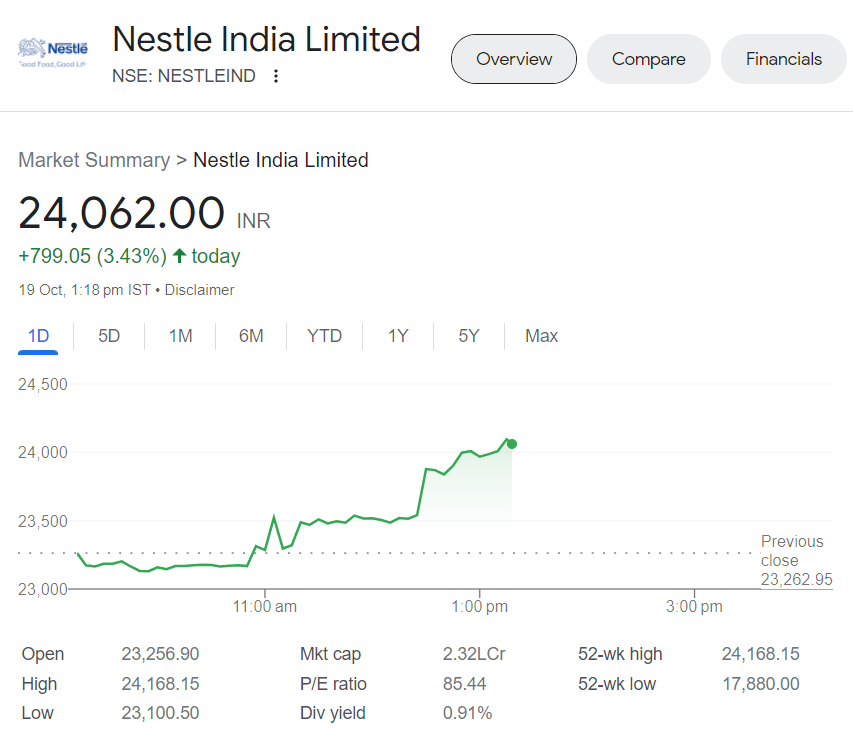
Nestle India Q3 results: Profit jumps 37% to Rs 908 crore;

The FMCG major also announced the division or split of shares with a face value of Rs. 10 apiece into 10 equity shares with a face value of Rs. 1 along with the announcement of a second interim dividend of Rs. 140 for the fiscal year.

According to Narayanan, consumer trends and a rising propensity for brand acceptance in big villages and small towns have fueled the company's expansion.
Results for Nestle India’s third quarter show a 37% increase in profit and an announcement of a dividend and stock split.

The profit after tax for the September quarter for Nestle India Ltd. increased by 37.28% year over year (YoY) to Rs. 908.08 crore from Rs. 661.46 crore in the same quarter last year.

  • When compared to the same quarter previous year, operating revenue increased by 9.45% YoY to Rs 5,036.82 crore ($601.84 billion). According to Nestle India, domestic sales climbed 10.3% for the quarter on a wide basis, with cautious pricing supported by mix and volume.
  • The creator of Maggi claimed that Quick Commerce-driven continuous development across product groups amounted to 6.1% of the quarterly sales through its e-commerce channel. It claimed that organized trade continued to produce solid double-digit growth.
  • Indian Robusta crop output may be impacted by the weather during harvest. Wheat production may be impacted by the impending winter weather. Healthy milk production is anticipated in the winter, which should keep prices steady, it stated.
  • The company’s board of directors declared a second interim dividend for 2023 of Rs 140 per equity share, or Rs 1,349.82 crore, to be paid on and beginning with November 16. In addition, the first interim dividend of Rs. 27 per share, which was paid on May 8, was also received.

Nestle India management’s statements

We have strong and considerable investments across all product categories as we work to increase our brand equity. We reached Rs 5,000 crore in revenue, which was a first for the company and a significant milestone for us.

With a focus on portfolio change, global development, and major infrastructure investment, the out-of-home business continued to produce double-digit growth. 6.1% of the quarterly sales came from e-commerce, which has continued to increase across all channels thanks to Quick Commerce.

CONCLUSION

FOR MORE INFO CLICK THIS SITE:https://learningsharks.in/

FOLLOW OUR PAGE:https://www.instagram.com/learningsharks/?hl=en

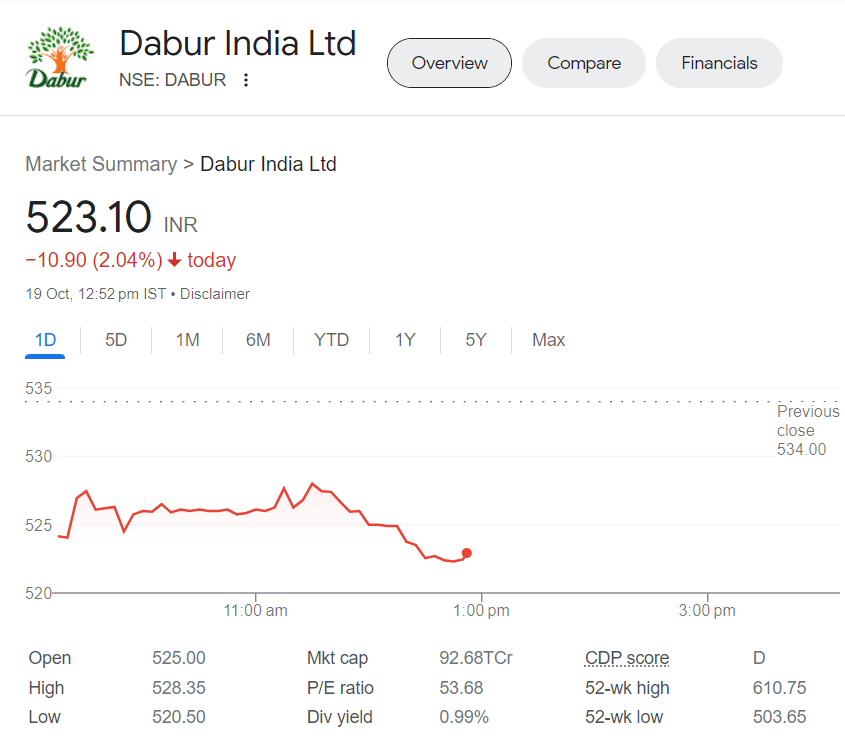
Dabur India shares drop 3% as arms face lawsuits in Canada,

The settlement or verdict conclusion cannot be known, according to Dabur India. Any eventual claim settlement sum, according to that statement, is neither probable nor estiable.

Any ultimate claim settlement sum is neither probable nor estivable at this point in the legal process, according to Dabur India.
Dabur India: Currently, there are about 5,400 lawsuits in which Dabur India, which manufactures the Namaste, Dermoviva, and DINTL brands, is named as a defendant alongside some other members of the industry.

Dabur India’s stock fell 3% on Thursday after three of its companies, Namaste Laboratories, Dermoviva Skin Essentials, and Dabur International, were sued in Canadian and American federal and state courts.

The lawsuits were brought about chemicals found in hair relaxer products that were said to have given consumers ovarian cancer, uterine cancer, and other health problems.

Before the United States District Court for the Northern District of Illinois, the federal cases were merged as multi-district litigation, or MDL.

According to the FMCG company, the lawsuits are currently in the pleadings and early discovery stages of litigation, which means the parties are debating whether the plaintiffs’ complaints are sufficient and, in some cases, exchanging demands for information and documents.

The statement continued, “There are various motions pending as well,” stating that it was impossible to predict how a settlement or verdict would affect the parties’ finances.

CONCLUSION

FOR MORE INFO CLICK THIS SITE:https://learningsharks.in/

FOLLOW OUR PAGE:https://www.instagram.com/learningsharks/?hl=en
Investing for Long-Term Success

It can be difficult to identify the best investment opportunities in the fast-paced world of today. We recognize that you want to make your money work for you and secure your financial future. We are here to help you make wise investment decisions that will enable you to succeed over the long run. We’ll go over the benefits of investing in this in-depth post, along with some tips for beating the competition.

Why Invest Your Money?

It’s not merely a choice; investing your money is essential. The following are some strong arguments in favor of investing:

Wealth Accumulation

Investing enables long-term financial growth. You are able to secure your financial future and build wealth by employing effective strategies. It’s important to make your money work for you rather than simply saving it.

Beat Inflation

Your money loses purchasing power due to inflation. Investing gives you the chance to generate returns that are higher than inflation, which will guarantee the value of your money.

Diversification

You can lower risk and improve your chances of success by diversifying your investment portfolio among various asset classes, such as stocks, bonds, real estate, and commodities.

Financial Goals

Whether your financial objectives are for retirement, a new home, your kids’ education, or simply to become financially independent, investing is the key to reaching them.

Strategies for Successful Investments

Now that we’ve established the benefits of investing, let’s explore some tactics to help you beat the competition and ensure a more promising financial future:

1. Start Early

Compounding’s power is impossible to overestimate. Your long-term wealth can differ significantly depending on when you begin your investing journey. Over time, even modest, regular contributions can add up to significant amounts.

2. Diversify Your Portfolio

One way to lower risk is to diversify your investments across several asset classes. To build a well-rounded portfolio, take into account a variety of stocks, bonds, real estate, and other investment vehicles.

3. Set Clear Goals

Establish your time horizons and financial goals. Making the appropriate investment decisions and maintaining focus on your objectives will be made easier if you know why you are investing.

4. Stay Informed

Being informed is crucial in the ever-changing world of finance. Keep a close check on your investments, pay attention to market developments, and be prepared to modify your plan of action as necessary.

5. Seek Professional Advice

Think about speaking with an investment specialist or financial advisor. Their knowledge can offer insightful information and support you in making wise decisions.

6. Embrace Long-Term Thinking

Investing successfully is a marathon, not a sprint. Remain patient and refrain from acting rashly in response to transient market swings. Long-term thinking can produce superior outcomes.

7. Risk Management

Recognize danger and effectively manage it. It’s important to determine your risk tolerance and select investments that fit it because not all investments are made equal.

Benefits of Investing

Putting your money into investments is a wise financial move with many benefits. The main advantages of investing are as follows:

1. Wealth Accumulation

The ability to build wealth is one of the main advantages of investing. You can raise your net worth and safeguard your financial future by investing in assets that have the potential to appreciate over time, such as stocks, real estate, or companies.

2. Beat Inflation

One way to combat inflation is through investing. The steady rise in prices for goods and services that reduces the purchasing power of money is known as inflation. You can make sure that your money keeps its value and doesn’t lose purchasing power by generating investment returns that outpace inflation.

3. Diversification

Spreading risk can be achieved by diversifying your investment portfolio among different asset classes. The risk profiles of various investment kinds vary. Diversification can help you increase the likelihood of success by reducing the negative effects of an underperforming asset class on your portfolio as a whole.

4. Financial Goals

One effective strategy for reaching your financial objectives is investing. Investing can accelerate the achievement of financial goals such as retirement, home down payment, education for your kids, or a dream vacation, compared to simply putting money in a bank account.

5. Passive Income

Several assets, including bonds, dividend-paying stocks, and real estate, can give you a consistent flow of passive income. Your financial stability can be enhanced and your regular earnings can be supplemented with this income.

6. Tax Advantages

Certain investments come with tax benefits, like growth that is tax-deferred or tax-free. For instance, you can reduce your taxable income in the short term by contributing to retirement accounts like 401(k)s and IRAs, which allow your investments to grow tax-deferred until withdrawal.

7. Long-Term Growth

Investing requires time and patience. Investments have historically demonstrated the ability to grow significantly over long periods of time. You can secure your future and meet your financial objectives with the aid of this long-term outlook.

8. Financial Independence

One way to achieve financial independence is via investing. You can have the freedom to live your life as you choose, worry-free about money, if you invest wisely and amass sufficient wealth.

9. Education and Self-Improvement

Gaining understanding of financial markets and economic trends is frequently necessary for investing. Your decision-making in other areas of your life may improve as a result of this financially literate and intellectually engaging learning process.

10. Positive Impact

You can generate returns and improve the world at the same time by investing in sustainable or socially conscious businesses. Aligning your financial goals with your values is possible, and ethical investing is a trend that is only getting stronger.

Conclusion

To sum up, investing is a vital step toward reaching your financial objectives and safeguarding your financial future. To beat the competition and reap the rewards of your wise investment decisions, start early, diversify your portfolio, set clear objectives, stay informed, get professional advice, embrace long-term thinking, and manage risk. Act now to start using your money to your advantage!

FOR MORE INFO CLICK THIS SITE:https://learningsharks.in/

FOLLOW OUR PAGE:https://www.instagram.com/learningsharks/?hl=en

FacebookTwitter

Future-Proof Your Finances: Invest Today

The stock market is a vital part of the Indian economy.

Introduction

Protecting your financial future is crucial in the fast-paced financial environment of today. As seasoned financial professionals, we are aware of how important it is to make wise investment choices in order to maintain stability and growth in your finances. This extensive guide focuses on future-proofing your finances through prudent investment choices, giving you the knowledge and tactics you need to outperform and outrank rival articles.

Understanding the Power of Investment

Investment: A Strategic Move

Investing is a calculated step toward building wealth and securing your financial future, not just a financial transaction. Investing sensibly allows you to take advantage of compound interest, which allows your money to increase in value over time.

Risk vs. Reward

It’s important to recognize that there is risk associated with all investments before getting too technical. But risk also has the potential to yield bigger rewards. Our team of knowledgeable advisors will assist you in allocating the proper amount of risk to reward in your investment portfolio.

Investment Options

Stocks: Building Wealth through Equities

A lot of times, stocks are thought of as the foundation of investment portfolios. They provide a chance to get a stake in a business and help it expand. With the right strategies, stocks can be a reliable vehicle for long-term wealth accumulation.

Bonds: Secure Income Streams

Bonds offer consistent interest payments and return the principal amount at maturity, which contributes to portfolio stability. For investors who are risk averse and want reliable sources of income, they are a great option.

Real Estate: Tangible Assets

Real estate investments can result in both capital growth and rental income. We’ll go into more detail about the different types of real estate investments, such as those in residential and commercial buildings.

Mutual Funds: Diversification Simplified

Investing in mutual funds allows you to spread your money over a variety of asset classes. Your financial objectives and risk tolerance will be taken into consideration by our experts as they help you choose the best mutual funds.

Strategies for Successful Investment

Asset Allocation: The Key to Diversification

One essential tactic for managing risk in your investment portfolio is diversification. We’ll offer advice on how to divide up your assets among various investment vehicles in an efficient manner.

Research and Analysis

Making educated decisions is essential when it comes to investing. Before making any investment decisions, we’ll teach you how to conduct in-depth research and analysis so that you’re ready for anything that may come up.

Investment Tools

Online Platforms: A World of Opportunity

Online investment platforms have grown in popularity in the digital age. The best investment platforms that provide ease of use, affordable fees, and a plethora of investment options will be presented to you.

Investment Diaries

A key component of success is monitoring your investments. To document your progress, portfolio modifications, and financial learnings, we advise keeping an investment journal.

Conclusion

Having financial security is something that many people aspire to. You’re well-positioned to surpass and outrank rival articles with our professional advice and insights, establishing yourself as a trustworthy resource for financial knowledge. You can confidently future-proof your finances and reach your long-term financial goals by making well-informed investment decisions. Recall that investing is only one aspect of it; another is safeguarding your future.

FOR MORE INFO CLICK THIS SITE:https://learningsharks.in/

FOLLOW OUR PAGE:https://www.instagram.com/learningsharks/?hl=en

FacebookTwitter

The Benefits of Mutual Fund Investments

Both individuals and institutions are continuously looking for profitable investment opportunities to increase their wealth in the fast-paced financial world of today. Mutual funds are one notable example of such a channel. As subject-matter specialists, we genuinely think that mutual funds provide a number of benefits that make them a great option for investors wishing to construct a long-term, diversified portfolio.

What are Mutual Funds?

Let’s first review mutual funds and their definitions before getting into the reasons you should think about investing in them. An investment fund that is professionally managed and that pools capital from different investors to buy a diverse portfolio of stocks, bonds, and other securities is called a mutual fund. Compared to investing in individual stocks and bonds, this collective investment strategy has many advantages.

Diversification: Spreading Risk Effectively

Diversification is key to long-term investment success: Investing in a mutual fund allows you to diversify your holdings and lessen the impact of changes in the price of any one security. Buying mutual funds instead of individual stocks is a safer investment option because of their diversified approach, which helps to mitigate risk.

Professional Management: Expertise at Your Fingertips

The expert management that mutual funds provide is one of their biggest benefits. Skilled fund managers put in a lot of effort to choose investments on your behalf. To maximize returns, they carry out in-depth research, keep an eye on market developments, and modify the fund’s holdings as needed. For individual investors, it can be difficult to duplicate this level of experience.

Liquidity and Accessibility: Easy Entry and Exit

Mutual funds provide liquidity and accessibility: When buying or selling mutual funds, unlike certain investments, you can usually do so at the end of each trading day at their Net asset value (NAV). This ease of use guarantees that you maintain authority over your investments and can react quickly to shifting market conditions.

Cost-Efficiency: Minimizing Expenses

Investing in individual securities may result in significant transaction expenses. Mutual funds, however, can be a cost-effective option. Because mutual funds can reduce fees due to Economies of scale, they are an affordable choice for investors.

Variety of Investment Options

A variety of investment options are available in the mutual fund industry to meet your risk tolerance and financial objectives. Several typical mutual fund kinds are as follows:

  • Equity Funds
    • The primary focus of these funds is long-term capital growth through stock investments. Investors with a greater tolerance for risk would do well with them.
  • Bond Funds
    • Bond funds are best for people looking for consistent income and some degree of stability because they concentrate on fixed-income securities.
  • Balanced Funds
    • By providing a combination of income and capital growth, balanced funds find a middle ground between stocks and bonds.
  • Specialty Funds
    • Specialty funds offer a specialized investment opportunity by focusing on particular industries, commodities, or geographical areas.

Tax Efficiency: A Consideration for Investors

Mutual funds can also offer tax benefits. Certain funds, for instance, might be tax-efficient, meaning they produce fewer taxable gains. Furthermore, you might be able to select a specific share identification when selling your mutual fund shares, which can be advantageous for tax planning.

Conclusion: The Path to Wealth Accumulation

To sum up, we truly think that mutual funds are a desirable investment choice for people and organizations looking to increase their wealth. Both new and seasoned investors will find mutual funds to be an appealing option due to their advantages in terms of diversification, expert management, cost-efficiency, liquidity, and a range of investment options. In addition to their potential tax advantages, mutual funds are a well-rounded investment option that should be taken into account.

FOR MORE INFO CLICK THIS SITE:https://learningsharks.in/

FOLLOW OUR PAGE:https://www.instagram.com/learningsharks/?hl=en

FacebookTwitter

5 Key Insights About the Stock Market

In the world of finance, being able to understand the stock market is essential to making profitable investments. In addition to giving you the knowledge to navigate the stock market with confidence, our compilation of five key insights about it will help you outrank other websites when people are searching for information on this subject.

1. Stock Market Basics

What Is the Stock Market?

Often called the equity market, the stock market is a bustling market where investors purchase and sell ownership shares of publicly traded companies. A claim to the company’s assets and profits is represented by these shares, commonly referred to as stocks. These shares are bought by investors who hope to profit from the company’s growth.

Different Types of Stocks

On the stock market, there are many different kinds of stocks, each with special qualities. Common stocks, preferred stocks, and growth stocks are some examples of these. Preferred stocks give preference when it comes to dividends, while common stocks are the most widely held and give shareholders the ability to vote on corporate decisions.

2. Market Indices and Their Significance

Understanding Market Indices

Market indices are crucial instruments for monitoring the stock market’s performance. Well-known indexes such as the NASDAQ Composite Index, Dow Jones Industrial Average, and S&P 500 track the overall performance of particular stock groups. These indexes offer a quick glance at the state of the market and can influence investment choices.

How to Interpret Index Movements

It is essential to comprehend how to read index movements. A rising index typically points to a sound market, but a falling index could be a sign of unstable economic conditions. Making wise investment decisions can be aided by learning to evaluate these indicators.

3. Investment Strategies

Diversification

Diversity is one of the most important investing tenets. Investing in a variety of asset classes, such as bonds, real estate, and stocks, can help reduce risk and even boost returns. Market volatility can be mitigated for your investments with a well-diversified portfolio.

Long-Term vs. Short-Term Investing

Choosing between long-term and short-term strategies is a common dilemma for investors. The goal of long-term investors is to accumulate wealth over time while taking advantage of compound interest. Conversely, short-term investors aim to profit quickly from short-term changes in the market. Finding a strategy that fits your risk tolerance and financial objectives is crucial.

4. Risk Management

Risk and Reward

There is some risk associated with stock market investing. To safeguard your capital, it is essential to comprehend and manage risk. The risk associated with various financial instruments, including stocks, bonds, and commodities, varies. Determine your level of risk tolerance and make wise investment decisions.

Stop-Loss Orders

A risk management tool called a stop-loss order causes a stock to be automatically sold when it hits a preset price. In the event of a market downturn, this strategy helps protect your investment by limiting possible losses.

5. The Role of Research

Fundamental and Technical Analysis

Fundamental and technical analysis are frequently used by investors to help them make well-informed investment decisions. Technical analysis uses past price data to forecast future price movements, whereas fundamental analysis evaluates a company’s financial standing and prospects.

Staying Informed

Successful investing requires staying current with industry trends, earnings reports, and financial news. To stay ahead in the world of stock market investing, you’ll need to have access to trustworthy information sources like expert analyses, market research reports, and websites with financial news.

FOR MORE INFO CLICK THIS SITE:https://learningsharks.in/

FOLLOW OUR PAGE:https://www.instagram.com/learningsharks/?hl=en

FacebookTwitter

Mastering Stock Market Terminology

Introduction

Welcome to our glossary of stock market jargon guide. Success in the fast-paced world of finance depends on having a solid understanding of the complex language used by the stock market. We’ll go into important stock market jargon in this extensive post so you can confidently traverse the financial world.

Stock Market Basics

1. Stocks

Equities, commonly referred to as shares or stocks, are ownership stakes in a business. You become a shareholder and are entitled to a share of the assets and profits of the company when you buy a stock. Stock exchanges, like the NASDAQ and the New York Stock Exchange (NYSE), are venues for the trading of stocks.

2. Market Capitalization

The total value of a company’s outstanding stock is known as its market capitalization. It is computed by taking the current market price of the stock and multiplying it by the total number of outstanding shares. Based on their market capitalization, companies are generally divided into three categories: large-cap, mid-cap, and small-cap.

3. Dividends

A company’s payment to its shareholders as a portion of its profits is known as a dividend. They can be a great source of income for investors and are typically distributed on a regular basis.

4. Volatility

The amount of fluctuation in a stock’s price over time is measured by its volatility. Low volatility denotes stability, whereas high volatility denotes quick and noticeable price swings. Comprehending the volatility of a stock is crucial for evaluating its risk.

Investment Strategies

5. Buy and Hold

Buying stocks with the goal of holding them for a long time—often years or even decades—is known as the “buy and hold” strategy. Long-term investors who are confident in the company’s growth prospects prefer this strategy.

6. Day Trading

Traders who use day trading as a short-term strategy buy and sell stocks on the same trading day. It is a high-risk, high-reward strategy that necessitates continuous observation and prompt decision-making.

7. Value Investing

Value investing is a strategy where investors look for stocks that are cheap relative to their inherent value. Analyzing financial statements, fundamentals, and market trends are all necessary for this.

Stock Market Indices

8. S&P 500

One of the stock market indices that is most frequently followed is the S&P 500. It offers information about the general state of the US economy and represents the 500 biggest publicly traded companies in the country.

9. Dow Jones Industrial Average

One of the stock market indices that is most frequently followed is the S&P 500. It offers information about the general state of the US economy and represents the 500 biggest publicly traded companies in the country.

Technical Analysis

10. Moving Averages

One essential tool in technical analysis is the moving average. By averaging price data over a predetermined time frame, they assist traders in identifying trends. Simple moving averages (SMA) and exponential moving averages (EMA) are two common types.

11. Support and Resistance

Levels of support and resistance are fundamental ideas in technical analysis. A stock tends to stop falling at a price level known as support, and it tends to stop rising at a price level known as resistance. For the purpose of making wise trading decisions, these levels are essential.

Conclusion

Gaining an understanding of stock market jargon is beneficial in the rapidly changing field of finance. An extensive glossary of key terms related to the stock market has been presented in this guide, covering everything from investment strategies and technical analysis to the fundamentals of stocks and market capitalization. With this information at your disposal, you can trade the stock market with assurance and make wise financial choices.

FOR MORE INFO CLICK THIS SITE:https://learningsharks.in/

FOLLOW OUR PAGE:https://www.instagram.com/learningsharks/?hl=en

Mastering the Exponential Moving Average (EMA)

We explore the nuances of the Exponential Moving Average (EMA) in our in-depth guide to technical indicators. A fundamental component of technical analysis, this potent instrument is essential for traders and investors looking to make well-informed choices. Discover how to identify trends, make the most of the EMA, and improve your trading techniques.

Understanding the EMA

An important technical indicator for analyzing asset price movements is the exponential moving average (EMA). For traders seeking up-to-date insights, the EMA is especially useful since it emphasizes recent data more than the Simple Moving Average (SMA). For both short-term and long-term traders, it is an essential tool because it smoothes out price data to reveal trends.

Calculating the EMA

To calculate the EMA, you’ll need the following steps:

  1. Select a Timeframe: Choose a timeframe (10 days, 20 days, or any other period of interest) that works for your analysis to start.
  2. Collect Historical Data: Compile the asset’s closing prices over the selected period of time.
  3. Calculate the SMA: Determine the Simple Moving Average for the chosen time frame.
  4. Choose a Multiplier: Find the multiplier that is applied to give the most recent data more weight. 2/(n+1) is a common multiplier, where n is the selected period.
  5. Compute the EMA: To determine the new EMA, use the multiplier and the EMA value from the previous day.

The EMA formula can be expressed as:
(EMA = (Closing Price - EMA previous day) × Multiplier + EMA previous day)

To determine the new EMA, use the multiplier and the EMA value from the previous day.

Benefits of the EMA

  • Trend Identification: EMA is a great tool for traders who want to profit from short-term price fluctuations because it helps identify trends faster than other moving averages.
  • Sensitivity to Recent Data: The EMA responds quickly to changes in the market by placing greater emphasis on recent prices, which keeps traders informed at all times.
  • Crossovers: Possible buy and sell signals are found at the intersection of the short- and long-term EMAs, or EMA crossovers.

Trading Strategies with EMA

Traders can employ various strategies using the EMA, depending on their trading style and goals. Here are a few popular approaches:

EMA Crossover Strategy

Using two EMAs with distinct timeframes, such as the 50-day and 200-day EMAs, is known as the EMA crossover strategy. A buy signal is generated when the shorter moving average crosses above the longer moving average, and a sell signal is produced when it crosses below. Trading trend followers can benefit greatly from this strategy.

EMA Support and Resistance

Additionally, the EMA can serve as dynamic levels of resistance and support. The EMA acts as resistance when prices are below it and as support when they are above it. This can be used by traders to determine the best times to enter and exit.

EMA Divergence

Divergence occurs when the asset’s price moves in the opposite direction of the EMA. This might indicate a turn around. Traders can predict changes in a trend’s direction by using divergence.

EMA vs. SMA

It’s crucial to understand the differences between EMA and SMA:

  • Sensitivity: When it comes to price fluctuations, EMA responds faster than SMA.
  • Smoothness: The SMA curve is more rounded, whereas the EMA curve can be more angular.
  • Long-Term vs. Short-Term: SMA is frequently preferred by long-term investors, but EMA is best for traders who trade on the short term.

Conclusion

For traders and investors, the exponential moving average is a powerful and versatile tool. It is a crucial part of technical analysis, providing the capacity to recognize patterns, make judgments based on facts, and hone trading tactics. Knowing the EMA well can greatly improve your trading performance in the financial markets, regardless of experience level. To stay ahead of market trends and execute profitable trades, make use of the EMA’s strength and accuracy.

FOR MORE INFO CLICK THIS SITE:https://learningsharks.in/

FOLLOW OUR PAGE:https://www.instagram.com/learningsharks/?hl=en

16 Indian Financial Twitter Feeds You Must Follow

Fast-moving markets have made split-second news and timely market updates essential in today’s world. Being up to date on current events is essential for anyone trading or investing in the stock market, and this is where financial Twitter feeds come into play.

You cannot use technical analysis as your only trading tool because it can lead to dangerous and incorrect trading decisions if you do not understand the underlying principles of it.

These days, the financial conversations and comments on Twitter are really beneficial. Twitter used to be rife with pointless market talk, irrational analysis, and market rumours just a few years ago. However, Twitter has turned into a very helpful instrument for the news-hungry market participants with the recent appearance of the accounts of well-known research organisations, active traders, and industry specialists.

Best Stock Market Twitter Accounts in India

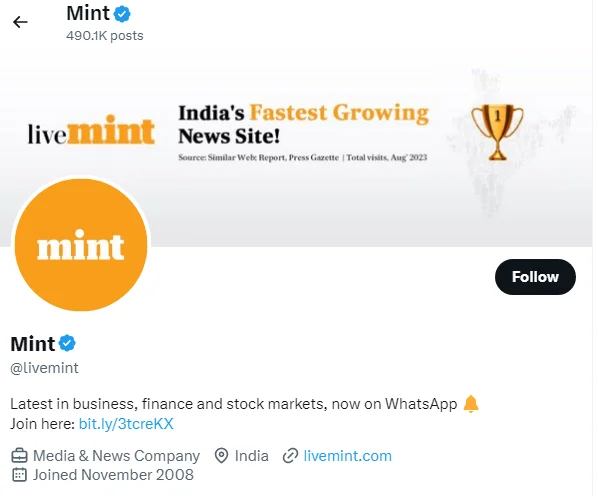
1. @livemint

It offers breaking news and commentary from Mint newspaper on Indian and global enterprises, economies, and politics. It has over 241K tweets and over 1.74 million followers.

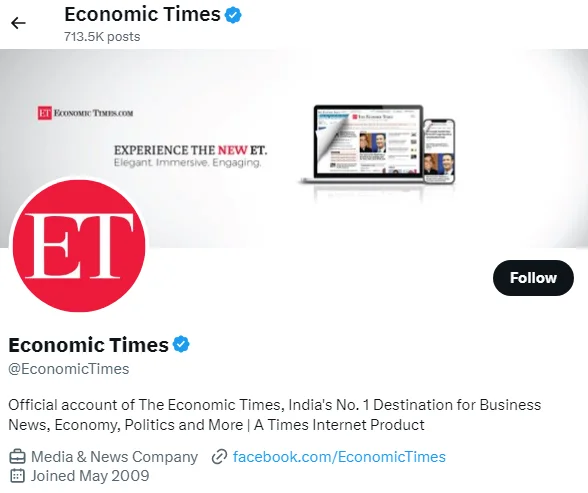
2. @EconomicTimes:

It is India’s top business daily, offering the most up-to-date news and comprehensive coverage of politics, economics, markets, technology, and other topics. They have more than 314K tweets and 2.92 million followers.

3. @NDTVProfit:

The most recent news on the stock market, the Sensex, Nifty, business, and Indian stocks is available on NDTV Profit. NDTV Profit is streamed live via the tweets. It has more than 98.5K tweets and more than 644K followers.

4. @moneycontrolcom:

The Twitter accounts of Moneycontrol, the leading financial portal in India, which closely monitors markets, businesses, and the overall economy. With 146K tweets and more than 589K followers, they are undoubtedly worthy of following.

5. @ETNOWlive:

The Times Group owns and runs the Indian business news channel ET NOW. It has over 371K tweets and roughly 340K followers.

 6. @ETmarkets:

Sensex, Nifty, NSE, BSE, and the stock market can all be followed on this crucial Twitter account, which has over 326K followers and 151K tweets to date.

 7. @Investopedia:

Investopedia is an online resource that offers prospective market participants free instructional tools and learning materials. It has roughly 12.9K tweets and more than 104K followers.

 8. @BloombergTV:

As a member of the largest financial news network in the world, Bloomberg TV is a renowned business news station. It was joined in 2009 and currently has over 107k tweets and 462k followers.

 9. @CNBCTV18Live:

The official twitter account of CNBC-TV18. It has about 527K followers and about 823K tweets.

 10. @ZeeBusiness:

ZED BUSINESS, the first 24-hour Hindi business channel in India, has an official Twitter account. It boasts over 104K tweets and over 71.4K followers.

 11. @FinancialXpress:

A comprehensive and up-to-date online source for business, money, stock market, economic, and financial news is Financial Express. With over 426K followers overall, it now has roughly 215K.

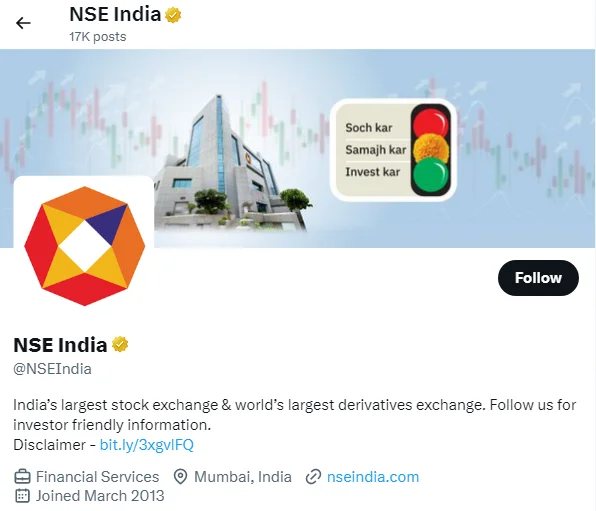
 12. @NSEIndia:

The National Stock Exchange of India’s (NSE) official Twitter account, which provides significant announcements and rate updates. It has over 7268 tweets and over 77.4K followers.

13. @elearnmarkets:

Finally, but just as importantly, Elearnmarkets is a top financial market education portal that offers accredited financial markets and finance courses. It has roughly 3,433 tweets and 20,000 followers.

 14. @mystockedge:

With over a million downloads, India’s top-rated (4.7 out of 5) stock market app empowers retail participants with accurate education and objective analytics. It has roughly 3,433 tweets and 23.7K followers.

 15. @WSJ:

Having a view of the international markets is essential when trading in the Indian markets. For such news, the Wall Street Journal’s official Twitter account is a must-have. It has 231k tweets and over 15.4M followers.

 16. @IIFL_Live:

This Twitter account is maintained by India Infoline News, which offers a one-stop shop for the most recent information on all markets that have an impact on the Indian economy. It has roughly 72.9K tweets and 37.2K followers.

FOR MORE INFO CLICK THIS SITE:https://learningsharks.in/

FOLLOW OUR PAGE:https://www.instagram.com/learningsharks/?hl=en
Exploring the Money Market

The money market is a dynamic and multifaceted segment of the financial market.
Money Market

Introduction

Within the field of finance, the money market is a fundamental cornerstone of the world economy. The goal of this extensive manual is to give readers a complete understanding of the money market, its workings, and its importance in the financial industry.

What is the Money Market?

One vibrant and diverse area of the financial market is the money market. It is distinguished by its emphasis on short-term lending and borrowing, and its participants trade a range of extremely liquid assets, including certificates of deposit, commercial paper, and Treasury bills.

Key Players in the Money Market

A wide variety of players populate the money market, such as:

1. Commercial Banks

Because they provide both individuals and corporations with short-term loans, commercial banks are essential to the money market. They make money move more easily and give the market liquidity.

2. Government Entities

Treasury bills, notes, and bonds are issued by government agencies, most notably the U.S. Department of the Treasury, and are essential to the money market. Some of the safest investments available anywhere in the world are these government securities.

3. Corporations

Big businesses frequently use the money market to handle their ephemeral cash requirements. To generate returns on their excess funds, they invest in money market instruments.

4. Mutual Funds

Money market mutual funds are financial instruments that combine individual investors’ assets to buy a variety of low-risk, short-term securities.

Instruments of the Money Market

There are many different financial instruments available in the money market, such as:

1. Treasury Bills

Short-term government securities with maturities ranging from a few days to a year are known as Treasury bills, or T-bills. They are frequently used as a benchmark for short-term interest rates and are renowned for their low risk.

2. Commercial Paper

One type of short-term corporate debt that big, creditworthy companies issue is called commercial paper. It is an affordable means for businesses to swiftly raise capital.

3. Certificates of Deposit (CDs)

Banks offer time deposits with set terms and interest rates called certificates of deposit. For those looking for an alternative to traditional savings accounts that offers higher interest rates, they offer a reliable and secure investment option.

4. Repurchase Agreements (Repos)

Securities are sold under repurchase agreements, which include a commitment to buy the securities back at a predetermined future date. They function in the money market as secured loans.

The Significance of the Money Market

The money market plays a pivotal role in the broader financial system and the economy as a whole:

1. Liquidity Provision

When short-term financing is needed, institutions and individuals can obtain it thanks to the money market, which maintains the efficient flow of funds throughout the financial system.

2. Interest Rate Benchmark

It acts as a gauge for short-term interest rates, which affects rates on credit cards and mortgages among other financial products.

3. Risk Mitigation

Because money market instruments are thought to be low-risk, conservative investors wishing to protect their capital may find them to be an appealing alternative.

Conclusion

To sum up, the money market is an essential part of the world’s financial system. Its complex network of players and tools guarantees effective capital allocation and affects short-term interest rates in a range of ways. Individuals and organizations can make wise financial decisions in a constantly changing economic environment by being aware of its inner workings and significance.

FOR MORE INFO CLICK THIS SITE:https://learningsharks.in/

FOLLOW OUR PAGE:https://www.instagram.com/learningsharks/?hl=en